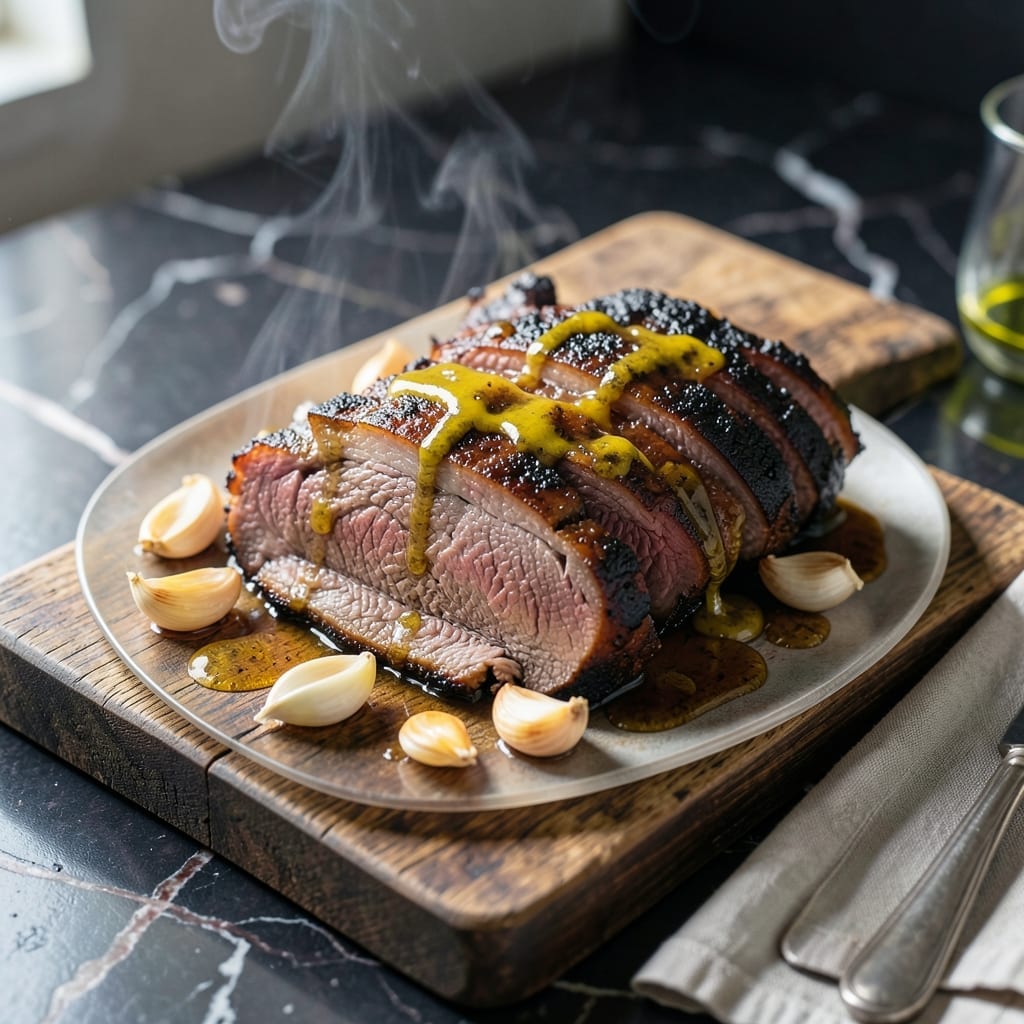
This barbecued corned beef transforms traditional flavors with a smoky char and tangy mustard glaze. My family’s cookouts taught me that corned beef isn’t just for boiling—it shines on the grill too.
The secret lies in slow-smoking the brined beef until tender, then finishing with a bold glaze that caramelizes over the heat. I developed this method to bridge my French training with my love for open-flame cooking.
You’ll achieve fall-apart tenderness with a crisp, caramelized crust that balances sweet and savory notes. The mustard glaze adds a tangy contrast to the rich, smoky meat.
Serve this as a main course with classic sides like coleslaw and roasted potatoes. Here’s how to master it.
Ingredients for Barbecued Corned Beef
Transform brined beef with bold glaze and smoky depth. Simple list, showstopping results.
| Ingredient | Amount | Notes |
|---|---|---|
| Corned Beef Brisket 🥩 | 3 lb | Pre-brined, with spice packet |
| Yellow Mustard 🟡 | ½ cup | For tangy glaze base |
| Honey 🍯 | ¼ cup | Balances mustard sharpness |
| Apple Cider Vinegar 🍏 | 2 tbsp | Adds acidity to glaze |
| Brown Sugar 🥄 | ¼ cup | Packed, for caramelization |
| Garlic Cloves 🧄 | 4 cloves | Minced for glaze depth |
| Worcestershire Sauce 💧 | 1 tbsp | Umami boost for beef |
| Olive Oil 🫒 | 2 tbsp | For brushing during smoking |
| Black Pepper 🌶️ | 1 tbsp | Coarse ground preferred |
| Kosher Salt 🧂 | 1 tsp | Adjust to taste after smoking |
| Smoked Paprika 🌶️ | 1 tsp | Enhances smoky flavor |
| Hickory Wood Chips 🪵 | 2 cups | Soaked for smoking |
| Beer 🍺 | 1 cup | Dark lager for braising liquid |
[recipe_ingredient_scaler]
The corned beef brisket is non-negotiable here—look for pre-brined with the spice packet at your butcher or Whole Foods meat counter. I prefer the point cut over flat for more marbling (that fat = flavor). The brisket should feel firm with a thin layer of fat on one side. If you’re smoking, hickory wood chips at Home Depot or Lowe’s are cheap and work great. Don’t skip soaking them first though (worth the extra minute).
Out of yellow mustard? Dijon works in a pinch but dial back the honey—it’s sharper. No apple cider vinegar? White vinegar plus a pinch of sugar gets close. The beer can be any dark lager—Guinness if you want extra richness. For a non-alcoholic swap, beef broth with a splash of soy sauce mimics the depth. The Worcestershire adds umami, but if you’re avoiding anchovies, extra soy sauce or coconut aminos work.
Leftovers taste even better the next day—store in an airtight container for up to 5 days. The glaze can be made 2 days ahead and refrigerated. To reheat, wrap the beef in foil and warm at 325°F until heated through. Freezes beautifully for up to 3 months.
Why You’ll Love This Recipe
- Set It and Forget It: I just toss the brisket with the sauce, pop it in the oven, and let the honey and brown sugar work their magic while I do other things.
- Sweet and Tangy: That mix of honey, mustard, and apple cider vinegar gives it this ridiculously good balance—sweet with a little zing.
- Feeds a Crowd: One brisket makes enough for a family dinner with leftovers for sandwiches the next day. Honestly, it’s my go-to for gatherings.
- Budget-Friendly Meal: Corned beef brisket stretches far, and the sauce uses pantry staples I already have. I’ll be real: it’s a solid, low-cost way to impress.
Step-by-Step Instructions for Barbecued Corned Beef
Here’s my no-fail method to transform that brisket into tender, smoky perfection with a sticky mustard glaze.
Step 1: Prepare and Season the Corned Beef Brisket
Remove the 3 lb corned beef brisket from its package and rinse under cold water to remove excess brine. Pat it completely dry with paper towels—this helps the seasoning stick and promotes better bark formation.
Rub the brisket all over with 1 tbsp black pepper, 1 tsp kosher salt, and 1 tsp smoked paprika. I like to press the spices in firmly so they adhere well. Let it sit at room temperature for 30 minutes while you prepare your smoker. This resting period allows the spices to penetrate the surface.
Step 2: Set Up the Smoker with Hickory
Soak the 2 cups hickory wood chips in water for at least 30 minutes before smoking. This prevents them from burning too quickly and ensures a steady stream of smoke. Drain the wood chips just before using.
Preheat your smoker to 225°F using indirect heat. Once it reaches temperature, add the soaked hickory wood chips to the smoker box or directly to the coals. You want a thin, blue smoke—not thick white smoke, which can bitter the meat. Place a drip pan filled with the 1 cup beer beneath the grates to maintain moisture.
Step 3: Smoke the Brisket Low and Slow
Place the seasoned corned beef brisket on the smoker grates, fat-side up. Insert a meat thermometer into the thickest part, avoiding the fat. Smoke undisturbed for 3-4 hours until the internal temperature reaches 165°F.
After the first hour, begin brushing the brisket every 45 minutes with a mixture of 2 tbsp olive oil to keep it moist and build layers of flavor. Don’t open the smoker more than necessary—each peek adds 10-15 minutes to your cook time.
Step 4: Glaze and Finish
In a bowl, whisk together 0.5 cup yellow mustard, 0.25 cup honey, 2 tbsp apple cider vinegar, 0.25 cup brown sugar, minced 4 cloves garlic cloves, and 1 tbsp Worcestershire sauce until smooth. This glaze will give your brisket that signature tangy-sweet crust.
When the brisket hits 165°F, brush it generously with the mustard glaze. Continue smoking for another 1-2 hours, brushing with glaze every 30 minutes, until the internal temperature reaches 195-203°F and it’s probe-tender. The glaze should be dark and sticky, with beautiful charred edges.
Step 5: Rest and Slice
Carefully remove the brisket from the smoker and transfer it to a cutting board. Tent loosely with foil and let it rest for 20-30 minutes. This resting period allows the juices to redistribute, ensuring every slice is moist and tender.
Slice against the grain into ¼-inch thick slices. The meat should pull apart slightly with a gentle tug, but still hold its shape. Serve immediately with any remaining glaze on the side for dipping.
Pro Tips For Making Barbecued Corned Beef
- Low and Slow First: Parboil the corned beef for 2-3 hours before grilling to remove excess salt and tenderize it—I learned this the hard way after my first attempt was inedibly salty.
- Balance the Glaze: Mix equal parts honey and apple cider vinegar for the glaze, about 1/4 cup each, then add brown sugar to taste; the vinegar cuts the sweetness perfectly.
- Skip the High Heat: Barbecue over indirect medium heat (around 325°F) to prevent the sugar in the glaze from burning—after ruining two batches, I finally figured out patience pays off.
- Rest Before Slicing: Let the brisket rest under foil for at least 15 minutes after grilling, or the juices will run all over the cutting board instead of staying in the meat.
Troubleshooting Perfect Results
Glaze Too Thin
If your mustard glaze runs right off the brisket, it needs thickening. Simmer the mixture for 5-7 minutes until it coats the back of a spoon. I add 1 tsp cornstarch mixed with water when in a hurry. The glaze should cling to the meat, not pool at the bottom of the smoker. 💡
Stall Phase Struggles
When the internal temp plateaus at 160-170°F, don’t panic. This stall is normal as moisture evaporates. Wrap the brisket in pink butcher paper with ¼ cup beer to power through. I’ve found this shaves 1-2 hours off the cook time.
Bitter Smoke Flavor
Thick white smoke creates bitterness. Ensure your hickory wood chips are properly soaked and your smoker stays at 225°F. Aim for thin, blue smoke. If it’s already bitter, trim the outer layer—it’s concentrated there. I learned this the hard way at my first competition.
Dry Brisket
Overcooking is the usual culprit. Pull it at 195-203°F when probe-tender. Also, spritz with olive oil every 45 minutes during the smoke. The beer in your drip pan adds moisture too. Resting for 30 minutes is non-negotiable for juiciness.
Glaze Burning
Sugar burns easily over direct heat. Keep your brisket on the smoker’s cooler side after glazing. If using a charcoal grill, bank the coals to one side. I move mine to the top rack for the last hour. The glaze should caramelize, not char black.
Uneven Cooking
The point and flat cook at different rates. Fold the flat under the point if it’s cooking faster. Rotate the brisket 180 degrees halfway through. My vintage smoker has hot spots, so I rotate every 90 minutes. A dual-probe thermometer helps track both sections.
Nutrition Facts
Frequently Asked Questions
Can I use a gas grill instead of a smoker?
Set up for indirect heat with one burner off. Maintain 225°F and add soaked hickory wood chips in a foil pouch. Expect slightly less smoke flavor but still great results.
What if I don’t have time for a full smoke?
Oven-braise at 300°F for 3-4 hours with beer in the pan. Finish with the mustard glaze under the broiler for 2-3 minutes to caramelize.
How do I know when it’s done?
Use a meat thermometer: it’s ready at 195-203°F when the probe slides in like butter. The stall at 160-170°F is normal—just be patient.
Can I make this ahead of time?
Yes! Smoke and glaze the day before, then reheat wrapped in foil at 325°F for 30-45 minutes. Slice just before serving.

Trained in classic French technique but raised on slow-cooked ribs and spicy rubs, she blends culinary skill with smoke and soul.
- Recipe for Boneless Pork Chops in Cast Iron Skillet: Sear and Baste to Juicy Perfection - October 3, 2026
- Recipe for Boneless Cross Rib Roast: Slow-Roasted Beef with Herb Crust - October 3, 2026
- Hamburgers in Sauce Recipe Crock Pot: Slow-Cooked Savory Delight - October 3, 2026