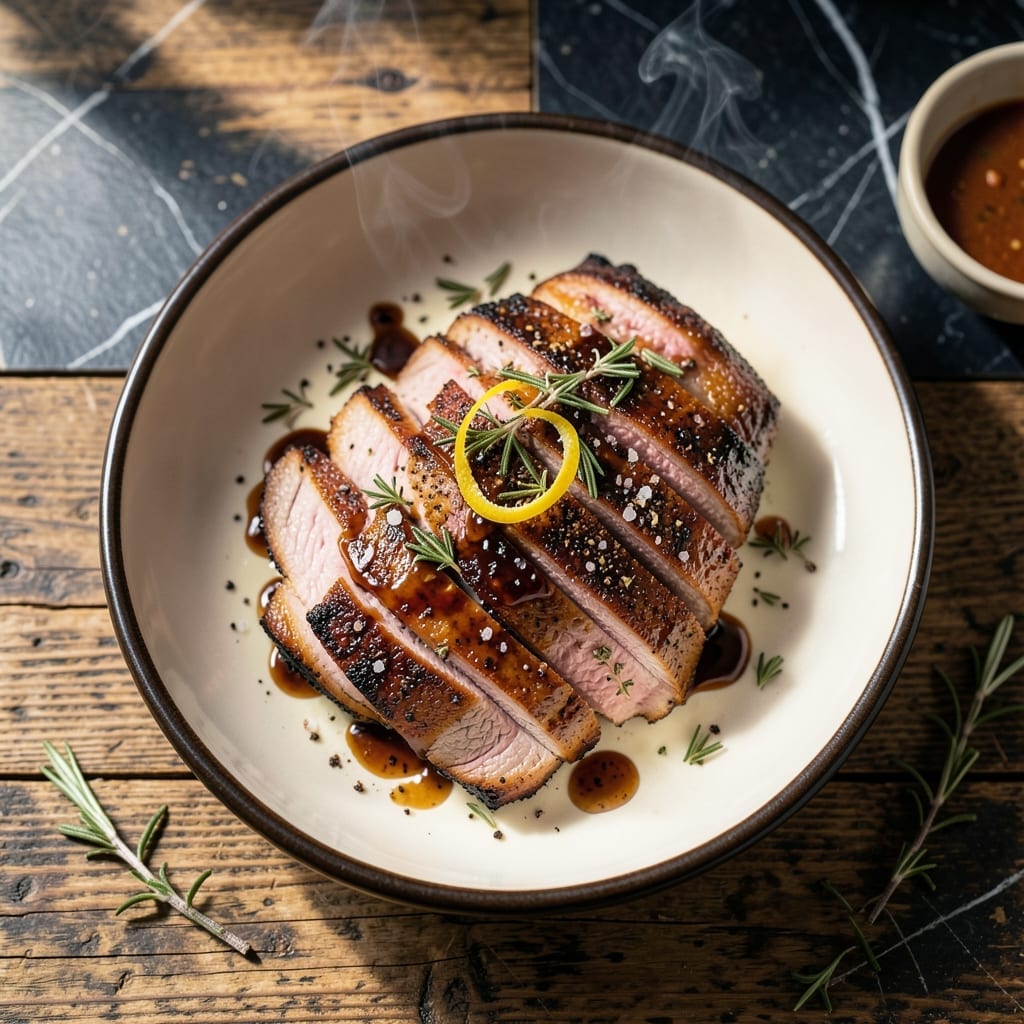
There’s nothing like the aroma of a tender pork loin slowly building its smoky crust over low heat. This method transforms a simple cut into a centerpiece worthy of any gathering.
I developed this approach after years of competing, focusing on balancing smoke penetration with juicy, tender meat. The herb rub creates a flavorful bark that locks in moisture during the long cook.
The result is a roast with a deep mahogany exterior giving way to perfectly tender meat inside. Each slice reveals the smoke ring that signals proper low-and-slow cooking.
Serve this with classic sides for a meal that captures the essence of true barbecue tradition. The technique works for any pork loin size.
Ingredients for Barbecued Pork Loin Roast
A few quality ingredients transform pork loin into a showstopping barbecue centerpiece with deep flavor and smoke-kissed tenderness.
| Ingredient | Amount | Notes |
|---|---|---|
| Pork Loin Roast 🥩 | 3 lb | Boneless, center-cut preferred |
| Kosher Salt 🧂 | 1 ½ tbsp | Diamond Crystal preferred for even seasoning |
| Black Pepper 🌶️ | 1 tbsp | Freshly cracked for robust flavor |
| Garlic Powder 🧄 | 1 tbsp | Not garlic salt for pure flavor |
| Onion Powder 🧅 | 1 tbsp | Granulated for even distribution |
| Smoked Paprika 🌶️ | 1 tbsp | Sweet or hot variety works |
| Dried Rosemary 🌿 | 1 tsp | Crushed to release essential oils |
| Dried Thyme 🍃 | 1 tsp | French or English variety |
| Olive Oil 🫒 | ¼ cup | Extra-virgin for rub binding |
| Apple Cider Vinegar 💧 | 2 tbsp | For tangy bark development |
| Brown Sugar 🍚 | ¼ cup | Light or dark for caramelization |
| Wood Chips 🪵 | 2 cups | Hickory or apple for smoke flavor |
| Beer 🍺 | 1 cup | Dark lager or amber ale preferred |
[recipe_ingredient_scaler]
The pork loin quality is paramount. Optimal results come from center-cut, boneless roasts with even marbling from a trusted butcher or Whole Foods meat counter. The rub spices should be freshly opened—old spices lose their potency. For the wood chips, hickory delivers classic barbecue flavor, while fruit woods like apple or cherry add subtle sweetness. Avoid pre-soaked chips; dry wood creates cleaner smoke.
Need to swap wood chips? Pecan or oak work well (avoid mesquite—too strong). No beer? Use apple cider plus a splash of Worcestershire (check for anchovies if strict vegetarian). Brown sugar can be coconut sugar for depth, or skip entirely for a savory crust. The vinegar is non-negotiable for bark formation—white vinegar in a pinch, but cider vinegar’s fruitiness balances the rub better.
Prepped pork can rest 12-24 hours in the fridge with the rub applied. Cooked roast holds beautifully at 140°F for up to 2 hours before serving. Leftovers keep 4-5 days refrigerated or freeze for 3 months—slice before freezing for easy portioning.
Why You’ll Love This Recipe
- Set It and Forget: I rub the pork loin with salt, pepper, and those powders, then let the oven do the work—no babysitting required.
- Smoky Depth: The garlic and onion powders give it that rich, barbecued flavor without a smoker or hours of tending.
- Feeds a Crowd: One roast makes enough for Sunday dinner, plus leftovers for sandwiches or tacos midweek.
- Budget Hero: Pork loin is lean, affordable, and stretches further than pricier cuts—my wallet loves it.
Step-by-Step Instructions for Barbecued Pork Loin Roast
Master the technique for perfectly tender meat with a deeply flavored smoky crust.
Step 1: Prepare the Herb and Spice Rub
In a bowl, combine the 1.5 tbsp Kosher Salt, 1 tbsp Black Pepper, 1 tbsp Garlic Powder, 1 tbsp Onion Powder, 1 tbsp Smoked Paprika, 1 tsp Dried Rosemary, and 1 tsp Dried Thyme. Crush the rosemary and thyme between your fingers to release their essential oils for maximum flavor impact.
This blend creates a robust dry rub that will form the flavor foundation of your roast. The smoked paprika is particularly crucial—it delivers that signature barbecue depth without overpowering the natural pork flavor. Set the rub aside while you prepare the pork loin roast.
Step 2: Apply Rub and Create a Flavorful Crust
Pat the 3 lb Pork Loin Roast completely dry with paper towels. This ensures the rub adheres properly and promotes better bark formation. Rub the 0.25 cup Olive Oil evenly over all surfaces of the pork, then apply the spice mixture aggressively, pressing it into the meat so it forms a thick, even coating.
In a separate bowl, mix the 0.25 cup Brown Sugar and 2 tbsp Apple Cider Vinegar to create a sticky paste. Spread this mixture over the spice-rubbed pork loin, pressing it into the surface to create a tacky base that will help the smoke adhere during cooking. Let the seasoned roast sit at room temperature for 30 minutes before smoking.
Step 3: Prepare the Smoker and Begin Cooking
Soak the 2 cups Wood Chips in the 1 cup Beer for at least 30 minutes. This not only hydrates the wood for better smoke production but also infuses the chips with subtle malt notes that will complement the pork beautifully. Drain the wood chips and add them to your smoker box or directly to the coals.
Preheat your smoker to 225°F. Place the pork loin roast directly on the grill grates, fat side up. Maintain a consistent temperature throughout the cooking process—this low-and-slow approach is what guarantees tender meat. Smoke the roast undisturbed for 2 hours to allow the flavors to penetrate deeply.
Step 4: Finish and Rest for Optimal Tenderness
After 2 hours, check the internal temperature with a meat thermometer. Continue smoking until the pork reaches 145°F in the thickest part. The exterior should have developed a dark, caramelized crust that gives way to incredibly moist meat beneath.
Remove the pork loin from the smoker and transfer it to a cutting board. Tent loosely with foil and let it rest for 15 minutes—this crucial step allows the juices to redistribute throughout the meat, ensuring every slice is exceptionally tender. The internal temperature will rise to about 150°F during this rest period, perfect for serving.
Pro Tips For Making Barbecued Pork Loin Roast
- Sear First, Smoke Later: Start with a hot sear on all sides of the pork loin to lock in juices, then move to lower, indirect heat for even cooking—I learned this the hard way after serving dry roasts for years.
- Dry the Surface: Pat the pork loin completely dry with paper towels before seasoning; sounds simple, but it makes a real difference in getting that crust to form properly.
- Skip the Overcrowding: If using a grill or smoker, leave space between the pork and any other meats so the heat circulates evenly—my first few attempts were uneven because I jammed everything in.
- Rest Before Slicing: Give it a solid 10-15 minutes under foil after cooking; I used to slice right away and watched all the juices run out onto the cutting board.
Regional Styles of These Flavors
Carolina Vinegar Style
In the Carolinas, they keep it simple with a tangy vinegar-based approach. I use apple cider vinegar in the rub and spritz the roast with a 50/50 mix of vinegar and water every hour during smoking. This method creates a thinner, crispier bark that lets the pork flavor shine. 🌶️
Texas Bold and Spicy
Texas pitmasters love big flavors. I add 1 tbsp cayenne pepper and 1 tbsp chili powder to the rub for heat. Use pecan wood for a rich, nutty smoke that complements the spice. The result is a roast with serious kick and deep color.
Memphis Dry Rub
Memphis is known for its dry rubs. I increase the brown sugar to ½ cup and add 1 tbsp mustard powder for a sweeter, more complex crust. The sugar caramelizes beautifully during the long cook, creating a sticky, flavorful bark.
Kansas City Sweet
For a Kansas City twist, I brush the roast with a thin layer of BBQ sauce during the last 30 minutes of cooking. Use a sauce with molasses for deep sweetness. This creates a glossy, sticky exterior that’s finger-licking good.
Alabama White Sauce
Alabama does things differently with its signature white sauce. After smoking, I serve slices with a side of sauce made from mayonnaise, apple cider vinegar, and horseradish. The tangy, creamy sauce pairs perfectly with the smoky pork.
Coastal Herb Infusion
Living near the coast, I often add 1 tbsp dried sage and 1 tbsp dried oregano to the rub for an herbal note. I also like to toss a few fresh rosemary sprigs directly on the coals for aromatic smoke. This gives the roast a bright, complex flavor. 💛
Nutrition Facts
Frequently Asked Questions
What’s the ideal internal temperature for this cut?
Pull it from the smoker at 145°F. The temp will rise to 150°F during the 15-minute rest, giving you perfect doneness.
Can I use an oven instead of a smoker?
Yes! Roast at 225°F on a wire rack over a pan with 1 cup water and 1 tbsp liquid smoke. Add wood chips to a foil packet for extra flavor.
How do I prevent dry meat?
Don’t overcook—use a thermometer. Spritz with apple cider vinegar every 45 minutes and rest properly before slicing.
Which wood gives the best flavor?
Hickory offers classic boldness, while apple or cherry add subtle sweetness. Avoid mesquite—it can overpower.

Trained in classic French technique but raised on slow-cooked ribs and spicy rubs, she blends culinary skill with smoke and soul.
- Recipe for Boneless Pork Chops in Cast Iron Skillet: Sear and Baste to Juicy Perfection - October 3, 2026
- Recipe for Boneless Cross Rib Roast: Slow-Roasted Beef with Herb Crust - October 3, 2026
- Hamburgers in Sauce Recipe Crock Pot: Slow-Cooked Savory Delight - October 3, 2026