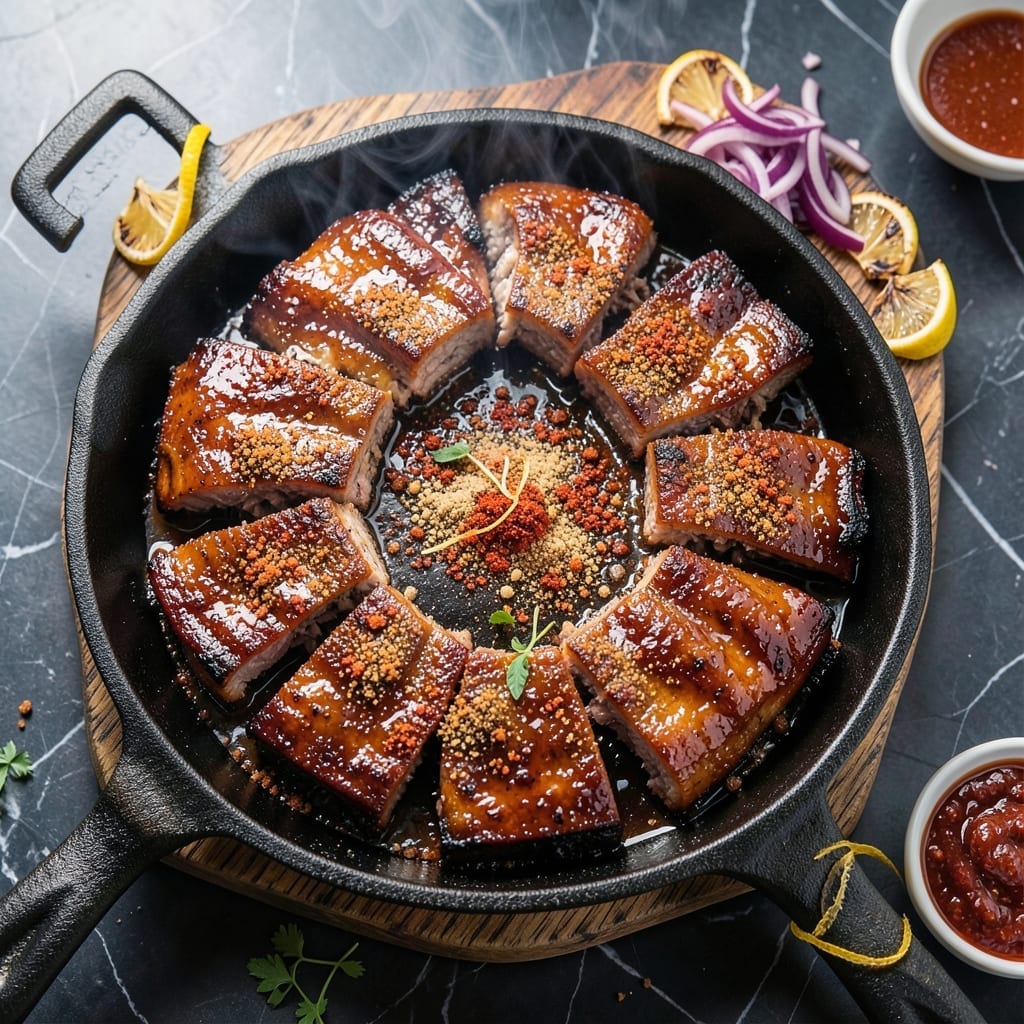
Getting my first whiff of hickory smoke at my family backyard cookout still makes my mouth water. This method delivers fall-off-the-bone ribs with a sticky glaze that caramelizes perfectly over low, steady heat.
The secret is patience. A slow-smoked process at 225°F for 5-6 hours lets the rub penetrate deeply while the wood chips add that signature smoky depth I grew up loving.
French technique meets pitmaster tradition here. The glaze, brushed on during the final hour, creates a glossy finish that seals in moisture while adding layers of sweet and tangy flavor.
These ribs need no sauce. The bark forms a perfect crust, and the meat inside stays tender and juicy. Serve with cornbread and pickles for the full experience.
Ingredients for Barbecued Pork Spare Ribs
Pantry staples and a trip to the butcher. That’s the secret to perfect ribs every time.
| Ingredient | Amount | Notes |
|---|---|---|
| Pork Spare Ribs 🥩 | 3 lb | Full rack, membrane removed |
| Hickory Wood Chips 🪵 | 2 cups | Soaked for 30 minutes |
| Brown Sugar 🍚 | ½ cup | Light or dark variety |
| Paprika 🌶️ | 2 tbsp | Smoked or sweet variety |
| Garlic Powder 🧄 | 1 tbsp | Freshly ground if possible |
| Onion Powder 🧅 | 1 tbsp | Fine grain preferred |
| Kosher Salt 🧂 | 1 tbsp | Diamond Crystal preferred |
| Black Pepper 🌶️ | 1 tbsp | Coarsely ground for bark |
| Cayenne Pepper 🔥 | ½ tsp | Adjust for heat preference |
| Apple Cider Vinegar 🍏 | ½ cup | For tangy balance |
| Honey 🍯 | ¼ cup | Local variety preferred |
| Tomato Paste 🍅 | 2 tbsp | Double-concentrated preferred |
| Worcestershire Sauce 🫒 | 1 tbsp | Anchovy-free if preferred |
| Dijon Mustard 🟡 | 1 tbsp | Smooth texture preferred |
[recipe_ingredient_scaler]
The ribs are the star—look for full racks with good marbling at your local butcher or Costco. Ask them to remove the membrane if you’re not comfortable doing it yourself (it peels off in one sheet with a paper towel). Hickory wood chips are non-negotiable for that classic smoke flavor. Lumberjack or Western brands are reliable. Soak them for 30 minutes before use—they’ll smoke, not burn.
No hickory? Apple or cherry wood gives a sweeter, milder smoke. Swap brown sugar for maple syrup if you want a deeper flavor. Out of Worcestershire? Soy sauce plus a dash of vinegar gets you close. The tomato paste can be skipped, but it adds that rich, umami depth to the glaze. If you’re avoiding anchovies in Worcestershire, Annie’s or Edward & Sons make anchovy-free versions.
Ribs taste best the day they’re smoked, but leftovers keep surprisingly well. Wrap them tightly in foil—good for 3-4 days in the fridge, 3 months frozen. Reheat in a low oven with a splash of apple juice to keep them moist.
Why You’ll Love This Recipe
- Set and Forget: The ribs just need time in the smoker with hickory chips—I can prep the rub in 5 minutes and let the grill do the rest.
- Smoky Sweet Crust: That brown sugar and paprika rub caramelizes into a sticky, finger-licking glaze over the pork.
- Crowd Pleaser: I’ve served these at summer barbecues and casual Sunday dinners, and they disappear every time.
- Leftovers for Days: Honestly, they taste even better the next day—pile them on sandwiches or reheat for an easy meal.
Step-by-Step Instructions for Slow-Smoked Pork Spare Ribs
Here’s the method I use to achieve fall-off-the-bone ribs with a sticky, caramelized glaze.
Step 1: Prep the Ribs and Apply the Dry Rub
First, pat the 3 lb Pork Spare Ribs dry with paper towels to remove excess moisture. This helps the rub adhere better. In a bowl, mix together 0.5 cup Brown Sugar, 2 tbsp Paprika, 1 tbsp Garlic Powder, 1 tbsp Onion Powder, 1 tbsp Kosher Salt, 1 tbsp Black Pepper, and 0.5 tsp Cayenne Pepper.
Generously coat every surface of the ribs with this mixture, pressing it in so it forms a crust. I always let the ribs sit with the rub for at least 30 minutes to allow the flavors to penetrate. Meanwhile, soak the 2 cups Hickory Wood Chips in water to prevent them from burning too quickly in the smoker.
Step 2: Smoke the Ribs Low and Slow
Preheat your smoker to 225°F. Once it reaches temperature, add the soaked hickory wood chips for a steady stream of smoke. Place the ribs bone-side down on the smoker grate, ensuring there’s space between racks for air circulation.
Smoke the ribs for 3-4 hours until they develop a deep mahogany bark. Spritz them with a little apple cider vinegar halfway through to add tang and keep the surface moist. Avoid lifting the lid too often—this maintains a consistent temperature and smoke level.
Step 3: Wrap and Tenderize
After the ribs have developed a good bark, transfer them to a large sheet of heavy-duty foil. Pour 0.5 cup Apple Cider Vinegar and 0.25 cup Honey over the meat, then tightly wrap the ribs. This step, called the “Texas crutch,” speeds up cooking and locks in moisture.
Return the wrapped ribs to the smoker and continue cooking for another 1.5-2 hours until the meat is tender enough to pull back from the bone about ¼ inch when probed. This is the perfect texture for competition-style ribs.
Step 4: Glaze and Finish
In a saucepan, combine 2 tbsp Tomato Paste, 1 tbsp Worcestershire Sauce, and 1 tbsp Dijon Mustard. Simmer for 5 minutes until thickened into a glossy glaze. Unwrap the ribs, brush them generously with this mixture, and return them to the smoker uncovered.
Let them smoke for an additional 30-45 minutes until the glaze caramelizes into a sticky, glossy finish. The ribs should be tender but not falling apart, with a beautiful sheen that makes them irresistible.
Pro Tips For Making Barbecued Pork Spare Ribs
- Pre-Cook the Ribs: Parboil the spare ribs for 10-15 minutes before grilling to render excess fat and shorten cooking time—this prevents chewy meat and helps the rub cling better.
- Soak the Wood: Submerge hickory chips in water for at least 30 minutes before using; wet wood smolders and produces clean smoke instead of harsh, bitter flames.
- Skip the Rush: I learned this the hard way—low and slow (225°F–250°F) for 4–5 hours is non-negotiable for fall-off-the-bone tenderness; cranking the heat just dries them out.
- Rest Before Serving: Pull the ribs off when they hit 195°F internal temp, wrap them in foil, and give them a solid 20 minutes to reabsorb juices—cutting too soon sends all the moisture running.
Storing and Reheating This Dish
Refrigerator Storage
Let your ribs cool at room temperature for no more than 2 hours, then wrap them tightly in heavy-duty foil or transfer to an airtight container. They’ll keep in the fridge at 40°F or below for up to 4 days. I always add a splash of apple juice to keep them moist. ❄️
Freezer Storage
For longer storage, freeze your ribs for up to 3 months without quality loss. I recommend vacuum-sealing or using freezer-grade zipper bags with all air pressed out. Label with the date so you can track freshness.
Oven Reheating
Preheat your oven to 275°F. Wrap ribs in foil with 2 tbsp apple juice, then warm for 20-30 minutes. This method restores that just-smoked tenderness. Unwrap and brush with extra glaze for the last 5 minutes if desired. 🔥
Grill Reheating
For that fresh-off-the-smoker taste, reheat on your grill over indirect heat for 10-15 minutes. Keep the ribs wrapped in foil and add a few wood chips to your grill for extra smoke flavor.
Microwave Quick Fix
Place ribs on a microwave-safe plate, cover with a damp paper towel, and heat on 50% power for 1-2 minutes. Check and repeat in 30-second intervals until reaching 165°F. This works in a pinch but lacks the caramelized texture.
Nutrition Facts
Frequently Asked Questions
Should I remove the membrane before cooking?
The membrane prevents rub and smoke from penetrating the meat. Slide a butter knife under it, lift, then pull it off in one sheet with a paper towel for grip.
Can I use baby back ribs instead?
Yes, but adjust cooking time to 2-2.5 hours unwrapped and 1-1.5 hours wrapped. Baby backs cook faster due to their smaller size and leanness.
Why did my ribs turn out tough?
Likely undercooked or temperature too high. Maintain 225°F and smoke until meat pulls back from bones. The Texas crutch step is key for tenderness.
How do I know when they’re done?
Use the bend test: pick up with tongs—ribs should bend and crack slightly. Internal temp should read 195-203°F in the thickest part.

Trained in classic French technique but raised on slow-cooked ribs and spicy rubs, she blends culinary skill with smoke and soul.
- Recipe for Boneless Pork Chops in Cast Iron Skillet: Sear and Baste to Juicy Perfection - October 3, 2026
- Recipe for Boneless Cross Rib Roast: Slow-Roasted Beef with Herb Crust - October 3, 2026
- Hamburgers in Sauce Recipe Crock Pot: Slow-Cooked Savory Delight - October 3, 2026