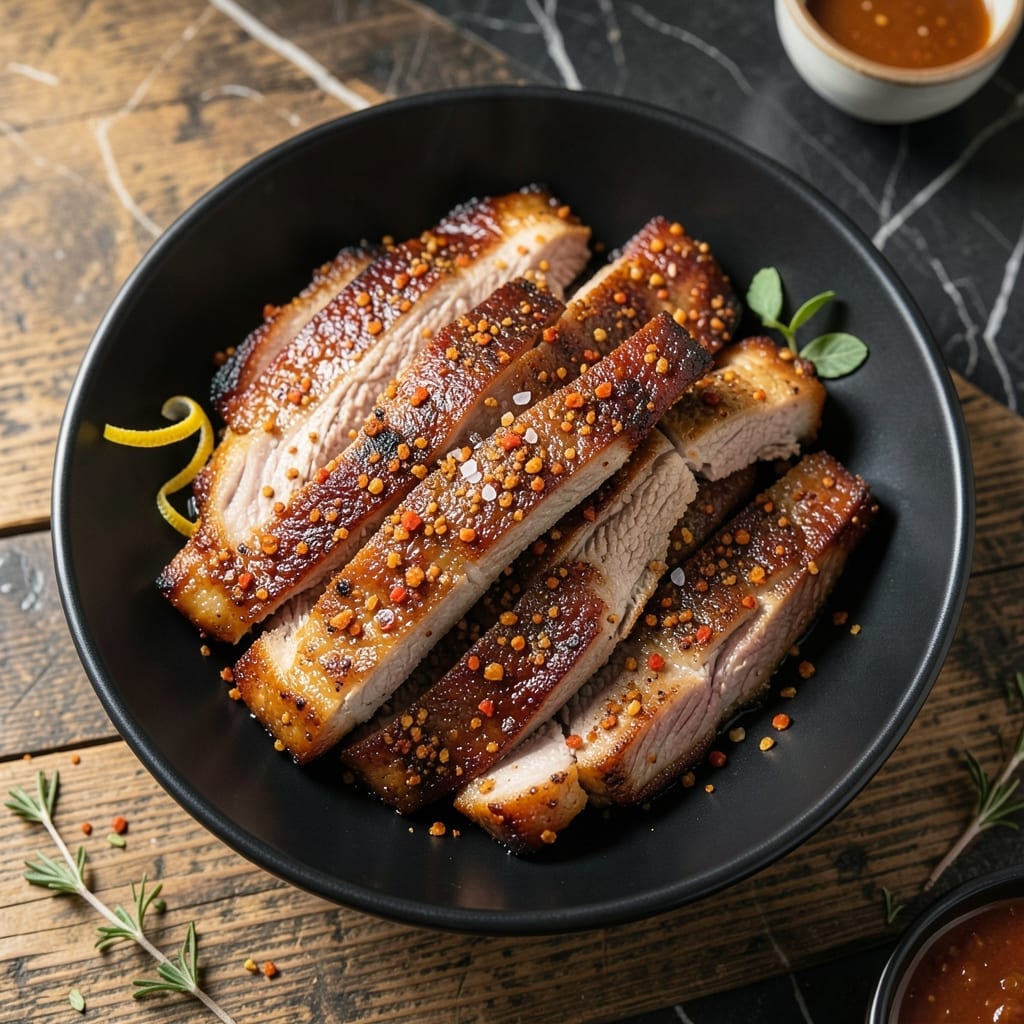
There’s nothing like the aroma of hickory smoke mingling with caramelizing pork to signal a true barbecue experience. My approach combines classic pitmaster techniques with a touch of French precision for tender, flavor-packed results every time.
These strips get their signature character from a balanced dry rub and careful attention to grilling temperatures. The key is achieving those charred edges while keeping the meat juicy inside—a skill I perfected over years of competition cooking.
What emerges from the grill are beautiful, glossy strips with smoky depth and just the right amount of sweetness. The texture contrasts between the crispy exterior and succulent interior make each bite memorable.
Serve with traditional sides or let them shine as the star of your next cookout. This method never fails to impress.
Ingredients for Barbecued Pork Strips
These flavor-packed ingredients deliver smoky, charred perfection with every bite.
| Ingredient | Amount | Notes |
|---|---|---|
| Pork Shoulder 🐖 | 2 lb | Boneless, cut into strips |
| Brown Sugar 🍚 | ½ cup | Light or dark variety |
| Paprika 🌶️ | 2 tbsp | Smoked paprika preferred |
| Garlic Powder 🧄 | 1 tbsp | Freshly ground if possible |
| Onion Powder 🧅 | 1 tbsp | For depth of flavor |
| Kosher Salt 🧂 | 1 ½ tbsp | Diamond Crystal preferred |
| Black Pepper 🌶️ | 1 tbsp | Freshly ground for best results |
| Cayenne Pepper 🔥 | ½ tsp | Adjust for heat preference |
| Barbecue Sauce 🍯 | 1 ½ cups | Hickory-smoked variety recommended |
| Olive Oil 🫒 | 2 tbsp | For brushing strips |
| Apple Cider Vinegar 🍏 | 1 tbsp | For acidity balance |
| Hickory Wood Chips 🪵 | 1 cup | Soaked for 30 minutes |
| Yellow Mustard 🟡 | 1 tbsp | For binding rub |
[recipe_ingredient_scaler]
The pork shoulder is non-negotiable here—boneless, well-marbled cuts from Whole Foods or a trusted butcher give you that melt-in-your-mouth texture. Ask for the blade end if possible; it’s got more fat and flavor. For the dry rub, smoked paprika is key (I use Penzeys when I can get it). The hickory wood chips? Western BBQ brand at Home Depot works great—just soak them first.
No pork shoulder? Pork loin works in a pinch, but it’s leaner so watch the cooking time. Swap brown sugar for honey if you prefer, though the molasses notes in brown sugar add depth. Out of smoked paprika? Regular paprika plus a pinch of liquid smoke gets you close. The barbecue sauce can be store-bought (Stubb’s Original is my go-to), but homemade takes it next-level.
Rub the strips and let them sit for at least 1 hour (overnight is even better). Cooked pork keeps 4-5 days in the fridge, freezes for 3 months. Pro tip: save leftover dry rub in a jar—it’s perfect for next time (or sprinkle on roasted veggies).
Why You’ll Love This Recipe
- One Pan Wonder: I toss the pork shoulder with the spices, pop it in the oven, and let the brown sugar caramelize—no babysitting required.
- Sweet & Smoky: That mix of brown sugar, paprika, and garlic powder gives it this sticky, finger-licking glaze that’s honestly hard to resist.
- Feeds a Crowd: Between us, I double the batch for Sunday dinner and still have leftovers for tacos or rice bowls all week.
- Budget Winner: Pork shoulder is cheap, and a little goes a long way—this recipe stretches my grocery dollars without skimping on flavor.
Step-by-Step Instructions for Barbecued Pork Strips
Here’s my tested method for achieving perfectly charred, smoky-sweet strips with tender interiors.
Step 1: Prepare the Dry Rub and Season the Pork
In a small bowl, combine the 0.5 cup Brown Sugar, 2 tbsp Paprika, 1 tbsp Garlic Powder, 1 tbsp Onion Powder, 1.5 tbsp Kosher Salt, 1 tbsp Black Pepper, and 0.5 tsp Cayenne Pepper. This blend creates a balanced sweet-spicy crust that caramelizes beautifully on the grill.
Pat the 2 lb Pork Shoulder strips dry with paper towels, then brush them lightly with the 1 tbsp Yellow Mustard—this helps the rub adhere. Massage the rub mixture evenly over all surfaces of the pork, pressing gently to ensure full coverage. Let the seasoned strips sit at room temperature for 20-30 minutes while you prepare the grill.
Step 2: Set Up the Grill for Indirect Heat
Soak the 1 cup Hickory Wood Chips in water for 30 minutes, then drain. If using a charcoal grill, push coals to one side to create a hot zone and a cooler zone. For gas grills, preheat all burners to medium-high (375-400°F), then turn off one burner to create indirect heat.
Add the soaked wood chips directly to the coals or place them in a smoker box for gas grills. You want steady, aromatic smoke—not billowing white smoke, which can impart a bitter flavor. Close the lid and let the temperature stabilize before adding the pork.
Step 3: Smoke and Char the Pork Strips
Place the pork strips over the indirect heat side of the grill. Cover and cook for 1 hour, flipping once halfway through. This slow cooking phase allows the smoke to penetrate deeply while the rub forms a flavorful bark.
After the initial smoke, move the strips to the direct heat side. Brush each side generously with some of the 1.5 cups Barbecue Sauce and sear for 2-3 minutes per side until you achieve charred edges and the internal temperature reaches 195°F. The sugar in the rub and sauce will caramelize, creating a sticky, glazy finish.
Step 4: Finish with Sauce and Rest
Transfer the strips to a clean cutting board. While still hot, brush with the remaining barbecue sauce mixed with the 1 tbsp Apple Cider Vinegar—this adds a bright contrast to the rich, smoky flavors. The vinegar also helps balance the sweetness of the sauce and rub.
Loosely tent the strips with foil and let them rest for 10 minutes. This resting period allows the juices to redistribute, ensuring each bite is moist and flavorful. Slice against the grain if desired, or serve whole for a rustic presentation.
Pro Tips For Making Barbecued Pork Strips
- Slice Against Grain: Cut the pork shoulder into strips against the grain after cooking—this makes them tender and easier to chew. I learned this the hard way after serving tough strips to guests.
- Brown the Sugar: Toast the brown sugar with the spices for 1-2 minutes in the pan before adding pork—it deepens the flavor and prevents a raw, gritty texture.
- Skip the Rush: Resist the urge to crank the heat too high. Pork shoulder needs low and slow (around 275°F) to break down properly without drying out.
- Rest Before Serving: Let the strips rest under foil for 5-10 minutes after cooking—this keeps the juices inside instead of all over the cutting board. Sounds weird, but it works.
Pro Cooking Tips for Perfect Results
Master the Two-Zone Fire
Set up your grill with indirect heat on one side and direct heat on the other. I use 375-400°F for the hot zone to get those perfect char marks. This setup gives you the control to smoke low and slow, then sear for that caramelized crust. 🔥
Perfect Your Smoke
Soak hickory wood chips for 30 minutes before adding to the fire. You want thin, blue smoke—not thick white smoke, which tastes bitter. I use Western BBQ brand chips from the hardware store.
Nail the Internal Temp
Cook the strips over indirect heat until they hit 195°F internal temperature. This ensures the collagen breaks down for that fall-apart tenderness. A ThermoWorks instant-read thermometer is my go-to for accuracy.
Sauce at the Right Time
Only brush on the barbecue sauce during the final 2-3 minutes over direct heat. This prevents burning while still creating that sticky, glossy finish. I always add a splash of apple cider vinegar for brightness.
Rest for Juiciness
Let the strips rest for 10 minutes after grilling. This step is non-negotiable—it allows the juices to redistribute. Tent loosely with foil to keep them warm while they relax.
Slice with Purpose
Cut against the grain for maximum tenderness. I use a 12-inch chef’s knife for clean slices. For rustic presentation, serve whole and let guests tear into them. 💪
Nutrition Facts
Frequently Asked Questions
What cut works best if pork shoulder isn’t available?
Pork loin can substitute, but it’s leaner so reduce cooking time. Watch for 160°F internal temp to avoid dryness.
How do I prevent the sauce from burning?
Apply sauce only during the final 2-3 minutes over direct heat. Keep the grill at medium-high for even caramelization.
Can I use a gas grill instead of charcoal?
Yes! Use a smoker box with soaked hickory chips and maintain 375-400°F for similar results.
Why rest the pork before serving?
Resting for 10 minutes lets juices redistribute, ensuring moist, tender meat in every bite.

Trained in classic French technique but raised on slow-cooked ribs and spicy rubs, she blends culinary skill with smoke and soul.
- Recipe for Boneless Pork Chops in Cast Iron Skillet: Sear and Baste to Juicy Perfection - October 3, 2026
- Recipe for Boneless Cross Rib Roast: Slow-Roasted Beef with Herb Crust - October 3, 2026
- Hamburgers in Sauce Recipe Crock Pot: Slow-Cooked Savory Delight - October 3, 2026