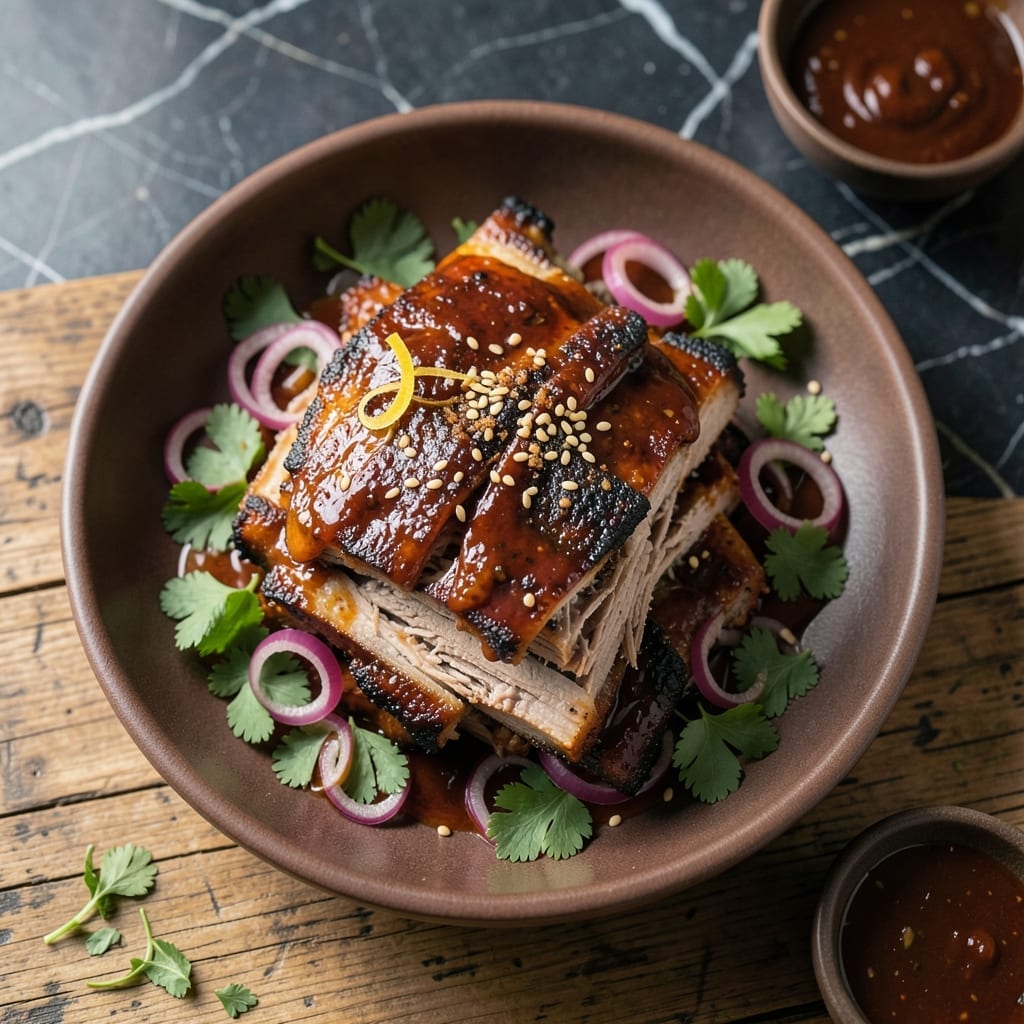
Few things compare to the aroma of hickory smoke slowly transforming pork shoulder into tender, juicy perfection. This method has been my signature at local BBQ competitions, delivering results that speak for themselves.
The key lies in patience—low heat and slow smoking allow the collagen to break down into that signature pull-apart texture. A well-balanced dry rub adds depth without overpowering the natural pork flavor.
What emerges after hours of careful smoking is meat so tender it nearly dissolves at the touch of a fork. The bark forms a flavorful crust that gives way to moist, smoky layers beneath.
Serve on soft buns with tangy coleslaw for the complete experience. The process demands time but rewards with restaurant-quality results.
Ingredients for Barbecued Pulled Pork
Slow-smoked pork shoulder with bold spices and tangy sauce delivers competition-worthy results.
| Ingredient | Amount | Notes |
|---|---|---|
| Pork Shoulder 🥩 | 4 lb | Bone-in, well-marbled preferred |
| Hickory Wood Chips 🪵 | 2 cups | Soaked in water for 30 minutes |
| Brown Sugar 🍚 | ½ cup | Light or dark variety |
| Paprika 🌶️ | 2 tbsp | Smoked or sweet variety |
| Garlic Powder 🧄 | 1 tbsp | Freshly ground preferred |
| Onion Powder 🧅 | 1 tbsp | Fine grain for even distribution |
| Ground Black Pepper 🌶️ | 1 tbsp | Coarse grind for texture |
| Sea Salt 🧂 | 1 tbsp | Kosher or flaky variety |
| Cayenne Pepper 🔥 | ½ tsp | Adjust for heat preference |
| Apple Cider Vinegar 🍏 | ½ cup | For mopping sauce |
| Barbecue Sauce 🍯 | 2 cups | Low-sugar or homemade preferred |
| Yellow Mustard 🟡 | 2 tbsp | For binder in dry rub |
| Soft Hamburger Buns 🍔 | 6 pieces | Lightly toasted for serving |
| Coleslaw Mix 🥬 | 4 cups | Pre-shredded for convenience |
[recipe_ingredient_scaler]
The pork shoulder is non-negotiable for authentic texture. Bone-in, well-marbled cuts from Costco or a local butcher yield superior results—avoid pre-trimmed lean cuts. Hickory wood chips (soaked for 30 minutes) provide the signature smoke flavor. Stubb’s or Weber brands offer consistent quality for wood chips. The dry rub spices should be freshly ground when possible, as pre-ground spices lose potency over time.
No hickory chips? Apple or cherry wood provide milder, fruity smoke. Substitute white sugar for brown in a pinch (the molasses difference is subtle). For the barbecue sauce, Sweet Baby Ray’s or Stubb’s Original balance sweetness and tang. The coleslaw can be store-bought (check Whole Foods for quality pre-made), but homemade with apple cider vinegar and a touch of the dry rub elevates the dish.
Pork shoulder keeps in the fridge for 3-4 days before cooking. Store wood chips in a sealed container to maintain freshness. Once cooked, pulled pork stays fresh for 5 days refrigerated or 3 months frozen. Reheat gently with extra barbecue sauce to maintain moisture.
Why You’ll Love This Recipe
- Set It and Forget It: Honestly, the pork shoulder practically cooks itself in the smoker while I sip iced tea on the porch.
- Smoky Sweet Perfection: The hickory chips and brown sugar rub create that sticky, caramelized bark I crave.
- Meal Prep MVP: I make a huge batch Sunday and turn it into tacos, sandwiches, and quesadillas all week.
- Budget Crowd-Pleaser: Pork shoulder is cheap, feeds an army, and still tastes like I slaved for hours.
Step-by-Step Instructions for Barbecued Pulled Pork
Master the low-and-slow technique that transforms pork shoulder into tender, smoky perfection.
Step 1: Prepare the Dry Rub and Season the Pork Shoulder
In a small bowl, combine the 0.5 cup brown sugar, 2 tbsp paprika, 1 tbsp garlic powder, 1 tbsp onion powder, 1 tbsp ground black pepper, 1 tbsp sea salt, and 0.5 tsp cayenne pepper. Stir in the 2 tbsp yellow mustard to create a thick paste—this binds the rub to the meat while adding a subtle tang.
Pat the 4 lb pork shoulder dry with paper towels to ensure the rub adheres properly. Massage the paste evenly over all surfaces, pressing firmly so it forms a crust. This layer not only seasons the meat but creates a flavorful bark during smoking. Let the seasoned pork sit at room temperature for 30 minutes while you prepare the smoker.
Step 2: Set Up the Smoker and Begin the Cook
Soak the 2 cups hickory wood chips in water for 30 minutes, then drain. Fill your smoker’s water pan with hot water to maintain moisture during the long cook. Preheat the smoker to 225°F using indirect heat—this low temperature ensures the pork cooks slowly without drying out.
Once the smoker stabilizes at 225°F, add the soaked wood chips to the coals or smoker box. Place the pork shoulder fat-side up on the grate, as far from the heat source as possible. Close the lid and maintain the temperature between 225°F and 250°F for the duration of the cook. Resist the urge to peek; every time you open the lid, you lose heat and extend the cooking time.
Step 3: Smoke and Mop for Maximum Flavor
Smoke the pork undisturbed for 4-5 hours until the internal temperature reaches 160°F. At this point, the pork will begin to develop a dark, flavorful bark. Mix the 0.5 cup apple cider vinegar with an equal amount of water to create a mopping sauce. Every 45-60 minutes, lightly mop the pork with the vinegar mixture to keep the surface moist and enhance the bark’s depth of flavor.
Continue smoking until the pork reaches an internal temperature of 195-203°F—this is the sweet spot where the collagen breaks down into gelatin, making the meat fork-tender. The process typically takes 8-10 hours total, depending on the size of the shoulder and your smoker’s consistency.
Step 4: Rest, Shred, and Sauce the Pork
Once the pork reaches the target temperature, transfer it to a large cutting board or pan. Tent it loosely with foil and let it rest for 30-60 minutes. This resting period allows the juices to redistribute, ensuring the meat stays moist when shredded. Use two forks to pull the pork apart into bite-sized strands, discarding any large fat chunks.
In a large bowl, combine the shredded pork with 2 cups barbecue sauce. Toss gently until the meat is evenly coated. For the best texture, let the sauced pork sit for 10-15 minutes to absorb the flavors. Serve the pulled pork on the 6 pieces soft hamburger buns, topped with 4 cups coleslaw mix for a classic barbecue experience.
Pro Tips For Making Barbecued Pulled Pork
- Dry the Shoulder: Pat the pork shoulder completely dry with paper towels before applying the rub—this helps the brown sugar and paprika form a better bark.
- Low and Slow: Keep your smoker or grill between 225-250°F and resist the urge to rush it; pulled pork needs 8-12 hours to become tender.
- Skip the Water Pan: I learned this the hard way—using a water pan in the smoker can steam the pork instead of letting it develop that smoky crust.
- Rest Before Pulling: After cooking, wrap the pork in foil and let it rest for at least 30 minutes—this makes it easier to shred and keeps it juicy.
Creative Variations of This Recipe
Carolina Vinegar Style
Skip the sweet barbecue sauce and embrace Eastern North Carolina’s tangy tradition. After pulling, toss the pork with 1 cup apple cider vinegar, 2 tbsp brown sugar, 1 tbsp crushed red pepper, and 1 tbsp sea salt. The result is bright, acidic, and perfect on a bun with extra coleslaw. 🌶️
Texas Sweet Heat
Add ¼ cup molasses and 1 tbsp chipotle powder to your dry rub for a Lone Star twist. When saucing, mix 1 cup barbecue sauce with 2 tbsp honey and 1 tsp cayenne. I learned this at a coastal BBQ competition—it won second place.
Asian-Inspired Fusion
Swap the dry rub for 2 tbsp gochujang, 1 tbsp soy sauce, and 1 tbsp grated ginger. After smoking, shred and toss with ½ cup hoisin sauce and 2 tbsp rice vinegar. Serve on brioche buns with pickled cucumbers and cilantro. 💛
Coffee-Rubbed Depth
Add 2 tbsp finely ground coffee and 1 tbsp cocoa powder to your dry rub. The coffee enhances the smoky notes while the cocoa adds richness. I forage wild herbs sometimes, but this blend is my go-to for depth.
Memphis Dry Rub
Omit the barbecue sauce entirely and increase the dry rub by 50%. After shredding, sprinkle with additional rub and serve with pickles and white bread. This style lets the bark shine. The first time I tried it, the bark reminded me of my family’s backyard cookouts.
Nutrition Facts
Frequently Asked Questions
What’s the ideal smoking temperature?
Maintain 225°F to 250°F for perfect low-and-slow cooking. This range breaks down collagen without drying the meat.
How do I know when it’s done?
Use a meat thermometer—it’s ready at 195-203°F internal temp. The pork should pull apart easily with forks.
Can I use an oven instead of a smoker?
Yes! Roast at 275°F in a covered pan with 1 cup liquid (broth or apple juice) for 6-8 hours. Add liquid smoke for that signature flavor.
Why did my pork turn out dry?
Likely cooked too hot or not rested enough. Always maintain low heat and let it rest 30-60 minutes after smoking.

Trained in classic French technique but raised on slow-cooked ribs and spicy rubs, she blends culinary skill with smoke and soul.
- Recipe for Boneless Pork Chops in Cast Iron Skillet: Sear and Baste to Juicy Perfection - October 3, 2026
- Recipe for Boneless Cross Rib Roast: Slow-Roasted Beef with Herb Crust - October 3, 2026
- Hamburgers in Sauce Recipe Crock Pot: Slow-Cooked Savory Delight - October 3, 2026