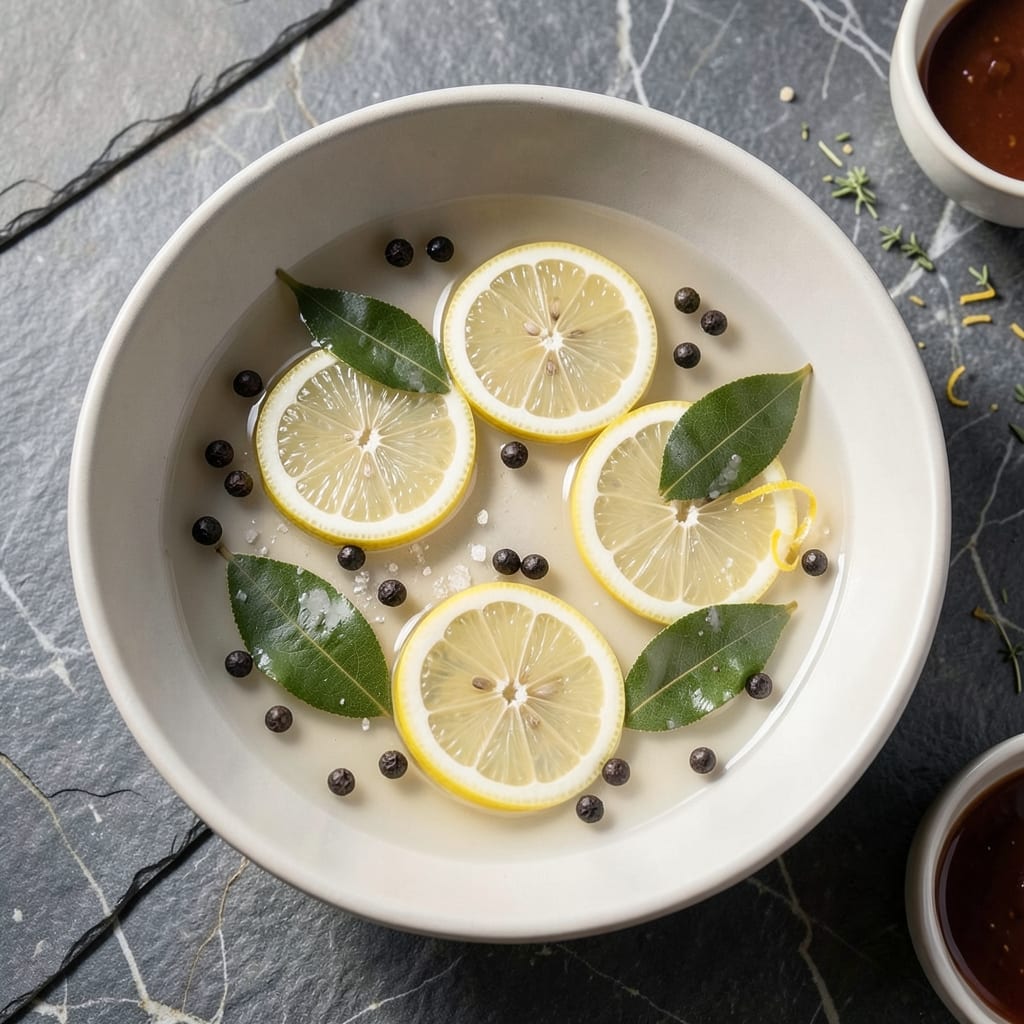
This simple brine solution transforms any fish into a moist, flavorful masterpiece with minimal effort. The science is straightforward: salt water alters protein structure to retain natural juices during cooking.
With just salt, water, and optional aromatics, you create a versatile base that enhances without overpowering. The ratio is precise yet adaptable to different fish types and cooking methods.
Whether grilling, baking, or frying, this preparation ensures your catch stays succulent. A 15-minute soak is often all it takes to make a noticeable difference.
Store unused brine in the refrigerator for up to 3 days, or prepare fresh for each use. The results speak for themselves.
Ingredients for Basic Fish Brine
Cold water, salt, sugar, and aromatics create this flavor-boosting liquid.
| Ingredient | Amount | Notes |
|---|---|---|
| Water 💧 | 4 cups | Cold, filtered preferred |
| Kosher Salt 🧂 | ½ cup | Diamond Crystal brand recommended |
| Granulated Sugar 🍚 | ¼ cup | Balances saltiness |
| Bay Leaves 🍃 | 2 whole | Dried, whole leaves |
| Black Peppercorns 🌶️ | 1 tbsp | Lightly crushed |
| Lemon Slices 🍋 | 2 slices | Thin, with rind |
| Fresh Dill Sprigs 🌿 | 3 pieces | Optional, for aroma |
| Garlic Cloves 🧄 | 4 cloves | Smashed, peeled |
[recipe_ingredient_scaler]
The salt is the engine here. Diamond Crystal kosher salt dissolves cleanly and gives consistent results—table salt will make it way too harsh (use half the amount if that’s all you’ve got). Cold water is key; warm water starts cooking the fish surface. I grab my bay leaves and peppercorns from Whole Foods bulk section—they’re cheaper and you can get exactly what you need.
No kosher salt? Sea salt works too but taste as you go—brands vary wildly in intensity. Skip the sugar if you’re brining oily fish like salmon or mackerel. Fresh herbs like thyme or parsley can swap in for dill, and dried herbs at one-third the amount are fine in a pinch. If you’ve got lemon juice, a splash adds brightness without the slices.
Brine keeps in the fridge for 3 days max—after that, the flavors dull and it’s best to start fresh. For longer storage, freeze the brine in ice cube trays and thaw as needed. Always chill completely before using on fish (warm brine = sad, mushy fish).
Why You’ll Love This Recipe
- 5-Minute Mix: I just stir water, salt, sugar, and spices in a pot—no fancy steps, no stress.
- Bright, Balanced Taste: The sugar and salt pull out the fish’s natural sweetness, while bay and peppercorns add a subtle depth I crave.
- Freezer to Table: Brine a batch of fillets on Sunday, freeze, and pull out for a quick weeknight dinner (yes, even on a Tuesday night).
- Penny-Pincher Approved: Kosher salt and a handful of pantry staples transform affordable fish into something restaurant-worthy.
Step-by-Step Instructions for Basic Fish Brine
Here’s the method I use to guarantee juicy, flavorful fish that never dries out.
Step 1: Dissolve Salt and Sugar in Cold Water
In a large bowl or container, combine the 4 cups Water with 0.5 cup Kosher Salt and 0.25 cup Granulated Sugar. Stir vigorously until both are completely dissolved—this usually takes 1-2 minutes of steady mixing.
I always use cold water here because it absorbs into the fish more effectively without starting the cooking process. The sugar balances the salt’s intensity, ensuring your brine enhances flavor rather than overpowering it.
Step 2: Infuse the Brine with Aromatics
Add the 2 whole Bay Leaves, 1 tbsp Black Peppercorns, 2 slices Lemon Slices, 3 pieces Fresh Dill Sprigs, and 4 cloves Garlic Cloves to the saltwater mixture. Lightly crush the peppercorns with the flat side of your knife before adding—they’ll release more flavor.
Let the brine sit for 5-10 minutes to allow the aromatics to steep. You’ll start to smell the bright citrus and earthy dill, which means the flavors are melding. This step transforms the brine from a simple salt solution into a complex, aromatic bath for your fish.
Step 3: Submerge the Fish Completely
Place your fish in the brine, ensuring it’s fully submerged. If the fish floats, weigh it down with a small plate or a zip-top bag filled with water. The brine needs to surround every part of the fish to work its magic.
For thin fillets, 30-60 minutes is plenty. For whole fish or thicker cuts, extend the brining time to 1-2 hours. You’ll notice the flesh firms up slightly—that’s how you know the brine is penetrating properly.
Step 4: Remove and Rinse Before Cooking
Gently remove the fish from the brine and give it a quick rinse under cold water. This washes off any excess salt on the surface, preventing an overly salty exterior. Pat the fish dry with paper towels—this is crucial for achieving a good sear or crispy skin later.
Discard the brine after use—it’s done its job. The fish will now retain moisture beautifully during cooking, whether you’re grilling, baking, or pan-searing. This step is what guarantees that promised juiciness in every bite.
Pro Tips For Making Basic Fish Brine
- Dissolve Salt First: I learned this the hard way—mix the salt and sugar into warm water first before adding the rest. Cold water just leaves gritty undissolved bits clinging to your fish.
- Crush the Peppercorns: Sounds weird, but it works: lightly crush those black peppercorns before adding them to release more flavor into the brine.
- Don’t Over-Brine: After ruining a batch with mushy fillets, I now stick to 30-60 minutes max for most fish. Any longer and the texture suffers.
- Use Ice for Quick Chill: Speed things up by adding a handful of ice to the brine after mixing—gets it cold fast so you can use it immediately without waiting.
Regional Styles of This basic fish brine
New England Style
This version adds 1 tbsp Old Bay seasoning to the base brine, giving it that classic East Coast kick. I love using this for cod or haddock before frying—it adds complexity without overpowering the fish’s natural sweetness.
Southern Buttermilk
Replace 1 cup water with 1 cup buttermilk and add 1 tsp cayenne pepper. The acidity tenderizes while the heat builds gradually. This works wonders for catfish or bass, creating a subtle tang that shines when fried. 🌶️
Pacific Northwest
Incorporate 2 tbsp maple syrup and 1 tsp juniper berries for a sweeter, earthier profile. This pairs beautifully with salmon or trout. I first tried this version at a Seattle seafood workshop—it’s been my go-to for wild-caught fish ever since.
Mediterranean Flare
Swap dill for 1 tsp dried oregano and 1 tsp coriander seeds. Add zest of 1 lemon instead of slices. This brightens white fish like sea bass or snapper, evoking the flavors of the Aegean coast.
Caribbean Twist
Add 1 habanero pepper (halved), 1 tsp allspice berries, and 1 cinnamon stick. Remove the pepper after 30 minutes to control heat. This bold brine transforms firm fish like mahi-mahi into a tropical delight. 💛
Asian-Inspired
Use 1 cup soy sauce in place of 1 cup water and 1 tbsp grated ginger. This umami-rich brine works especially well for tuna or swordfish, adding depth that stands up to grilling.
Nutrition Facts
Frequently Asked Questions
How long should I brine thin fish fillets?
For thin fillets, 30-60 minutes is ideal. Any longer risks over-salting. Remove promptly, rinse, and pat dry before cooking for best texture.
Can I reuse the same brine?
No, discard after use. Reusing can transfer bacteria and dilute flavors. Always make fresh for each batch to ensure safety and quality.
Why use cold water in the brine?
Cold water prevents premature cooking of the fish surface. Warm water can make the exterior mushy while the inside stays raw.
What if I only have table salt?
Use half the amount of table salt. Its finer grains pack more salt by volume than kosher salt. Taste carefully to avoid over-salting.

Trained in classic French technique but raised on slow-cooked ribs and spicy rubs, she blends culinary skill with smoke and soul.
- Recipe for Boneless Pork Chops in Cast Iron Skillet: Sear and Baste to Juicy Perfection - October 3, 2026
- Recipe for Boneless Cross Rib Roast: Slow-Roasted Beef with Herb Crust - October 3, 2026
- Hamburgers in Sauce Recipe Crock Pot: Slow-Cooked Savory Delight - October 3, 2026