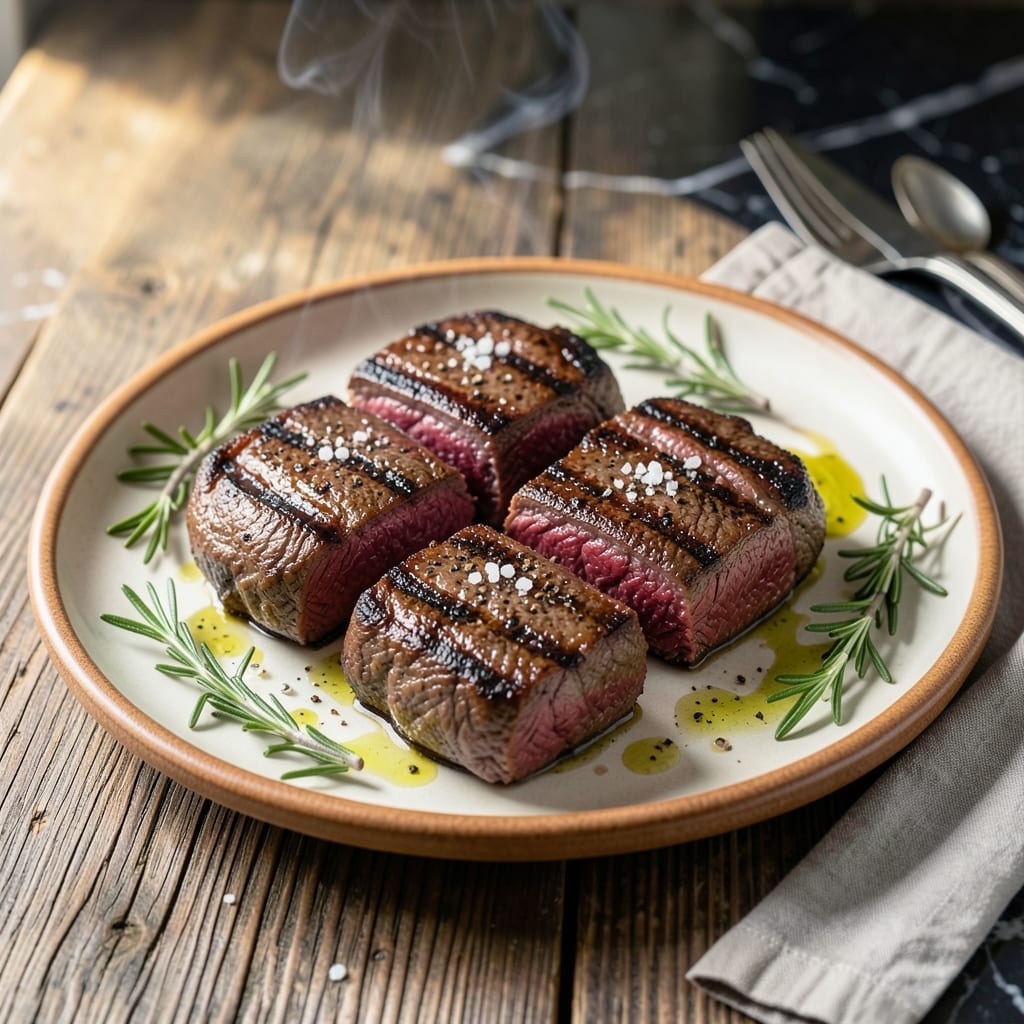
Mastering the grill starts with understanding how heat transforms quality beef into something extraordinary. Getting my first whiff of hickory smoke at my family backyard cookout taught me that patience and precision matter most.
This proven method delivers perfect char and juicy marbling without complicated techniques. A hot grill, proper seasoning, and knowing when to flip are the only rules you need.
The result is tender, flavorful steak with a caramelized crust that seals in every drop of natural goodness. Resting the meat after grilling ensures the juices redistribute for the best possible bite.
Whether you prefer ribeye, strip, or filet, this approach works every time. The grill does most of the work—you just need to guide it.
Ingredients for Basic Grilled Steak
Quality beef and a handful of seasonings. That’s all you need for perfect grilled steak.
| Ingredient | Amount | Notes |
|---|---|---|
| Ribeye Steaks 🥩 | 4 whole | 1 to 1.5 inches thick, bone-in preferred |
| Kosher Salt 🧂 | 2 tbsp | Diamond Crystal preferred for even distribution |
| Freshly Ground Black Pepper 🌶️ | 2 tsp | Coarse grind for texture |
| Garlic Powder 🧄 | 1 tsp | Enhances natural beef flavor |
| Onion Powder 🧅 | 1 tsp | Adds depth to seasoning blend |
| Olive Oil 🫒 | 2 tbsp | High smoke point variety for grilling |
| Unsalted Butter 🧈 | 2 tbsp | For basting during final minute |
| Fresh Rosemary Sprigs 🌿 | 2 whole | Optional for aromatic smoke |
| Fresh Thyme Sprigs 🍃 | 2 whole | Optional for aromatic smoke |
| Hickory Wood Chips 🌳 | 1 cup | Soaked in water for 30 minutes |
| Lemon Wedges 🍋 | 4 pieces | For serving and brightness |
[recipe_ingredient_scaler]
The steak is everything here. Ribeye gives you that marbling that renders into pure flavor—USDA Choice or Prime if you can swing it. I grab mine from Whole Foods or Costco when they’ve got good sales. Thickness matters more than you think: aim for 1 to 1.5 inches so the outside gets that caramelized crust while the inside stays juicy. Bone-in adds extra flavor, but boneless works in a pinch. Just avoid anything thinner than an inch—it’ll overcook before you get a proper sear.
No ribeye? New York strip or filet mignon are excellent alternatives. Swap garlic and onion powder for Montreal steak seasoning if that’s what you’ve got. The olive oil can be any neutral variety, but avoid extra-virgin—its smoke point is too low for high-heat grilling. Hickory not available? Mesquite or apple wood chips work just as well. And if you’re out of fresh herbs, dried rosemary and thyme tossed directly on the coals add a nice touch.
Let the steaks sit at room temperature for 30-45 minutes before grilling. Leftovers? Wrap tightly and refrigerate for up to 4 days. Reheat gently in a skillet with a pat of butter to revive that just-grilled taste. Hickory chips keep indefinitely in a sealed bag, but soak them every time before use.
Why You’ll Love This Recipe
- Five-Minute Prep: I just pat the ribeye dry, shake on salt, pepper, and those powders, and it’s ready for the grill.
- That Crispy Crust: Kosher salt and black pepper form a crackling crust that gives way to the juicy beef inside.
- Weeknight Hero: Honestly, it’s my Tuesday dinner as often as it’s the star of a backyard cookout.
- Leftovers? Yes Please: Cold slices on a salad the next day taste even better, and that’s saying something.
Step-by-Step Instructions for Perfect Grilled Steak
Here’s the method that delivers incredible char and juicy results every single time.
Step 1: Season the Ribeye Steaks Properly
Pat the 4 whole Ribeye Steaks completely dry with paper towels. This critical step removes surface moisture that would steam the meat instead of searing it. Season both sides generously with the 2 tbsp Kosher Salt, 2 tsp Freshly Ground Black Pepper, 1 tsp Garlic Powder, and 1 tsp Onion Powder.
I press the seasonings into the meat to ensure they adhere well and create that flavorful crust we’re after. Let the seasoned steaks sit at room temperature for 30-45 minutes while you prepare the grill. This allows the salt to begin penetrating the meat and ensures more even cooking.
Step 2: Prepare the Grill for High Heat
Soak the 1 cup Hickory Wood Chips in water for 30 minutes to prevent them from burning too quickly. Drain them and place directly on the charcoal or in your grill’s smoker box. Preheat your grill to high heat (about 450-500°F).
If using the 2 whole Fresh Rosemary Sprigs and 2 whole Fresh Thyme Sprigs, toss them directly onto the hot coals just before grilling. This creates an aromatic smoke that complements the beef beautifully. Clean and oil the grates thoroughly to prevent sticking.
Step 3: Sear and Cook to Perfection
Brush the 2 tbsp Olive Oil on both sides of each steak. Place the steaks on the grill and sear for 3-4 minutes on each side for medium-rare. You’re looking for a deep, dark brown crust to form—this is where all that incredible flavor develops.
For the final minute, add the 2 tbsp Unsalted Butter to the steaks and baste continuously by spooning the melted butter over the tops. This adds richness and helps develop an even deeper color on the crust. Resist the urge to move the steaks—let them develop that perfect sear.
Step 4: Rest and Serve
Transfer the steaks to a cutting board or warm platter. Tent loosely with foil and let them rest for 5-10 minutes. This crucial step allows the juices to redistribute throughout the meat, ensuring every bite is as juicy as possible.
Slice against the grain and serve immediately with the 4 pieces Lemon Wedges on the side. The bright acidity of the lemon cuts through the richness of the beef beautifully. Each steak should have a perfect char on the outside and be wonderfully juicy inside.
Pro Tips For Making Basic Grilled Steak
- Dry the Steaks: Pat the ribeyes bone-dry with paper towels before seasoning—I learned this the hard way after my first few steaks steamed instead of seared.
- Season Generously: Use more kosher salt than feels natural, especially on a thick ribeye, and don’t forget to hit the sides—it actually changes the outcome.
- Wait for the Grill: Don’t put the steaks on until the grill is screaming hot—about 5 minutes of preheating on high, or you’ll lose that crust.
- Rest Before Serving: Give the steaks a solid 5-10 minutes under foil after grilling—yes, even if you’re starving—so the juices redistribute where they belong.
Troubleshooting basic grilled steak
Uneven Cooking Issues
If one side of your steak is cooking faster, your grill likely has hot spots. I rotate my steaks halfway through each side’s cooking time. On my Weber kettle, I move them from the center to the edge to even out the heat distribution. 🔥
Steak Sticking to Grates
This usually means the grates weren’t hot enough or clean enough. I preheat my grill for 15 minutes and scrub the grates with a brass brush right before cooking. Always oil the grates and the steak surface just before placing it on the grill.
No Crust Formation
Your grill isn’t hot enough or you’re moving the steak too much. Let the grill reach 450-500°F before adding the meat. I only flip once during cooking to allow that beautiful Maillard reaction to work its magic.
Overcooked Centers
Thicker cuts solve this. I aim for 1.5-inch thick steaks to create a buffer between the hot surface and the center. Use a meat thermometer—pull at 125°F for medium-rare. The temp will rise 5-10°F during resting.
Dry or Tough Texture
This often comes from not resting long enough. I let my steaks rest for 8-10 minutes under foil. Also, avoid pressing the steak with your spatula—you’re squeezing out all those precious juices we worked so hard to develop.
Weak Smoke Flavor
Your wood chips might be old or not producing enough smoke. I soak hickory chips for 30 minutes and add fresh batches every 20 minutes. Try placing them directly on the coals rather than in a smoker box for more intense flavor.
Nutrition Facts
Frequently Asked Questions
How hot should my grill be?
Preheat to 450-500°F for a perfect sear. This high heat creates that coveted crust while keeping the inside juicy. Use a grill thermometer for accuracy.
Can I use a different cut of steak?
New York strip or filet mignon work beautifully with the same method. Just adjust thickness to 1-1.5 inches for best results.
How do I know when it’s done?
Use a meat thermometer: 125°F for rare, 130-135°F for medium-rare. The temperature will rise 5-10°F while resting.
Why do I need to rest the steak?
Resting for 5-10 minutes lets juices redistribute. Cutting too soon causes them to spill out, leaving your steak dry. Patience pays off!

Trained in classic French technique but raised on slow-cooked ribs and spicy rubs, she blends culinary skill with smoke and soul.
- Recipe for Boneless Pork Chops in Cast Iron Skillet: Sear and Baste to Juicy Perfection - October 3, 2026
- Recipe for Boneless Cross Rib Roast: Slow-Roasted Beef with Herb Crust - October 3, 2026
- Hamburgers in Sauce Recipe Crock Pot: Slow-Cooked Savory Delight - October 3, 2026