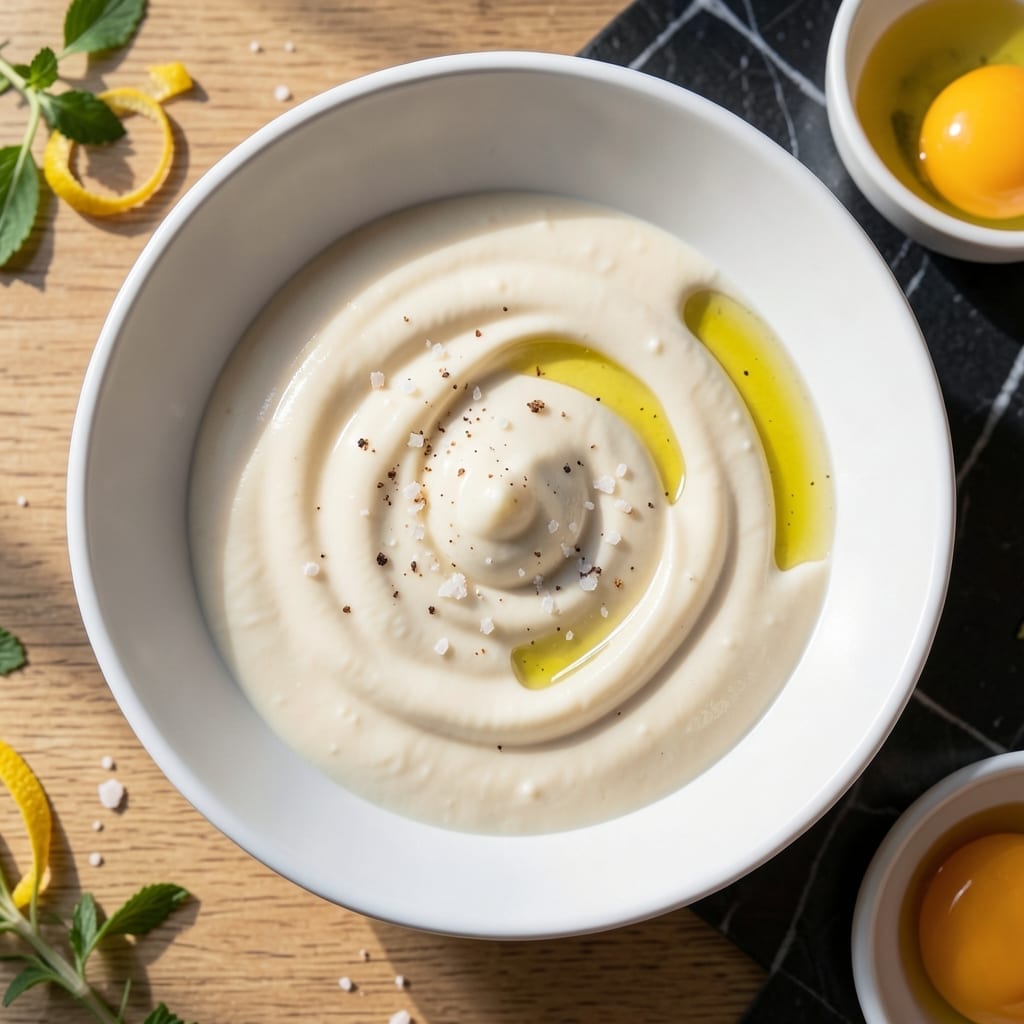
Creamy homemade mayonnaise doesn’t require mustard to achieve a perfect emulsion. This straightforward method uses just egg yolk, oil, and a touch of acid to create a smooth, velvety condiment.
With precise whisking and slow oil incorporation, you’ll produce a rich, stable mayonnaise that’s superior to store-bought. The result is a blank canvas for countless sandwiches, salads, and sauces.
Ingredients for Basic Mayonnaise Recipe Without Mustard
A handful of simple ingredients yields a velvety, restaurant-quality condiment without mustard.
| Ingredient | Amount | Notes |
|---|---|---|
| Large Egg Yolks 🥚 | 1 whole | Room temperature preferred |
| Neutral-Flavored Oil 🫒 | 1 ½ cups | Avocado or light olive oil |
| Lemon Juice 🍋 | 1 tbsp | Freshly squeezed preferred |
| White Wine Vinegar 🍷 | 1 tsp | Or apple cider vinegar |
| Salt 🧂 | ½ tsp | Fine sea salt preferred |
| White Pepper 🌶️ | ¼ tsp | Optional, for subtle heat |
[recipe_ingredient_scaler]
The oil choice dramatically impacts flavor and stability. Avocado oil offers the highest smoke point and neutral taste, while light olive oil adds subtle fruitiness. For professional results, use room-temperature egg yolks—cold yolks resist emulsification. Whole Foods and Trader Joe’s carry high-quality neutral oils in their baking sections.
No lemon juice? White wine vinegar at double the amount works well. The acid is crucial for both flavor and emulsion stability, so don’t skip it. For a richer variation, use one whole egg plus one yolk. If avoiding raw eggs, pasteurized egg yolks (sold at Target or Walmart) are a safe alternative.
Homemade mayonnaise keeps for about 1 week in the refrigerator. Always store in a clean, airtight container. The emulsion may separate slightly over time—simply whisk before using. For longer storage, freeze in ice cube trays for up to 3 months.
Why You’ll Love This Recipe
- One-Bowl Wonder: I just whisk the yolks, oil, lemon, and vinegar in a single bowl—no fuss, no extra dishes.
- Bright and Creamy: The lemon and white wine vinegar give it that tangy lift without overpowering the rich, silky texture.
- Endless Uses: I slather it on sandwiches, mix it into dressings, or use it as a base for dips all week long.
- Budget Keeper: A handful of pantry staples turns into a jar of mayo that costs pennies compared to store-bought.
Step-by-Step Instructions for Basic Mayonnaise Without Mustard
Master the emulsion technique for a stable, creamy result every time.
Step 1: Whisk the Egg Yolk with Acidic Components
Place the 1 whole Large Egg Yolks in a medium bowl. Add the 1 tbsp Lemon Juice, 1 tsp White Wine Vinegar, 0.5 tsp Salt, and 0.25 tsp White Pepper to the yolk. This combination of acids helps stabilize the emulsion and balance the richness of the oil.
Whisk vigorously with a wire whisk for 30-45 seconds until the mixture becomes pale and slightly thickened. You should see the whisk leave visible trails in the mixture. Room temperature egg yolk emulsifies more readily, so ensure your yolk isn’t cold from the refrigerator.
Step 2: Begin the Emulsion with Slow Oil Incorporation
With one hand, continue whisking the yolk mixture constantly. With your other hand, begin adding the 1.5 cups Neutral-Flavored Oil in the thinnest possible stream, literally drop by drop at first. This slow addition is critical—adding oil too quickly will break the emulsion.
After about 1-2 minutes of constant whisking and dripping, you’ll notice the mixture start to thicken and lighten in color. At this point, you can increase the oil to a very thin stream, but maintain steady whisking. The mixture should begin to resemble a thick, pale cream.
Step 3: Complete the Emulsion with Remaining Oil
Once half the Neutral-Flavored Oil has been incorporated and the mixture has visibly thickened, you can add the remaining oil in a slightly faster but still controlled stream. Continue whisking vigorously until all the oil is fully incorporated.
The finished mayonnaise should be thick, creamy, and pale ivory in color. It should hold its shape when you stop whisking, with a glossy appearance. If the mixture appears thin or separated at any point, stop adding oil and whisk vigorously for 15-20 seconds to re-emulsify before continuing.
Step 4: Adjust Seasoning and Rest Before Using
Taste the mayonnaise and adjust the seasoning if needed. The Salt should be noticeable but not overpowering, and the Lemon Juice and White Wine Vinegar should provide a subtle tang without sharpness. Remember that flavors will meld and mellow as it rests.
Transfer the mayonnaise to a clean jar or airtight container. Let it rest at room temperature for 10-15 minutes before refrigerating. This brief rest allows the flavors to harmonize. Store in the refrigerator for up to 1 week, where it will thicken slightly as it chills.
Pro Tips For Making Basic Mayonnaise Recipe Without Mustard
- Use Room Temp Yolks: Cold yolks resist emulsifying—pull them out of the fridge 30 minutes before starting. I learned this the hard way after ending up with a broken, oily mess more times than I’d like to admit.
- Drip the Oil Slowly: Add the neutral oil in a thin, steady stream at first, especially during the first half. After burning through two batches by pouring too fast, I now use a measuring cup with a spout for better control.
- Balance the Acids: Start with 1 teaspoon each of lemon juice and white wine vinegar, then adjust. Too much acid can curdle the emulsion, and I was skeptical until I tried it—just a little makes a real difference.
- Rescue with Water: If your mayo breaks, whisk in 1 teaspoon of hot water, one drop at a time. Sounds weird, but it works—this trick saved my mayo more times than I care to count.
Regional Styles of This Dish
French Style 🥘
In France, a basic mayonnaise recipe without mustard often relies on a simple emulsion of egg yolks, oil, and a touch of vinegar or lemon juice. The French prioritize a light, airy texture, achieved by slowly whisking oil into the yolks.Historically, this version was a staple in Provençal cuisine, where fresh ingredients like olive oil were preferred for a richer flavor.
American Style 🍳
In the U.S., a mustard-free mayo often includes a hint of sugar or garlic for added depth. Southern states, in particular, favor using apple cider vinegar for tanginess. This style is versatile, often used in classic potato salad or as a base for sandwich spreads. The simplicity aligns with American comfort food traditions.
Japanese Style 🥢
Japanese mayonnaise, or Kewpie mayo, typically omits mustard and uses rice vinegar for a milder, slightly sweeter taste. The texture is creamier due to the use of egg yolks only. This style is a favorite in dishes like okonomiyaki or as a topping for sushi, reflecting Japan’s love for subtle, balanced flavors.
Spanish Style 🌍
In Spain, alioli is a traditional mustard-free mayo made with garlic and olive oil. This version is thicker and often served with grilled meats or seafood. The Mediterranean influence shines through in its bold, garlicky profile, a testament to Spain’s rich culinary heritage.
Nutrition Facts

Trained in classic French technique but raised on slow-cooked ribs and spicy rubs, she blends culinary skill with smoke and soul.
- Recipe for Boneless Pork Chops in Cast Iron Skillet: Sear and Baste to Juicy Perfection - October 3, 2026
- Recipe for Boneless Cross Rib Roast: Slow-Roasted Beef with Herb Crust - October 3, 2026
- Hamburgers in Sauce Recipe Crock Pot: Slow-Cooked Savory Delight - October 3, 2026