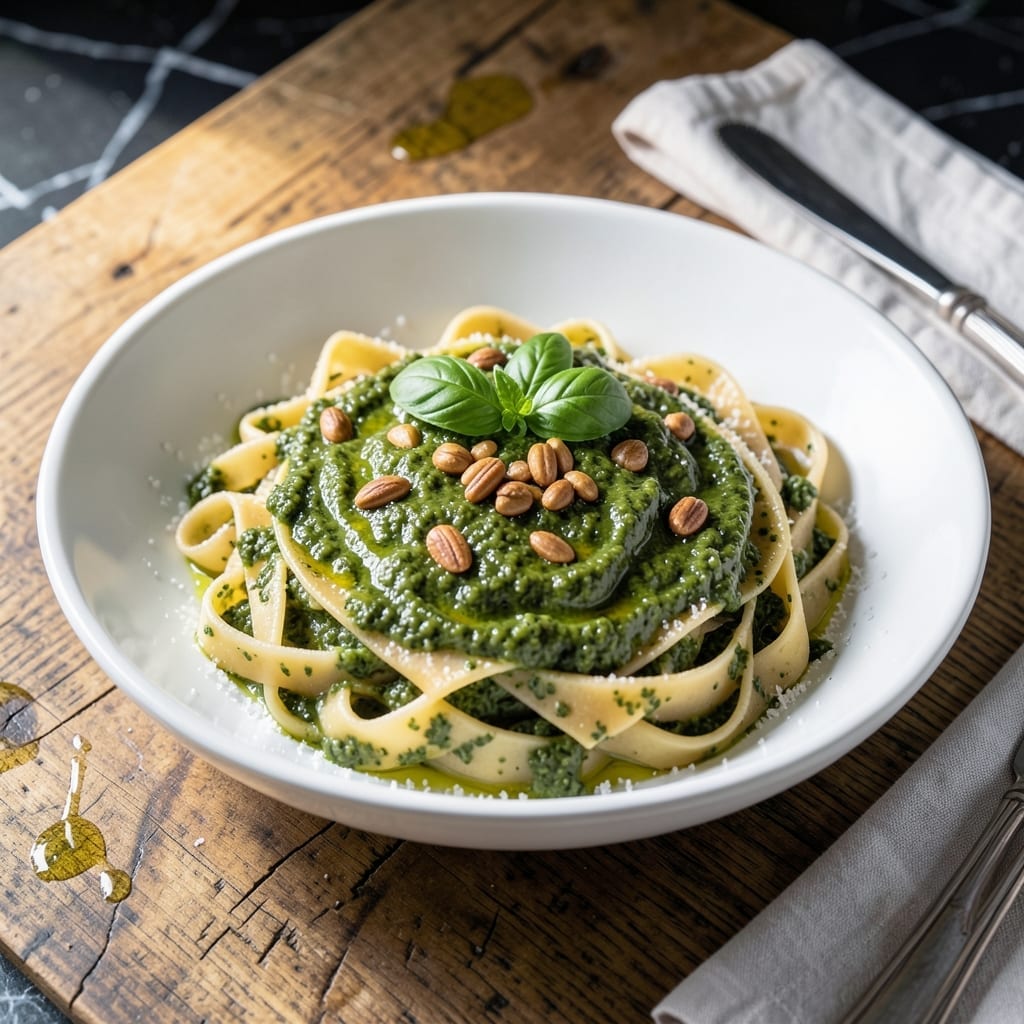
This fresh herb sauce transforms any pasta dish with its vibrant basil flavor and rich, nutty notes. The combination of fresh basil, pine nuts, garlic, and parmesan creates a paste that’s both aromatic and deeply satisfying.
It’s incredibly versatile—toss with hot pasta, spread on sandwiches, or use as a dip for vegetables. This sauce keeps well in the fridge for up to five days, making it a convenient addition to any meal plan.
Ingredients for Basil Pesto Sauce Recipe for Pasta
Eight ingredients craft this vibrant, aromatic sauce with rich nutty depth and bright flavor.
| Ingredient | Amount | Notes |
|---|---|---|
| Fresh Basil Leaves 🌿 | 2 cups | Packed, stems removed |
| Pine Nuts 🥜 | ½ cup | Toasted for depth |
| Garlic Cloves 🧄 | 3 cloves | Peeled and chopped |
| Parmesan Cheese 🧀 | ¾ cup | Freshly grated preferred |
| Extra-Virgin Olive Oil 🫒 | ¾ cup | High quality, fruity |
| Lemon Juice 🍋 | 1 tbsp | Freshly squeezed preferred |
| Sea Salt 🧂 | ½ tsp | Fine grain preferred |
| Black Pepper 🌶️ | ¼ tsp | Freshly ground |
[recipe_ingredient_scaler]
The basil is non-negotiable here. Farmers market basil offers superior aroma compared to grocery store varieties, but any fresh, vibrant leaves will work—just avoid wilted or yellowing bunches. Pine nuts are traditional, but Trader Joe’s and Costco offer the best value for quality. For Parmesan, real Parmigiano-Reggiano is ideal; pre-grated loses texture and flavor.
No pine nuts? Walnuts or raw cashews substitute beautifully with a slightly different profile. Out of fresh basil? Stretch with fresh parsley (up to half). The olive oil should be high-quality extra-virgin—this isn’t the place for neutral oils. Lemon juice can be bottled in a pinch, but fresh brightens the sauce.
Pesto oxidizes quickly. Cover with a thin layer of olive oil before sealing to preserve color. Keeps for 5 days refrigerated or 6 months frozen. Ice cube trays make perfect single-serving portions.
Why You’ll Love This Recipe
- Five-Minute Blend: I toss everything in the food processor and it’s ready before the pasta boils.
- Garlicky Green Heaven: That first bite of basil, pine nuts, and Parmesan with the olive oil is ridiculously good.
- Freezer Best Friend: I make a double batch, freeze half in ice cube trays, and have pesto ready anytime.
- Pantry Hero: Honestly, it uses just a handful of staples I always have on hand.
Step-by-Step Instructions for Basil Pesto Sauce
This straightforward method ensures a vibrant, well-balanced sauce with minimal effort.
Step 1: Toast the Pine Nuts for Depth
Heat a dry skillet over medium-low heat. Add the 0.5 cup Pine Nuts and spread them in an even layer. Toast for 3-5 minutes, stirring frequently, until they turn light golden brown and emit a nutty aroma.
Watch them closely—Pine Nuts burn quickly once they start browning. Immediately transfer the toasted nuts to a plate to cool. This prevents them from continuing to cook in the hot pan and preserves their rich, buttery flavor for the sauce.
Step 2: Blend Basil, Garlic, and Pine Nuts
In a food processor or high-powered blender, combine the 2 cups Fresh Basil Leaves, 3 cloves Garlic Cloves, and the toasted 0.5 cup Pine Nuts. Pulse in 1-second bursts for 15-20 seconds total until the mixture resembles coarse crumbs.
Stop and scrape down the sides of the bowl as needed to ensure even blending. The goal is to break down the ingredients without over-processing them into a paste at this stage. This creates the perfect texture foundation for the sauce.
Step 3: Incorporate Cheese and Seasonings
Add the 0.75 cup Parmesan Cheese, 0.5 tsp Sea Salt, and 0.25 tsp Black Pepper to the food processor. Pulse again for 10-15 seconds until the cheese is finely incorporated and the mixture is uniform but still slightly textured.
Taste and adjust seasoning if needed, though the Parmesan adds significant saltiness. The cheese should be fully integrated, with no visible chunks remaining. This step builds the savory depth that defines a great pesto.
Step 4: Emulsify with Olive Oil and Lemon Juice
With the processor running continuously, slowly drizzle in the 0.75 cup Extra-Virgin Olive Oil through the feed tube. Process for 20-30 seconds until the mixture becomes smooth and creamy, stopping to scrape the bowl once or twice.
Add the 1 tbsp Lemon Juice and pulse briefly to combine. The sauce should be thick but pourable, with a glossy appearance. The oil emulsifies with the other ingredients, creating a rich, cohesive sauce that clings beautifully to pasta.
For the best texture, avoid over-processing. The final product should have some visible flecks of basil and Pine Nuts for visual appeal and texture contrast.
Pro Tips For Making Basil Pesto Sauce Recipe For Pasta
- Toast the Pine Nuts: Lightly toast the pine nuts in a dry pan over medium heat for 2-3 minutes until golden—I learned this the hard way after using raw nuts and getting a dull, flat flavor.
- Blanch the Basil: Dip basil leaves in boiling water for 10 seconds then shock in ice water to lock in that bright green color and prevent browning in your pesto.
- Skip the Food Processor: Use a mortar and pestle or pulse very briefly in a blender to avoid over-processing, which turns pesto bitter and pasty.
- Add Cheese Last: Fold in the grated Parmesan after blending the other ingredients to keep the texture creamy rather than gluey—I was skeptical until I tried it.
Storing and Reheating This basil pesto sauce recipe for pasta
🍳 Refrigerator Storage
To keep your basil pesto sauce fresh for a few days, transfer it to an airtight container and press plastic wrap directly onto the surface to minimize air exposure. This helps prevent oxidation, which can turn the sauce brown. Stored this way, your pesto will stay vibrant and flavorful in the refrigerator for 3-4 days.
❄️ Freezer Storage
For longer storage, freeze your pesto in ice cube trays or small jars. Once frozen, transfer the cubes to a freezer-safe bag or container, squeezing out excess air. Properly wrapped, your basil pesto sauce will retain its quality in the freezer for 2-3 months. This method is perfect for portioning out just the right amount for future pasta dishes!
🔥 Reheating Methods
When ready to use, thaw frozen pesto in the refrigerator overnight. To reheat, gently warm it in a saucepan over low heat (around 160°F) for 2-3 minutes, stirring frequently to prevent separation. Avoid high heat, as it can cause the oils to break down. For a quick fix, microwave in 10-15 second intervals, stirring between each, until just warmed through.
💡 Quality Preservation
To maintain the best texture and flavor, avoid adding water or extra oil when reheating. If the sauce seems thick after thawing, stir in a splash of pasta water to restore its creamy consistency. Always store pesto in small batches to minimize repeated exposure to air, which can degrade its fresh, herby taste. Pro tip: Drizzle a thin layer of olive oil on top before sealing to create an extra barrier against oxidation!
Nutrition Facts

Trained in classic French technique but raised on slow-cooked ribs and spicy rubs, she blends culinary skill with smoke and soul.
- Recipe for Boneless Pork Chops in Cast Iron Skillet: Sear and Baste to Juicy Perfection - October 3, 2026
- Recipe for Boneless Cross Rib Roast: Slow-Roasted Beef with Herb Crust - October 3, 2026
- Hamburgers in Sauce Recipe Crock Pot: Slow-Cooked Savory Delight - October 3, 2026