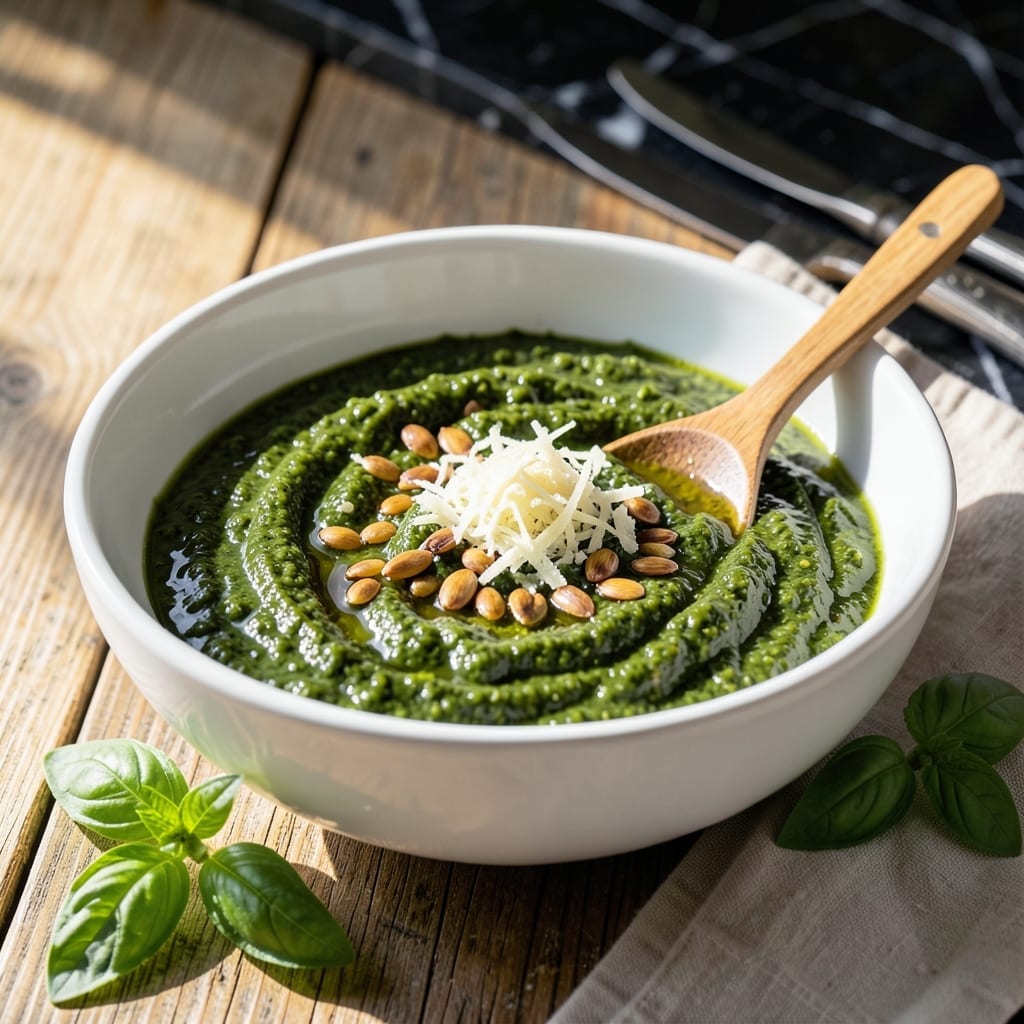
This nut-free basil pesto delivers creamy richness without compromising on flavor. The secret is blending fresh basil with garlic, Parmesan, and olive oil until smooth.
Perfect as a pasta sauce, sandwich spread, or dip, this version stays vibrant and fresh for up to a week in the fridge. The texture is velvety, not grainy.
Ingredients for Basil Pesto Sauce Recipe Without Nuts
Eight simple ingredients create this velvety herb sauce with bold flavor and no nuts.
| Ingredient | Amount | Notes |
|---|---|---|
| Fresh Basil Leaves 🌿 | 2 cups | Packed, stems removed |
| Garlic Cloves 🧄 | 3 cloves | Peeled, rough chopped |
| Parmesan Cheese 🧀 | ¾ cup | Freshly grated from wedge |
| Extra-Virgin Olive Oil 🫒 | ¾ cup | High quality, fruity |
| Lemon Juice 🍋 | 1 tbsp | Freshly squeezed |
| Sea Salt 🧂 | ½ tsp | Fine grain preferred |
| Black Pepper 🌶️ | ¼ tsp | Freshly ground |
| Sunflower Seeds 🌻 | ¼ cup | Optional for texture |
[recipe_ingredient_scaler]
The basil must be fresh—look for vibrant green leaves at your local market or grocery store. Whole Foods often has the best selection, but any store with a decent produce section will work. For the Parmesan, avoid pre-grated as it contains anti-caking agents that affect texture. A wedge of Parmigiano-Reggiano grated fresh makes all the difference in achieving that creamy consistency mentioned in the intro.
No sunflower seeds? Skip them entirely for a completely smooth sauce, or use pumpkin seeds as another nut-free alternative. For a vegan version, swap Parmesan for nutritional yeast. The olive oil should be extra-virgin and cold-pressed for the best flavor. If your basil is slightly wilted, soak the leaves in ice water for 10 minutes to revive them before blending.
This sauce stays fresh in an airtight container with a thin layer of olive oil on top for up to 1 week in the fridge. For longer storage, freeze in ice cube trays for up to 3 months. The cold helps preserve that vibrant green color and fresh basil flavor.
Why You’ll Love This Recipe
- Minimal Chopping Required: I just toss basil, garlic, and Parmesan into the blender—no tedious nut prep to slow me down.
- Bright and Zesty: The lemon juice cuts through the richness of the olive oil and cheese, making every bite sing.
- Endless Uses: I slather it on sandwiches, mix into pasta, or dollop over roasted veggies—it never gets old.
- Budget Stretcher: A handful of basil and pantry staples turns into a sauce that feels fancy but costs pennies.
Step-by-Step Instructions for Basil Pesto Sauce
This method ensures a velvety texture and balanced flavor in every batch.
Step 1: Prepare the Base Ingredients
Pack the 2 cups Fresh Basil Leaves tightly into your measuring cup, ensuring stems are removed for the smoothest consistency. Rough chop the 3 cloves Garlic Cloves—this prevents large chunks from forming in the final sauce.
If using the optional 0.25 cup Sunflower Seeds, lightly toast them in a dry pan over medium heat for 2-3 minutes until fragrant. This enhances their nutty flavor and compensates for the lack of traditional nuts. Let them cool completely before blending.
Step 2: Blend Aromatics and Cheese
In a food processor, combine the basil, chopped garlic, and toasted sunflower seeds. Pulse until finely minced but not pureed—you should still see some texture. This controlled blending prevents over-processing, which can make the sauce bitter.
Add the 0.75 cup Parmesan Cheese and pulse again until the mixture resembles coarse sand. The freshly grated cheese melts beautifully into the sauce, creating that signature creamy texture without any dairy beyond what’s listed.
Step 3: Emulsify with Oil and Seasonings
With the processor running, slowly drizzle in the 0.75 cup Extra-Virgin Olive Oil through the feed tube. This gradual addition is key to creating a stable emulsion. Stop to scrape down the sides as needed to ensure even incorporation.
Once the oil is fully incorporated, add the 1 tbsp Lemon Juice, 0.5 tsp Sea Salt, and 0.25 tsp Black Pepper. Pulse briefly to combine. The lemon juice brightens the flavors, while the salt and pepper enhance the natural sweetness of the basil.
Step 4: Adjust and Finish
Taste the pesto and adjust seasoning if needed. If the mixture is too thick, add a splash of water or additional oil, but remember the sauce will thin slightly as it sits. For the creamiest texture, let it rest for 10 minutes at room temperature before serving.
Transfer to an airtight container. The surface may darken slightly over time due to oxidation, but the flavor remains vibrant. For best results, use within 3 days or freeze for up to 3 months with a thin layer of oil on top to preserve color.
Pro Tips For Making Basil Pesto Sauce Recipe Without Nuts
- Blanch the Basil: Dip basil leaves in boiling water for 10 seconds then shock in ice water—this keeps the pesto bright green instead of turning dull brown.
- Grate the Garlic: Use a microplane for the garlic instead of chopping; it blends smoothly into the sauce without those harsh raw chunks.
- Skip the Blender: Pulse everything in a food processor or mortar and pestle—blenders heat the oil and turn your pesto bitter.
- Add Cheese Last: Fold in the Parmesan after blending the rest; it prevents the sauce from getting too thick and lets you adjust the texture.
Dietary Considerations for These Flavors
Keto-Friendly Options
A traditional basil pesto without nuts can easily fit into a keto diet with a few tweaks. Replace any added sugar with a keto-friendly sweetener if needed, and ensure your Parmesan cheese is high-quality and free of additives. Olive oil is naturally keto-friendly, making this sauce a great low-carb option.
Gluten-Free
This nut-free basil pesto is naturally gluten-free, as it relies on fresh basil, garlic, Parmesan, and olive oil. However, always check that your Parmesan cheese is labeled gluten-free, as some brands may include anti-caking agents with gluten.
Allergens
Since this recipe omits nuts, it avoids a common allergen. However, it does contain dairy (Parmesan) and garlic. For a dairy-free version, substitute nutritional yeast or a vegan hard cheese. If garlic is a concern, reduce or omit it entirely.
Vegetarian Modifications
This pesto is vegetarian as-is, but you can make it vegan by swapping Parmesan for a plant-based alternative, such as nutritional yeast or a vegan Parmesan. Ensure all ingredients align with your dietary preferences for a fully plant-based sauce.
Low-Sodium
To reduce sodium, use low-sodium Parmesan or reduce the amount of cheese. You can also balance the flavor with extra fresh basil, garlic, or a squeeze of lemon juice. This keeps the pesto flavorful while cutting back on salt.
Nutrition Facts

Trained in classic French technique but raised on slow-cooked ribs and spicy rubs, she blends culinary skill with smoke and soul.
- Recipe for Boneless Pork Chops in Cast Iron Skillet: Sear and Baste to Juicy Perfection - October 3, 2026
- Recipe for Boneless Cross Rib Roast: Slow-Roasted Beef with Herb Crust - October 3, 2026
- Hamburgers in Sauce Recipe Crock Pot: Slow-Cooked Savory Delight - October 3, 2026