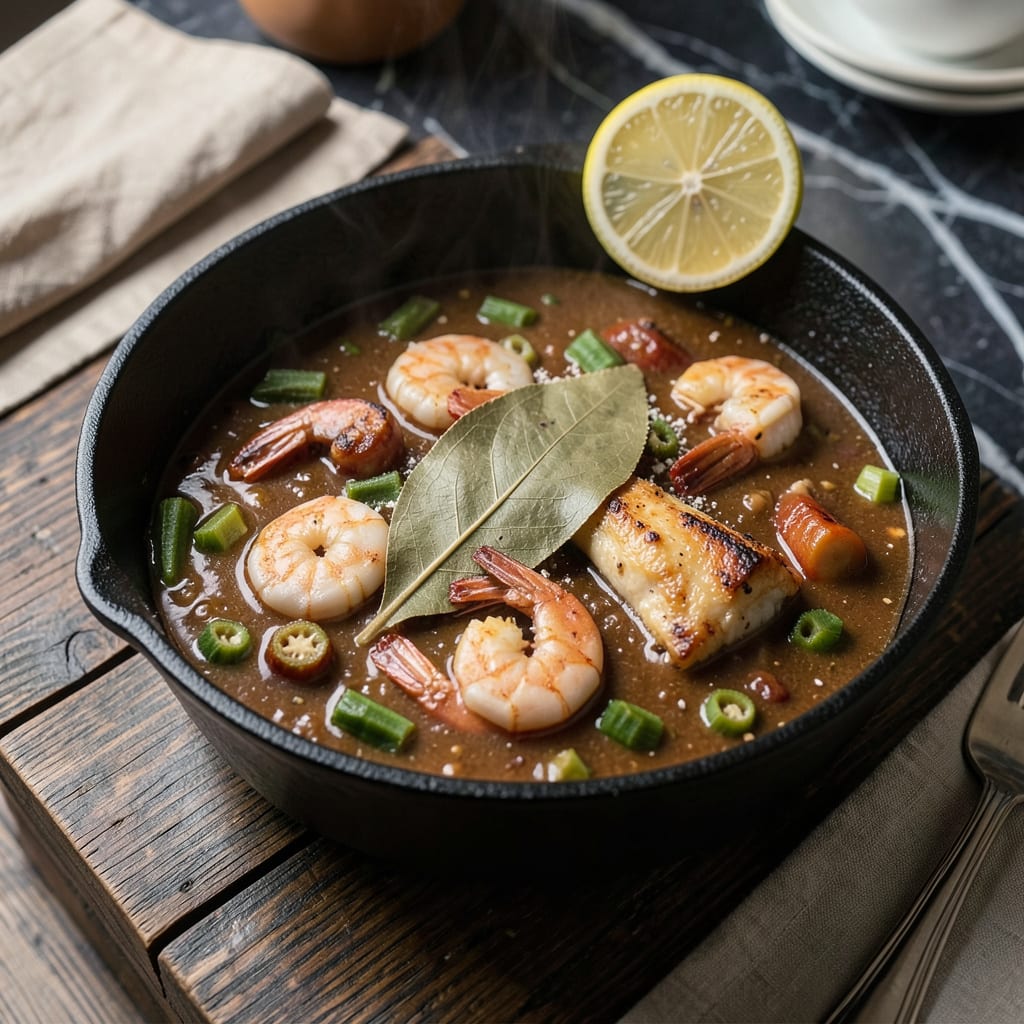
There’s something about a pot of gumbo simmering on the stove that feels like pure comfort. The smell alone—deep, smoky, and layered with spices—tells you something special is happening. I’ve been making gumbo since my Louisiana days, and let me tell you, those bay leaves are the quiet heroes that tie everything together.
Most folks don’t realize how much difference a couple of bay leaves make. Added early with the stock, they slowly release their earthy, slightly floral notes that build the gumbo’s foundation. The trick is letting them steep for at least an hour, then pulling them out before serving—no one wants to bite into a leaf by accident.
What you end up with is a pot of gumbo that tastes like it’s been simmering all day, even if it hasn’t. The bay leaves work behind the scenes, enhancing the roux’s richness and balancing the smoky andouille and spicy Cajun seasoning. It’s that subtle complexity that makes people ask for your recipe.
Don’t skip them—trust me, I’ve tried. Without bay leaves, gumbo tastes flat, like it’s missing its bass note. And if you’re in a pinch, a mix of thyme and oregano can work, but it’s not quite the same magic. Let’s get that roux started.
📚 In This Guide
- What You’ll Need
- Instructions
- Tips and Common Mistakes
What Youll Need
- ● Fresh or dried bay leaves – 2-3 leaves (fresh preferred, but dried works in a pinch 🌿)
- ● Roux base – ½ cup all-purpose flour + ½ cup oil/butter (or pre-made dark roux for shortcuts!)
- ● “Holy Trinity” veggies – 1 cup diced onion, ½ cup diced bell pepper, ½ cup diced celery
- ● Protein – 1 lb andouille sausage, chicken, or seafood (shrimp/crab for classic gumbo 🍤)
- ● Stock – 6-8 cups chicken, seafood, or vegetable stock (homemade = best flavor!)
- ● Okra or filé powder – 1 cup sliced okra or 1 tbsp filé powder (thickening agent)
- ● Cajun seasoning – 1 tbsp (adjust to taste—spice lovers, go wild! 🌶️)
- ● Heavy-bottomed pot (5-6 qt, for even roux cooking)
- ● Wooden spoon (roux’s best friend!)
- ● Fine-mesh strainer (if using filé powder)
- ○ Optional: Slow cooker or Instant Pot (for hands-off simmering)
Instructions for Using Bay Leaves in Gumbo
Here’s how to properly incorporate bay leaves for that authentic, complex Cajun flavor.
Select and Prepare Your Bay Leaves
Choose whole, dried bay leaves for your gumbo—fresh leaves can be bitter and don’t infuse flavor as effectively. I recommend using 2-3 medium-sized leaves per quart of liquid in your recipe. This gives you that perfect balance of herbal depth without overwhelming the dish.
Before adding them, give each leaf a quick rinse under cool water to remove any dust or debris. Pat them dry gently with a paper towel. There’s no need to crush or tear them—whole leaves will infuse the broth beautifully while staying intact for easy removal later.
Add Bay Leaves at the Right Time
Introduce the bay leaves to your gumbo when you add your liquid components—whether that’s broth, water, or tomato products. This timing ensures they have maximum contact time with the liquid to slowly release their essential oils and aromatic compounds throughout the cooking process.
Drop the leaves into the pot and give them a quick stir to submerge. You’ll notice they’ll float at first, but as the gumbo simmers, they’ll become more pliable and absorb some liquid. Don’t worry if they don’t stay completely submerged—they’ll still work their magic.
Simmer for Full Flavor Infusion
Allow the bay leaves to simmer in your gumbo for at least 45 minutes to 1 hour. This extended cooking time lets the leaves gradually release their complex flavors—earthy, slightly floral, with hints of menthol and black pepper. The longer they simmer, the more pronounced their contribution becomes.
As your gumbo cooks, you’ll start to notice the difference the bay leaves make. The broth will develop a richer, more rounded flavor profile that’s hard to pinpoint but impossible to ignore. It’s that “something special” that makes people ask for your recipe.
Remove and Discard Properly
Before serving, locate and remove all bay leaves from your gumbo. I like to use a slotted spoon to fish them out one by one. The leaves will be soft and pliable after cooking, so be thorough in your search—no one wants to bite into a bay leaf!
Discard the used leaves in your compost or trash. They’ve given all their flavor to your gumbo and aren’t meant to be eaten. Give your gumbo a final stir after removing them to redistribute all those wonderful flavors they’ve contributed throughout the cooking process.
Taste and Adjust Seasoning
After removing the bay leaves, taste your gumbo carefully. The bay leaves should have added depth and complexity, not a single dominant flavor. If you feel the herbal notes are too subtle, you can add 1 additional leaf and simmer for another 15-20 minutes.
Remember that bay leaf flavor becomes more pronounced as the gumbo sits, so what tastes perfect now might be even more flavorful tomorrow. This is why gumbo often tastes even better the next day—the bay leaf’s influence continues to develop over time.
Tips and Common Mistakes
Getting the most out of bay leaves in your gumbo comes down to a few key details that make all the difference.
Timing Secret: The 45 minutes to 1 hour simmer time in Step 3 isn’t arbitrary—it’s when the bay leaves release their full spectrum of flavors. I’ve found that removing them too early (before 45 minutes) gives a flat, one-dimensional broth, while going beyond 1 hour can make the herbal notes too pronounced. Watch for the moment when the broth develops that subtle complexity mentioned in Step 3—it’s your cue that the leaves have done their work.
The Technique That Changed Everything: In Step 4, don’t just skim the surface when removing bay leaves. Their soft, pliable texture after cooking makes them blend into the gumbo, and I’ve learned the hard way that a quick once-over with a spoon isn’t enough. Use your fingers or tongs to gently press through the gumbo, feeling for any hidden leaves. It takes an extra 30 seconds but saves you from that unpleasant surprise bite.
Ingredient Intel: The recommendation of 2-3 medium-sized leaves per quart in Step 1 is spot-on, but here’s what nobody tells you—size matters more than count. A single large bay leaf can overpower, while three small ones might disappear. Hold them up to a quarter: if they’re about the same size, you’re good. If they’re significantly larger or smaller, adjust the count accordingly.
Flavor Development Tip: Step 5 mentions how bay leaf flavor intensifies overnight, and it’s true. If you’re making gumbo ahead, consider adding just 1 leaf during the initial cook, then taste the next day before deciding if you need that additional 15-20 minutes with a second leaf. The flavors will have deepened considerably by then.
Pro Tips for Bay Leaves In Gumbo
- Getting the most out of bay leaves in your gumbo comes down to a few key details that make all the difference.
- Timing Secret: The 45 minutes to 1 hour simmer time in Step 3 isn’t arbitrary—it’s when the bay leaves release their …
- The Technique That Changed Everything: In Step 4, don’t just skim the surface when removing bay leaves. Their soft, p…
Frequently Asked Questions
Got questions about using bay leaves in gumbo? You’re not alone! Here are the most common queries—with quick, practical answers to help you nail that rich Cajun flavor.
Do I need to remove bay leaves before serving gumbo?
Yes! Whole bay leaves are tough and sharp—never eat them. Fish them out with tongs or a slotted spoon before serving. If you prefer convenience, use a cheesecloth bundle or tea infuser to steep them during cooking.
How many bay leaves should I use per pot of gumbo?
For a standard 6–8 quart pot, 2–3 dried bay leaves are ideal. Fresh leaves? Use 4–5 (they’re milder). Too many can overpower the dish—balance is key! Pro tip: Crumble one lightly to test potency before adding.
Can I substitute bay leaves if I don’t have any?
In a pinch, try 1/4 tsp dried thyme + 1/8 tsp oregano per bay leaf—but it won’t be the same. Bay leaves add a unique earthy, slightly floral depth. Skip substitutes if possible; they’re cheap and shelf-stable!
When’s the best time to add bay leaves to gumbo?
Add them early—right after the roux and Trinity (onions, bell peppers, celery) start simmering. This gives them 30+ minutes to infuse flavor. Remove them before adding seafood (if using) to avoid bitterness.
Why does my gumbo taste bitter? Did I mess up the bay leaves?
Bitterness usually comes from overcooked roux or old bay leaves. Check your leaves: if they’re grayish or smell weak, toss them. Fresh leaves should be greenish-olive with a strong aroma. Simmer gently—don’t boil hard!
Bay leaves might just be the unsung hero of your next gumbo masterpiece! 🌿 With their ability to infuse deep, earthy notes without overpowering, they’re the subtle yet essential touch that elevates this Cajun classic. Whether you’re simmering a slow-cooked roux or tweaking a family recipe, don’t skip this humble ingredient—it’s the secret to that restaurant-quality depth you crave.
Ready to put your newfound knowledge to the test? Grab your stockpot and start experimenting with bay leaves in your gumbo today. And if you’re hungry for more Cajun cooking tips, check out our guide on perfecting the holy trinity of gumbo—your taste buds will thank you!

Trained in classic French technique but raised on slow-cooked ribs and spicy rubs, she blends culinary skill with smoke and soul.
- Recipe for Boneless Pork Chops in Cast Iron Skillet: Sear and Baste to Juicy Perfection - October 3, 2026
- Recipe for Boneless Cross Rib Roast: Slow-Roasted Beef with Herb Crust - October 3, 2026
- Hamburgers in Sauce Recipe Crock Pot: Slow-Cooked Savory Delight - October 3, 2026