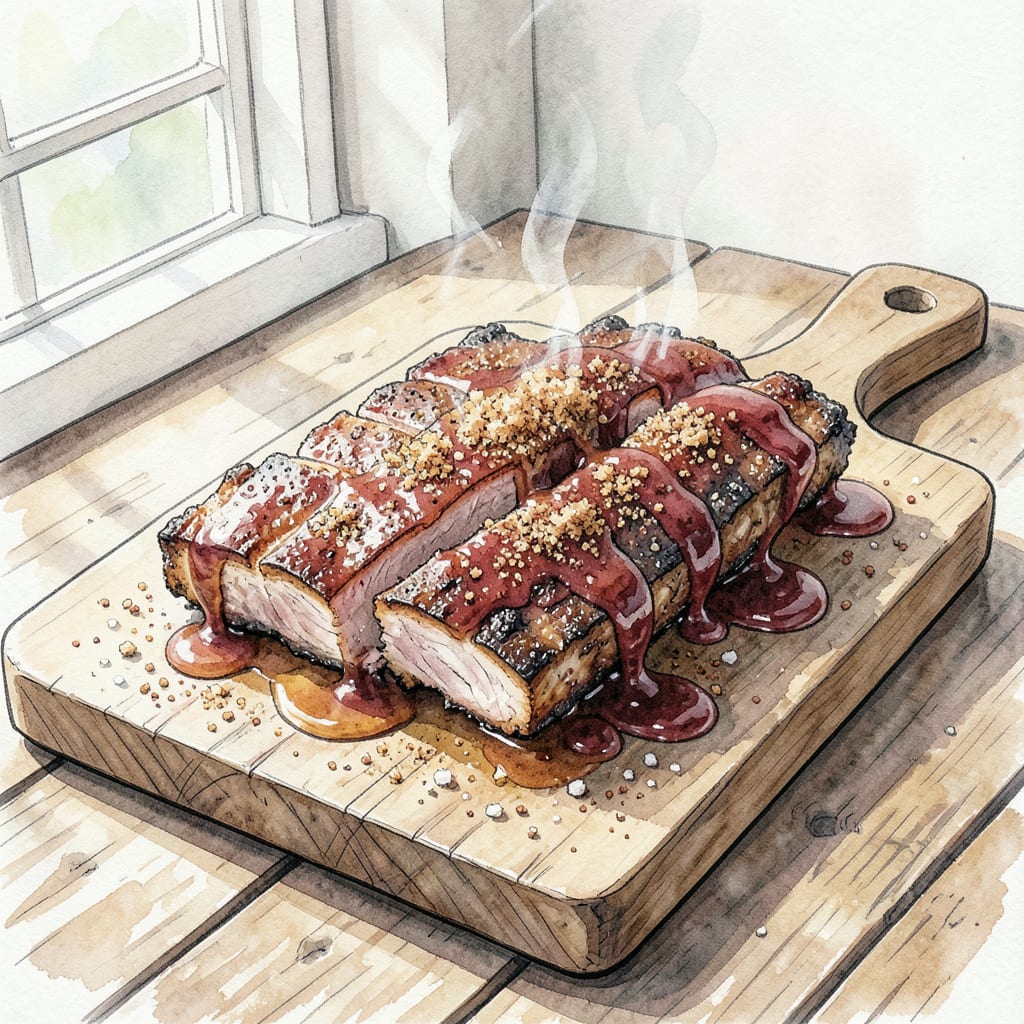
Achieving that perfect BBQ bark is an art I’ve mastered over years of slow-cooking ribs and experimenting with spice rubs. The secret lies in the combination of low-and-slow cooking, precise temperature control, and a dry rub that creates a flavorful crust. 🔥
By following my technique, you’ll get smoky, crusty perfection every time. Whether you’re a pitmaster or just starting out, this recipe delivers restaurant-quality results with tender meat and a bark that’s both flavorful and textured.
Ingredients for Bbq Bark Tips
Gather these ingredients for smoky, crusty BBQ perfection every time.
| Ingredient | Amount | Notes |
|---|---|---|
| Pork Ribs 🥩 | 2 lb | St. Louis-style, membrane removed |
| Brown Sugar 🍮 | ¼ cup | Dark brown for deeper flavor |
| Smoked Paprika 🌶️ | 2 tbsp | Smoked for authentic BBQ flavor |
| Garlic Powder 🧄 | 1 tbsp | Not garlic salt |
| Onion Powder 🧅 | 1 tbsp | Dehydrated for concentration |
| Salt 🧂 | 1 tbsp | Kosher or sea salt preferred |
| Black Pepper 🌶️ | 1 tsp | Freshly ground for best flavor |
| Cayenne Pepper 🔥 | ½ tsp | Adjust for heat preference |
| Apple Cider Vinegar 🍎 | ¼ cup | For spritzing during cooking |
| Wood Chips 🌲 | 2 cups | Hickory or apple wood for smoking |
| Olive Oil 🫒 | 2 tbsp | For coating ribs before rub |
[recipe_ingredient_scaler]
For the best bark, St. Louis-style pork ribs are ideal—they have the right meat-to-bone ratio. Most grocery stores carry them pre-cut, or you can ask your butcher to trim them. I like to get mine from Costco when I’m doing a big batch. The membrane on the back must be removed for the rub to penetrate properly.
The dry rub is where the magic happens. Smoked paprika gives that authentic BBQ flavor—don’t skip it. If you can’t find smoked paprika, regular paprika with a dash of liquid smoke works too. For the garlic and onion powder, Penzeys has excellent quality that makes a difference in the final flavor. Adjust the cayenne based on your heat tolerance.
These ribs keep beautifully—4-5 days in the fridge, 3 months frozen. Reheat with a quick spritz of apple cider vinegar to keep them moist. The dry rub can be made ahead and stored in an airtight container for up to 6 months.
Step-by-Step Instructions for Smoky, Crusty BBQ Bark
Let’s get started with the method that’ll give you that perfect BBQ bark every time.
🔥 Step 1: Prepare the Ribs and Dry Rub
Start by coating the 2 lb Pork Ribs evenly with 2 tbsp Olive Oil. This helps the dry rub adhere better to the meat. In a small bowl, mix together 0.25 cup Brown Sugar, 2 tbsp Smoked Paprika, 1 tbsp Garlic Powder, 1 tbsp Onion Powder, 1 tbsp Salt, 1 tsp Black Pepper, and 0.5 tsp Cayenne Pepper. I like to use my fingers to mix the spices thoroughly until they’re evenly distributed.
Apply the dry rub generously to both sides of the ribs, making sure to coat them evenly. Don’t be shy with the rub – you want a good layer on the meat. Let the ribs sit at room temperature for 30 minutes before smoking to allow the meat to relax and the rub to adhere.
🔥 Step 2: Set Up Your Smoker for Low and Slow
Preheat your smoker to 225-250°F using 2 cups Wood Chips (hickory or apple wood work great). I’ve found this temperature range gives you that perfect balance of smoke flavor without drying out the meat. Place the ribs bone-side down on the smoker grates.
Close the lid and let the ribs smoke undisturbed for 2 hours. During this time, the rub will start to form that beautiful bark we’re after. After 2 hours, spritz the ribs with 0.25 cup Apple Cider Vinegar to keep them moist and enhance the flavor. Repeat this spritzing every 30 minutes until the ribs reach your desired tenderness.
⏰ Step 3: Monitor and Finish
Continue smoking the ribs for another 2-3 hours until they reach an internal temperature of 195-203°F. You’ll know they’re done when the meat starts to pull away from the bones and a probe slides in easily. The bark should be dark mahogany and have a crispy texture.
Once the ribs are done, remove them from the smoker and let them rest for 10-15 minutes before slicing. This resting period allows the juices to redistribute, making the meat even more tender. Slice the ribs between the bones and serve immediately, enjoying that perfect BBQ bark.
Dietary Considerations for This Recipe
Dietary Considerations for BBQ Bark
When preparing BBQ bark, there are several dietary considerations to keep in mind. First, the dry rub contains gluten due to the brown sugar and some spice blends, so those with gluten intolerance should be cautious. I always check the ingredient labels to ensure compliance. Consider using gluten-free alternatives like coconut sugar or certified gluten-free spice blends. 🌾
Nutritional Information
A typical serving of BBQ ribs with bark (about 4 oz or 115g) contains approximately 350-400 calories, with 25-30g of protein, and 25-30g of fat. The exact nutritional content depends on the specific ingredients and portion sizes. The sodium content can be high due to the salt in the dry rub, so those on low-sodium diets should adjust accordingly.
Low-Carb and Keto Adaptations
For those on low-carb or keto diets, BBQ bark can be adapted by reducing or eliminating the brown sugar in the dry rub. I often substitute with Swerve or another low-carb sweetener. Be mindful of the barbecue sauce used during or after cooking, as many commercial sauces contain added sugars. Opt for a sugar-free BBQ sauce or make your own using keto-friendly ingredients.
Other Dietary Considerations
For vegetarians and vegans, there are alternatives to traditional BBQ bark. You can achieve a similar texture and flavor using portobello mushrooms or jackfruit with a modified dry rub. When cooking for large groups, consider labeling dishes with ingredient cards to help guests with dietary restrictions make informed choices.
Storage and Leftovers
Leftover BBQ ribs with bark can be stored in an airtight container in the refrigerator for up to 4-5 days. When reheating, a quick spritz with apple cider vinegar helps maintain moisture. You can also freeze the ribs for up to 3 months and reheat them slowly in the oven or smoker to preserve the bark’s texture.
Customizing for Dietary Needs
To accommodate various dietary needs, be flexible with ingredient substitutions. For example, using low-sodium salt or reducing the amount of salt in the dry rub can help those on sodium-restricted diets. Always communicate with your guests about the ingredients used, especially if they have severe food allergies or restrictions.
Nutrition Facts

Trained in classic French technique but raised on slow-cooked ribs and spicy rubs, she blends culinary skill with smoke and soul.
- Recipe for Boneless Pork Chops in Cast Iron Skillet: Sear and Baste to Juicy Perfection - October 3, 2026
- Recipe for Boneless Cross Rib Roast: Slow-Roasted Beef with Herb Crust - October 3, 2026
- Hamburgers in Sauce Recipe Crock Pot: Slow-Cooked Savory Delight - October 3, 2026