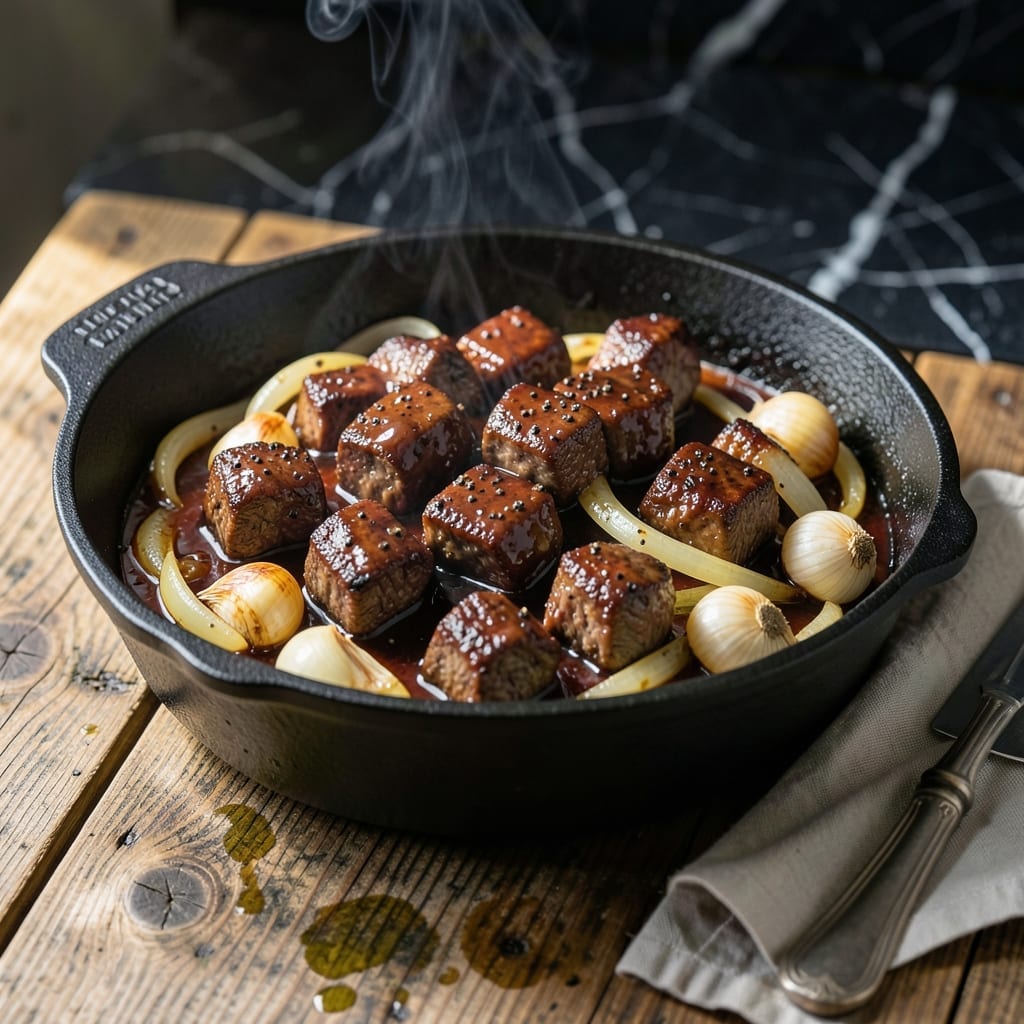
This recipe brings the bold flavors of military mess hall cooking to your home kitchen with tender beef cubes bathed in smoky barbecue sauce. The secret lies in the slow cooking process that transforms tough cuts into melt-in-your-mouth perfection.
I developed this method after years of perfecting my pitmaster skills, blending classic French techniques with traditional smoke-cooking traditions. The result is a dish that delivers tender, flavorful beef every time, just like the mess hall classics.
Ingredients for Bbq Beef Cubes Army
Pantry staples plus a well-chosen cut of beef bring this dish to life.
| Ingredient | Amount | Notes |
|---|---|---|
| Beef Chuck Roast 🥩 | 2 lb | Cut into 1-inch cubes, well-marbled |
| Barbecue Sauce 🍯 | 2 cups | Smoky, low-sugar variety preferred |
| Yellow Onion 🧅 | 1 whole | Medium, finely diced |
| Garlic Cloves 🧄 | 4 cloves | Minced for depth of flavor |
| Apple Cider Vinegar 🍏 | 2 tbsp | For brightness and balance |
| Worcestershire Sauce 🫒 | 1 tbsp | Adds umami complexity |
| Brown Sugar 🍚 | 2 tbsp | Light or dark, packed |
| Dijon Mustard 🟡 | 1 tbsp | Smooth, not whole grain |
| Smoked Paprika 🌶️ | 1 tsp | For authentic smoke flavor |
| Ground Black Pepper 🌶️ | 1 tsp | Freshly cracked for best results |
| Kosher Salt 🧂 | 1 ½ tsp | Diamond Crystal preferred |
| Beef Broth 🥩 | 1 cup | Low-sodium for control |
| Olive Oil 🫒 | 2 tbsp | For searing beef cubes |
| Liquid Smoke 🔥 | ½ tsp | Optional for extra smokiness |
[recipe_ingredient_scaler]
The beef is everything here. Chuck roast is your best bet—it’s got the fat marbling that turns into that melt-in-your-mouth texture after slow cooking. Look for USDA Choice or better at your butcher counter, or grab pre-cubed from Costco (they do the work for you). Avoid lean cuts like sirloin—they’ll just dry out. And whatever you do, don’t skip the searing step. That’s where the depth comes from.
No Worcestershire? Soy sauce plus a dash of lemon juice gets you close. Out of apple cider vinegar? White vinegar in a pinch (but the cider’s sweetness is ideal). Want more heat? Add a pinch of cayenne. The barbecue sauce can be store-bought—Stubb’s or Sweet Baby Ray’s work well—but if you’re feeling fancy, a homemade batch with extra smoked paprika takes this over the top.
This tastes even better the next day—flavors meld overnight. Leftovers keep 4-5 days in the fridge, or freeze for 3 months. Reheat gently on the stove with a splash of broth to keep the beef from drying out. Perfect for meal prep.
Why You’ll Love This Recipe
- I’ll be real: it tastes even better the next day, and the chuck roast stays tender for meal prep all week.
- One Pot Magic: I toss everything in a single pot—beef, BBQ sauce, onions, garlic—and let it simmer. Honestly, cleanup takes less time than the cooking.
- Smoky Sweet Bite: The apple cider vinegar cuts through the richness of the beef, while the BBQ sauce gives that sticky, smoky depth.
- Feeds the Squad: Between us, this is my go-to for game day or family gatherings—it stretches easily to feed a hungry crowd.
Instructions
Here’s the method. Straightforward, tested, works every time.
Step 1: Sear Beef Chuck Roast Cubes
Heat 2 tbsp olive oil in a large Dutch oven over medium-high heat until shimmering. Pat the 2 lb beef chuck roast cubes dry with paper towels, then season evenly with 1.5 tsp kosher salt and 1 tsp ground black pepper. I always let the beef sit at room temperature for 15 minutes before searing—this ensures even cooking.
Add the beef cubes in a single layer, working in batches if necessary to avoid crowding. Sear undisturbed for 2-3 minutes per side until deeply browned on all sides. You’ll know it’s ready to flip when the cubes release easily from the pan. Transfer the seared beef to a plate and set aside.
Step 2: Build the Flavor Base
In the same pot, add 1 whole yellow onion (finely diced) and cook over medium heat for 3-4 minutes, stirring occasionally, until softened and just starting to brown. Add 4 cloves garlic cloves (minced) and cook for 30 seconds until fragrant. Don’t let the garlic burn—it turns bitter quickly.
Stir in 2 tbsp brown sugar, 1 tbsp Dijon mustard, 1 tsp smoked paprika, 1 tbsp Worcestershire sauce, and 0.5 tsp liquid smoke. Cook for 1 minute, stirring constantly, until the sugar begins to caramelize. This creates a rich, complex base for your sauce.
Step 3: Deglaze and Simmer
Pour in 2 tbsp apple cider vinegar and scrape up all the browned bits from the bottom of the pot with a wooden spoon. These fond bits are packed with flavor. Then add 1 cup beef broth and bring to a simmer.
Return the seared beef cubes to the pot along with any accumulated juices. Pour in 2 cups barbecue sauce and stir to combine. The liquid should just cover the beef—if it doesn’t, add a splash more broth. Bring to a gentle simmer.
Step 4: Slow Cook to Tender Perfection
Reduce heat to low, cover the pot, and let it simmer gently for 2 to 2.5 hours. Check occasionally and stir to prevent sticking. You’ll know it’s done when the beef cubes are fork-tender and the sauce has thickened to coat the back of a spoon.
If the sauce reduces too much before the beef is tender, add ¼ cup water or broth to maintain the right consistency. The beef should fall apart slightly when pressed but still hold its cube shape. This low-and-slow method guarantees that tender result promised in the intro.
Pro Tips For Making Bbq Beef Cubes Army
- Cube Evenly: Cut the chuck roast into 1-inch cubes—any smaller and they dry out, any larger and they won’t absorb the barbecue sauce properly.
- Bloom the Aromatics: Cook the onions and garlic in the pot first until soft and fragrant, about 3-4 minutes; it builds a flavor base that raw garlic just can’t match.
- Skip the Boil: I learned this the hard way—simmer the beef gently in the sauce, don’t let it boil, or the cubes turn tough and chewy.
- Add Vinegar Last: Stir in the apple cider vinegar during the last 15 minutes of cooking to brighten the sauce without making the beef sour.
Dietary Considerations for This Dish
Gluten-Free Adaptations
This dish is naturally gluten-free if you choose the right barbecue sauce. I recommend Stubb’s Original or Sweet Baby Ray’s—both are certified gluten-free. Always check labels, as some brands add wheat-based thickeners. The Worcestershire sauce is the only other potential concern.
Worcestershire Substitute
Traditional Worcestershire sauce contains malt vinegar, which isn’t gluten-free. Swap it for Annie’s Organic Worcestershire or San-J Tamari (which is gluten-free soy sauce) plus ½ tsp lemon juice. This maintains the umami depth without gluten. 💡
You can also use coconut aminos—it’s a great gluten-free alternative with a similar savory punch.
Low-Sugar Options
For a lower-sugar version, use sugar-free barbecue sauce like G Hughes or Primal Kitchen. Reduce the brown sugar to 1 tbsp or replace it with a sugar substitute like monk fruit sweetener. The apple cider vinegar will still balance the flavors.
Dairy-Free Note
This recipe is naturally dairy-free, so no modifications are needed. Just ensure your barbecue sauce doesn’t contain hidden dairy derivatives—some creamy varieties might. Stick to classic smoky styles, and you’re good to go.
Allergen Awareness
The primary allergens to watch for are in the barbecue sauce and Worcestershire sauce. Some sauces contain soy or mustard, so always verify ingredients if allergies are a concern. For mustard-sensitive folks, omit the Dijon mustard—the dish will still be flavorful. 🌱
Nutrition Facts

Trained in classic French technique but raised on slow-cooked ribs and spicy rubs, she blends culinary skill with smoke and soul.
- Meat Loaf Recipe With Beef And Pork: Homestyle Blend With Rich Gravy - October 3, 2026
- Hamburger Patty Recipe No Egg: Juicy Bind With Breadcrumbs and Milk - October 3, 2026
- Recipe for Oven Baked Halibut: Buttery White Fish with Zesty Lemon Topping - October 3, 2026