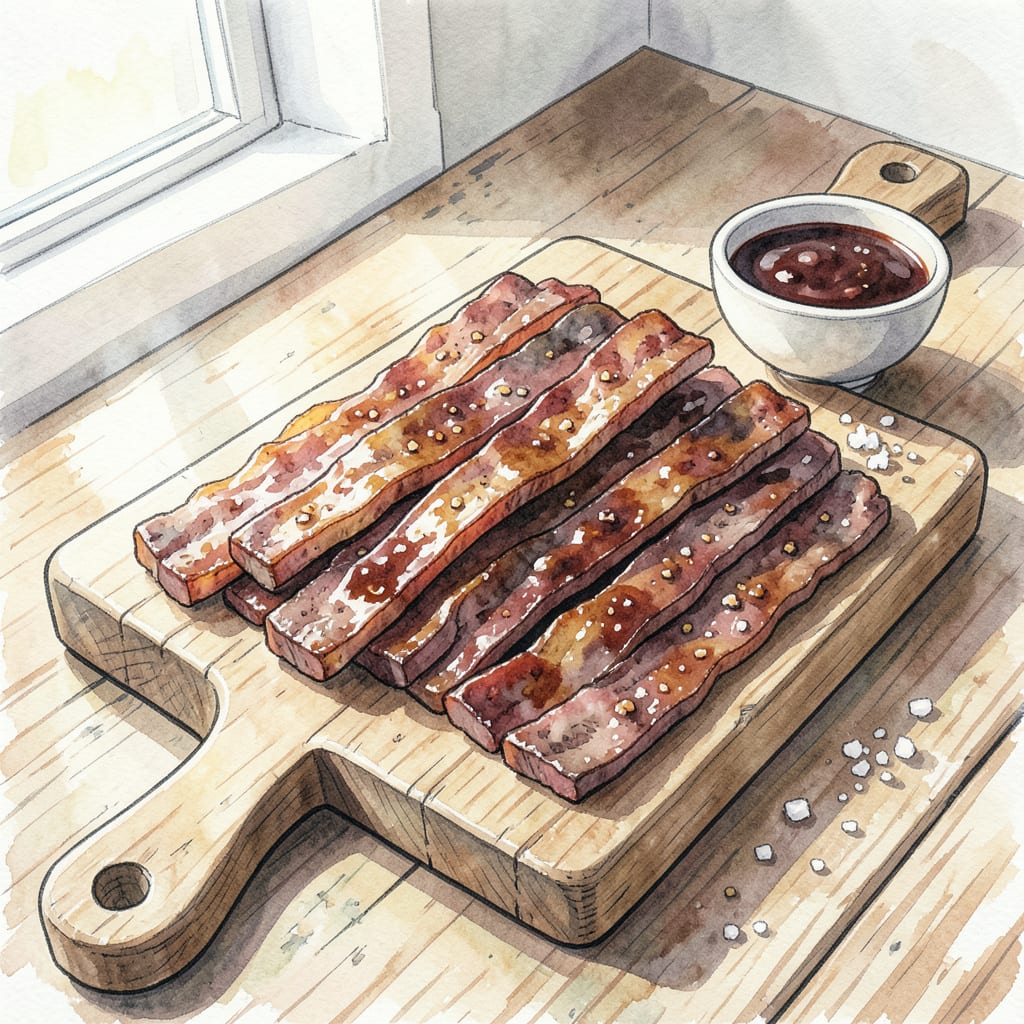
As a pitmaster, I’ve perfected the art of creating tender, smoky BBQ beef jerky using my smoker. 🔥 The key is low and slow cooking, which breaks down the tough fibers and infuses deep flavor.
By smoking at 160°F for 4-6 hours, you’ll achieve that perfect balance of tenderness and chew. The result is irresistibly tender jerky with a rich, BBQ flavor that’ll keep you coming back for more.
Ingredients for Bbq Beef Jerky Recipe Smoker
Essential ingredients for smoky beef jerky that’ll make your smoker shine.
| Ingredient | Amount | Notes |
|---|---|---|
| Top Round Steak 🥩 | 1 lb | Lean cut preferred |
| Worcestershire Sauce 💧 | ¼ cup | Adds depth of flavor |
| Soy Sauce 💧 | ¼ cup | Use low-sodium variety |
| Brown Sugar 🍮 | 2 tbsp | Balances smokiness |
| Smoked Paprika 🌶️ | 1 tbsp | For smoky flavor |
| Garlic Powder 🧄 | 1 tsp | Not garlic salt |
| Onion Powder 🧅 | 1 tsp | Adds savory depth |
| Black Pepper 🌶️ | ½ tsp | Freshly ground preferred |
| Cayenne Pepper 🔥 | ¼ tsp | Optional, for heat |
| Liquid Smoke 💧 | 2 tbsp | Hickory or mesquite flavor |
[recipe_ingredient_scaler]
Top round steak is ideal here. Costco and Sam’s Club often have great deals on bulk. Make sure to slice against the grain for tender jerky. If you’re using a different cut, just ensure it’s lean—fat doesn’t dry well.
No liquid smoke? You can omit it or substitute with smoked salt. The Worcestershire sauce adds complexity, but additional soy sauce can work in a pinch. For extra heat, increase cayenne or add red pepper flakes.
This jerky keeps for 2 weeks in an airtight container. Store in a cool, dry place or freeze for up to 3 months. I portion mine into Ziplock bags for easy snacking on the go.
Step-by-Step Instructions for BBQ Beef Jerky Smoker
Here’s the method for creating tender, smoky beef jerky using your smoker.
🔥 Step 1: Prepare the Marinade
In a large bowl, whisk together the 0.25 cup Worcestershire Sauce, 0.25 cup Soy Sauce, 2 tbsp Brown Sugar, 1 tbsp Smoked Paprika, 1 tsp Garlic Powder, 1 tsp Onion Powder, 0.5 tsp Black Pepper, and 0.25 tsp Cayenne Pepper. I like to use a fork to ensure the brown sugar dissolves completely into the liquid ingredients. The mixture should be smooth and well combined.
Add the 2 tbsp Liquid Smoke to the marinade and whisk until fully incorporated. The liquid smoke adds that authentic smoky flavor even before we get to the smoker. You can adjust the amount based on your personal preference for smokiness.
👨🍳 Step 2: Marinate the Beef
Trim any visible fat from the 1 lb Top Round Steak to prevent spoilage during the long drying process. Slice the beef into thin strips, about ¼ inch thick. I find it easier to slice the meat when it’s partially frozen.
Add the sliced beef to the marinade, ensuring all pieces are fully coated. Cover the bowl with plastic wrap and refrigerate for at least 4 hours or overnight (I prefer 8-12 hours for maximum flavor penetration).
🔥 Step 3: Set Up Your Smoker
Preheat your smoker to 160-180°F using your preferred type of wood chips or chunks. I recommend using a combination of hickory and apple wood for a balanced smoky flavor. Once the smoker reaches temperature and you see clean, thin blue smoke, you’re ready to add the beef.
Remove the beef strips from the marinade, allowing any excess to drip off. Place the strips on the smoker racks in a single layer, leaving space between each piece for air circulation. Close the smoker lid and let the jerky cook undisturbed for 4-6 hours until it reaches your desired level of dryness.
⏰ Step 4: Check and Rest the Jerky
After 4 hours, start checking the jerky for doneness. It should be dry on the surface but still slightly flexible. If you prefer a drier texture, continue smoking in 30-minute increments until it reaches your liking. The internal temperature should reach at least 160°F for food safety.
Once done, remove the jerky from the smoker and let it cool completely on wire racks. During cooling, the jerky will continue to dry slightly and develop its final texture. Store the cooled jerky in an airtight container to maintain freshness.
Common Mistakes When Making Perfect Results
Temperature Control Mistakes
One of the most critical mistakes when making beef jerky in a smoker is inconsistent temperature control. If your smoker fluctuates between 140-200°F, you’ll end up with unevenly cooked jerky. I always recommend using a reliable thermometer like ThermoWorks Smoke to maintain precise temperature monitoring. 🔥
Overcrowding the Smoker
When you pack too many beef strips onto the smoker racks, you prevent proper air circulation, leading to uneven drying. Leave at least ½ inch between each strip to ensure consistent smoke flow. I like to use multiple racks to spread out the jerky evenly.
Skipping the Rest Period
After smoking, it’s tempting to slice immediately, but resting is crucial. Let the jerky cool completely on wire racks for at least 30 minutes before storing. This allows the juices to redistribute and the texture to set properly. Skipping this step can result in jerky that’s too moist or unevenly textured.
Incorrect Slicing Technique
Slicing with the grain instead of against it will result in tough, chewy jerky. Always slice your beef into thin strips against the grain (¼ inch thick is ideal). I find it helps to partially freeze the meat before slicing to get clean, even cuts. For particularly stubborn pieces, a sharp Dalstrong knife makes all the difference.
Poor Marinade Penetration
If your marinade doesn’t fully coat the meat, you’ll end up with flavor inconsistencies.
Storage Mistakes
Storing jerky in plastic bags or non-airtight containers will cause it to become stale quickly. Instead, use glass Mason jars or metal tins with tight-fitting lids to maintain freshness. For longer storage, consider vacuum-sealing portions and freezing them – this keeps jerky fresh for up to 3 months.

Trained in classic French technique but raised on slow-cooked ribs and spicy rubs, she blends culinary skill with smoke and soul.
- Recipe for Boneless Pork Chops in Cast Iron Skillet: Sear and Baste to Juicy Perfection - October 3, 2026
- Recipe for Boneless Cross Rib Roast: Slow-Roasted Beef with Herb Crust - October 3, 2026
- Hamburgers in Sauce Recipe Crock Pot: Slow-Cooked Savory Delight - October 3, 2026