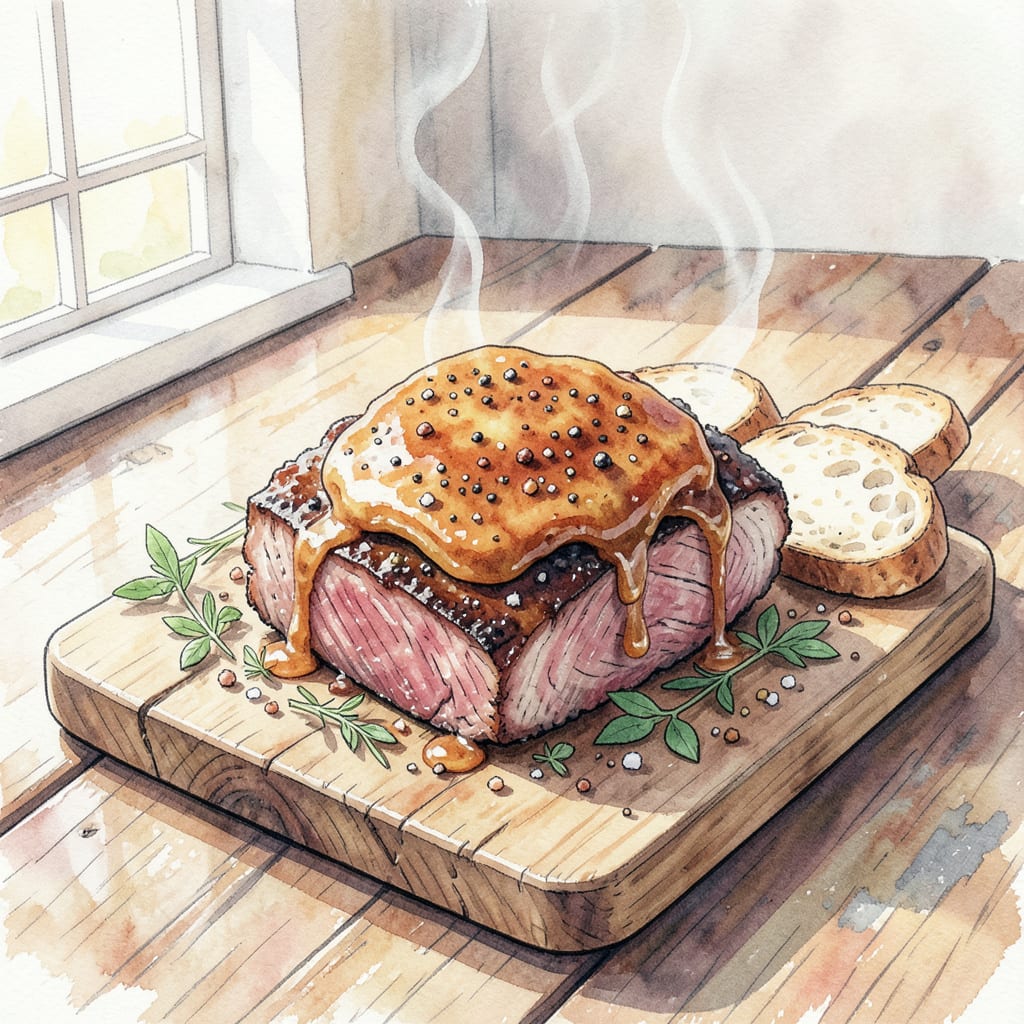
As a pitmaster, I’ve perfected the BBQ fat cap technique that delivers unforgettable crust and tender meat. 🔥 The secret lies in maintaining a consistent temperature and using the right type of wood to infuse that deep, smoky flavor.
My experience with slow-cooked ribs and spicy rubs has taught me that the key to tender meat is low and slow cooking. With this recipe, you’ll achieve a perfectly cooked fat cap that adds texture and flavor to your BBQ.
Ingredients for Bbq Fat Cap
Gather these ingredients to create the ultimate BBQ fat cap experience with tender, smoky meat.
| Ingredient | Amount | Notes |
|---|---|---|
| Beef Brisket 🥩 | 2 ½ lb | With fat cap intact |
| Kosher Salt 🧂 | 2 tbsp | Coarse grind preferred |
| Black Pepper 🌶️ | 1 tbsp | Freshly ground |
| Brown Sugar 🍮 | 2 tbsp | Dark or light brown |
| Smoked Paprika 🌿 | 1 tbsp | For smoky flavor |
| Garlic Powder 🧄 | 1 tsp | Not garlic salt |
| Onion Powder 🧅 | 1 tsp | Dehydrated onion |
| Chili Powder 🌶️ | 1 tsp | Mild or hot variety |
| Wood Chips 🌲 | 2 cups | For smoking, any variety |
| Beef Broth 🥘 | 1 cup | Low sodium, for moisture |
| Worcestershire Sauce 💧 | 2 tbsp | Adds depth, optional |
[recipe_ingredient_scaler]
The beef brisket matters here. Look for a 2.5 lb piece with a nice fat cap—this is where the magic happens. Most grocery stores carry brisket, but you might need to special order if they don’t have it in stock. I usually grab mine from Costco when I’m doing a big batch, but the regular supermarket stuff works fine for a weeknight dinner.
No smoked paprika? Regular paprika works, but you’re missing that deep smoke flavor. For the wood chips, hickory or mesquite gives a strong flavor, while applewood is milder—your call. If you’re using a charcoal smoker, make sure you’ve got enough to last the 8-10 hour cooking time. The beef broth keeps things moist, but you can swap it for beer or apple cider if you want a different flavor profile.
This recipe makes great leftovers—keeps 4-5 days in the fridge, freezes for 3 months. When reheating, wrap it tight in foil and warm it in the oven at 250°F. The fat cap will be even more tender the next day. I portion mine into containers so lunches are sorted for the week.
Step-by-Step Instructions for BBQ Fat Cap Brisket
Here’s the method to achieve that perfect BBQ fat cap – tender, flavorful, and unforgettable.
🔥 Step 1: Prepare the Brisket for Smoking
Start by trimming any uneven edges of the 2.5 lb Beef Brisket to create a uniform shape, but leave the fat cap intact. I like to leave about ¼ inch of fat on the brisket – this ensures it stays moist during the long smoking process. Generously season all surfaces with 2 tbsp Kosher Salt and 1 tbsp Black Pepper, pressing the seasoning into the meat to ensure it adheres.
Next, mix together 2 tbsp Brown Sugar, 1 tbsp Smoked Paprika, 1 tsp Garlic Powder, 1 tsp Onion Powder, and 1 tsp Chili Powder in a small bowl. Sprinkle this dry rub evenly over the brisket, making sure to coat all surfaces thoroughly. Let the brisket sit at room temperature for 1 hour before smoking to allow the meat to relax and the seasonings to penetrate.
🔥 Step 2: Set Up Your Smoker for Low and Slow
Preheat your smoker to 225-250°F using your preferred type of 2 cups Wood Chips. I like to use a mix of hickory and apple wood for that perfect balance of smokiness. Once the smoker is ready and producing clean, thin blue smoke, place the brisket in the smoker fat-side up. This allows the rendering fat to baste the meat as it cooks. Close the lid and let it smoke undisturbed for 4-5 hours until it reaches an internal temperature of 160°F.
During this time, resist the temptation to open the lid too often – every peek adds 15-20 minutes to your cook time. You’ll know it’s working when you smell that beautiful smoke infusing into the meat. If you have a water pan, keep it filled with 1 cup Beef Broth to maintain moisture in the smoker.
🥘 Step 3: Wrap and Finish with Moisture
Once the brisket reaches 160°F internally, remove it from the smoker and wrap it tightly in foil with 2 tbsp Worcestershire Sauce (if using). This “Texas crutch” helps push through the stall and adds moisture. Return the wrapped brisket to the smoker and continue cooking until it reaches an internal temperature of 200-205°F, usually another 2-3 hours.
When done, remove the brisket from the smoker and let it rest wrapped for at least 1 hour. This resting period allows the juices to redistribute throughout the meat, ensuring every slice is tender and flavorful. The fat cap should be beautifully rendered and the meat should be probe-tender.
🔪 Step 4: Slice and Serve
After resting, unwrap the brisket and slice it against the grain using a sharp knife. You should see a beautiful bark on the outside and a tender, juicy interior. The fat cap should have rendered down to create a delicious, unctuous texture. Serve immediately, enjoying the fruits of your patience and skill.
Dietary Considerations for This Recipe
Dietary Modifications
While this BBQ brisket recipe isn’t keto-friendly due to the brown sugar in the rub, you can easily modify it by substituting with 1-2 tbsp coconut sugar or a sugar-free alternative. For gluten-free needs, ensure your chili powder and Worcestershire sauce are certified gluten-free.
Low-Sodium Adjustments
To reduce sodium, use low-sodium beef broth and omit the Worcestershire sauce, which is high in sodium. You can also reduce the kosher salt to 1 tbsp and use a salt-free seasoning blend for additional flavor.
Dairy-Free Considerations
This recipe is naturally dairy-free, making it suitable for various dietary restrictions. If serving with sides, choose dairy-free options like coleslaw made with vegan mayonnaise or baked beans without added dairy.
Meat Alternatives
For vegetarian or vegan versions, consider using portobello mushrooms or jackfruit as substitutes. Marinate them in a mixture of beef broth, smoked paprika, and garlic powder before slow-cooking. The smoking process will still provide that authentic BBQ flavor.
Additional Tips
When making dietary modifications, remember that changing one ingredient can affect the overall flavor profile. For instance, omitting brown sugar will reduce the bark formation, so you might need to adjust cooking times or temperatures. Always monitor your brisket’s internal temperature to ensure food safety.

Trained in classic French technique but raised on slow-cooked ribs and spicy rubs, she blends culinary skill with smoke and soul.
- Recipe for Boneless Pork Chops in Cast Iron Skillet: Sear and Baste to Juicy Perfection - October 3, 2026
- Recipe for Boneless Cross Rib Roast: Slow-Roasted Beef with Herb Crust - October 3, 2026
- Hamburgers in Sauce Recipe Crock Pot: Slow-Cooked Savory Delight - October 3, 2026