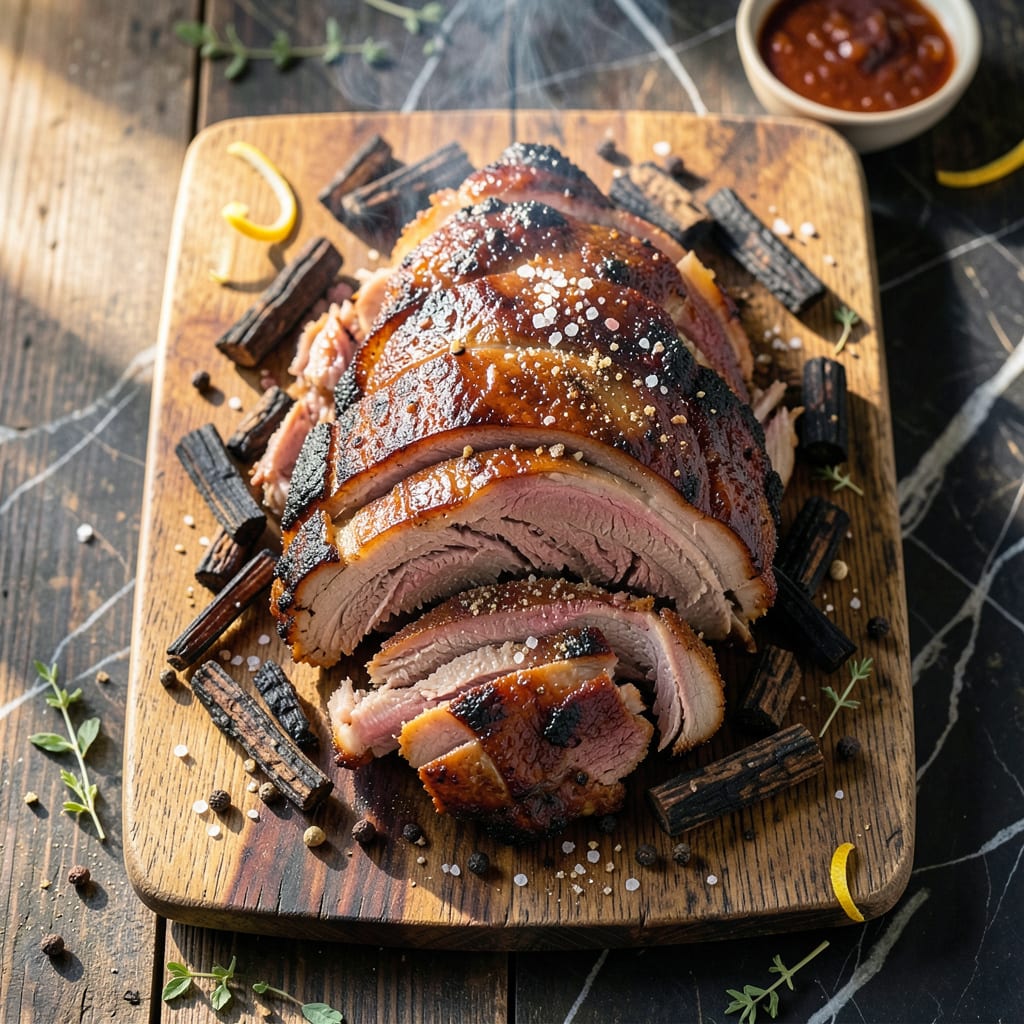
There’s nothing quite like the aroma of a slow-smoked hog cooking over hickory and oak. I’ve spent years perfecting this method to achieve that fall-off-the-bone tenderness that makes BBQ legendary.
This technique transforms tough cuts into tender, juicy meat with a smoky crust. The key is patience—low heat and careful attention create a dish worth the wait.
Ingredients for Bbq Hog Roast
Quality cuts and wood smoke create that legendary low-and-slow BBQ experience worth waiting for.
| Ingredient | Amount | Notes |
|---|---|---|
| Pork Shoulder 🐷 | 8 lb | Bone-in, skin-on preferred |
| Hickory Wood Chunks 🪵 | 4 lb | For smoking, soaked 1 hour |
| Oak Wood Chunks 🪵 | 2 lb | For smoking, soaked 1 hour |
| Coarse Kosher Salt 🧂 | ½ cup | Diamond Crystal preferred |
| Black Peppercorns 🌶️ | ¼ cup | Freshly cracked for best flavor |
| Garlic Powder 🧄 | 3 tbsp | Not garlic salt |
| Onion Powder 🧅 | 3 tbsp | Fresh ground preferred |
| Smoked Paprika 🌶️ | 2 tbsp | Sweet or hot variety |
| Brown Sugar 🍚 | 1 cup | Light or dark, packed |
| Yellow Mustard 🟡 | ½ cup | For binder in rub |
| Apple Cider Vinegar 🍏 | 1 cup | For mopping sauce |
| BBQ Sauce 🍯 | 2 cups | Quality store-bought or homemade |
| Unsalted Butter 🧈 | ½ cup | For finishing, melted |
[recipeingredientscaler]
The pork shoulder is non-negotiable for authentic BBQ hog roast. Bone-in, skin-on provides the best texture and moisture retention. Source from a reputable butcher or specialty meat market—look for good marbling and a thick fat cap. Hickory and oak wood chunks should be food-grade, untreated. Soak them for at least one hour before smoking to prevent burning. Costco and Whole Foods often carry quality wood chunks for smoking.
For the rub, Diamond Crystal kosher salt is the professional choice for its clean flavor and even distribution. If brown sugar is unavailable, turbinado or raw sugar works at a 1:1 ratio. No apple cider vinegar? White vinegar in a pinch, though the flavor profile will be sharper. The BBQ sauce can be store-bought—Stubb’s or Sweet Baby Ray’s are reliable—but homemade allows for customization. Skip the pre-ground black pepper; freshly cracked makes a noticeable difference.
The smoked hog can rest at room temperature for up to 2 hours before serving, which actually improves tenderness. Leftovers keep in the fridge for 4-5 days or freeze for 3 months. For best results, reheat gently in a covered dish with a splash of apple cider vinegar to maintain moisture.
Why You’ll Love This Recipe
- Set It and Forget: I love throwing the pork shoulder on the smoker with hickory and oak chunks, then letting the low heat do all the work for hours.
- Smoky Perfection: That rich, deep flavor from the wood chunks with just salt and pepper letting the pork shine is ridiculous.
- Feeds a Crowd: Honestly, this is my go-to for summer gatherings—one big cut serves everyone with minimal effort.
- Leftovers for Days: The pulled pork keeps beautifully, so I get sandwiches, tacos, and quick dinners all week long.
Step-by-Step Instructions for BBQ Hog Roast
Master the technique of smoking pork shoulder to achieve unparalleled tenderness and depth of flavor.
Step 1: Prepare and Season the Pork Shoulder
Begin by patting the 8 lb Pork Shoulder dry with paper towels to ensure the rub adheres properly. In a bowl, combine the 0.5 cup Coarse Kosher Salt, freshly cracked 0.25 cup Black Peppercorns, 3 tbsp Garlic Powder, 3 tbsp Onion Powder, and 2 tbsp Smoked Paprika.
Brush the 8 lb Pork Shoulder with 0.5 cup Yellow Mustard as a binder, then generously coat it with the rub mixture, pressing it into the meat to create a flavorful crust. Allow the seasoned pork to rest at room temperature for 30-45 minutes while you prepare the smoker.
Step 2: Set Up the Smoker with Wood Chunks
Soak the 4 lb Hickory Wood Chunks and 2 lb Oak Wood Chunks in water for at least 1 hour to ensure they smolder and produce clean smoke. Preheat your smoker to 225-250°F, adding the soaked wood chunks to the firebox or smoker box once the temperature stabilizes.
Place a water pan inside the smoker to maintain humidity, which is critical for keeping the pork moist during the long cook. You’re aiming for thin, blue smoke—this indicates ideal combustion and imparts the best flavor.
Step 3: Smoke the Pork to Perfection
Place the 8 lb Pork Shoulder fat-side up on the smoker grates. Smoke undisturbed for 6-8 hours, or until the internal temperature reaches 165-170°F. This is the “stall” phase, where the meat’s internal temperature plateaus as moisture evaporates.
Every 2 hours, spritz the pork with a mixture of 1 cup Apple Cider Vinegar and water to keep the surface moist and enhance the bark formation. Resist the urge to open the smoker unnecessarily, as this can prolong the cooking time.
Step 4: Wrap, Finish, and Rest
Once the pork reaches 170°F, wrap it tightly in butcher paper or aluminum foil to power through the stall. Return it to the smoker and continue cooking until the internal temperature hits 200-205°F, which typically takes another 2-3 hours.
Remove the pork from the smoker and let it rest, still wrapped, in a cooler or warm oven for at least 1 hour. This resting period allows the juices to redistribute, ensuring the meat is fall-off-the-bone tender when sliced.
Step 5: Shred and Sauce
Unwrap the pork and discard any large fat caps. Using two forks or meat claws, shred the pork into bite-sized pieces. In a large bowl, combine the shredded pork with 2 cups BBQ Sauce and 0.5 cup Unsalted Butter, mixing gently to coat evenly.
Taste and adjust seasoning if needed, then serve immediately on buns or as a main dish. The result should be juicy, smoky, and tender, with a perfect balance of bark and moisture in every bite.
Pro Tips For Making Bbq Hog Roast
- Start Low and Slow: Keep your smoker between 225-250°F—any hotter and the pork shoulder will toughen up before it has a chance to get tender. I learned this the hard way after pulling a dry, chewy roast that looked perfect but ate like shoe leather.
- Dry the Skin: Pat the pork shoulder dry with paper towels before seasoning, then let it sit uncovered in the fridge for an hour. Sounds weird, but it works: the salt sticks better and the skin crisps up like it should.
- Skip the Over-Smoking: Hickory and oak are strong—use just 3-4 chunks total, swapped out halfway through. After burning a batch that tasted like a campfire, I finally figured out that less wood actually gives better flavor.
- Rest Overnight: Once it hits 195-200°F internally, wrap it in towels and let it rest in a cooler for at least 4 hours, or overnight. My grandmother swore by this, and she was right: the meat reabsorbs all the juices and pulls apart like butter.
Essential Equipment for bbq hog roast
Smoker Selection
For authentic results, I rely on my Weber Smokey Mountain—its vertical design maintains consistent 225-250°F heat. A quality offset smoker works too, but requires more attention. Avoid cheap electric models; they rarely hit the right temperature range. 🔥
Wood for Flavor
Hickory and oak are non-negotiable for that classic BBQ profile. I source mine from Fruitwood & Forest—they sell untreated, food-grade chunks. Soak them for 1 hour before use to prevent bitter smoke.
Temperature Control
A dual-probe thermometer like ThermoWorks Smoke is essential. One probe monitors smoker temp, the other tracks internal meat temp. This prevents the guesswork that ruins so many roasts.
Essential Tools
Invest in heat-resistant gloves and meat claws for handling. I also keep a water spray bottle handy to tame flare-ups. A drip pan catches renderings and makes cleanup easier.
Resting Setup
After smoking, rest your pork in a cooler wrapped in towels for 1-2 hours. This keeps it warm while juices redistribute. I use a Yeti Tundra—it holds heat perfectly.
Finishing Touches
For saucing, a large stainless mixing bowl and silicone spatula work best. I prefer Fox Run bowls—they’re durable and easy to clean. 💡
Nutrition Facts

Trained in classic French technique but raised on slow-cooked ribs and spicy rubs, she blends culinary skill with smoke and soul.
- Recipe for Boneless Pork Chops in Cast Iron Skillet: Sear and Baste to Juicy Perfection - October 3, 2026
- Recipe for Boneless Cross Rib Roast: Slow-Roasted Beef with Herb Crust - October 3, 2026
- Hamburgers in Sauce Recipe Crock Pot: Slow-Cooked Savory Delight - October 3, 2026