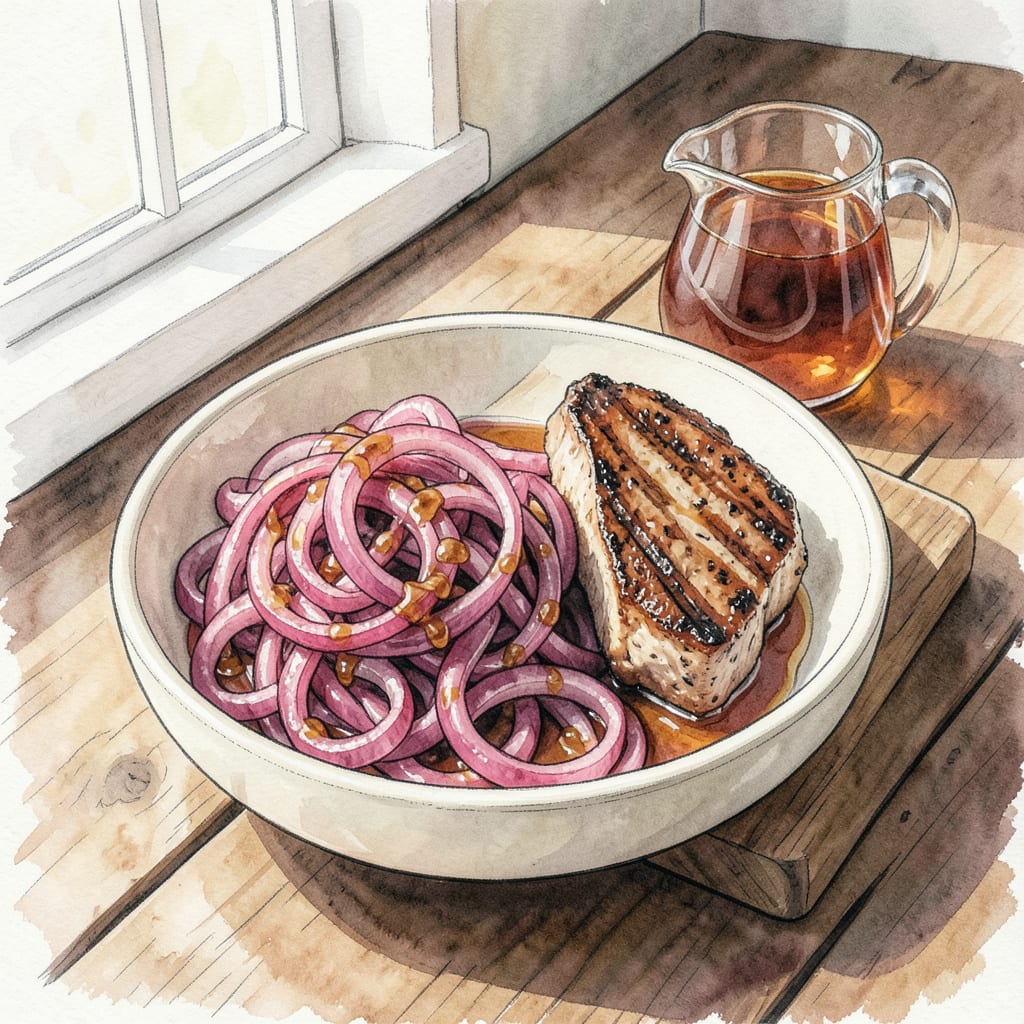
I’ve perfected a quick BBQ pickled onions recipe that adds tangy-sweet magic to any grilled dish. Ready in just 15 minutes, these onions bring professional pitmasters’ techniques to your backyard.
Thinly sliced red onions marinate in a zesty vinegar-based brine, creating a flavor bomb that elevates burgers, hot dogs, or pulled pork. Store leftovers in the fridge for up to 2 weeks – they’ll keep getting better!
Ingredients for Bbq Pickled Onions Recipe Quick
Quick pickling magic happens with just a few pantry staples and some patience.
| Ingredient | Amount | Notes |
|---|---|---|
| Red Onions 🧅 | 1 whole | Thinly sliced, preferably red |
| Apple Cider Vinegar 🍎 | 1 cup | Or white wine vinegar |
| Water 💧 | 1 cup | For balanced brine |
| Granulated Sugar 🍮 | ½ cup | Or brown sugar |
| Kosher Salt 🧂 | 2 tbsp | Diamond Crystal preferred |
| Black Peppercorns 🌶️ | 1 tsp | Freshly ground |
| Optional: Smoked Paprika 🌶️ | ¼ tsp | For smoky flavor |
| Optional: Red Pepper Flakes 🔥 | ¼ tsp | For spicy kick |
[recipe_ingredient_scaler]
The onions are the star, so choose firm, vibrant red onions. Whole Foods or Trader Joe’s usually have great ones. Slice them thin and uniform so they pickle evenly. If you’re short on time, you can skip the sugar and salt, but they do make a difference in the flavor.
No apple cider vinegar? White wine vinegar or white distilled vinegar works too. If you want a bit of heat, red pepper flakes are your friend. For a smoky twist, add some smoked paprika. You can adjust the sugar and salt to taste, or try using brown sugar for a richer flavor.
These pickled onions keep for up to 2 weeks in the fridge. Store them in an airtight container and they’ll be ready to elevate your next burger or hot dog. They actually get better with time, so don’t be afraid to make a double batch. Just be sure to use a clean utensil when serving to keep them fresh.
Step-by-Step Instructions for BBQ Pickled Onions
Here’s the method to create these tangy-sweet onions in minutes – simple and effective.
Step 1: Prepare the Red Onions
Start by thinly slicing the 1 whole red onion. I prefer using a mandoline for consistent, thin slices that pickle evenly. If you don’t have a mandoline, a sharp chef’s knife will work – just try to keep the slices as uniform as possible so they pickle at the same rate.
The onions will start to release their moisture as you slice them. This is normal – we’ll use this liquid to create a rich, flavorful brine. You should end up with about 2 cups of sliced onions.
Step 2: Create the Pickling Brine
In a medium saucepan, combine the 1 cup apple cider vinegar, 1 cup water, 0.5 cup granulated sugar, and 2 tbsp kosher salt. Place the saucepan over medium heat and stir until the sugar and salt dissolve completely. You’ll know they’re fully incorporated when the liquid is clear and there’s no grainy texture.
Bring the mixture to a simmer – you’ll see tiny bubbles forming around the edges. This should take about 5-7 minutes. Once it’s simmering, remove it from the heat immediately to prevent the brine from reducing too much.
Step 3: Pickle the Onions
Add the sliced red onions to a heatproof jar or container. Pour the hot pickling brine over the onions, making sure they’re completely submerged. If necessary, you can weight them down with a small, clean stone or fermentation weight to keep them under the liquid.
Let the onions cool to room temperature. This step is crucial – it allows the flavors to meld and the onions to pickle properly. You’ll start to notice the onions turning a beautiful pinkish-red color as they pickle.
Step 4: Add Flavor and Store
Once the onions have cooled, add the 1 tsp black peppercorns. If you’re using the optional spices, now’s the time to add them – either the 0.25 tsp smoked paprika for that smoky BBQ flavor or the 0.25 tsp red pepper flakes for a spicy kick. Stir gently to distribute the spices evenly.
Transfer the pickled onions to an airtight container and store them in the refrigerator. They’ll be ready to use in about 30 minutes and will keep for up to 2 weeks in the fridge. The flavors will continue to develop over time, becoming more complex and delicious.
Dietary Considerations for bbq pickled onions recipe quick
Gluten-Free and Keto Considerations
These BBQ pickled onions are naturally gluten-free, making them perfect for gluten-sensitive guests. The primary ingredients – red onions, apple cider vinegar, and spices – contain no gluten. However, always check your vinegar brand’s certification if you’re serving guests with celiac disease.
Keto Compatibility
This recipe is keto-friendly when used as a condiment. A ¼ cup serving contains approximately 5g net carbs. The sugar content comes from the ½ cup granulated sugar in the brine, but most of that sugar remains in the liquid rather than being absorbed by the onions. For stricter keto diets, you can reduce the sugar to ¼ cup without significantly affecting flavor.
Vegan and Vegetarian Suitability
These pickled onions are both vegan and vegetarian-friendly. There’s no animal-derived ingredient in the recipe. The kosher salt and black peppercorns are plant-based, making this condiment suitable for both dietary preferences. You can use it to enhance plant-based BBQ dishes or as a topping for vegan burgers.
Low-Sodium Adaptation
For a lower-sodium version, you can reduce the 2 tbsp kosher salt to 1 tablespoon. This will still provide enough salt to balance the flavors without making the brine too salty. Alternatively, you can substitute with a salt alternative like potassium chloride, though this may slightly alter the flavor profile.
Storage and Safety
Always store these pickled onions in an airtight container in the refrigerator to maintain freshness and prevent contamination. They’ll keep for up to 2 weeks. When serving, use a clean utensil to avoid introducing bacteria into the container. If you notice any off odors or mold, discard the onions immediately.
Customization for Dietary Needs
For a sugar-free version, you can substitute the granulated sugar with a natural sweetener like stevia or erythritol. Start with a small amount – about ½ teaspoon – and adjust to taste, as these sweeteners can be more potent than sugar. This modification works well if you’re reducing overall sugar content or catering to diabetic dietary needs.
Nutrition Facts

Trained in classic French technique but raised on slow-cooked ribs and spicy rubs, she blends culinary skill with smoke and soul.
- Recipe for Boneless Pork Chops in Cast Iron Skillet: Sear and Baste to Juicy Perfection - October 3, 2026
- Recipe for Boneless Cross Rib Roast: Slow-Roasted Beef with Herb Crust - October 3, 2026
- Hamburgers in Sauce Recipe Crock Pot: Slow-Cooked Savory Delight - October 3, 2026