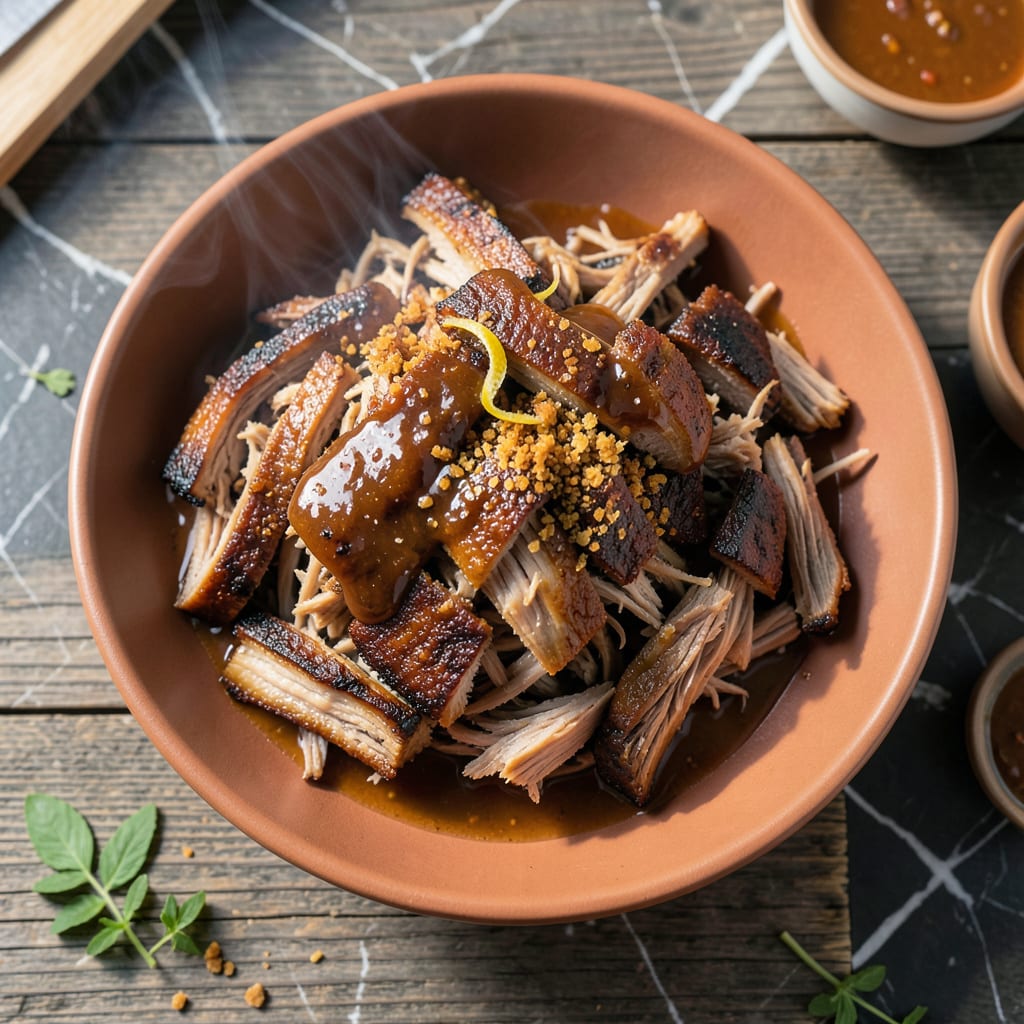
This recipe transforms a humble pork shoulder into fall-apart tender BBQ perfection with minimal effort. The slow cooking process allows the meat to absorb smoky flavors deeply.
I developed this method after years of competition cooking, focusing on simplicity without sacrificing quality. The result is juicy, flavorful pork that pulls apart with just a fork.
Ingredients for Bbq Pork Boston Butt
Transform humble pork shoulder into smoky BBQ perfection with these essential ingredients.
| Ingredient | Amount | Notes |
|---|---|---|
| Boston Butt Pork Shoulder 🐖 | 4 lb | Bone-in preferred for flavor |
| Yellow Mustard 🟡 | ¼ cup | For rub binding |
| Light Brown Sugar 🍚 | ½ cup | Packed firmly |
| Paprika 🌶️ | 2 tbsp | Sweet or smoked variety |
| Garlic Powder 🧄 | 1 tbsp | Freshly ground if possible |
| Onion Powder 🧅 | 1 tbsp | Fine grain preferred |
| Kosher Salt 🧂 | 1 tbsp | Diamond Crystal brand recommended |
| Ground Black Pepper 🌶️ | 1 tbsp | Freshly ground preferred |
| Cayenne Pepper 🔥 | ½ tsp | Adjust for heat preference |
| Apple Cider Vinegar 🍏 | ½ cup | For tangy balance |
| BBQ Sauce 🍯 | 2 cups | Low-sugar variety preferred |
| Chicken Broth 🥣 | 1 cup | Low-sodium for control |
| Hickory Wood Chips 🪵 | 1 cup | Soaked in water 30 minutes |
| Liquid Smoke 💨 | 1 tsp | Optional for extra smokiness |
[recipeingredientscaler]
The pork shoulder is non-negotiable here. Boston Butt (despite the name) comes from the upper shoulder and has the perfect fat-to-meat ratio for low-and-slow cooking. Look for bone-in cuts at Costco or your local butcher—this adds depth to the final flavor. The rub ingredients should be fresh; spices lose potency after six months, so check those dates.
No apple cider vinegar? White vinegar in a pinch, but expect a sharper tang. For the BBQ sauce, Stubb’s or Sweet Baby Ray’s are reliable grocery store options. If you want to go homemade, combine ketchup, molasses, vinegar, and spices. Bone-in vs. boneless is mostly preference, but bone-in retains moisture better during the long cook.
The cooked pork freezes beautifully for up to 3 months. Store in airtight containers with some of the cooking liquid to maintain moisture. Reheat gently in a covered dish with a splash of broth. The rub can be pre-mixed and stored in an airtight container for up to 2 weeks.
Why You’ll Love This Recipe
- Set It and Forget: I toss the Boston butt with mustard, brown sugar, and spices, then let the oven do the work.
- Sweet & Smoky Magic: That combo of brown sugar and paprika creates a caramelized crust I can’t resist.
- Feeds the Whole Crew: One shoulder turns into pulled pork sandwiches, tacos, or meal prep for days.
- Leftovers for Days: I always make extra—it reheats beautifully and tastes even better the next day.
Step-by-Step Instructions for BBQ Pork Boston Butt
Master the art of slow-cooked pulled pork with this proven method for fall-apart tenderness.
Step 1: Prepare the Dry Rub and Coat the Pork
In a small bowl, combine the 2 tbsp Paprika, 1 tbsp Garlic Powder, 1 tbsp Onion Powder, 1 tbsp Kosher Salt, 1 tbsp Ground Black Pepper, and 0.5 tsp Cayenne Pepper. This blend creates a balanced, smoky-sweet crust that will form a beautiful bark during cooking.
Pat the 4 lb Boston Butt Pork Shoulder dry with paper towels, then brush all over with the 0.25 cup Yellow Mustard. The mustard acts as a binder for the rub while adding a subtle tang. Press the dry rub mixture generously onto all surfaces of the pork, ensuring an even coating. Let it sit at room temperature for 30 minutes while you prepare the smoker.
Step 2: Set Up the Smoker with Wood Chips
Soak the 1 cup Hickory Wood Chips in water for at least 30 minutes to ensure they smolder rather than burn. This creates the perfect smoke for infusing flavor into the pork. Drain the wood chips just before use and add them to your smoker’s wood chip tray.
Preheat your smoker to 225°F. If using an electric smoker, add the 1 tsp Liquid Smoke to the water pan for an extra layer of smokiness. Maintain this temperature consistently throughout the cooking process—low and slow is the key to breaking down the collagen in the pork shoulder for that signature tenderness.
Step 3: Smoke the Pork to Perfection
Place the pork in the smoker, fat-side up, so the rendered fat bastes the meat as it cooks. Position a drip pan filled with the 1 cup Chicken Broth and 0.5 cup Apple Cider Vinegar beneath the pork to catch drippings and add moisture to the cooking environment.
Smoke the pork undisturbed for 8-10 hours, or until the internal temperature reaches 195-203°F and a meat thermometer slides in effortlessly. Resist the urge to open the smoker frequently—every peek releases valuable heat and smoke. The pork is done when it reaches a deep mahogany color and the bone pulls away cleanly.
Step 4: Shred and Finish with BBQ Sauce
Remove the pork from the smoker and let it rest, tented with foil, for 30 minutes. This allows the juices to redistribute, ensuring moist, flavorful meat. Using two forks or meat claws, shred the pork into bite-sized pieces, discarding any large fat chunks or the bone.
Transfer the shredded pork to a large bowl and toss with 2 cups BBQ Sauce. The pork should be glistening and coated evenly, with just enough sauce to enhance its natural juices without making it soggy. Serve immediately on buns with additional sauce on the side, or store in the refrigerator for up to 4 days for even deeper flavor development.
Pro Tips For Making Bbq Pork Boston Butt
- Low and Slow: Cook at 225°F for 8-10 hours—rushing it with higher heat gives you tough meat instead of that fall-apart texture. I learned this the hard way after pulling a dry, chewy shoulder at 300°F.
- Rub Overnight: Mix your yellow mustard, brown sugar, paprika, and garlic powder into a paste and coat the butt the night before. Sounds weird, but it works: the flavors sink deep and the crust forms better.
- Skip the Rush: Don’t pull the pork too early just because it looks done—use a probe thermometer and wait for 195-203°F internally. After burning three batches, I finally figured out patience is non-negotiable.
- Rest Under Foil: Give it a solid 30-45 minutes wrapped in foil after cooking—this isn’t the prettiest method, but it’s the tastiest, letting juices redistribute so they don’t spill out when you slice.
Flavor Customization for These Flavors
Spice Level Adjustments
For a milder flavor, reduce the cayenne pepper to ¼ tsp or omit it entirely. If you love heat, add 1 tsp chipotle powder to your dry rub—this gives a smoky heat that complements the pork beautifully. I often add a pinch to my personal batches.
Sweetness Variations
Swap the light brown sugar for dark brown sugar for a deeper molasses flavor. Or try turbinado sugar for a coarser texture that creates a more pronounced bark. For a sugar-free option, use 1 tbsp erythritol instead.
Smoke Flavor Options
Instead of hickory, try apple wood chips for a sweeter, fruitier smoke. Or use pecan wood for a milder, nuttier flavor. I forage wild hickory branches sometimes for an extra earthy note. 🌿
For electric smokers, add 1 tsp mesquite liquid smoke to the water pan for a stronger profile.
Sauce Customizations
Mix ½ cup BBQ sauce with 2 tbsp honey and 1 tbsp bourbon for a sticky glaze. Or stir in 1 tbsp mustard for a tangy kick. I prefer a vinegar-based sauce for a Carolina-style twist.
Herb Infusions
Add 1 tbsp dried rosemary or thyme to your rub for an herby depth. Fresh herbs work too—just use 3 times the amount. I often gather wild rosemary along the coast for a unique aromatic touch. 💛
Nutrition Facts

Trained in classic French technique but raised on slow-cooked ribs and spicy rubs, she blends culinary skill with smoke and soul.
- Recipe for Boneless Pork Chops in Cast Iron Skillet: Sear and Baste to Juicy Perfection - October 3, 2026
- Recipe for Boneless Cross Rib Roast: Slow-Roasted Beef with Herb Crust - October 3, 2026
- Hamburgers in Sauce Recipe Crock Pot: Slow-Cooked Savory Delight - October 3, 2026