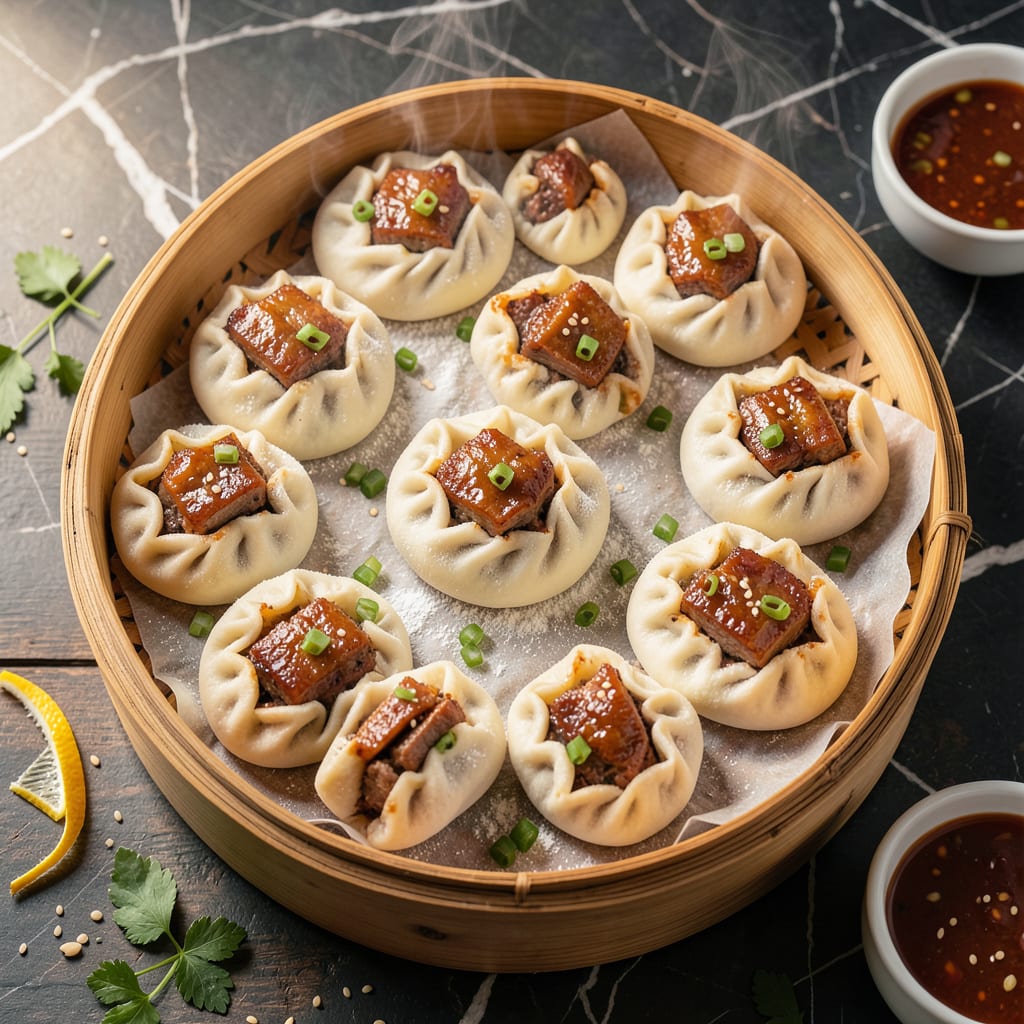
This recipe delivers perfectly soft, fluffy buns with sweet and savory BBQ pork filling. I developed this method after years of testing to achieve that ideal balance of texture and flavor.
The dough comes together with simple ingredients, while the filling combines tender pork with a rich, sticky glaze. Steaming ensures each bun emerges pillowy soft with just the right amount of chew.
Ingredients for Bbq Pork Bun
A handful of pantry staples plus fresh aromatics create these soft, pillowy buns.
| Ingredient | Amount | Notes |
|---|---|---|
| All-Purpose Flour 🌾 | 4 cups | Plus extra for dusting |
| Instant Yeast 🍞 | 2 tsp | Or active dry yeast |
| Granulated Sugar 🍚 | ¼ cup | For activating yeast and dough |
| Warm Water 💧 | 1 ¼ cups | About 110°F |
| Neutral Oil 🫒 | 2 tbsp | Vegetable or canola |
| Salt 🧂 | 1 tsp | Fine sea salt |
| Pork Shoulder 🥩 | 1 lb | Boneless, diced small |
| BBQ Sauce 🍯 | ¾ cup | Sweet and tangy variety |
| Brown Sugar 🍚 | 2 tbsp | Packed, for glaze |
| Soy Sauce 🫒 | 2 tbsp | Low-sodium preferred |
| Garlic Cloves 🧄 | 3 cloves | Minced finely |
| Fresh Ginger 🌿 | 1 tbsp | Grated or minced |
| Green Onions 🧅 | 3 whole | Thinly sliced for garnish |
| Sesame Oil 🫒 | 1 tsp | For finishing flavor |
| Cornstarch 🌾 | 1 tbsp | For thickening glaze |
[recipe_ingredient_scaler]
The pork shoulder is non-negotiable here—look for well-marbled cuts at your butcher or Whole Foods. I prefer boneless for easy dicing, but bone-in works if you don’t mind extra prep. The flour should be all-purpose (King Arthur or Gold Medal are reliable). For the BBQ sauce, Sweet Baby Ray’s or Stubb’s give that perfect sweet-tangy balance without overpowering the filling.
No pork shoulder? Pork butt works identically. Need a shortcut? Pre-cooked pulled pork (about 3 cups) saves hours—just shred and toss with the glaze. For the yeast, instant and active dry are interchangeable (use the same amount). The brown sugar in the glaze can be swapped for honey or maple syrup, but adjust to taste since they’re less sweet.
Dough can be made a day ahead—store covered in the fridge. The filling keeps 3 days refrigerated or freezes beautifully for up to 3 months. Steam buns fresh for best texture; reheat leftovers by steaming again or microwaving with a damp paper towel.
Why You’ll Love This Recipe
- One Bowl Wonder: I love that I can mix the dough right in one bowl—flour, yeast, sugar, water, and oil—and let it rise while I prep the filling.
- Sweet & Savory Magic: The sugar in the dough caramelizes slightly, balancing the smoky BBQ pork filling in every bite.
- Weekend Project: These buns are my go-to for lazy Sunday baking sessions when I want something hands-on but rewarding.
- Budget Stretcher: A bag of flour and a few pantry staples make a dozen buns, and they freeze beautifully for quick meals later.
Step-by-Step Instructions for BBQ Pork Buns
Master these steps to create perfectly fluffy buns with rich, sticky filling every time.
Step 1: Prepare the Dough
In a large bowl, combine the 4 cups All-Purpose Flour, 2 tsp Instant Yeast, 0.25 cup Granulated Sugar, and 1 tsp Salt. I always whisk these dry ingredients together first to ensure even distribution of the yeast and salt throughout the flour.
Create a well in the center and add the 1.25 cups Warm Water and 2 tbsp Neutral Oil. Mix with a wooden spoon until a shaggy dough forms. The water should be about 110°F—warm to the touch but not hot enough to kill the yeast.
Turn the dough onto a lightly floured surface and knead for 8-10 minutes until smooth and elastic. The dough should spring back slowly when pressed with a finger. Place it in a lightly oiled bowl, cover with a damp towel, and let rise in a warm place for 1-1.5 hours until doubled in size.
Step 2: Make the BBQ Pork Filling
While the dough rises, prepare the filling. Heat a large skillet over medium-high heat. Add the diced 1 lb Pork Shoulder and cook until browned, about 5-7 minutes. The meat should lose its pink color and develop some caramelization.
Reduce heat to medium and add the 0.75 cup BBQ Sauce, 2 tbsp Soy Sauce, 2 tbsp Brown Sugar, minced 3 cloves Garlic Cloves, and 1 tbsp Fresh Ginger. Stir well to combine and simmer for 8-10 minutes until the pork is tender and the sauce has thickened slightly.
In a small bowl, mix the 1 tbsp Cornstarch with 1 tablespoon of water to create a slurry. Stir this into the pork mixture and cook for another 2 minutes until the filling reaches a thick, glaze-like consistency. Remove from heat and let cool completely before using.
Step 3: Shape the Buns
Once the dough has doubled, punch it down and turn it onto a lightly floured surface. Divide the dough into 12 equal pieces (about 80-85 grams each for 4 servings). Roll each piece into a smooth ball, then flatten into a 3-inch circle, keeping the edges thinner than the center.
Place a generous tablespoon of the cooled pork filling in the center of each dough circle. Pleat the edges of the dough upward, pinching to seal completely. Twist the pleats gently to ensure a tight seal—this prevents the buns from opening during steaming.
Step 4: Steam to Perfection
Line a steamer basket with parchment paper, poking small holes to allow steam to circulate. Arrange the buns in the basket with 1 inch of space between each to allow for expansion. Cover and let rise for 15-20 minutes until slightly puffed.
Bring 2 inches of water to a boil in a wok or large pot that fits your steamer. Place the basket over the boiling water, ensuring the bottom doesn’t touch the water. Steam for 15 minutes with the lid on.
After 15 minutes, turn off the heat but keep the lid on for an additional 5 minutes. This final step prevents the buns from collapsing as they cool slightly. The buns should be glossy, pillowy soft, and the filling should be hot and sticky.
Step 5: Finish and Serve
Carefully remove the buns from the steamer. Brush the tops with 1 tsp Sesame Oil for a subtle nutty aroma and glossy finish. Garnish with thinly sliced 3 whole Green Onions for a fresh contrast to the rich filling.
Serve immediately while hot. The ideal bun should have a snowy-white, slightly sticky exterior that gives way to a tender, flavorful filling. Each bite should deliver a perfect balance of sweet, tangy pork and soft, pillowy dough.
Pro Tips For Making Bbq Pork Bun
- Proof Properly: Let the dough rise in a warm spot for 1-2 hours until doubled—I learned this the hard way when my buns came out dense and flat.
- Check Water Temp: Use warm water around 110°F (43°C) for the yeast; any hotter and you’ll kill it, leaving your dough lifeless.
- Don’t Overflour: Resist the urge to dust too much flour when shaping the buns—it makes them dry and tough, and the dough should stay slightly tacky.
- Use Oil Generously: Brush the buns with neutral oil before baking to get that soft, golden finish—skipping this leaves them pale and rough.
Essential Equipment for This Dish
Steamer Basket
A bamboo steamer is ideal for even heat circulation—I use a 10-inch model from EcoNest. Line it with parchment paper, poking small holes for steam flow. Avoid metal steamers as they can create hot spots that overcook the buns. 💡
Stand Mixer
For the dough, a stand mixer with a dough hook attachment saves 10 minutes of kneading time. I swear by my KitchenAid Artisan—it handles the thick dough without strain. Mix on speed 2 for 6-8 minutes until smooth.
If you don’t have one, hand-kneading works fine but requires more effort. Just ensure the dough passes the windowpane test before the first rise.
Digital Scale
Precision matters for consistent results. My Escali Primo scale ensures each bun gets exactly 80-85 grams of dough. This uniformity guarantees even cooking and a professional appearance.
Sharp Knife
Dicing the 1 lb Pork Shoulder into small, uniform pieces requires a sharp chef’s knife. I use an 8-inch Wüsthof—its weight and balance make quick work of the meat. Keep your knife honed for clean cuts and safer prep.
Dough Scraper
A bench scraper is invaluable for dividing dough and cleaning your work surface. I prefer the OXO stainless steel model—it’s sturdy and easy to grip. Use it to portion the dough into 12 equal pieces without sticking. 🔥
Instant-Read Thermometer
While not strictly necessary, I use my ThermoWorks ThermoPop to verify the water temperature is exactly 110°F for activating the yeast. This small step prevents dough that fails to rise or rises too quickly.
Nutrition Facts

Trained in classic French technique but raised on slow-cooked ribs and spicy rubs, she blends culinary skill with smoke and soul.
- Recipe for Boneless Pork Chops in Cast Iron Skillet: Sear and Baste to Juicy Perfection - October 3, 2026
- Recipe for Boneless Cross Rib Roast: Slow-Roasted Beef with Herb Crust - October 3, 2026
- Hamburgers in Sauce Recipe Crock Pot: Slow-Cooked Savory Delight - October 3, 2026