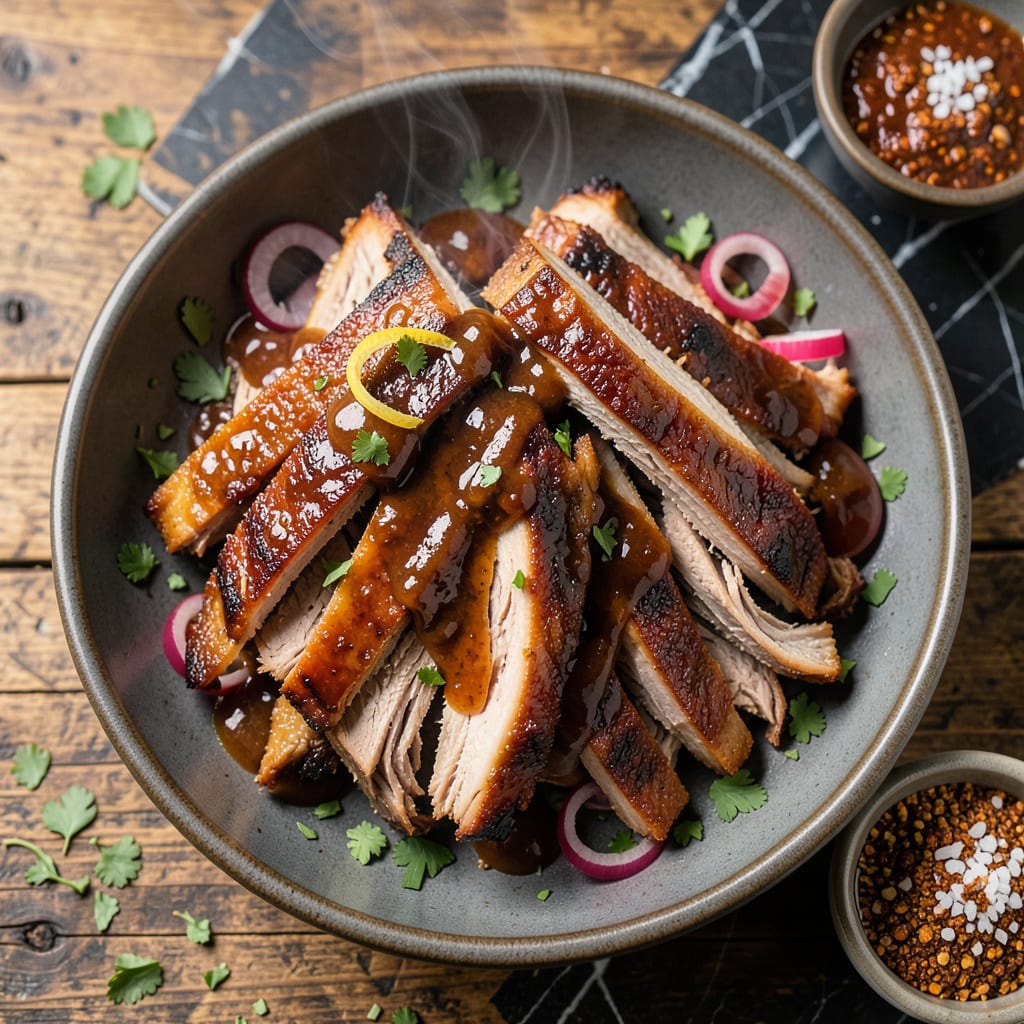
True BBQ mastery comes from patience and precision, not shortcuts. This method transforms tough pork butt into tender, vinegar-kissed perfection through low and slow cooking.
I developed this technique blending smoke tradition with professional knowledge. The result is fall-apart meat with a balanced tang that defines great BBQ.
Ingredients for Bbq Pork Butt
Low and slow transforms tough pork butt into vinegar-kissed, fall-apart perfection with these ingredients.
| Ingredient | Amount | Notes |
|---|---|---|
| Pork Butt 🥩 | 4 lb | Bone-in, well-marbled preferred |
| Apple Cider Vinegar 🍏 | 1 ½ cups | For tangy mop and finishing sauce |
| Yellow Mustard 🟡 | ½ cup | Binds rub to meat surface |
| Brown Sugar 🏝️ | ½ cup | Light or dark, packed |
| Kosher Salt 🧂 | ¼ cup | Diamond Crystal preferred for texture |
| Black Pepper 🌶️ | 2 tbsp | Freshly cracked for bold flavor |
| Paprika 🌶️ | 2 tbsp | Sweet or smoked for depth |
| Garlic Powder 🧄 | 1 tbsp | Not garlic salt substitute |
| Onion Powder 🧅 | 1 tbsp | Enhances savory base notes |
| Cayenne Pepper 🔥 | 1 tsp | Adjust for heat preference |
| Hickory Wood Chips 🪵 | 2 cups | Soaked in water 1 hour |
| Chicken Stock 🍲 | 1 cup | Low-sodium for controlled seasoning |
| Unsalted Butter 🧈 | ½ cup | For finishing sauce richness |
| Hot Sauce 🌶️ | 2 tbsp | Texas Pete or Crystal preferred |
[recipe_ingredient_scaler]
Pork butt quality is non-negotiable for this technique. Seek bone-in, well-marbled roasts—the fat cap ensures moisture during the long cook. Most Costco or warehouse stores carry them in 8-10 lb sizes (ask the butcher to halve it). The vinegar should be raw, unfiltered apple cider vinegar like Bragg—its bold acidity balances the richness. Avoid pre-ground spices; freshly cracked pepper and toasted paprika deliver superior depth.
Substitutions require careful balance. No apple cider vinegar? White vinegar with 1 tbsp brown sugar approximates the flavor. Out of hickory? Cherry or oak wood chips work well (avoid mesquite—it overpowers). For the rub, turbinado sugar can replace brown sugar at a 1:1 ratio. The butter in the finishing sauce can be omitted, but don’t skip the hot sauce—it’s essential for that signature Carolina tang.
Pork butt benefits from a 12-hour dry brine (salt it the night before). Store wood chips in a sealed container away from moisture. Finished pork keeps 5 days refrigerated or 3 months frozen. Always slice against the grain—even pulled pork has a direction.
Why You’ll Love This Recipe
- Set It and Forget It: I rub the pork butt with that brown sugar and mustard mix, pop it in the oven, and let it do its thing for hours—no babysitting required.
- Sweet and Tangy: The apple cider vinegar cuts through the richness while the brown sugar caramelizes into this sticky, finger-licking crust.
- Feeds a Crowd: Eight people for Sunday dinner? No problem. This pork butt stretches into sandwiches, tacos, or straight-up plates with sides.
- Leftovers for Days: Honestly, it tastes even better the next day—shredded into quesadillas or piled onto a baked potato for a lazy lunch.
Step-by-Step Instructions for BBQ Pork Butt
Master the art of low and slow smoking with precise techniques and timing.
Step 1: Prepare the Pork Butt with a Flavorful Rub
Pat the 4 lb Pork Butt dry with paper towels to ensure the rub adheres properly. In a bowl, combine the 0.25 cup Kosher Salt, 0.5 cup Brown Sugar, 2 tbsp Black Pepper, 2 tbsp Paprika, 1 tbsp Garlic Powder, 1 tbsp Onion Powder, and 1 tsp Cayenne Pepper. This blend creates a balanced, smoky-sweet crust.
Coat the pork butt liberally with 0.5 cup Yellow Mustard—this acts as a binder for the rub. Press the spice mixture evenly over all surfaces, ensuring full coverage. Let it rest at room temperature for 30 minutes while you prepare the smoker.
Step 2: Set Up the Smoker with Hickory Wood
Soak the 2 cups Hickory Wood Chips in water for at least 1 hour to prevent them from burning too quickly. Fill your smoker’s water pan with water to maintain moisture during the cook. Preheat the smoker to 225°F using indirect heat.
Once the smoker reaches temperature, add the soaked hickory wood chips to the coals or smoker box. You want a steady stream of thin blue smoke—thick white smoke indicates poor combustion and can impart a bitter flavor. Place the pork butt fat-side up on the grates.
Step 3: Smoke Low and Slow with Vinegar Mop
Smoke the pork butt undisturbed for 4-5 hours. In a spray bottle, combine 1.5 cups Apple Cider Vinegar and 2 tbsp Hot Sauce. Every 45-60 minutes, spritz the pork with this mixture to keep the surface moist and build layers of tangy flavor.
Monitor the smoker temperature closely, keeping it steady at 225°F. If the temperature spikes, adjust the vents or add unlit coals as needed. The pork should develop a deep mahogany bark as it cooks.
Step 4: Wrap and Finish with Chicken Stock and Butter
When the internal temperature reaches 165-170°F (usually after 6-8 hours), wrap the pork butt tightly in butcher paper or foil. Add 1 cup Chicken Stock to the wrap to braise the meat and speed up the cooking process. Return it to the smoker.
Continue cooking until the pork reaches an internal temperature of 200-203°F and a probe slides in like butter. This typically takes another 2-3 hours. Once done, transfer the pork to a resting surface, keeping it wrapped, and let it rest for 1 hour.
Unwrap the pork and pour the accumulated juices into a saucepan. Add 0.5 cup Unsalted Butter and simmer for 5 minutes to create a rich finishing sauce. Shred the pork, discarding any large fat pieces, and toss with the sauce before serving.
Pro Tips For Making Bbq Pork Butt
- Low and Slow Wins: Cook at 225°F for at least 8 hours—I learned this the hard way after pulling tough, undercooked meat at 6 hours.
- Dry Rub First: Pat the pork butt completely dry before applying the brown sugar and salt rub; it sticks better and forms a proper bark.
- Don’t Rush the Rest: Let it rest wrapped in foil for 30-45 minutes after cooking, or you’ll lose half the juices to the cutting board.
- Vinegar Last: Brush the apple cider vinegar and mustard mix on during the last hour only—adding it earlier makes the bark soggy.
Regional Styles of This bbq pork butt
Carolina Style
This Eastern NC approach skips heavy sauces for a vinegar-based mop I fell in love with at local competitions. Use 2 cups apple cider vinegar, ½ cup water, and 1 tbsp red pepper flakes for the spritz. The tang cuts through the fat beautifully. 🌶️
Texas Tradition
Big on bark, Texas pitmasters let the rub speak for itself. I boost the black pepper to 3 tbsp and add 1 tbsp chili powder for depth. The long 14-hour cook at 225°F develops a crust so good it doesn’t need sauce.
Memphis Dry Rub
Memphis is all about the dry rub—no mopping here. I add 1 tbsp celery salt and 1 tsp dry mustard to my base mix. The result is a crusty exterior with intense flavor in every bite.
Kansas City Sweet
For KC-style, I sweeten the rub with extra ¼ cup brown sugar and finish with a sticky sauce. Simmer 1 cup ketchup, ½ cup vinegar, and ¼ cup molasses for 20 minutes, then brush on before serving.
Alabama White Sauce
Alabama’s signature is a creamy white sauce I make with 1 cup mayo, ¼ cup vinegar, and 1 tbsp horseradish. Drizzle it over pulled pork for a tangy, rich twist that surprises first-timers. 💫
Nutrition Facts

Trained in classic French technique but raised on slow-cooked ribs and spicy rubs, she blends culinary skill with smoke and soul.
- Recipe for Boneless Pork Chops in Cast Iron Skillet: Sear and Baste to Juicy Perfection - October 3, 2026
- Recipe for Boneless Cross Rib Roast: Slow-Roasted Beef with Herb Crust - October 3, 2026
- Hamburgers in Sauce Recipe Crock Pot: Slow-Cooked Savory Delight - October 3, 2026