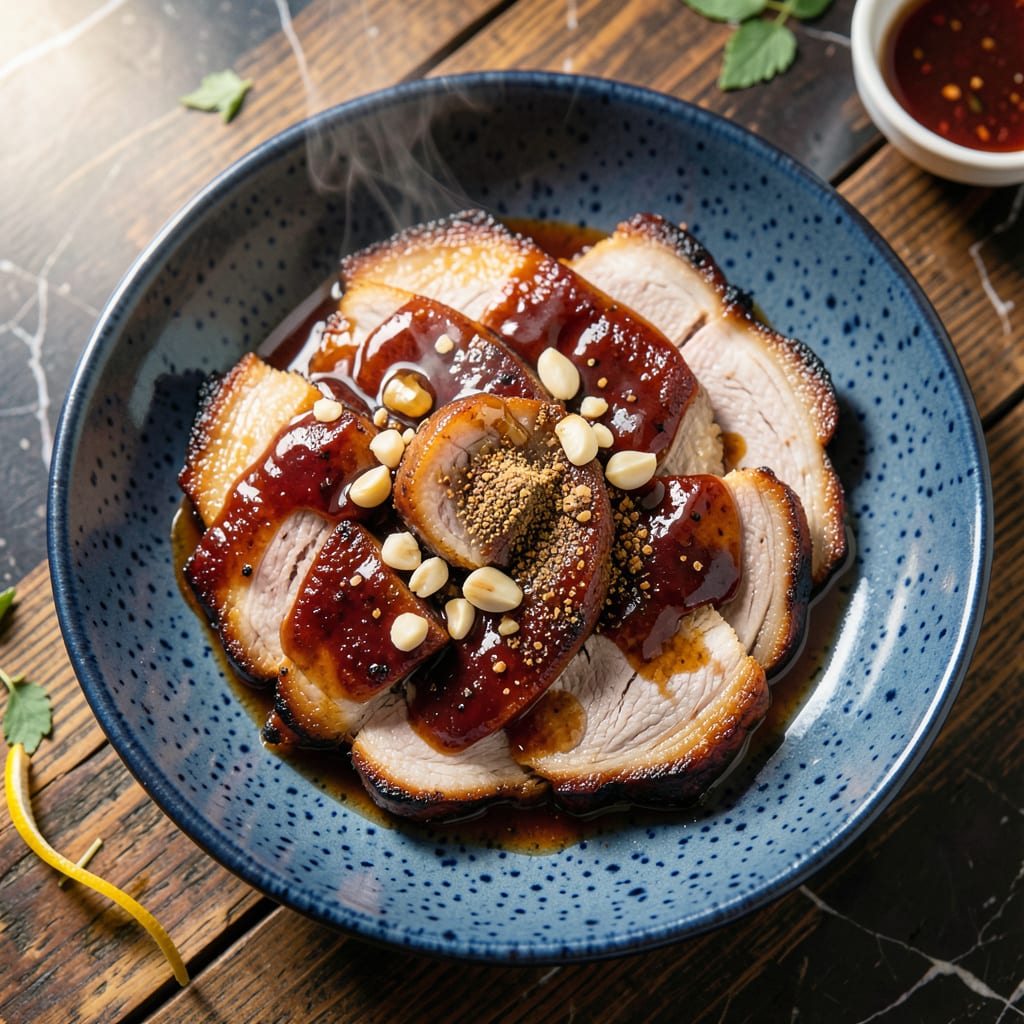
This recipe transforms ordinary pork into a restaurant-quality dish with a sticky, caramelized glaze and aromatic five-spice depth.
Using traditional char siu techniques, the marinade infuses rich flavor before roasting to perfectly tender results every time.
Ingredients for Bbq Pork Chinese Style
Transform pork shoulder into a restaurant-quality dish with these aromatic ingredients.
| Ingredient | Amount | Notes |
|---|---|---|
| Pork Shoulder 🍖 | 2 lb | Boneless, cut into strips |
| Hoisin Sauce 🥫 | ½ cup | High-quality for authentic flavor |
| Soy Sauce 🥫 | ¼ cup | Low-sodium preferred |
| Honey 🍯 | 3 tbsp | Balances sweetness and glaze |
| Five-Spice Powder 🌿 | 1 tsp | Essential for aromatic depth |
| Garlic Cloves 🧄 | 4 cloves | Minced for marinade |
| Fresh Ginger 🌿 | 1 tbsp | Grated for zing |
| Rice Wine 🍶 | 2 tbsp | Dry sherry works as substitute |
| Brown Sugar 🍚 | 2 tbsp | For caramelization |
| Sesame Oil 🫒 | 1 tsp | Toasted for aroma |
| Red Fermented Bean Curd 🧀 | 1 whole | Optional for extra umami |
| Scallions 🧅 | 4 whole | Thinly sliced for garnish |
| Vegetable Oil 🫒 | 1 tbsp | For roasting |
[recipe_ingredient_scaler]
Pork shoulder is non-negotiable here—its marbling ensures the perfectly tender results promised. Source bone-in or boneless from a trusted butcher or Whole Foods for consistent quality. The five-spice powder must be fresh; stale blends lose their aromatic depth. Penzeys offers excellent quality, but most Asian markets carry authentic options too.
No hoisin sauce? Oyster sauce plus a touch of molasses mimics the sweet-savory depth. Substitute agave for honey if needed. Rice wine can be dry sherry or mirin in a pinch. The red fermented bean curd is optional but adds complex umami—find it in the refrigerated section of Asian markets. Fresh ginger is ideal, but ground ginger at half the amount works too.
Marinate the pork overnight for maximum flavor infusion. The glaze caramelizes best when roasted at high heat. Leftovers keep for 4-5 days refrigerated or can be frozen for 3 months. Reheat gently to preserve the sticky texture.
Why You’ll Love This Recipe
- Set It and Forget It: I toss everything in the oven and let the pork shoulder slow-cook while the hoisin and honey work their magic.
- Sweet-Savory Bomb: The mix of hoisin, soy, and honey creates this crazy good balance—sticky, salty, and just a little spiced from the five-spice.
- Meal Prep Hero: I make a big batch and it’s perfect in rice bowls, tacos, or even cold the next day in a sandwich. Honestly, it’s my weekly lunch savior.
- Budget-Friendly Feast: Pork shoulder is cheap, and one batch feeds us for days—proof that flavor doesn’t need a fancy price tag.
Step-by-Step Instructions for Chinese-Style BBQ Pork
Master the balance of sweet, savory, and aromatic with this traditional preparation method.
Step 1: Create the Marinade with Aromatic Depth
In a large bowl, whisk together the 0.5 cup Hoisin Sauce, 0.25 cup Soy Sauce, 3 tbsp Honey, 1 tsp Five-Spice Powder, 2 tbsp Rice Wine, 2 tbsp Brown Sugar, and 1 tsp Sesame Oil until fully combined. The Hoisin should create a thick, glossy base that clings to the pork.
Add the 4 cloves Garlic Cloves (minced) and 1 tbsp Fresh Ginger (grated) to the marinade. If using the 1 whole Red Fermented Bean Curd, mash it into a paste and incorporate thoroughly. This builds the complex umami foundation essential to authentic flavor.
Step 2: Marinate the Pork for Maximum Flavor Penetration
Place the 2 lb Pork Shoulder (cut into strips) in the marinade, ensuring all pieces are fully coated. I prefer using a resealable plastic bag for this step—it allows for better distribution and easier cleanup. Massage the marinade into the meat for 2 minutes to ensure every surface is covered.
Seal and refrigerate for at least 4 hours, but overnight is ideal. The longer marinating time allows the Five-Spice Powder and other aromatics to deeply penetrate the pork, creating layers of flavor that short marinating can’t achieve.
Step 3: Roast with Precision for Sticky Caramelization
Preheat your oven to 375°F. Remove the pork from the marinade (reserve the marinade) and arrange the strips on a wire rack set over a baking sheet lined with foil. Pour 1 tbsp Vegetable Oil over the pork to help with browning. The reserved marinade will be used later for basting.
Roast for 25 minutes, then flip the pork strips. Baste generously with the reserved marinade and roast for another 20-25 minutes until the edges are deeply caramelized and the internal temperature reaches 195°F. The sugar in the marinade should create a sticky, glossy glaze.
Step 4: Rest and Garnish for Optimal Texture
Transfer the pork to a cutting board and let it rest for 10 minutes. This allows the juices to redistribute and the glaze to set slightly. Slice the pork into bite-sized pieces—it should be tender with a slight resistance from the caramelized exterior.
Garnish with the 4 whole Scallions (thinly sliced) just before serving. The scallions add a fresh, oniony contrast that cuts through the richness of the dish. Serve immediately while the glaze is still sticky and the pork is at its most tender.
Pro Tips For Making Bbq Pork Chinese Style
- Marinate Overnight: I learned this the hard way—give the pork shoulder at least 8 hours in the hoisin-soy-honey mix, or the flavors won’t penetrate. Sounds tedious, but it’s the only way to get that deep, sticky char siu taste.
- Score the Fat: Cut 1/4-inch slits in the pork’s fat cap before marinating. My grandmother swore by this, and she was right: it lets the five-spice and sauces seep in and crisp up the edges.
- Skip Boiling Sauce: Resist the urge to simmer the marinade first—raw pork needs the raw enzymes in the honey and hoisin to tenderize properly. After burning three batches, I finally figured out this matters more than you’d think.
- Broil Last 2 Minutes: Finish under a high broiler for just 1-2 minutes to get that glossy, slightly charred crust. This isn’t the prettiest method, but it’s the tastiest way to mimic the roast duck shop’s finish.
Regional Styles of This Dish
Cantonese Char Siu
The traditional method from Guangdong uses a honey-heavy glaze with red fermented bean curd for its signature crimson hue. I learned this version from a local dim sum chef—it’s sweeter and more aromatic than other regional takes. The pork is often skewered and roasted over charcoal for extra smokiness. 🗺️
Sichuan Spicy Style
For heat lovers, Sichuan-style incorporates chili oil and Sichuan peppercorns into the marinade. The numbing spice of the peppercorns contrasts beautifully with the sweet glaze. I add 1 tsp chili flakes to my standard marinade for this variation.
Hunan Bold and Smoky
Hunan’s version leans into smoky flavors with dried chilies and smoked paprika in the rub. The pork is often grilled over longan wood for a distinct aroma. I’ve found that adding 1 tsp smoked salt to the marinade mimics this effect in a home oven.
Shanghai Sweet and Sticky
Shanghai-style focuses on an ultra-sticky glaze achieved by reducing the marinade into a syrup before basting. The result is a glossy, finger-licking finish. I reduce ½ cup of the marinade in a saucepan for 5-7 minutes until thickened.
Taiwanese Street Food
In Taiwan, this pork is often served in steamed buns (bao) with pickled mustard greens and cilantro. The street food version is less sweet, with more emphasis on the five-spice powder and garlic. I love this as a quick lunch—just pile the pork into store-bought bao.
Nutrition Facts

Trained in classic French technique but raised on slow-cooked ribs and spicy rubs, she blends culinary skill with smoke and soul.
- Recipe for Boneless Pork Chops in Cast Iron Skillet: Sear and Baste to Juicy Perfection - October 3, 2026
- Recipe for Boneless Cross Rib Roast: Slow-Roasted Beef with Herb Crust - October 3, 2026
- Hamburgers in Sauce Recipe Crock Pot: Slow-Cooked Savory Delight - October 3, 2026