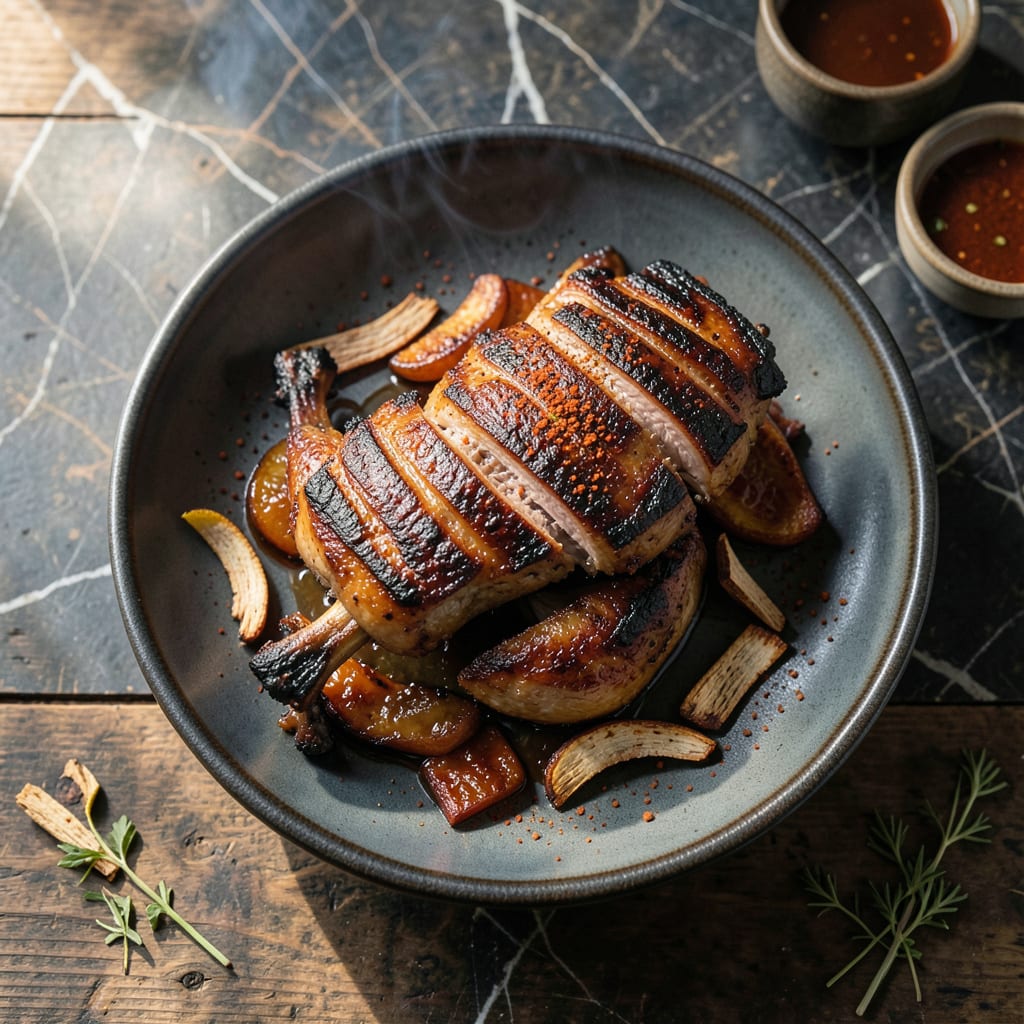
There’s nothing quite like applewood smoke wrapping around a pork leg, transforming it into tender, flavorful perfection. I’ve spent years refining this method to achieve that ideal balance of smoky depth and crispy bark.
This process requires patience—low heat, careful monitoring, and a quality rub. The result is meat that pulls apart easily with a satisfying resistance from the crispy exterior, making every bite worthwhile.
Ingredients for Bbq Pork Leg
A handful of bold ingredients create that signature smoky depth and crispy exterior everyone craves.
| Ingredient | Amount | Notes |
|---|---|---|
| Pork Leg 🐖 | 8 lb | Bone-in, skin-on for best bark |
| Applewood Chips 🪵 | 4 cups | Soaked in water 1 hour |
| Brown Sugar 🍚 | ½ cup | Light or dark variety |
| Kosher Salt 🧂 | ¼ cup | Diamond Crystal preferred |
| Black Pepper 🌶️ | 2 tbsp | Freshly ground coarse |
| Smoked Paprika 🌶️ | 2 tbsp | Sweet or hot variety |
| Garlic Powder 🧄 | 2 tbsp | Not garlic salt |
| Onion Powder 🧅 | 2 tbsp | Fine grind preferred |
| Cayenne Pepper 🔥 | 1 tsp | Adjust for heat preference |
| Yellow Mustard 🟡 | ½ cup | Binder for rub adhesion |
| Apple Cider Vinegar 🍏 | ½ cup | For spritzing during smoke |
| Olive Oil 🫒 | 2 tbsp | For rub moisture |
[recipe_ingredient_scaler]
The pork leg is non-negotiable for authentic texture. Bone-in, skin-on yields the best bark formation. Source from local butchers or specialty markets like Whole Foods for consistent quality. Applewood chips must be 100% natural—avoid compressed briquettes with additives. For the rub, Diamond Crystal kosher salt dissolves perfectly into the meat surface, creating ideal crust adhesion.
No applewood? Cherry or hickory work well (avoid mesquite—it overpowers). Out of brown sugar? Turbinado sugar at equal volume adds similar caramelization. Want deeper color? Add 1 tbsp cocoa powder to the rub. The mustard binder can be swapped for Dijon (stronger flavor) or even honey mustard (sweeter profile). Cayenne can be omitted for mild heat.
Rub can be applied up to 12 hours ahead. Store pork uncovered in fridge to dry the surface for better smoke absorption. Leftovers keep 4-5 days refrigerated or freeze for 3 months. Reheat in oven with a splash of apple juice to maintain moisture.
Why You’ll Love This Recipe
- I’ll be real: a pork leg is cheaper than ribs but just as impressive at a backyard gathering.
- Set It and Forget It: I season the pork leg with brown sugar and spices, then let the smoker do the work for hours.
- Smoky Sweet Crust: Honestly, the applewood chips give it that deep, rich flavor while the brown sugar caramelizes into a sticky, irresistible bark.
- Feeds My Crew: Between us, this one pork leg serves my whole family with enough left for sandwiches the next day.
Step-by-Step Instructions for Applewood Smoked Pork Leg
This method delivers tender meat with a perfect mahogany bark every time.
Step 1: Prepare the Dry Rub and Pork Leg
In a bowl, combine the 0.25 cup Kosher Salt, 0.5 cup Brown Sugar, 2 tbsp Black Pepper, 2 tbsp Smoked Paprika, 2 tbsp Garlic Powder, 2 tbsp Onion Powder, and 1 tsp Cayenne Pepper. Whisk until evenly blended—the sugar should be fully distributed to prevent clumping.
Pat the 8 lb Pork Leg dry with paper towels. This is critical for rub adhesion and bark formation. Apply the 0.5 cup Yellow Mustard and 2 tbsp Olive Oil mixture evenly over the surface, then generously coat with the dry rub, pressing firmly to create a thick, even layer.
Step 2: Set Up the Smoker with Applewood
Soak the 4 cups Applewood Chips in water for 1 hour to prevent rapid combustion. Drain before use. Preheat your smoker to 225°F using indirect heat. Add the soaked applewood chips to the firebox or smoker box once the temperature stabilizes.
Place the seasoned pork leg in the smoker, fat-side up. Maintain a consistent 225°F throughout the cook, adding more applewood chips as needed to sustain a steady stream of thin blue smoke. Avoid thick white smoke, which can impart a bitter flavor.
Step 3: Smoke and Spritz for Bark Development
Smoke the pork leg undisturbed for 8-10 hours, or until the internal temperature reaches 195-203°F in the thickest part. After the first 4 hours, begin spritzing with the 0.5 cup Apple Cider Vinegar every 45-60 minutes to keep the surface moist and enhance bark formation.
Monitor the color—the exterior should develop a deep, dark bark that’s firm to the touch but not burnt. If the temperature stalls (common around 160-170°F), be patient; this is normal as the collagen breaks down.
Step 4: Rest and Shred
Once the pork leg reaches the target internal temperature and probes like butter, remove it from the smoker. Tent loosely with foil and let it rest for 1 hour. This allows the juices to redistribute, ensuring moist, tender meat.
Shred the pork using forks or bear claws, discarding any large fat chunks. The bark should be crispy and deeply flavorful, with a beautiful smoke ring just beneath the surface. Serve immediately for the best texture.
Pro Tips For Making Bbq Pork Leg
- Score the Skin: Cut 1/4-inch deep crosshatches in the pork leg skin before rubbing—this lets the brown sugar and salt penetrate while helping the fat render out during smoking.
- Soak the Wood: I learned this the hard way: dry applewood chips burn too fast and bitter. Soak them in water for at least 30 minutes before adding to the smoker.
- Skip the Rush: Resist the urge to crank the heat above 225°F—low and slow (about 1.5 hours per pound) is what makes the collagen melt into that fall-apart texture.
- Rest Before Slicing: After pulling it from the smoker, tent the pork leg with foil and let it rest 20 minutes—this keeps all those juices from pooling on your cutting board instead of in the meat.
Health Benefits of This Dish
Rich Protein Source
This dish packs a protein punch—an 8 lb pork leg yields about 140 grams of protein per serving. Protein is essential for muscle repair and growth, making this a satisfying meal that keeps you full for hours. I always feel energized after enjoying a hearty portion. 💪
Essential Vitamins
Pork is loaded with B vitamins, especially B12 and B6, which support brain function and metabolism. A single serving delivers a significant portion of your daily needs. These nutrients help convert food into energy, keeping you fueled throughout the day.
Mineral Boost
You’ll get a healthy dose of zinc and iron from this recipe. Zinc supports immune function, while iron helps transport oxygen in your blood. These minerals are vital for overall health and vitality.
Low-Carb Option
Without any added carbs beyond the rub, this dish fits well into low-carb or keto lifestyles. The natural fats in pork provide sustained energy without spiking blood sugar. Perfect for those watching their carb intake.
Collagen Benefits
Slow-cooking pork leg breaks down collagen into gelatin, which supports joint health and skin elasticity. The 8-10 hour smoke ensures maximum collagen conversion, making this dish as nourishing as it is delicious. ✨
Healthy Fats
Pork contains monounsaturated fats, the same heart-healthy fats found in olive oil. These fats help reduce bad cholesterol levels while providing flavor and richness to your meal. A balanced part of any diet.
Nutrition Facts

Trained in classic French technique but raised on slow-cooked ribs and spicy rubs, she blends culinary skill with smoke and soul.
- Recipe for Boneless Pork Chops in Cast Iron Skillet: Sear and Baste to Juicy Perfection - October 3, 2026
- Recipe for Boneless Cross Rib Roast: Slow-Roasted Beef with Herb Crust - October 3, 2026
- Hamburgers in Sauce Recipe Crock Pot: Slow-Cooked Savory Delight - October 3, 2026