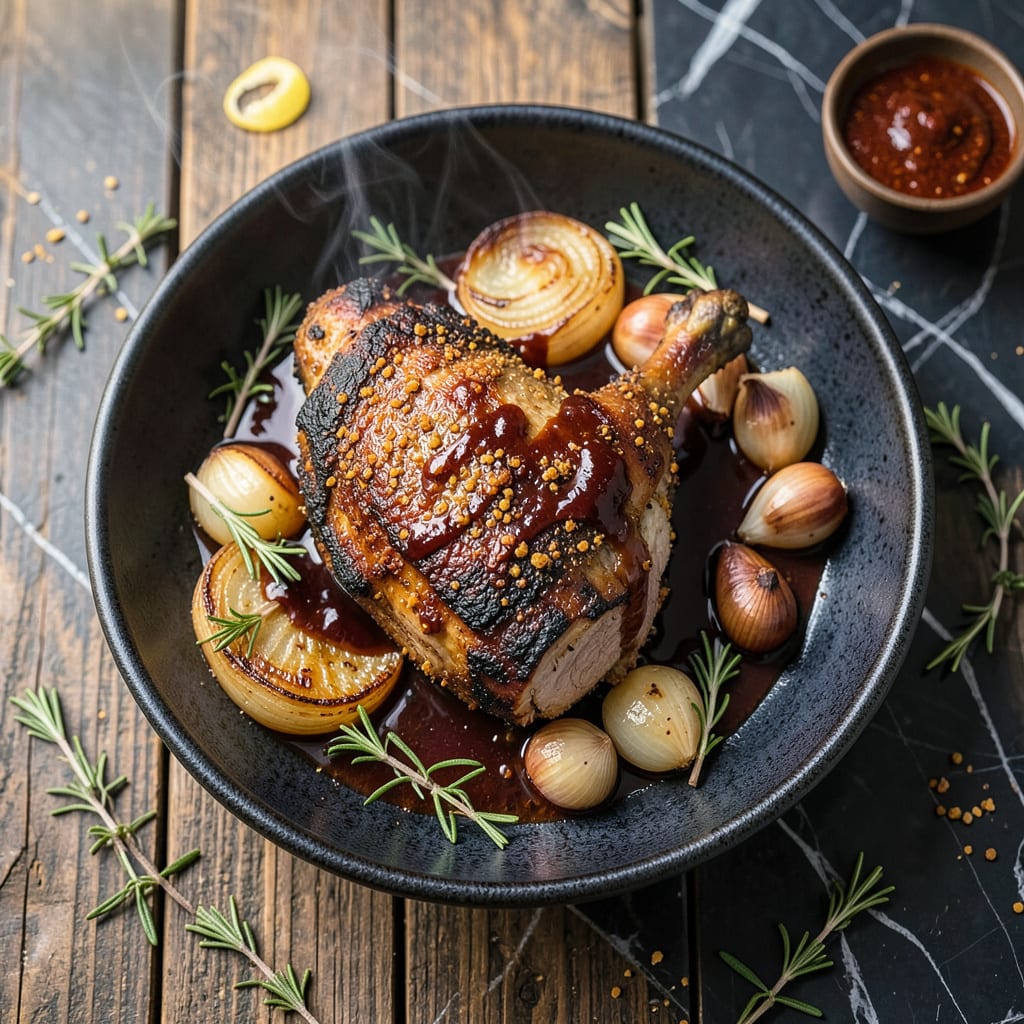
Low and slow is the only way to achieve that fall-off-the-bone tenderness in pork leg roast. This method transforms tough cuts into melt-in-your-mouth perfection through smoke and time.
The secret lies in maintaining a consistent 225°F temperature while letting the smoke work its magic. Each bite delivers the rich, deep flavor that defines true barbecue excellence.
Ingredients for Bbq Pork Leg Roast
A bone-in pork leg and a bold dry rub form the foundation of this slow-smoked masterpiece.
| Ingredient | Amount | Notes |
|---|---|---|
| Pork Leg Roast 🍖 | 4 lb | Bone-in, skin-on preferred for flavor |
| Kosher Salt 🧂 | 2 tbsp | Diamond Crystal preferred for even coating |
| Black Pepper 🌶️ | 1 tbsp | Coarsely ground for texture |
| Garlic Powder 🧄 | 1 tbsp | Freshly ground optimal |
| Onion Powder 🧅 | 1 tbsp | Balances sweetness in pork |
| Smoked Paprika 🌶️ | 1 tbsp | Spanish variety for depth |
| Brown Sugar 🧈 | ½ cup | Light or dark, packed |
| Yellow Mustard 🟡 | ¼ cup | Binder for dry rub |
| Apple Cider Vinegar 🍏 | ¼ cup | For tangy mop sauce |
| Hickory Wood Chips 🪵 | 2 cups | Soaked in water 30 minutes |
| Apple Juice 🍎 | 1 cup | For spritzing during cook |
| BBQ Sauce 🍯 | 1 cup | Low-sugar variety recommended |
| Olive Oil 🫒 | 2 tbsp | For searing crust |
[recipe_ingredient_scaler]
The pork leg must have good marbling and a fat cap for self-basting during the long cook. Costco or Whole Foods typically carry high-quality bone-in, skin-on cuts. Avoid pre-brined roasts as they can become overly salty during the extended smoking process. A 4-pound roast feeds four generously with leftovers for sandwiches.
No smoked paprika? Chipotle powder adds heat while still delivering smokiness. Brown sugar can be swapped for honey or maple syrup (adjust quantity slightly). If hickory chips are unavailable, pecan or oak offer excellent alternatives. The apple juice spritz keeps the meat moist—cider vinegar diluted with water works in a pinch.
The cooked pork rests beautifully wrapped in foil for 1-2 hours. Store leftovers in the fridge for up to 5 days or freeze for 3 months. Reheat gently in a covered dish with a splash of apple juice to maintain moisture.
Why You’ll Love This Recipe
- 5-Minute Prep: I just rub the pork with salt, pepper, garlic, and onion powder—no marinating, no fuss.
- Smoky Crust: The dry rub forms this incredible bark that locks in juices while the meat slow-roasts.
- Feeds a Crowd: One 4-pound leg roast serves eight with zero stress. Honestly, it’s my go-to for Sunday dinners.
- Leftovers Level Up: Shredded pork from this roast makes killer tacos or sandwiches for days. Between us, it tastes even better the next day.
Step-by-Step Instructions for BBQ Pork Leg Roast
Master the art of slow-smoked pork with this precise method for tender, flavorful results.
Step 1: Prepare the Dry Rub and Coat the Roast
In a bowl, combine the 2 tbsp Kosher Salt, 1 tbsp Black Pepper, 1 tbsp Garlic Powder, 1 tbsp Onion Powder, 1 tbsp Smoked Paprika, and 0.5 cup Brown Sugar. Mix thoroughly to ensure even distribution of spices.
Pat the 4 lb Pork Leg Roast dry with paper towels, then brush it generously with the 0.25 cup Yellow Mustard to create a sticky base for the rub. Massage the spice mixture all over the roast, pressing firmly so it adheres. Let it sit at room temperature for 30 minutes while you prepare the smoker.
Step 2: Soak Wood Chips and Preheat the Smoker
Place the 2 cups Hickory Wood Chips in a bowl of water and soak for 30 minutes. This prevents them from burning too quickly in the smoker. Meanwhile, preheat your smoker to 225°F using indirect heat.
Once soaked, drain the wood chips and add them to the smoker’s wood chip box or a foil pouch placed directly on the heat source. Maintain a steady temperature of 225°F—this low and slow approach ensures the pork cooks evenly without drying out.
Step 3: Smoke the Roast and Apply the Mop Sauce
Place the pork leg roast in the smoker, fat-side up. Insert a meat thermometer into the thickest part of the roast, avoiding the bone. Smoke undisturbed for 3 hours.
In a spray bottle, combine the 0.25 cup Apple Cider Vinegar and 1 cup Apple Juice. After the initial 3 hours, spritz the roast every 45-60 minutes to keep it moist. Continue smoking until the internal temperature reaches 195-203°F for fall-off-the-bone tenderness.
Step 4: Sear and Sauce the Roast
Once the roast reaches the desired internal temperature, carefully transfer it to a heatproof skillet. Brush the 1 cup BBQ Sauce all over the surface, then drizzle with the 2 tbsp Olive Oil to enhance the crust.
Place the skillet under a broiler set to high for 3-5 minutes, or return it to the smoker at 350°F for 10 minutes, until the sauce caramelizes and forms a glossy, sticky glaze. Watch closely to prevent burning.
Step 5: Rest and Serve
Remove the roast from the heat and transfer it to a cutting board. Tent loosely with foil and let it rest for 20-30 minutes. This allows the juices to redistribute, ensuring every bite is moist and flavorful.
Slice or pull the pork apart, discarding any large fat or bone pieces. Serve immediately with additional BBQ sauce on the side, if desired. The meat should be tender enough to pull apart with minimal effort, showcasing the perfect balance of smoky, sweet, and tangy flavors.
Pro Tips For Making Bbq Pork Leg Roast
- Start Low and Slow: I learned this the hard way—crank the oven to 275°F for the first 3 hours, then finish at 325°F. This keeps the pork leg tender while letting the spices deepen into the meat.
- Dry the Surface: Pat the pork leg completely dry with paper towels before seasoning. My grandmother swore by this, and she was right: it helps the rub stick and forms a better crust.
- Skip the Water Pan: Resist the urge to add water to the roasting pan—it steams the pork instead of letting it roast. Sounds weird, but it works: the meat stays juicier without it.
- Rest Before Slicing: Give it a solid 15-20 minutes under foil after pulling it from the oven. I was skeptical until I tried it, but the juices redistribute and every slice stays moist.
Pro Cooking Tips for This Dish
Temperature Control
Low and slow is non-negotiable here. I maintain a strict 225°F throughout the cook using a ThermoWorks Smoke dual-probe thermometer. One probe monitors the smoker, the other tracks the internal temp of the roast. Even a 10°F fluctuation can impact your results. 🌡️
The Stall Phase
When your pork hits 160-170°F, expect the stall where evaporative cooling slows the cook. Don’t rush it—this is where collagen breaks down. I spritz with apple juice every 45 minutes during this phase to maintain moisture.
Wood Chip Strategy
I use hickory wood chips soaked for 30 minutes before adding to the smoker. This creates a steady, aromatic smoke. Add fresh chips every 1-2 hours to maintain that perfect blue smoke. Pecan wood gives a milder, sweeter profile if you prefer.
Crust Development
Before the final pull, I brush with olive oil and return to the smoker at 350°F for 10 minutes. This creates a beautiful bark that contrasts with the tender interior. Watch closely—sugar in the rub can burn quickly at higher temps. 🔥
Resting Period
After reaching 203°F internal temperature, I wrap in foil and rest for 30 minutes. This lets the juices redistribute. Skipping this step means dry meat, no matter how perfect your cook was.
Slicing Technique
Use a long, sharp knife to slice against the grain. For pulled pork, I use bear claw shredders—they make quick work of the tender meat. Always discard any large fat pieces or bones before serving.
Nutrition Facts

Trained in classic French technique but raised on slow-cooked ribs and spicy rubs, she blends culinary skill with smoke and soul.
- Recipe for Boneless Cross Rib Roast: Slow-Roasted Beef with Herb Crust - October 3, 2026
- Hamburgers in Sauce Recipe Crock Pot: Slow-Cooked Savory Delight - October 3, 2026
- Sanjeev Kapoor Egg Biryani Recipe: Fragrant Spiced Rice With Boiled Eggs - October 3, 2026