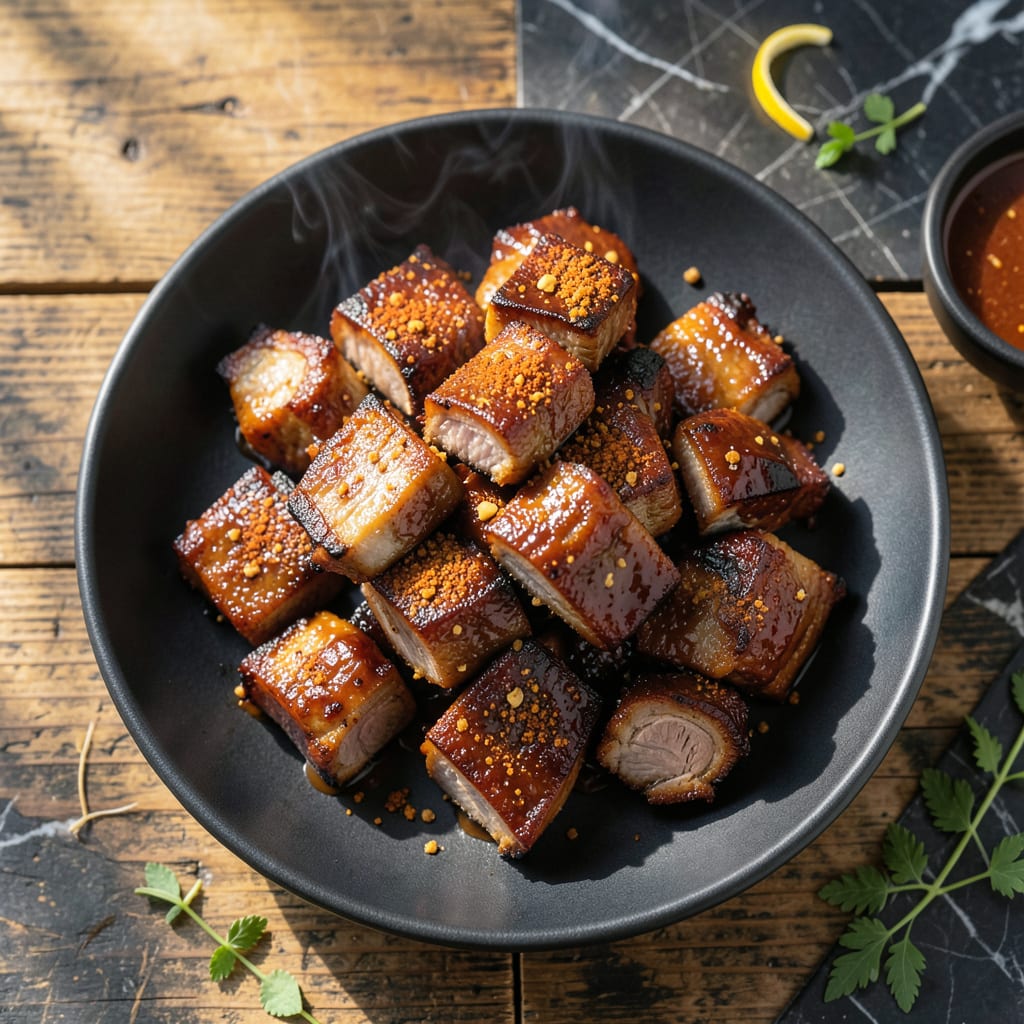
There’s nothing quite like the aroma of smoky pork riblets sizzling on the grill. I developed this method to capture that perfect balance of tender meat and caramelized bark in every bite.
With a simple dry rub and low-and-slow cooking, these riblets deliver restaurant-quality flavor without the fuss. The secret lies in the patience—letting the smoke work its magic for fall-off-the-bone results.
Ingredients for Bbq Pork Riblets
Quality pork riblets and a bold dry rub create that perfect smoky, tender bite every time.
| Ingredient | Amount | Notes |
|---|---|---|
| Pork Riblets 🥩 | 2 lb | Trimmed of excess fat |
| Brown Sugar 🟤 | ¼ cup | Light or dark variety |
| Paprika 🌶️ | 1 tbsp | Smoked paprika preferred |
| Garlic Powder 🧄 | 1 tbsp | Freshly ground if possible |
| Onion Powder 🧅 | 1 tbsp | Fine grain preferred |
| Salt 🧂 | 1 tbsp | Kosher or coarse sea salt |
| Black Pepper 🌶️ | 1 tsp | Freshly ground preferred |
| Cayenne Pepper 🔥 | ½ tsp | Adjust for heat preference |
| BBQ Sauce 🍯 | 1 ½ cups | Quality store-bought or homemade |
| Apple Cider Vinegar 🍏 | 2 tbsp | Balances sweetness of rub |
| Olive Oil 🫒 | 2 tbsp | For bonding dry rub |
| Wood Chips 🪵 | 1 cup | Hickory or applewood recommended |
[recipe_ingredient_scaler]
The pork riblets are the foundation—look for well-marbled cuts with good fat distribution. Most butchers sell them pre-trimmed, but ask for St. Louis-style ribs cut into individual riblets if you want uniformity. Costco has great pre-cut options, while local butcher shops offer better quality if you’re willing to spend a bit more. The meat should be pink with white marbling, not gray or dull.
No smoked paprika? Regular paprika plus a pinch of liquid smoke works in a pinch. Short on BBQ sauce? Ketchup mixed with molasses and vinegar gets close. The brown sugar can be swapped for honey or maple syrup, but adjust the liquid in your rub. If you’re out of apple cider vinegar, white vinegar or lemon juice will do—just use half the amount.
Riblets keep in the fridge for 3-4 days before cooking, or freeze for up to 3 months. Once cooked, they’ll stay good for 4 days refrigerated or 3 months frozen. Always let them rest at room temperature for 30 minutes before grilling for even cooking.
Why You’ll Love This Recipe
- Set It and Forget: The riblets just need a quick rub with brown sugar and spices, then the oven does all the work.
- Smoky Sweet Bite: That paprika and brown sugar crust caramelizes into this ridiculously good, sticky-sweet layer.
- Crowd Pleaser: I’ve served these at backyard hangouts and weeknight dinners—everyone from picky kids to barbecue snobs cleans their plate.
- Leftovers? Yes Please: Honestly, they taste even better the next day, and the batch is big enough for sandwiches or tacos later.
Step-by-Step Instructions for BBQ Pork Riblets
Here’s the method. Straightforward, tested, works every time.
Step 1: Prepare and Season the Riblets
Pat the 2 lb pork riblets completely dry with paper towels to ensure the dry rub adheres properly. In a small bowl, combine the 0.25 cup brown sugar, 1 tbsp paprika, 1 tbsp garlic powder, 1 tbsp onion powder, 1 tbsp salt, 1 tsp black pepper, and 0.5 tsp cayenne pepper.
Rub the 2 tbsp olive oil evenly over the pork riblets, then coat them thoroughly with the dry rub mixture. Press the seasoning into the meat so it forms a crust. Let the riblets sit at room temperature for 20-30 minutes while you prepare the smoker or grill.
Step 2: Set Up the Smoker or Grill
Soak the 1 cup wood chips in water for 30 minutes to prevent them from burning too quickly. Prepare your smoker or grill for indirect cooking at 225-250°F. If using a charcoal grill, bank the coals to one side and place a drip pan filled with water on the other side.
Drain the soaked wood chips and add them to the smoker box or directly onto the coals. Once the grill reaches the desired temperature and you see thin blue smoke, you’re ready to begin cooking.
Step 3: Smoke the Riblets to Tenderness
Place the seasoned pork riblets on the grill grates over the drip pan, away from direct heat. Close the lid and maintain a consistent temperature between 225-250°F for 2-2.5 hours.
The riblets are ready for saucing when they reach an internal temperature of 160°F and the meat begins to pull away from the bones slightly. Keep an eye on the wood chips, adding more as needed to maintain a steady stream of smoke.
Step 4: Glaze and Finish
In a bowl, mix the 1.5 cups BBQ sauce with the 2 tbsp apple cider vinegar. Transfer the smoked riblets to a clean section of the grill over direct medium heat.
Brush the riblets generously with the BBQ sauce mixture and cook for an additional 5-7 minutes, turning and basting frequently until the sauce caramelizes and the riblets reach an internal temperature of 195°F.
Pro Tips For Making Bbq Pork Riblets
- Dry the Riblets: Pat them completely dry with paper towels before seasoning—I learned this the hard way after my first batch steamed instead of caramelized.
- Low and Slow: Cook them at 275°F for 2.5-3 hours, not hot and fast. After burning two racks trying to rush, I finally accepted that patience is what makes them fall-off-the-bone tender.
- Rub Overnight: Mix the brown sugar, paprika, garlic and onion powder into the meat the night before. Sounds like extra work, but it actually changes the outcome—way more flavor penetration.
- Skip the Boiling: Resist the urge to parboil the riblets first. This isn’t the prettiest method, but it’s the tastiest—all the flavor stays in the meat where it belongs.
Troubleshooting This Dish
Temperature Fluctuations
If your smoker can’t maintain 225-250°F, adjust cooking time—below 200°F extends the process significantly. I once lost 30°F during a windy coastal ride prep, and the riblets still turned out great after 4 hours. 🌡️
Dry Rub Won’t Stick
Pat the pork riblets bone-dry before applying the olive oil and rub. If it still falls off, the meat may be too cold—let it sit at room temperature for 20-30 minutes first. I learned this the hard way at my first local BBQ competition.
Sauce Burning
Move riblets to indirect heat when glaze begins to darken too quickly. Keep a spray bottle of apple cider vinegar handy to tame flames. The vinegar also adds a nice tang while preventing charring.
Tough Meat
If riblets aren’t tender at 160°F, they need more time. Wrap in foil with ¼ cup apple juice and continue cooking to 195°F. This trick saved many of my early attempts when I was still perfecting my French-inspired dry rubs.
Remember, patience is key—rushing the process always shows in the final bite. 💡
Nutrition Facts

Trained in classic French technique but raised on slow-cooked ribs and spicy rubs, she blends culinary skill with smoke and soul.
- Recipe for Boneless Pork Chops in Cast Iron Skillet: Sear and Baste to Juicy Perfection - October 3, 2026
- Recipe for Boneless Cross Rib Roast: Slow-Roasted Beef with Herb Crust - October 3, 2026
- Hamburgers in Sauce Recipe Crock Pot: Slow-Cooked Savory Delight - October 3, 2026