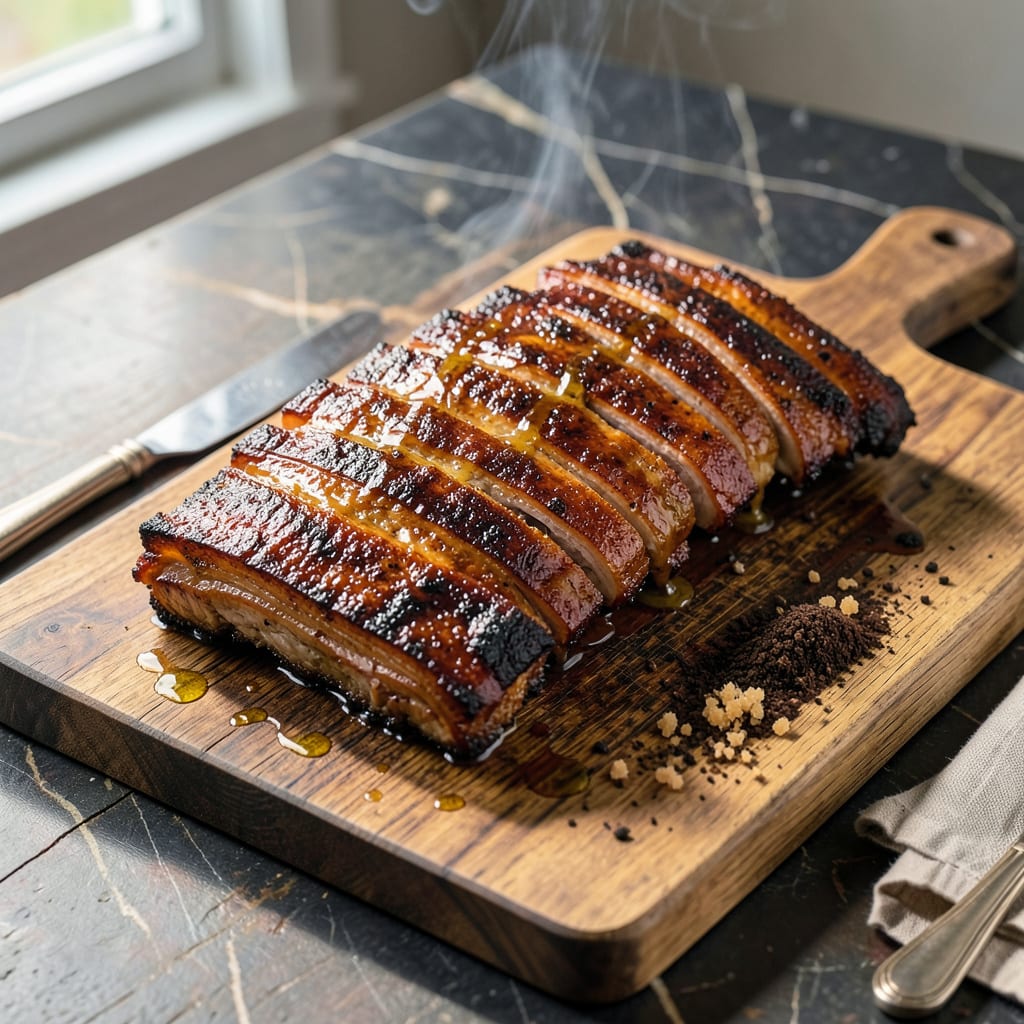
There’s nothing like the aroma of hickory smoke wrapping around slow-cooked ribs on a warm afternoon. My family’s backyard cookouts taught me that patience and low heat transform tough cuts into fall-off-the-bone perfection.
This method combines classic pitmaster techniques with precise temperature control. You’ll achieve tender, smoky ribs that pull clean from the bone with just the right resistance. No shortcuts, just time-honored tradition.
Ingredients for Bbq Pork Ribs Recipe Smoker
Slow-smoked ribs need time, smoke, and a well-seasoned rub to shine. Nothing fancy, just good technique.
| Ingredient | Amount | Notes |
|---|---|---|
| Pork Baby Back Ribs 🥩 | 4 lb | Full rack, membrane removed |
| Hickory Wood Chips 🪵 | 4 cups | Soaked in water 1 hour |
| Yellow Mustard 🟡 | ½ cup | For binder on ribs |
| BBQ Dry Rub 🌶️ | ½ cup | Store-bought or homemade |
| Brown Sugar 🍚 | ¼ cup | Light or dark variety |
| Kosher Salt 🧂 | 2 tbsp | Diamond Crystal preferred |
| Ground Black Pepper 🌶️ | 2 tbsp | Freshly ground for best flavor |
| Paprika 🌶️ | 1 tbsp | Sweet or smoked variety |
| Garlic Powder 🧄 | 1 tbsp | Not garlic salt |
| Onion Powder 🧅 | 1 tbsp | Fresh ground preferred |
| Apple Cider Vinegar 🍏 | ½ cup | For spritzing during smoke |
| BBQ Sauce 🍅 | 2 cups | Your favorite brand or homemade |
| Unsalted Butter 🧈 | ½ cup | For finishing sauce |
| Honey 🍯 | ¼ cup | For glaze sweetness |
[recipe_ingredient_scaler]
The ribs are the star. Baby back ribs give you that perfect tender bite, but spare ribs work too if that’s what’s on sale. Look for racks with good marbling and avoid anything that’s been enhanced with solution (check the label). Costco has great pre-membraned racks, or ask your butcher to remove it for you. Hickory wood chips are classic, but apple or cherry wood add a nice fruity note.
No dry rub on hand? Salt, pepper, and paprika get you 80% there. Out of apple cider vinegar? White vinegar in a pinch works fine. The butter at the end is non-negotiable for me—it melts into the meat and takes the sauce to another level. If you’re avoiding dairy, olive oil works but won’t be quite as rich. The honey can be swapped for maple syrup or brown sugar.
Ribs can rest wrapped in foil for 2 hours before serving—actually improves the texture. Leftover ribs keep for 4 days in the fridge or freeze for 3 months. Reheat gently in the oven with a splash of apple juice to keep them moist (don’t microwave, they’ll dry out).
Why You’ll Love This Recipe
- Set and Forget: I just coat the ribs with mustard and rub, then let the smoker do all the work with hickory chips.
- Smoky Sweet Perfection: The brown sugar in the rub caramelizes with the hickory smoke for that stick-to-your-fingers goodness.
- Crowd-Pleasing Star: Between us, I’ve served these at summer barbecues and weeknight dinners – always disappears first.
- Leftovers? Nope: Honestly, the only leftovers are the bones – and even those get fought over for the last bits of meat.
Step-by-Step Instructions for BBQ Pork Ribs Smoker
Here’s my proven method that delivers fall-off-the-bone ribs with perfect bark every time.
Step 1: Prep the Ribs and Season Generously
Start by patting the 4 lb Pork Baby Back Ribs completely dry with paper towels. Remove the thin membrane from the bone side by sliding a butter knife underneath, then pulling it off with a paper towel for better grip.
Brush both sides of the ribs with 0.5 cup Yellow Mustard—this acts as a binder for the seasoning and adds a subtle tang. Next, combine 0.5 cup BBQ Dry Rub, 0.25 cup Brown Sugar, 2 tbsp Kosher Salt, 2 tbsp Ground Black Pepper, 1 tbsp Paprika, 1 tbsp Garlic Powder, and 1 tbsp Onion Powder in a bowl. Apply this rub generously to all sides of the ribs, pressing it in so it adheres well. Let them sit at room temperature for 30 minutes before smoking.
Step 2: Set Up Your Smoker for Low and Slow
Soak the 4 cups Hickory Wood Chips in water for at least 1 hour before use. Preheat your smoker to 225°F using the soaked wood chips for that classic hickory smoke flavor.
Once the smoker reaches temperature and you see thin, blue smoke, place the ribs bone-side down on the grates. Maintain the temperature between 225-250°F throughout the cook. Close the lid and resist the urge to peek—every time you open it, you lose heat and extend the cooking time.
Step 3: Smoke and Spritz for Moisture
Smoke the ribs undisturbed for 3 hours. After this time, begin spritzing the ribs every 45-60 minutes with a mixture of 0.5 cup Apple Cider Vinegar and 0.5 cup water to keep them moist and build layers of flavor. This step is crucial for preventing the ribs from drying out during the long cook.
Continue smoking until the ribs reach an internal temperature of 195-203°F and the meat has pulled back from the bones by about ¼ inch. This usually takes 5-6 hours total, depending on your smoker and the size of the ribs.
Step 4: Wrap and Finish with Sauce
Remove the ribs from the smoker and place them on a large sheet of heavy-duty foil. Drizzle with 0.5 cup Unsalted Butter, 0.25 cup Honey, and 1 cup BBQ Sauce. Wrap tightly, creating a sealed packet, and return to the smoker for another 1-2 hours.
This step tenderizes the meat and infuses it with rich, smoky-sweet flavor. After unwrapping, brush the ribs with the remaining 1 cup BBQ Sauce and smoke uncovered for an additional 30 minutes to set the sauce and caramelize the glaze.
Step 5: Rest and Serve
Transfer the ribs to a cutting board and let them rest for 10-15 minutes before slicing. This allows the juices to redistribute, ensuring every bite is moist and flavorful.
Slice between the bones and serve immediately with extra BBQ sauce on the side. The ribs should have a beautiful mahogany bark on the outside and be so tender they practically fall off the bone.
Pro Tips For Making Bbq Pork Ribs Recipe Smoker
- Preheat the Smoker: Start with your smoker at a steady 225°F before adding the ribs—I learned this the hard way after ruining two racks with wild temperature swings.
- Use Mustard as Binder: That yellow mustard isn’t for flavor (you won’t taste it), but slathering it on first makes the dry rub stick like glue to the ribs.
- Skip the Boil: Resist the urge to pre-boil the ribs to “soften them”—it washes away flavor and turns the texture mushy instead of tender.
- Wrap with Brown Sugar: When you wrap the ribs in foil halfway through, sprinkle a thin layer of brown sugar inside—it caramelizes and adds a subtle sweetness that balances the smoke.
Creative Variations of These Flavors
St. Louis Style
For a meatier bite, swap the baby back ribs for St. Louis-style spare ribs. These come from the belly and have more fat marbling, which renders down beautifully during the 5-6 hour smoke. I prefer to trim them myself for a cleaner presentation.
Memphis Dry Rub
Skip the sauce entirely and go for a Memphis-style dry rub. After smoking, dust the ribs with an extra 2 tbsp of your dry rub mixed with 1 tbsp brown sugar. The result is a crusty, flavor-packed bark that purists swear by. 🔥
Competition Style
For that award-winning shine, add ¼ cup apple juice to your spritz mix. During the final 30 minutes, baste with a glaze of ½ cup BBQ sauce and 2 tbsp honey every 10 minutes. This builds glossy layers that judges love.
Asian Fusion Twist
Replace the BBQ sauce with a mix of ½ cup hoisin, 2 tbsp soy sauce, and 1 tbsp sriracha. Add 1 tsp five-spice powder to your rub. The sweet-spicy combo with hickory smoke is surprisingly delicious.
Coffee-Rubbed Ribs
Add 2 tbsp finely ground coffee to your dry rub for depth. The coffee enhances the smoky notes without overpowering. I use dark roast from my local roaster for maximum impact. The aroma while smoking is intoxicating.
Serve with pickled jalapeños to cut through the richness. ✨
Nutrition Facts

Trained in classic French technique but raised on slow-cooked ribs and spicy rubs, she blends culinary skill with smoke and soul.
- Recipe for Boneless Pork Chops in Cast Iron Skillet: Sear and Baste to Juicy Perfection - October 3, 2026
- Recipe for Boneless Cross Rib Roast: Slow-Roasted Beef with Herb Crust - October 3, 2026
- Hamburgers in Sauce Recipe Crock Pot: Slow-Cooked Savory Delight - October 3, 2026