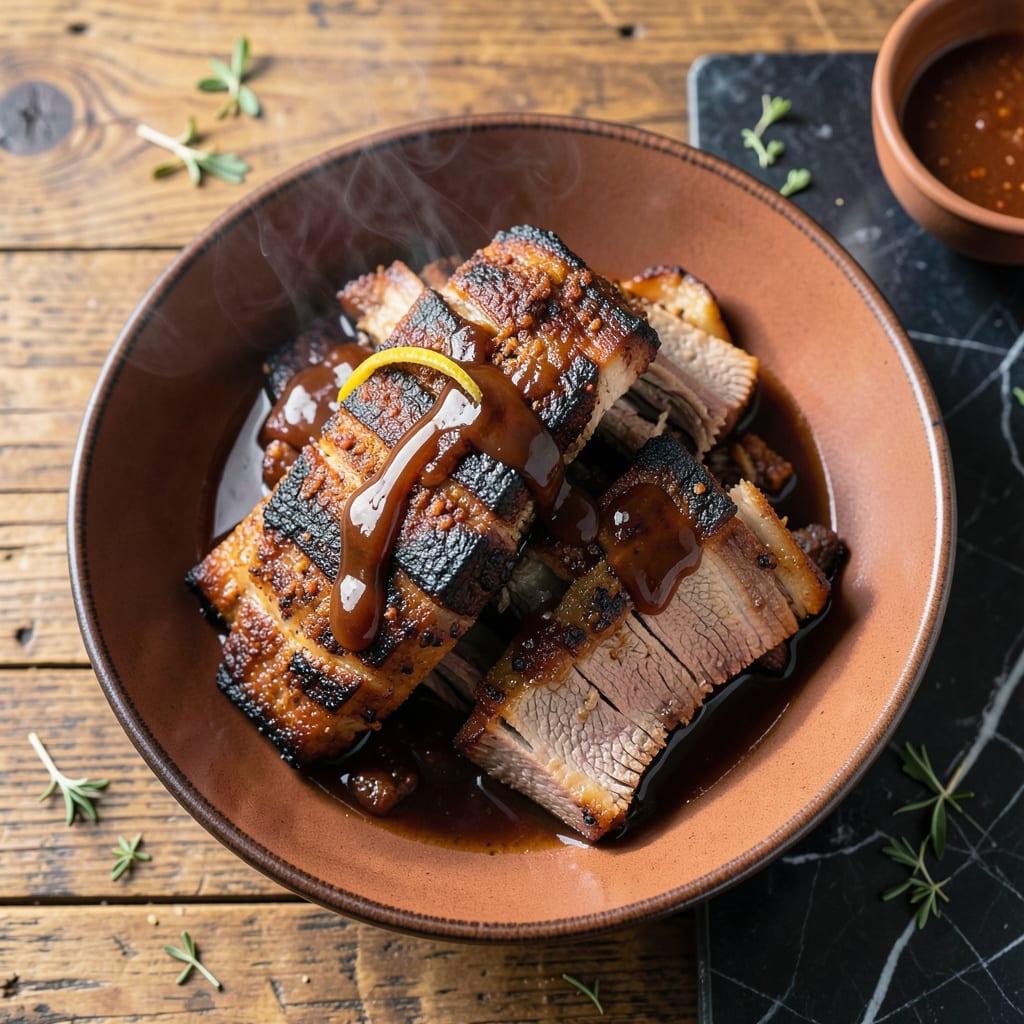
Getting my first whiff of hickory smoke at age eight changed how I cook forever. This method delivers tender results every time with minimal effort.
Low heat and patience transform tough pork shoulder into falling-apart perfection. The smoke adds depth that elevates every bite.
Ingredients for Bbq Pork Shoulder
Pantry staples meet a trip to the butcher. Nothing complicated, just patience.
| Ingredient | Amount | Notes |
|---|---|---|
| Pork Shoulder 🥩 | 4 lb | Bone-in, skin-on preferred |
| Hickory Wood Chips 🪵 | 2 cups | Soaked in water for 30 minutes |
| Brown Sugar 🍚 | ½ cup | Light or dark variety |
| Paprika 🌶️ | 2 tbsp | Smoked paprika preferred |
| Garlic Powder 🧄 | 2 tbsp | Freshly made if possible |
| Onion Powder 🧅 | 2 tbsp | Fine ground texture |
| Kosher Salt 🧂 | 2 tbsp | Diamond Crystal brand preferred |
| Black Pepper 🌶️ | 1 tbsp | Coarsely ground for rub |
| Apple Cider Vinegar 🍏 | ½ cup | For spritzing during cooking |
| Yellow Mustard 🟡 | ¼ cup | For binder in rub |
| BBQ Sauce 🍯 | 2 cups | Your favorite brand or homemade |
| Chicken Broth 🥣 | 1 cup | Low-sodium preferred for spritz |
[recipe_ingredient_scaler]
The pork shoulder is everything here. Bone-in, skin-on gives the best texture—avoid the pre-cut pieces if you can help it. I grab mine from Costco when they have the big cryovacs, but any butcher worth their salt can hook you up. Look for good marbling (those white streaks of fat). The hickory chips? Any hardware store sells them, but soak them first or they’ll burn up too fast.
No hickory? Apple or cherry wood works too—sweeter smoke but still solid. Out of brown sugar? White sugar plus a splash of molasses gets you close. If you’re skipping the binder, just rub the spices right on the meat (the bark won’t be as crispy). The BBQ sauce can be whatever you’ve got—Sweet Baby Ray’s if you’re lazy, homemade if you’re feeling fancy.
Pork shoulder freezes beautifully—just thaw it overnight before cooking. Leftovers? Shred, mix with a little extra sauce, and freeze for 3 months. Honestly, it’s better the next day after sitting in its own juices.
Why You’ll Love This Recipe
- Set and Forget: I toss the pork shoulder with the dry rub, let the smoker do the work, and hours later it’s fall-apart tender.
- Smoky Sweet Crust: The brown sugar and paprika caramelize with the hickory smoke into a bark so good I sneak bites while shredding.
- Feeds the Weekend: It’s my Saturday project that turns into tacos, sandwiches, and nachos for the whole crew.
- Leftovers for Days: One 8-pound shoulder gives me pulled pork for a week—honestly the gift that keeps on giving.
Step-by-Step Instructions for Slow-Smoked BBQ Pork Shoulder
Here’s the method I use to achieve that fall-apart texture with a perfect bark.
Step 1: Prepare the Pork Shoulder and Dry Rub
Start by patting the 4 lb pork shoulder dry with paper towels. In a bowl, mix 0.5 cup brown sugar, 2 tbsp paprika, 2 tbsp garlic powder, 2 tbsp onion powder, 2 tbsp kosher salt, and 1 tbsp black pepper. I like to press the rub into the meat firmly so it adheres well.
Next, spread 0.25 cup yellow mustard evenly over the pork shoulder as a binder. This helps the rub stick and creates a beautiful bark. Coat the entire surface with the dry rub mixture, pressing it in so it forms a thick crust. Let it sit at room temperature for 30 minutes while you prepare the smoker.
Step 2: Set Up the Smoker and Add Wood Chips
Soak the 2 cups hickory wood chips in water for at least 30 minutes before use. Fill your smoker with charcoal and light it, aiming for a temperature of 225-250°F. I use a chimney starter to get even heat without lighter fluid flavors.
Once the smoker reaches temperature, add the soaked wood chips directly to the coals or in the smoker box. You want clean, thin blue smoke—not thick white smoke, which can impart a bitter flavor. Place a water pan in the smoker to maintain moisture during the long cook.
Step 3: Smoke the Pork Shoulder Low and Slow
Place the pork shoulder fat-side up on the smoker grate. This position allows the fat to baste the meat as it renders. Smoke undisturbed for 6-8 hours, maintaining that 225-250°F temperature range.
Every 2 hours, spritz the pork with a mixture of 0.5 cup apple cider vinegar and 1 cup chicken broth to keep it moist and add flavor. You’ll know it’s ready for the next step when the internal temperature reaches 165-170°F and the bark is a deep mahogany color.
Step 4: Wrap and Finish the Cook
When the pork hits the stall (around 165-170°F), wrap it tightly in pink butcher paper or aluminum foil. This helps power through the stall while keeping the meat moist. Return it to the smoker and continue cooking until the internal temperature reaches 200-205°F.
At this point, the pork should be probe-tender—meaning a meat thermometer slides in like butter with no resistance. This usually takes another 2-4 hours, but trust the probe test over the clock.
Step 5: Rest, Shred, and Sauce
Remove the pork from the smoker and let it rest, still wrapped, for at least 1 hour. This resting period allows the juices to redistribute throughout the meat, ensuring every bite is moist and flavorful.
Unwrap the pork and discard any large fat chunks. Shred the meat using two forks or meat claws, then toss it with 2 cups BBQ sauce. The sauce should coat every strand without making the pork soggy. Serve immediately on buns or as a main dish with your favorite sides.
Pro Tips For Making Bbq Pork Shoulder
- Rest Overnight: I learned this the hard way—letting the dry rub (brown sugar, paprika, garlic powder) sit on the pork shoulder for 12+ hours makes a real difference in flavor penetration. Sounds like a hassle, but it’s worth the wait.
- Use a Probe: After overcooking my first three shoulders, I finally figured out that using a meat thermometer (203°F internal temp) guarantees perfect pull-apart tenderness without guessing.
- Soak the Wood: Hickory chips can burn too fast and turn bitter—soak them in water for at least 30 minutes before smoking to slow the burn and keep the flavor clean.
- Skip the Sauce Early: Resist the urge to slather on BBQ sauce until the last 30 minutes, or the sugar in it (and the brown sugar rub) will char before the meat finishes cooking.
Common Mistakes When Making bbq pork shoulder
Skipping the Soak
I’ve seen folks toss dry hickory wood chips straight onto the coals, only to watch them burn up in 10 minutes. Soaking for 30 minutes prevents this and gives you that slow, steady blue smoke you need for proper flavor infusion. 🔥
Peeking Too Often
Every time you open the smoker lid, you lose 25-50°F of heat and add 30 minutes to your cook time. Resist the urge to check progress constantly. Trust your thermometer and the process—patience is the real secret ingredient here.
Rushing the Rest
Cutting into pork straight from the smoker sends all those beautiful juices onto your cutting board. That 1 hour rest is non-negotiable for juicy results. I learned this the hard way at my first local BBQ competition—lesson burned into my memory forever. 💪
Over-Saucing Early
Adding BBQ sauce too soon creates a burnt, sticky mess. Wait until after shredding to mix it in. This preserves the bark you worked so hard to build and lets each element shine. A light brush in the last 30 minutes is fine if you want extra stickiness.
Ignoring the Stall
The stall at 165-170°F can last hours if you don’t wrap. That pink butcher paper is your best friend for pushing through this phase. I keep a roll in my smoker toolkit at all times—it’s as essential as my thermometer.
Wrong Side Up
Always smoke pork shoulder fat-side up. This lets the rendering fat baste the meat throughout the cook. I’ve tried fat-side down for crispier bark, but the texture suffers. The fat cap is nature’s self-basting mechanism—don’t fight it.
Nutrition Facts

Trained in classic French technique but raised on slow-cooked ribs and spicy rubs, she blends culinary skill with smoke and soul.
- Recipe for Boneless Pork Chops in Cast Iron Skillet: Sear and Baste to Juicy Perfection - October 3, 2026
- Recipe for Boneless Cross Rib Roast: Slow-Roasted Beef with Herb Crust - October 3, 2026
- Hamburgers in Sauce Recipe Crock Pot: Slow-Cooked Savory Delight - October 3, 2026