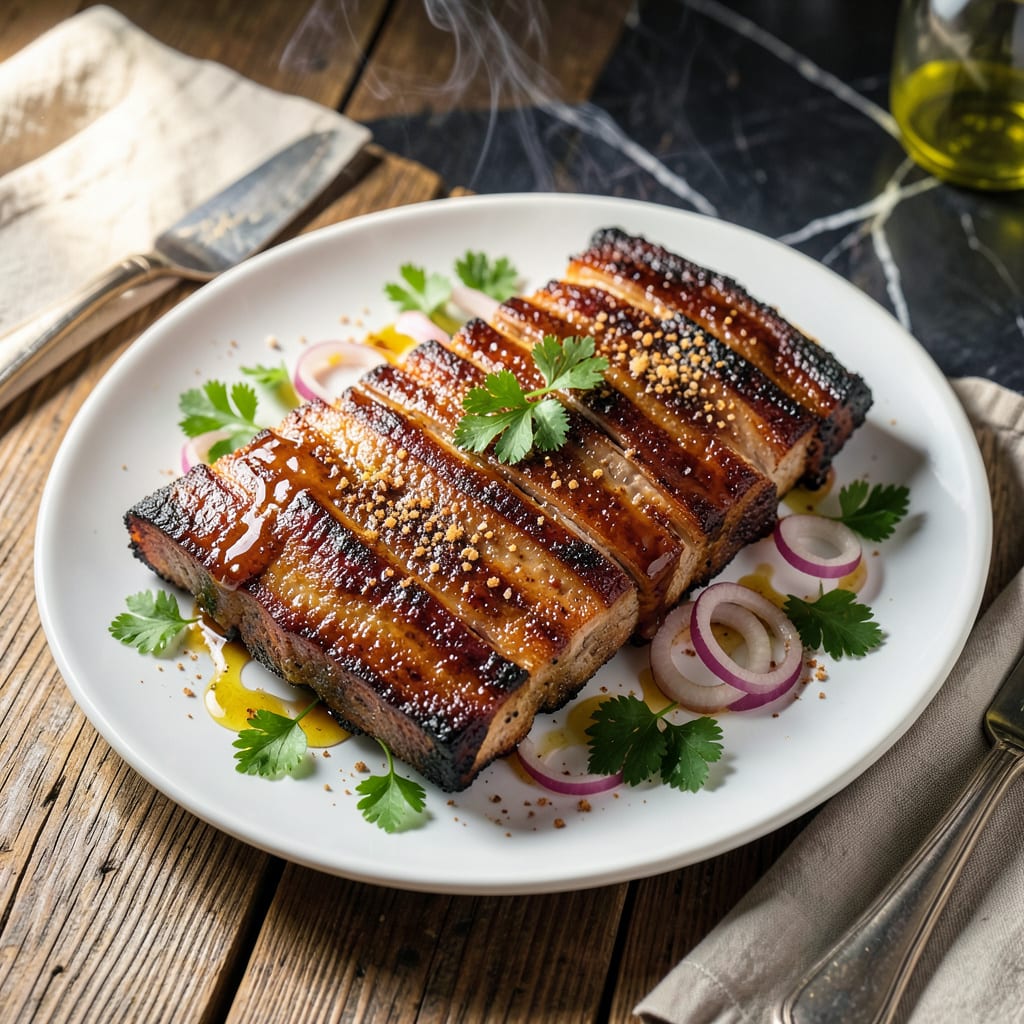
My first taste of slow-smoked ribs came from my family’s backyard cookouts, where hickory smoke filled the air. This recipe brings that memory to life with tender, fall-off-the-bone pork spare ribs.
Using a low-and-slow method at 225°F, the meat becomes irresistibly tender while the rub forms a crusty bark. It’s a foolproof way to achieve competition-worthy results at home.
Ingredients for Bbq Pork Spare Ribs
Tender pork spare ribs meet a bold dry rub and hickory smoke. Nothing beats this classic.
| Ingredient | Amount | Notes |
|---|---|---|
| Pork Spare Ribs 🥩 | 4 lb | Full rack, membrane removed |
| Brown Sugar 🍚 | ½ cup | Light or dark variety |
| Paprika 🌶️ | 2 tbsp | Sweet or smoked variety |
| Garlic Powder 🧄 | 1 tbsp | Freshly ground preferred |
| Onion Powder 🧅 | 1 tbsp | Fine powder for even coverage |
| Coarse Salt 🧂 | 1 tbsp | Kosher or sea salt variety |
| Black Pepper 🌶️ | 1 tbsp | Freshly ground for best flavor |
| Cayenne Pepper 🔥 | ½ tsp | Adjust for heat preference |
| Mustard Powder 🟡 | 1 tsp | For rub binding and tang |
| Apple Cider Vinegar 🍏 | ¼ cup | For spritzing during smoking |
| Hickory Wood Chips 🪵 | 2 cups | Soaked in water for 30 minutes |
| Olive Oil 🫒 | 2 tbsp | For rub adhesion and moisture |
| BBQ Sauce 🍯 | 1 ½ cups | For glazing final 30 minutes |
[recipe_ingredient_scaler]
The ribs are everything. Look for full spare ribs with good marbling at your butcher or Costco—avoid pre-trimmed versions, as they lack fat for flavor. Ask for the membrane to be removed if you’re not comfortable doing it yourself. The wood chips matter too: hickory delivers that classic smoky depth, but apple or cherry wood works if that’s what’s available.
No spare ribs? Baby back ribs cook faster but stay tender. Out of hickory? Pecan or oak wood chips give a milder smoke. For the rub, freshly ground spices make a difference—penneys or bulk bins at natural food stores are ideal. If you must use pre-ground, check the expiration date. The BBQ sauce can be store-bought—Stubb’s or Sweet Baby Ray’s are reliable.
Ribs taste even better the next day. Store cooked ribs wrapped in foil in the fridge for up to 4 days, or freeze for 3 months. Reheat gently in the oven with a splash of apple juice to keep them moist. Always keep wood chips dry until ready to use—they’ll last indefinitely if stored properly.
Why You’ll Love This Recipe
- Minimal Effort: I just rub the ribs with brown sugar and spices, then let the oven do the work.
- Smoky Sweetness: The paprika and brown sugar caramelize into this ridiculous crust that’s sticky and savory all at once.
- Feeds My Crew: These ribs disappear fast at family dinners, and honestly, they’re just as good reheated the next day.
- Budget Friendly: Pork spare ribs are cheaper than baby backs, and the dry rub stretches flavor without extra cost.
Step-by-Step Instructions for BBQ Pork Spare Ribs
Master the art of slow-smoked ribs with this proven technique for tender, flavorful results.
Step 1: Prepare and Season the Ribs
Begin by removing the membrane from the 4 lb pork spare ribs—this ensures the rub penetrates fully and the seasoning adheres properly. Pat the ribs dry with paper towels to remove any moisture, which helps create a better bark.
In a bowl, combine the 0.5 cup brown sugar, 2 tbsp paprika, 1 tbsp garlic powder, 1 tbsp onion powder, 1 tbsp coarse salt, 1 tbsp black pepper, 0.5 tsp cayenne pepper, and 1 tsp mustard powder. Drizzle the 2 tbsp olive oil over the ribs, then generously apply the rub, pressing it into the meat so it sticks. Let the ribs rest at room temperature for 30 minutes while you prepare the smoker.
Step 2: Set Up the Smoker and Begin Cooking
Soak the 2 cups hickory wood chips in water for 30 minutes to ensure they produce clean, steady smoke. Preheat your smoker to 225°F and add the soaked wood chips once it reaches temperature. Place the ribs bone-side down on the grate.
Smoke the ribs undisturbed for 3 hours. Maintain a consistent temperature and avoid opening the smoker lid unnecessarily. During this time, spritz the ribs with the 0.25 cup apple cider vinegar every 45-60 minutes to keep them moist and enhance the bark formation. You’ll notice the color deepen to a rich mahogany as the smoke works its magic.
Step 3: Wrap and Continue Cooking
After 3 hours, carefully remove the ribs from the smoker and wrap them tightly in heavy-duty aluminum foil. This step, known as the “Texas crutch,” helps tenderize the meat by trapping steam. Return the wrapped ribs to the smoker and continue cooking for another 2 hours.
At this stage, the ribs should be probe-tender, meaning a meat thermometer or toothpick slides in with little resistance. The internal temperature should reach around 195-203°F for that perfect fall-off-the-bone texture.
Step 4: Glaze and Finish
Unwrap the ribs and place them back on the smoker grate, bone-side up. Brush generously with the 1.5 cups BBQ sauce, coating all surfaces evenly. Smoke for an additional 30 minutes to set the glaze and caramelize the sauce.
The sauce should thicken slightly and develop a glossy sheen. Keep a close eye to prevent burning, as the sugars in the sauce can char quickly. Once the ribs are glaze-coated and the edges look slightly crispy, they’re ready to serve.
Step 5: Rest and Serve
Transfer the ribs to a cutting board and let them rest for 10-15 minutes. This allows the juices to redistribute, ensuring each bite is moist and flavorful. Slice between the bones for individual servings or serve the full rack for a dramatic presentation.
The ribs should have a deep, smoky aroma with a perfect balance of sweet, spicy, and tangy flavors. The meat should pull away from the bone cleanly with minimal effort, delivering that signature fall-off-the-bone experience.
Pro Tips For Making Bbq Pork Spare Ribs
- Pat Dry First: I learned this the hard way—moisture on the ribs prevents the dry rub from sticking and the bark from forming. Blot them thoroughly with paper towels before seasoning.
- Low and Slow: After burning two racks trying to rush it, I now keep the smoker at 225°F and give them 5-6 hours. Anything hotter and the meat gets tough before it’s tender.
- Don’t Over-Sugar: Brown sugar caramelizes fast and can turn bitter if it burns. Mix it with the paprika and powders, but go easy—about 2 tablespoons per pound of ribs is plenty.
- Rest Before Serving: Sounds tedious, but wrapping the ribs in foil and letting them sit for 15 minutes after cooking keeps the juices inside where they belong. I skip this when I’m in a hurry, but the texture suffers every time.
Storing and Reheating This bbq pork spare ribs
Fridge Storage
Let your ribs cool completely before storing—this prevents condensation that makes the bark soggy. I wrap mine in heavy-duty foil with a splash of apple cider vinegar to maintain moisture. They’ll keep in the fridge for 4 days without losing quality. ❄️
Freezing for Later
For longer storage, wrap cooled ribs tightly in plastic wrap then foil, or use vacuum-sealed bags. They freeze beautifully for 3 months. I always label with the date—I once forgot and found mystery meat from a local BBQ competition prep session!
Oven Reheating
Preheat to 300°F and place ribs in a baking dish with ¼ cup apple juice. Cover with foil and heat for 20-25 minutes. This method preserves the bark while keeping the meat juicy. I swear by this technique for leftovers that taste almost fresh off the smoker.
Grill Reheating
For that just-smoked flavor, reheat on indirect medium heat for 10-12 minutes. Brush with extra BBQ sauce the last 2 minutes. My coastal rides often include stops at friends’ houses where I demo this trick—always a hit. 🔥
Microwave Method
When I’m in a rush, I place ribs on a microwave-safe plate with a damp paper towel. Heat on 50% power in 1-minute intervals until 165°F. Not ideal for texture, but it works in a pinch. The vinegar spritz from storage helps maintain moisture.
Nutrition Facts

Trained in classic French technique but raised on slow-cooked ribs and spicy rubs, she blends culinary skill with smoke and soul.
- Recipe for Boneless Pork Chops in Cast Iron Skillet: Sear and Baste to Juicy Perfection - October 3, 2026
- Recipe for Boneless Cross Rib Roast: Slow-Roasted Beef with Herb Crust - October 3, 2026
- Hamburgers in Sauce Recipe Crock Pot: Slow-Cooked Savory Delight - October 3, 2026