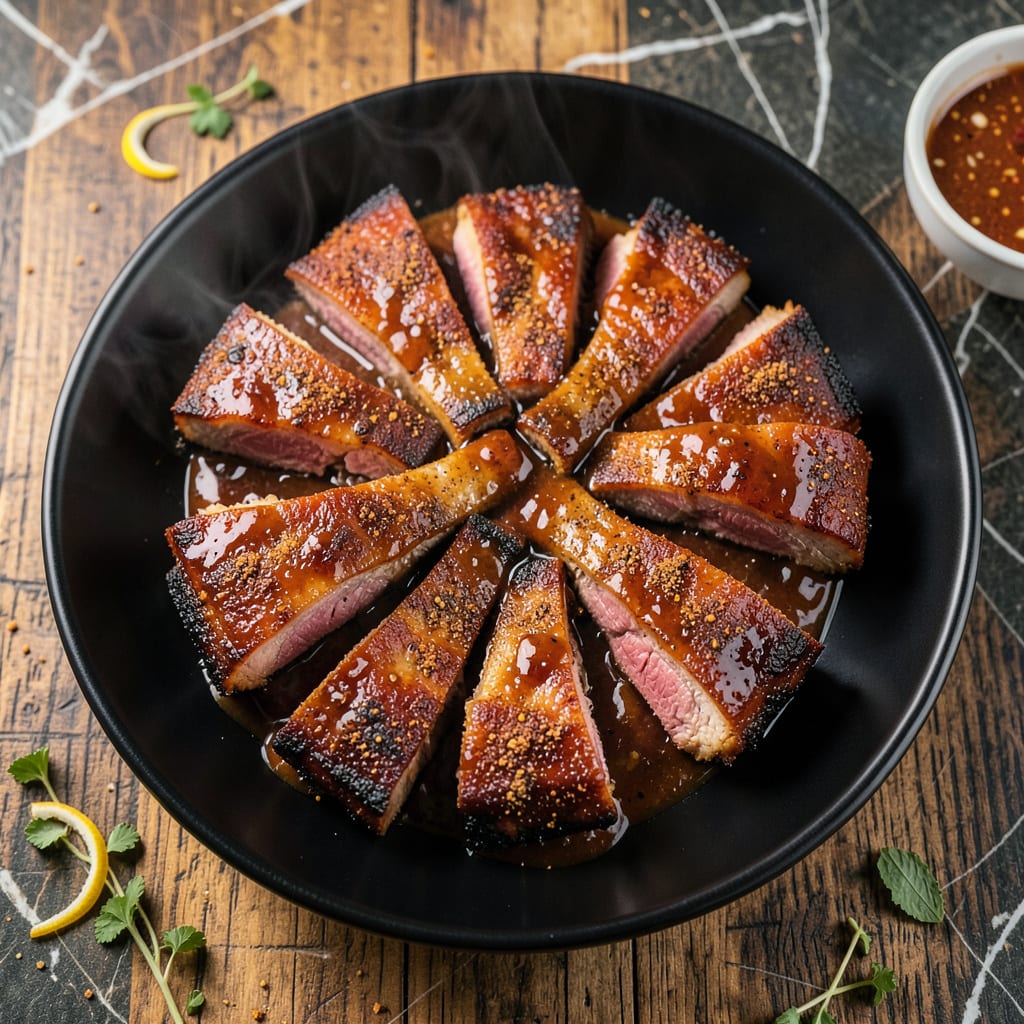
There’s nothing quite like the aroma of slow-smoked spareribs filling the air on a warm afternoon. I developed this method after years of testing at local BBQ competitions, focusing on achieving that perfect balance between tender meat and smoky char.
The secret lies in a careful combination of dry rub, low heat, and patience. Each step builds layers of flavor, from the initial seasoning to the final glaze. The result is meat that falls off the bone with just the right amount of resistance.
Ingredients for Bbq Pork Spareribs
Quality pork spareribs and a well-balanced dry rub form the foundation of this dish.
| Ingredient | Amount | Notes |
|---|---|---|
| Pork Spareribs 🥩 | 4 lb | Full rack, membrane removed |
| Brown Sugar 🍚 | ½ cup | Light or dark variety |
| Paprika 🌶️ | 2 tbsp | Sweet or smoked variety |
| Garlic Powder 🧄 | 1 tbsp | Not garlic salt |
| Onion Powder 🧅 | 1 tbsp | Fresh ground preferred |
| Kosher Salt 🧂 | 1 tbsp | Diamond Crystal preferred |
| Black Pepper 🌶️ | 1 tbsp | Freshly ground preferred |
| Cayenne Pepper 🔥 | ½ tsp | Adjust for heat preference |
| Apple Cider Vinegar 🍏 | ¼ cup | For tang in rub |
| Mustard Powder 🟡 | 1 tsp | For depth in dry rub |
| BBQ Sauce 🍯 | 2 cups | For glazing and serving |
| Hickory Wood Chips 🪵 | 2 cups | Soaked in water 30 minutes |
| Olive Oil 🫒 | 2 tbsp | For rubbing on ribs |
[recipe_ingredient_scaler]
The spareribs are critical—look for full racks with good marbling at Costco or your local butcher. Avoid pre-trimmed ribs, as they tend to dry out. The membrane must be removed (use a paper towel for grip), and Diamond Crystal kosher salt is ideal for the rub due to its texture. Professional pits use hickory, but apple or cherry wood works too for milder smoke.
No brown sugar? Turbinado or coconut sugar can substitute, though flavor will differ slightly. Swap smoked paprika for regular if you prefer less intensity. Yellow mustard powder works in place of dry mustard. For the BBQ sauce, Stubb’s or Sweet Baby Ray’s are reliable store-bought options. The vinegar can be white vinegar in a pinch, though cider adds better complexity.
Rubbed ribs can rest overnight in the fridge—actually improves flavor. Cooked ribs keep 3-4 days refrigerated, reheat gently with sauce. Wood chips should be stored in a sealed container to prevent moisture loss. Always soak before using to prevent flare-ups.
Why You’ll Love This Recipe
- Set and Forget: I just rub the ribs with brown sugar, paprika, and the powders, then let the oven do the rest.
- Sweet and Smoky: The brown sugar caramelizes with the paprika for that sticky, finger-licking crust.
- Crowd Pleaser: Honestly, these disappear faster than I can make them at summer cookouts.
- Budget Feast: Pork spareribs stretch far—one rack feeds my whole family with leftovers for sandwiches.
Step-by-Step Instructions for BBQ Pork Spareribs
Master the technique for fall-off-the-bone ribs with smoky depth and caramelized glaze.
Step 1: Prepare the Dry Rub and Season the Ribs
In a bowl, combine the 0.5 cup brown sugar, 2 tbsp paprika, 1 tbsp garlic powder, 1 tbsp onion powder, 1 tbsp kosher salt, 1 tbsp black pepper, 0.5 tsp cayenne pepper, and 1 tsp mustard powder. Stir until the spices are evenly distributed and the mixture takes on a uniform, rust-colored hue.
Pat the 4 lb pork spareribs dry with paper towels, then rub them all over with the 2 tbsp olive oil. Apply the dry rub generously to every surface, pressing it into the meat so it adheres well. The ribs should be completely coated with a visible layer of seasoning.
Step 2: Smoke the Ribs Low and Slow
Prepare your smoker according to manufacturer instructions, targeting a consistent temperature of 225-250°F. Add the 2 cups hickory wood chips (previously soaked in water for 30 minutes) to the smoker box or directly onto the coals for a steady stream of aromatic smoke.
Place the seasoned ribs bone-side down on the smoker grates. Insert a meat probe into the thickest part of the meat, avoiding the bone. Smoke undisturbed for 3-4 hours, or until the internal temperature reaches 160-165°F and the ribs develop a deep mahogany bark.
Step 3: Wrap and Continue Cooking
Lay out a large sheet of heavy-duty aluminum foil and place the ribs meat-side down in the center. Spritz the ribs lightly with the 0.25 cup apple cider vinegar for added tang, then pour 1 cup bbq sauce over the top. Wrap the ribs tightly in the foil, creating a sealed packet to trap steam and accelerate cooking.
Return the wrapped ribs to the smoker and continue cooking for another 1.5-2 hours. The ribs are done when the internal temperature reaches 195-203°F and the meat pulls back from the bones by at least ¼ inch, exposing the rib tips.
Step 4: Glaze and Finish for Maximum Flavor
Carefully unwrap the ribs and place them back on the smoker grates, meat-side up. Brush the remaining 1 cup bbq sauce generously over the surface, ensuring every rib is coated. Return the ribs to the smoker and cook uncovered for an additional 15-20 minutes to set the glaze.
The sauce should caramelize slightly, forming a glossy, sticky layer that clings to the meat. The ribs should have a slight bend when picked up with tongs, and the meat should be tender enough to pull apart with minimal resistance.
Pro Tips For Making Bbq Pork Spareribs
- Trim the Fat: Remove the thick membrane on the bone side and any excess fat—this lets the dry rub with brown sugar and spices actually penetrate the meat instead of sliding off.
- Low and Slow: Keep your oven or grill at 250°F for the first 2 hours. I learned this the hard way—rushing with high heat gives you tough ribs instead of fall-off-the-bone tenderness.
- Rest Before Serving: Pull the ribs off the heat and let them rest under foil for 15 minutes. Sounds weird, but it works: the juices redistribute so they don’t all spill out when you cut them.
- Double the Rub: Use twice as much spice mix as you think you need—especially the paprika and brown sugar. After burning three batches, I finally figured out that ribs can handle bold flavor.
Creative Variations of This Dish
Asian-Inspired Glaze
Swap the BBQ sauce for a mix of ½ cup hoisin, ¼ cup soy sauce, and 2 tbsp honey. Add 1 tbsp grated ginger and 2 minced garlic cloves for punch. The sticky-sweet glaze pairs perfectly with the smoky ribs. I learned this trick at a fusion cook-off last summer.
Texas-Style Dry Rub
Replace the brown sugar with ¼ cup turbinado sugar and add 1 tbsp chili powder and 1 tsp cumin for a bolder crust. Skip the final sauce glaze to let the dry rub shine. This is my go-to for local BBQ competitions. 🔥
Sweet Heat Variation
Increase the cayenne to 1 full tsp and add 2 tbsp brown sugar to the dry rub. Brush with a mix of 1 cup BBQ sauce and 2 tbsp hot honey in the final step. The contrast of sweet and spicy is addictive.
Apple Cider Brine
Before rubbing, soak ribs in 4 cups apple cider, ½ cup kosher salt, and ¼ cup brown sugar for 2 hours. This keeps them extra juicy. I forage wild apples in fall for the ultimate version. 💪
Coffee-Rubbed Ribs
Add 2 tbsp finely ground coffee to your dry rub for depth. The coffee enhances the smoky hickory notes. Use a dark roast from your local specialty shop for best results.
Nutrition Facts

Trained in classic French technique but raised on slow-cooked ribs and spicy rubs, she blends culinary skill with smoke and soul.
- Recipe for Boneless Pork Chops in Cast Iron Skillet: Sear and Baste to Juicy Perfection - October 3, 2026
- Recipe for Boneless Cross Rib Roast: Slow-Roasted Beef with Herb Crust - October 3, 2026
- Hamburgers in Sauce Recipe Crock Pot: Slow-Cooked Savory Delight - October 3, 2026