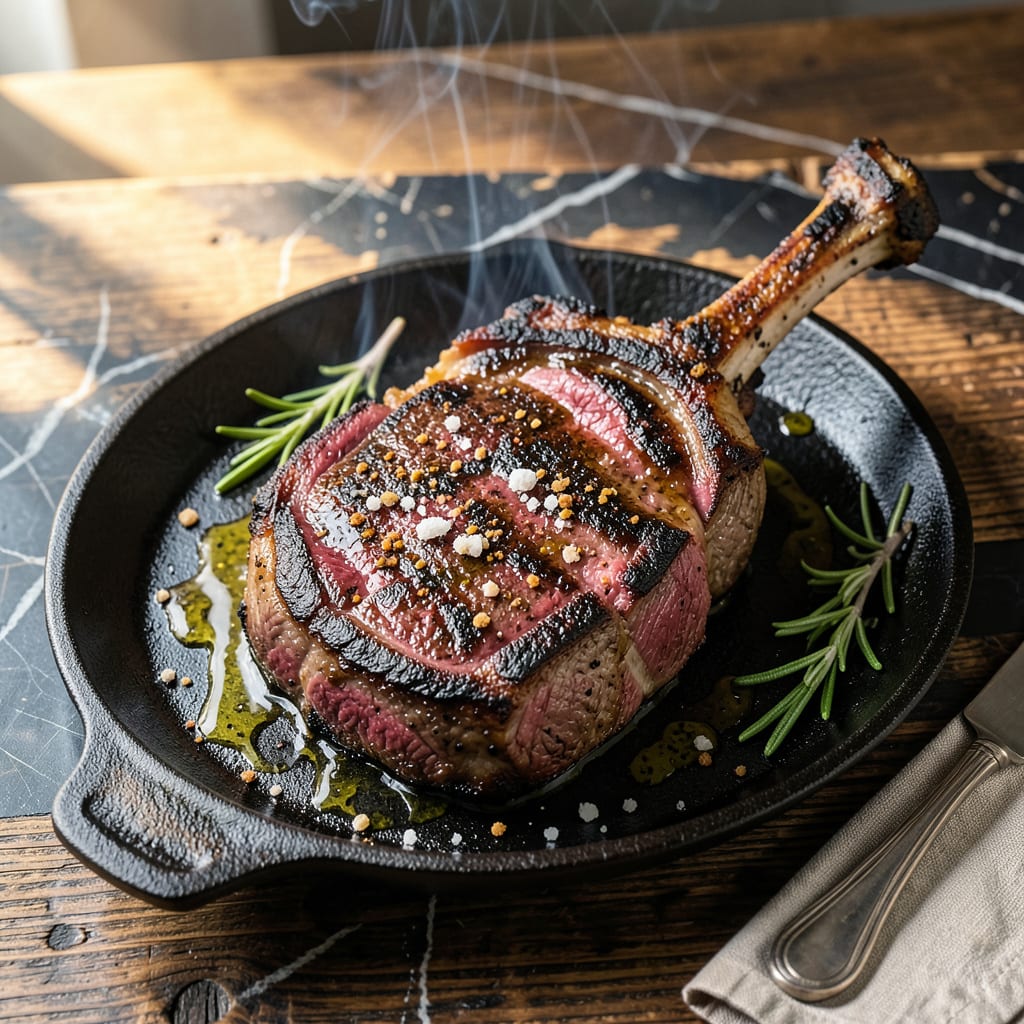
Few things beat the bold smoky flavor of a properly char-grilled porterhouse. My years of pitmaster experience taught me that high heat and precise timing unlock the steak’s natural juiciness.
This method delivers a perfectly seared crust outside with tender, buttery meat inside. The porterhouse—with its strip and tenderloin in one cut—rewards careful grilling with every bite.
Ingredients for Bbq Porterhouse Steak
High heat, bold smoke, and a thick cut make this steak unforgettable.
| Ingredient | Amount | Notes |
|---|---|---|
| Porterhouse Steak 🥩 | 2 whole | About 1.5 inches thick, bone-in |
| Kosher Salt 🧂 | 2 tbsp | Diamond Crystal preferred for even coating |
| Freshly Ground Black Pepper 🌶️ | 2 tsp | Coarse grind for bold flavor |
| Garlic Powder 🧄 | 1 tsp | Not garlic salt |
| Smoked Paprika 🌶️ | 1 tsp | Spanish variety for authentic smoke |
| Olive Oil 🫒 | 2 tbsp | High smoke point, neutral flavor |
| Unsalted Butter 🧈 | 4 tbsp | For basting during grilling |
| Fresh Rosemary Sprigs 🌿 | 2 whole | Optional, for aromatic basting |
| Fresh Thyme Sprigs 🍃 | 2 whole | Optional, for aromatic basting |
| Lump Charcoal ⚫ | 5 lb | Natural, no additives for clean burn |
| Hickory Wood Chunks 🪵 | 2 pieces | For authentic smoky flavor |
[recipeingredientscaler]
The porterhouse is non-negotiable here. USDA Prime grade delivers superior marbling, but Choice works perfectly fine—just look for even fat distribution. Thickness matters: aim for 1.5 inches minimum to achieve that perfect medium-rare without overchar. I source mine from Whole Foods or a trusted local butcher who dry-ages in-house. The bone-in cut adds flavor but requires careful trimming of excess fat before grilling.
No lump charcoal? Hardwood briquettes without fillers are an acceptable backup. Hickory not available? Oak or pecan wood provide excellent smoke too. For the dry rub, onion powder at half the amount can replace garlic powder if needed. The butter basting is essential for crust formation—ghee works as a dairy-free alternative if required, though it lacks the same richness.
Dry-brine the steak uncovered in the fridge for 1-2 hours before grilling. Cook immediately after seasoning for best results. Leftovers (if any) keep 3-4 days refrigerated, though porterhouse is best served fresh off the grill.
Why You’ll Love This Recipe
- Five-Minute Prep: I just rub the steak with salt, pepper, garlic powder, and smoked paprika—no marinade, no fuss.
- Smoky, Garlicky Crust: That first bite with the charred edges and the deep, smoky paprika kick? Worth every second.
- Backyard Star: It’s my secret for impressing guests at summer BBQs without slaving in the kitchen.
- Next-Day Luxury: Leftovers (if there are any) make the best steak sandwiches for lunch the next day.
Step-by-Step Instructions for BBQ Porterhouse Steak
Master the grill with this method—precise timing and technique guarantee perfect results.
Step 1: Prepare and Season the Porterhouse Steaks
Pat the 2 whole Porterhouse Steak completely dry with paper towels to ensure a good sear. The steaks should be about 1.5 inches thick and bone-in for optimal flavor.
In a small bowl, combine the 2 tbsp Kosher Salt, 2 tsp Freshly Ground Black Pepper, 1 tsp Garlic Powder, and 1 tsp Smoked Paprika. Rub this mixture evenly over all surfaces of the steaks, pressing gently to adhere. Let the seasoned steaks sit at room temperature for 30-45 minutes before grilling.
Step 2: Set Up the Grill for Two-Zone Cooking
Arrange the 5 lb Lump Charcoal in your grill, creating a hot zone with coals on one side and an empty space on the other for indirect heat. Add the 2 pieces Hickory Wood Chunks directly onto the hot coals for authentic smoky flavor.
Once the charcoal is ashed over and glowing red, the grill is ready. The temperature should reach about 450°F over the hot zone. This two-zone setup allows you to sear the steaks over direct heat and finish cooking over indirect heat.
Step 3: Sear and Baste the Steaks
Brush the grates clean and oil them lightly with some of the 2 tbsp Olive Oil. Place the steaks over the hot zone and sear for 3-4 minutes per side until a deep, rich crust forms. Avoid moving the steaks during this time to ensure proper grill marks.
After searing, move the steaks to the indirect heat zone. Add the 4 tbsp Unsalted Butter, 2 whole Fresh Rosemary Sprigs, and 2 whole Fresh Thyme Sprigs to the steaks. Baste the steaks with the melted butter and herbs for 2-3 minutes to infuse additional flavor.
Step 4: Finish Cooking to Desired Doneness
Continue cooking the steaks over indirect heat, with the lid closed, until they reach your desired internal temperature. For medium-rare, aim for 130-135°F internal temperature, which should take about 8-10 minutes total cooking time depending on thickness.
Use a meat thermometer to check the temperature in the thickest part of the steak, avoiding the bone. The steaks are ready when the thermometer reads 5°F below your target temperature, as they will continue to rise while resting.
Step 5: Rest and Serve
Transfer the steaks to a cutting board and tent loosely with foil. Let them rest for 10-15 minutes to allow the juices to redistribute throughout the meat. This resting period is crucial for achieving juicy, flavorful steaks.
Slice the steaks against the grain and serve immediately. The result should be a perfectly charred exterior with a juicy, tender interior, infused with bold smoky flavor from the hickory wood.
Pro Tips For Making Bbq Porterhouse Steak
- Dry the Steak: Pat the porterhouse completely dry with paper towels before seasoning—I learned this the hard way after my first few steaks steamed instead of seared.
- Rest Before Slicing: Give it a solid 10 minutes under foil after grilling; I used to skip this and watched all the juices run onto the cutting board.
- Use Coarse Salt: Kosher salt sticks better and gives a more even crust than fine table salt, especially on a thick-cut porterhouse.
- Start Hot: Crank the grill to high for the first 2-3 minutes per side to lock in a good crust before moving to indirect heat for finishing.
Health Benefits of These Flavors
Protein Powerhouse
This cut delivers 45-50g of protein per 6-ounce serving, supporting muscle repair and growth. Porterhouse combines strip and tenderloin, giving you two premium protein sources in one. I notice my energy levels stay steady after enjoying this meal. 💪
Iron and Zinc Boost
Beef is one of the best sources of heme iron, which your body absorbs more easily than plant-based iron. A porterhouse provides about 30% of your daily iron needs per serving, along with 40% of daily zinc for immune support.
B Vitamin Complex
You’ll get a full spectrum of B vitamins from this steak, including B12 for nerve function and B6 for metabolism. A single serving covers about half your daily B vitamin requirements, making it a nutritional powerhouse.
Healthy Fats Balance
The marbling in porterhouse provides monounsaturated fats that support heart health when consumed in moderation. The fat cap also carries fat-soluble vitamins A, D, E, and K, which your body needs for various functions.
Low-Carb Friendly
With zero carbs and minimal sugars, this dish fits perfectly into low-carb and keto diets. The protein-to-fat ratio helps maintain satiety, which I find keeps me full for hours after eating. 🥩
Mineral Richness
Beyond iron and zinc, you’ll find selenium, phosphorus, and potassium in good quantities. These minerals support everything from thyroid function to bone health, making this steak more than just a delicious meal.
Nutrition Facts

Trained in classic French technique but raised on slow-cooked ribs and spicy rubs, she blends culinary skill with smoke and soul.
- Recipe for Boneless Pork Chops in Cast Iron Skillet: Sear and Baste to Juicy Perfection - October 3, 2026
- Recipe for Boneless Cross Rib Roast: Slow-Roasted Beef with Herb Crust - October 3, 2026
- Hamburgers in Sauce Recipe Crock Pot: Slow-Cooked Savory Delight - October 3, 2026