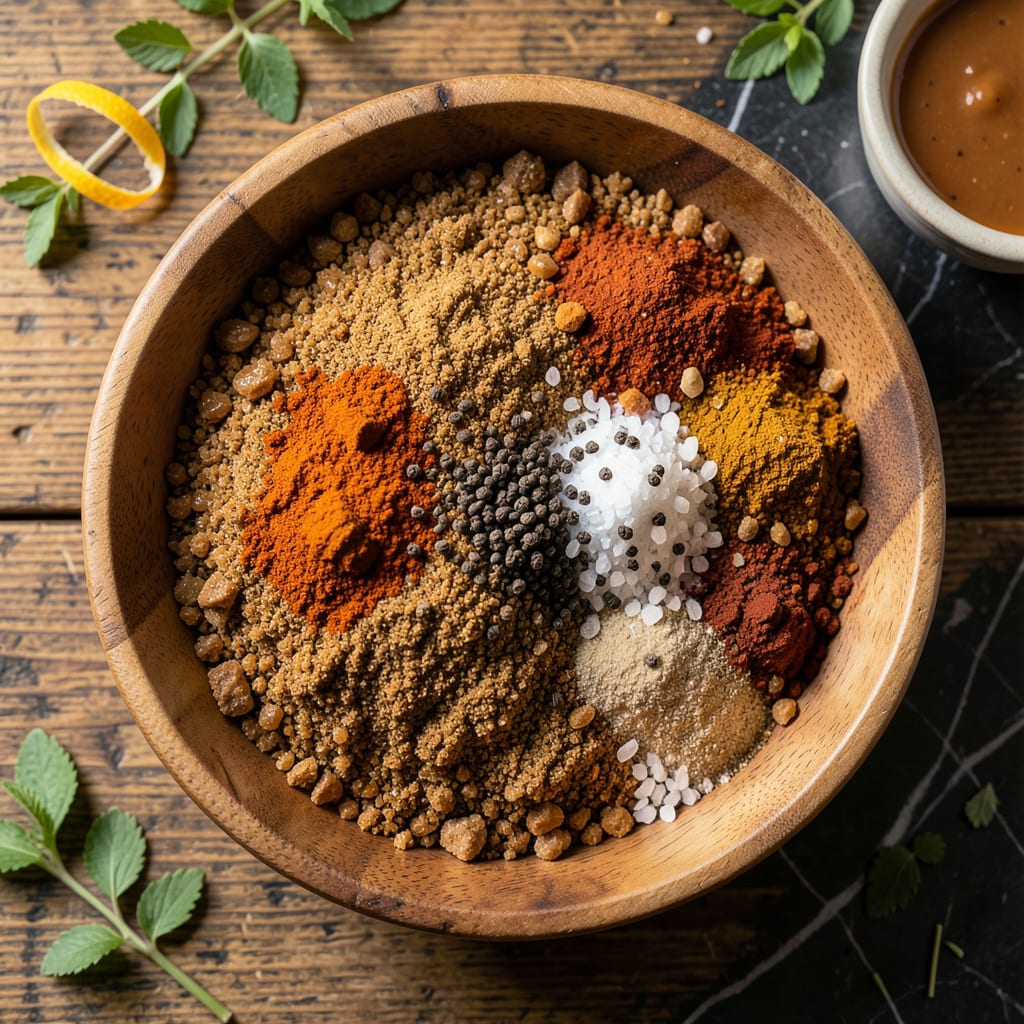
This blend captures the essence of outdoor cooking with smoky, sweet, and spicy notes. I developed it to ensure every bite of pulled pork delivers tender, flavorful results.
Mix a big batch and keep it on hand. It lasts 6 months in an airtight container and works for chicken, ribs, or vegetables too.
Ingredients for Bbq Pulled Pork Seasoning
Nine carefully balanced spices create that signature smoky-sweet BBQ flavor profile.
| Ingredient | Amount | Notes |
|---|---|---|
| Brown Sugar 🍚 | ½ cup | Light or dark variety |
| Smoked Paprika 🌶️ | 2 tbsp | Essential for smoky depth |
| Garlic Powder 🧄 | 1 tbsp | Fine grind preferred |
| Onion Powder 🧅 | 1 tbsp | Complements the garlic |
| Ground Black Pepper 🌶️ | 1 tbsp | Freshly ground for best results |
| Kosher Salt 🧂 | 1 tbsp | Diamond Crystal preferred |
| Chili Powder 🌶️ | 1 tbsp | Mild or hot variety |
| Ground Cumin 🌿 | 1 tsp | Toasted enhances flavor |
| Cayenne Pepper 🔥 | ½ tsp | Adjust for heat preference |
| Dried Mustard 🟡 | 1 tsp | Powdered mustard works too |
[recipeingredientscaler]
Optimal quality requires fresh spices—Penzeys or bulk sections at natural food stores are ideal. Smoked paprika is non-negotiable for authentic barbecue flavor; Spanish pimentón offers superior depth. Kosher salt, specifically Diamond Crystal, ensures even distribution. Brown sugar adds caramelization—light for subtlety, dark for molasses notes. Professional kitchens source these in bulk for consistency.
Substitutions must maintain the balance: one-third the amount of chipotle powder replaces cayenne for smoky heat. No smoked paprika? Regular plus half a teaspoon liquid smoke (sparingly) works. Dried mustard can be omitted, but it contributes a subtle tang. For sweetness, white sugar lacks depth but functions; coconut sugar adds complexity. Always taste and adjust—this blend should be robust yet harmonious.
Store in an airtight container away from light and heat. This mix retains potency for 6 months. For extended storage, freeze in portions—thaw before use. The sugars may clump slightly; a quick stir revives the blend. Label with the date to track freshness.
Why You’ll Love This Recipe
- Five-Minute Mix: I literally stir these five spices together while my coffee brews—no chopping, no fuss.
- Smoky Sweet Balance: The brown sugar caramelizes against the smoked paprika, giving that sticky, finger-licking crust every time.
- Freezer Friendly: I make a double batch and keep it in a jar, so I can season a fresh pork shoulder whenever the craving hits.
- Pantry Staples Only: No special shopping trips—just reach for what’s already in my spice rack and save a few bucks.
Step-by-Step Instructions for BBQ Pulled Pork Seasoning
This method ensures maximum flavor adherence and balanced distribution across your pork.
Step 1: Combine the Base Spices
In a medium mixing bowl, whisk together the 2 tbsp Smoked Paprika, 1 tbsp Chili Powder, and 1 tsp Ground Cumin until uniformly blended. These spices form the smoky-sweet foundation of your rub. The smoked paprika provides that essential barbecue depth, while the chili powder adds complexity.
I always start with these three because they tend to clump together. Breaking them up first ensures no bitter pockets in your final mix. Use the back of a spoon to press against any lumps in the chili powder—it often contains anti-caking agents that create small clusters.
Step 2: Add the Aromatic Powders
Incorporate the 1 tbsp Garlic Powder, 1 tbsp Onion Powder, and 1 tsp Dried Mustard. These ingredients build the savory backbone that complements the pork’s natural sweetness. Stir thoroughly for 30 seconds to distribute evenly.
The garlic and onion powders should be fine-grind for optimal adhesion to the meat. If you notice any separation (garlic powder often does this), continue mixing until the color appears uniform throughout. The dried mustard enhances the other spices without overpowering them.
Step 3: Balance with Salt, Pepper, and Heat
Add the 1 tbsp Kosher Salt, 1 tbsp Ground Black Pepper, and 0.5 tsp Cayenne Pepper. The salt penetrates the meat, tenderizing it while enhancing all other flavors. Freshly ground black pepper adds a sharp contrast to the sweetness.
Start with 0.25 tsp of the cayenne, taste, then add the remaining if you prefer more heat. Remember that the heat will intensify slightly as the rub rests on the pork during cooking. The Diamond Crystal kosher salt dissolves particularly well, ensuring even seasoning.
Step 4: Incorporate the Brown Sugar
Finally, add the 0.5 cup Brown Sugar to the spice mixture. Whether using light or dark variety, the sugar caramelizes during cooking, creating that signature sticky bark on your pulled pork. Fold it in gently with a fork to avoid compacting the mixture.
The brown sugar should be free of lumps. If it’s particularly hard, sift it first or pulse it briefly in a food processor. This step ensures even distribution throughout the rub. The sugar’s moisture also helps the spices adhere to the meat surface, preventing them from falling off during the long cook.
Step 5: Store and Apply the Rub
Transfer the completed seasoning to an airtight container. The rub will keep at room temperature for up to 3 months, though I prefer using it within 1 month for maximum potency. Shake the container vigorously before each use to redistribute any settled spices.
For best results with pork shoulder, apply the rub generously—about 1 tbsp per pound of meat. Press it firmly into the surface to create a crust that locks in juices. Let the seasoned pork rest for at least 1 hour before cooking, or overnight in the refrigerator for deeper flavor penetration.
Pro Tips For Making Bbq Pulled Pork Seasoning
- Toast the Spices: Lightly toast the smoked paprika, garlic powder, and onion powder in a dry pan for 30 seconds—it wakes up the flavors before mixing with the brown sugar.
- Balance the Sweetness: If your brown sugar is packed too tightly, measure it loosely then level off—too much sweetness can overpower the smoky, savory notes.
- Skip the Salt: I learned this the hard way—most pulled pork sauces are salty enough, so leave it out of the dry rub to avoid over-seasoning.
- Rub It In: Press the seasoning mix firmly into the pork shoulder so it sticks—this creates a better bark and deeper flavor penetration.
Common Mistakes When Making This Recipe
Over-Salting the Mix
It’s easy to get heavy-handed with Kosher Salt, but remember this rub is meant to season pounds of pork. Start with the recipe amount, then taste on a small piece of meat first. I once ruined a batch by adding extra salt upfront—lesson learned the hard way. 💡
Skipping Fresh Spices
Old spices lose potency fast. That Smoked Paprika from last summer won’t deliver the same depth. I forage wild herbs sometimes, but for this blend, I trust Penzeys or my local spice shop for fresh, vibrant flavors. Always check the aroma before mixing.
Uneven Distribution
Clumpy Brown Sugar or separated Garlic Powder creates inconsistent flavor. Sift the sugar and whisk vigorously for 30 seconds to blend evenly. I use a fork to break up any stubborn lumps in the Chili Powder.
Ignoring Heat Balance
The Cayenne Pepper can overpower if you’re not careful. Start with ¼ tsp, taste, then adjust. Remember, the heat builds as the rub sits on the meat. My family prefers mild, so I often dial it back even further.
Storing Improperly
Light and moisture are the enemy. Use an airtight container in a cool, dark place. I keep mine in the pantry, not above the stove. This blend stays fresh for 6 months if stored correctly. 🔥
Applying Too Early
Don’t rush the process. Let the rub sit on the pork for at least 1 hour before cooking. Overnight in the fridge is even better for deep flavor penetration. I learned this patience from my French training—good things take time.
Nutrition Facts

Trained in classic French technique but raised on slow-cooked ribs and spicy rubs, she blends culinary skill with smoke and soul.
- Recipe for Boneless Pork Chops in Cast Iron Skillet: Sear and Baste to Juicy Perfection - October 3, 2026
- Recipe for Boneless Cross Rib Roast: Slow-Roasted Beef with Herb Crust - October 3, 2026
- Hamburgers in Sauce Recipe Crock Pot: Slow-Cooked Savory Delight - October 3, 2026