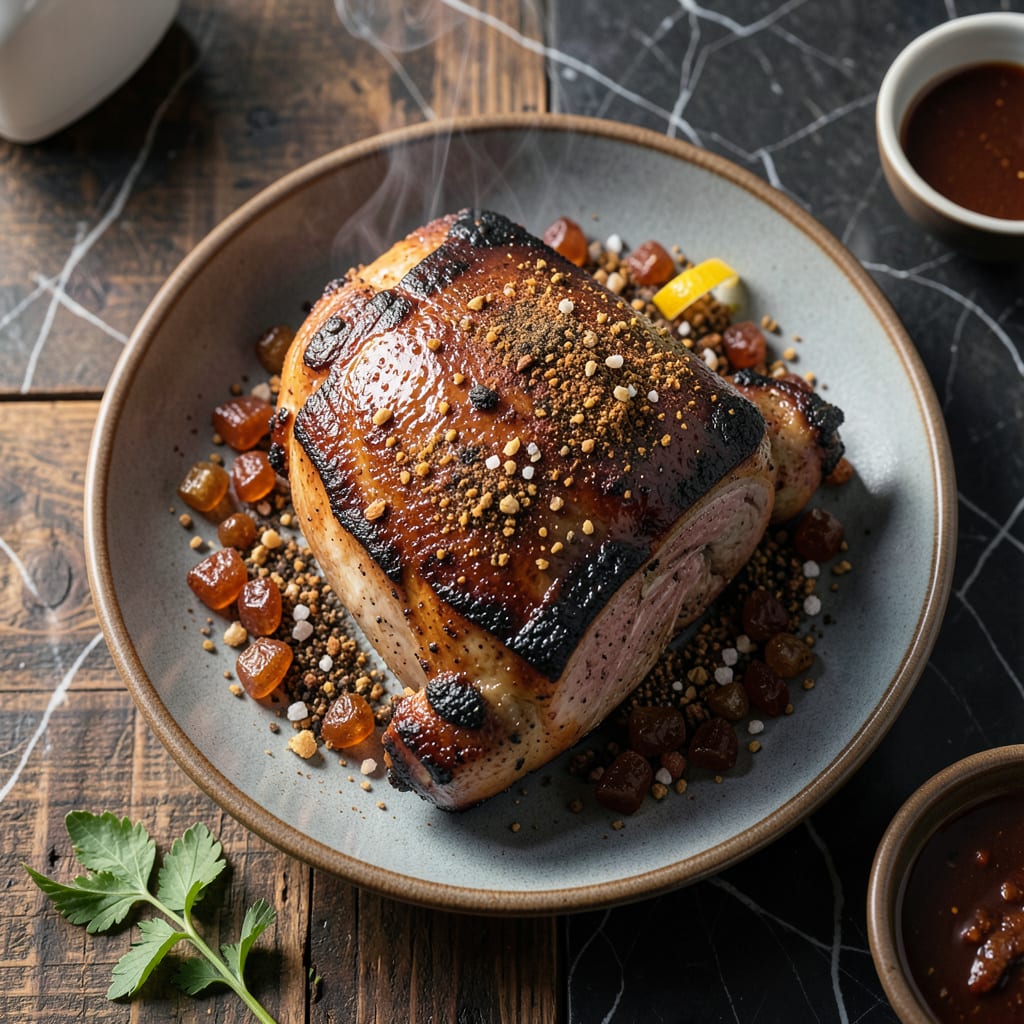
There’s nothing like the aroma of oak-smoked rib roast filling the air, a tradition I first fell in love with at family cookouts. This method delivers crispy bark and juicy, tender meat every time.
With a simple dry rub and low, steady heat, this roast develops deep, smoky flavor and that perfect texture contrast between the crust and the meat inside.
Ingredients for Bbq Rib Roast
Pantry raid plus a beautiful roast. That’s all you need for this.
| Ingredient | Amount | Notes |
|---|---|---|
| Rib Roast 🥩 | 4 lb | Bone-in, well-marbled preferred |
| Kosher Salt 🧂 | 2 tbsp | Diamond Crystal or Morton |
| Black Pepper 🌶️ | 2 tbsp | Coarsely ground for bark |
| Garlic Powder 🧄 | 1 tbsp | Not garlic salt |
| Onion Powder 🧅 | 1 tbsp | Fresh ground preferred |
| Smoked Paprika 🌶️ | 1 tbsp | For deep smoky flavor |
| Brown Sugar 🍚 | ½ cup | Light or dark works |
| Olive Oil 🫒 | ¼ cup | For binding rub |
| Oak Wood Chunks 🪵 | 4 pieces | Or use oak chips |
| Apple Cider Vinegar 🍏 | ¼ cup | For spritzing during cook |
| Beef Broth 🥣 | 1 cup | Low-sodium preferred |
| Unsalted Butter 🧈 | ½ cup | For basting finish |
[recipe_ingredient_scaler]
The rib roast is the star here—bone-in prime rib from Costco or Whole Foods gives you the best marbling. Ask your butcher for a well-trimmed roast with the fat cap left on (that’s where the bark forms). I always grab Diamond Crystal salt for the rub—it dissolves perfectly into the meat. The oak wood? Any hardwood chunks work, but oak gives that classic barbecue scent. Don’t skip soaking the wood if you’re using chips instead.
No oak chunks? Hickory or pecan work great too. Swap brown sugar for turbinado if you want a crunchier crust. The beef broth can be homemade or store-bought—just watch the sodium. If you’re out of apple cider vinegar, white vinegar in a pinch (but the flavor won’t be as mild). The butter at the end? Vegan butter works if you’re avoiding dairy—just brush it on the same way.
Leftovers keep 4-5 days in the fridge, but honestly? This disappears fast. You can freeze slices for up to 3 months—just wrap them tight. The wood chunks? Store in a dry place (a cardboard box works) so they’re ready for next time.
Why You’ll Love This Recipe
- Set It & Forget: I rub the roast with salt, pepper, garlic and onion powder, pop it in the oven, and let the dry heat do the work—no babysitting required.
- Crust You Crave: That first bite with the crispy, peppery crust giving way to the juicy meat inside? Worth every second of the wait.
- Feeds the Crowd: One rib roast, a handful of pantry staples, and I’ve got a centerpiece that satisfies everyone from picky kids to my meat-loving uncle.
- Leftovers for Days: Honestly, the sandwiches I make from the cold slices the next day might be even better than the original meal.
Step-by-Step Instructions for BBQ Rib Roast
Here’s how I nail that perfect bark and juicy interior every time.
Step 1: Season the Rib Roast Generously
Pat the 4 lb Rib Roast dry with paper towels—this ensures the rub sticks and the bark forms properly. In a bowl, mix together the 2 tbsp Kosher Salt, 2 tbsp Black Pepper, 1 tbsp Garlic Powder, 1 tbsp Onion Powder, 1 tbsp Smoked Paprika, and 0.5 cup Brown Sugar.
Rub the mixture all over the roast, pressing firmly so it adheres. Drizzle the 0.25 cup Olive Oil over the top and work it into the seasoning with your hands. Let it sit at room temperature for 1 hour—this helps the flavors penetrate and the meat cook evenly.
Step 2: Set Up the Smoker with Oak Wood
Preheat your smoker to 225°F using the 4 pieces Oak Wood Chunks. I prefer oak for its bold, clean smoke that pairs perfectly with beef. Once the smoker reaches temperature and you see thin blue smoke, place the roast directly on the grates, fat-side up.
Close the lid and let it smoke undisturbed. Resist the urge to peek—every time you open the lid, you lose heat and smoke, which can add 30 minutes or more to your cook time.
Step 3: Spritz and Monitor for Bark Formation
After 2 hours, start spritzing the roast every 45-60 minutes with the 0.25 cup Apple Cider Vinegar mixed with an equal amount of water. This keeps the surface moist, helping the bark develop without drying out.
You’ll know the bark is forming when the exterior turns a deep mahogany color and feels firm to the touch. This usually happens around the 4-hour mark, but your smoker may vary.
Step 4: Wrap and Finish with Butter Baste
Once the internal temperature hits 165°F, wrap the roast tightly in pink butcher paper and return it to the smoker. This step, called the “Texas crutch,” helps push through the stall while keeping the bark intact.
When the internal temperature reaches 200-203°F (usually another 2-3 hours), remove the roast and unwrap it. Melt the 0.5 cup Unsalted Butter and mix it with the 1 cup Beef Broth, then baste the roast generously. Return it to the smoker uncovered for 15-20 minutes to set the bark.
Step 5: Rest and Slice for Maximum Juiciness
Remove the roast from the smoker and let it rest, loosely tented with foil, for 30-45 minutes. This resting period allows the juices to redistribute, ensuring every slice is moist and flavorful.
Slice against the grain into ½-inch thick portions. The bark should be crispy and dark, while the inside stays tender and juicy. Serve immediately with the remaining au jus for dipping.
Pro Tips For Making Bbq Rib Roast
- Dry the Roast: Pat the rib roast completely dry with paper towels before seasoning—this guarantees a better crust and helps the spices stick.
- Season Generously: Use more kosher salt than you think you need, especially if the roast is thick. I learned this the hard way after my first few attempts came out bland.
- Avoid Overcrowding: Skip the urge to pile the roast in a small pan—give it space so the heat circulates evenly and you get that perfect bark.
- Rest Before Slicing: Let it rest under foil for at least 15-20 minutes after cooking. Sounds tedious, but it keeps all the juices inside where they belong.
Health Benefits of This Recipe
Rich Protein Source
This dish delivers high-quality protein essential for muscle repair and growth. A 4 oz serving provides about 25 grams of protein, making it perfect for active lifestyles. I always feel energized after enjoying a slice or two. 💪
Iron and Zinc Boost
Beef is packed with heme iron, which your body absorbs more easily than plant-based iron. You’ll also get a healthy dose of zinc, crucial for immune function. One serving covers about 20% of your daily iron needs.
Vitamin B12 Powerhouse
This roast is an excellent source of vitamin B12, vital for nerve function and red blood cell production. A single serving provides over 100% of your daily requirement. I notice my energy levels stay stable when I include beef in my diet.
Healthy Fats Balance
While it contains saturated fats, the marbling also provides monounsaturated fats similar to those in olive oil. The omega-3 to omega-6 ratio in grass-fed beef is particularly beneficial for heart health.
Collagen and Connective Tissue
Slow cooking breaks down collagen into gelatin, which supports joint health. The connective tissues in rib roast become tender during cooking, providing glycine and proline—amino acids that support skin and gut health. 🥩
Low Carb Option
With virtually no carbohydrates, this dish fits perfectly into keto or low-carb diets. The protein and fat content help maintain satiety. I often serve it with roasted vegetables for a complete, low-carb meal.
Nutrition Facts

Trained in classic French technique but raised on slow-cooked ribs and spicy rubs, she blends culinary skill with smoke and soul.
- Recipe for Boneless Pork Chops in Cast Iron Skillet: Sear and Baste to Juicy Perfection - October 3, 2026
- Recipe for Boneless Cross Rib Roast: Slow-Roasted Beef with Herb Crust - October 3, 2026
- Hamburgers in Sauce Recipe Crock Pot: Slow-Cooked Savory Delight - October 3, 2026