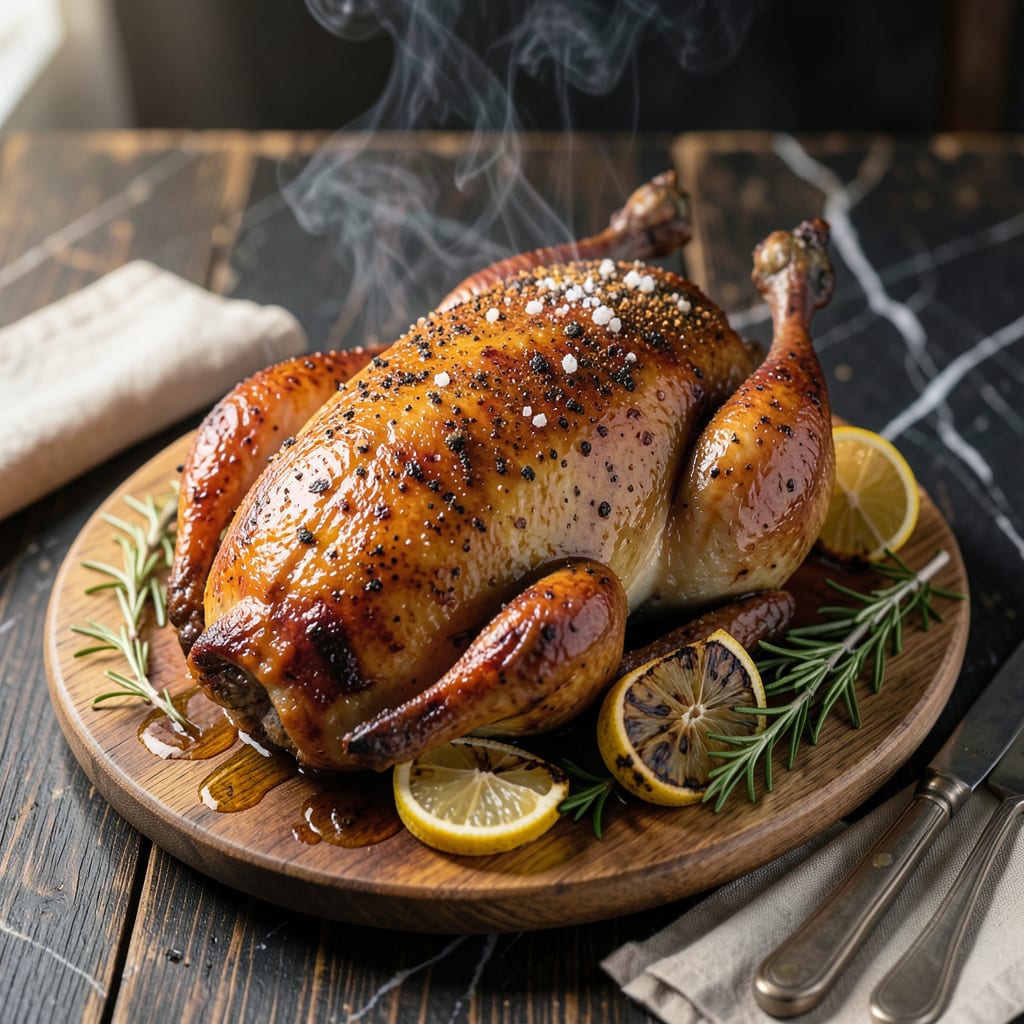
This BBQ roast turkey delivers smoky depth with crisp charred skin that cracks with every slice. The secret lies in proper smoke control and precise heat management.
I’ve perfected this method over years of competition cooking, ensuring juicy meat and that signature wood-fired flavor. The result is a showstopping centerpiece for any gathering.
Ingredients for Bbq Roast Turkey
A whole turkey and a handful of pantry spices create this wood-fired masterpiece with signature char.
| Ingredient | Amount | Notes |
|---|---|---|
| Whole Turkey 🦃 | 12 lb | Fresh or thawed, giblets removed |
| Kosher Salt 🧂 | ¼ cup | Diamond Crystal preferred for texture |
| Black Pepper 🌶️ | 1 tbsp | Freshly ground for maximum flavor |
| Garlic Powder 🧄 | 1 tbsp | Not garlic salt |
| Onion Powder 🧅 | 1 tbsp | Fresh ground for best results |
| Smoked Paprika 🌶️ | 2 tsp | Provides authentic smoky depth |
| Dried Thyme 🍃 | 1 tsp | Crushed between fingers to release oils |
| Dried Rosemary 🌿 | 1 tsp | Crushed between fingers to release oils |
| Olive Oil 🫒 | ½ cup | Extra-virgin for rubbing under skin |
| Apple Cider Vinegar 🍏 | ¼ cup | For balancing richness in rub |
| Hickory Wood Chips 🌳 | 4 cups | Soaked in water for 1 hour |
| Unsalted Butter 🧈 | ½ cup | Melted for basting during cooking |
| Chicken Stock 🍲 | 2 cups | Low-sodium preferred for basting liquid |
[recipe_ingredient_scaler]
The turkey quality is paramount. Source a fresh, never-frozen bird from a reputable butcher or Whole Foods for optimal moisture retention. For competition-level results, brine overnight (1/2 cup kosher salt per gallon of water). The skin should be dry before seasoning—pat it thoroughly with paper towels. Hickory wood chips are traditional, but apple or cherry wood adds a sweeter smoke profile.
No smoked paprika? Liquid smoke at 1/2 teaspoon can substitute, but use sparingly—it’s potent. Dried herbs losing their punch? Double the amount if they’ve been in your cabinet over six months. The vinegar in the rub isn’t optional—it tenderizes and helps the skin crisp. For extra depth, add 1 teaspoon ground coriander to the spice mix (a competition cook’s secret).
Store the turkey in the fridge uncovered for 12-24 hours before cooking to dry the skin. Leftovers keep for 4 days refrigerated or 3 months frozen. The wood chips can be reused once if soaked again, but fresh chips yield the best smoke.
Why You’ll Love This Recipe
- Set It & Forget It: I rub the turkey with salt, pepper, garlic and onion powder, pop it in the oven, and let the BBQ dry rub do all the work.
- Smoky Depth: That combo of garlic and onion powder gives the meat a rich, savory crust that tastes like it’s been slow-smoked for hours.
- Holiday or Tuesday: Honestly, it’s just as at home at Thanksgiving as it is on a random weeknight when I’m craving comfort food.
- Leftovers for Days: One 12-pound turkey feeds my family for a solid week—sandwiches, tacos, soup, you name it.
Step-by-Step Instructions for BBQ Roast Turkey
Master the art of smoky, juicy turkey with this professional technique for charred, crisp skin.
Step 1: Prepare and Season the Whole Turkey
Pat the 12 lb Whole Turkey completely dry inside and out with paper towels. This critical step removes surface moisture that would otherwise steam the skin instead of allowing it to crisp. Place the turkey on a rack set over a baking sheet to catch drippings.
In a bowl, combine the 0.25 cup Kosher Salt, 1 tbsp Black Pepper, 1 tbsp Garlic Powder, 1 tbsp Onion Powder, 2 tsp Smoked Paprika, 1 tsp Dried Thyme, and 1 tsp Dried Rosemary. Crush the thyme and rosemary between your fingers to release their aromatic oils before mixing.
Rub the 0.5 cup Olive Oil evenly over the entire surface of the turkey, including under the skin of the breast. This creates a barrier that helps the skin crisp while keeping the meat moist. Then apply the spice rub generously, ensuring it adheres to the oiled surface. Drizzle the 0.25 cup Apple Cider Vinegar over the turkey and rub it in—this balances the richness of the rub and tenderizes the meat.
Step 2: Prepare the Smoker and Wood Chips
Soak the 4 cups Hickory Wood Chips in water for at least 1 hour before cooking. This prevents them from burning too quickly and ensures a steady stream of smoke. Drain the wood chips just before use.
Set up your smoker for indirect heat, aiming for a consistent temperature of 275-300°F. Add the soaked hickory wood chips to the smoker box or directly onto the coals. Once you see thin, blue smoke (not thick white smoke), you’re ready to cook. The thin blue smoke indicates clean combustion, which imparts the best flavor to the turkey.
Step 3: Smoke the Turkey to Perfection
Place the turkey breast-side up on the smoker grate, directly over the drip pan if using a charcoal smoker. Insert a meat thermometer into the thickest part of the thigh, avoiding the bone. Smoke the turkey undisturbed for 3-4 hours, or until the internal temperature reaches 165°F in the thigh.
Every 45-60 minutes, baste the turkey with the 0.5 cup Unsalted Butter that has been melted and mixed with 1 cup Chicken Stock. This keeps the skin moist and enhances the smoky flavor. Reserve the remaining 1 cup Chicken Stock for later use if needed.
Step 4: Crisp the Skin and Rest
Once the turkey reaches 160°F internally, transfer it to a preheated grill or increase the smoker temperature to 375°F for the final 15-20 minutes. This high-heat finish ensures the skin develops a deep, charred crispness while the meat finishes cooking to 165°F.
Remove the turkey from the smoker and transfer it to a cutting board. Tent loosely with foil and let it rest for 30-45 minutes. Resting allows the juices to redistribute throughout the meat, ensuring every slice is moist and flavorful. The internal temperature will rise a few degrees during this time, so remove it from the heat just shy of 165°F.
Pro Tips For Making Bbq Roast Turkey
- Dry the Skin: Pat the turkey completely dry with paper towels before seasoning—this is what gives you that crispy, golden BBQ crust instead of steamed skin.
- Season Under Skin: Gently loosen the skin and rub the salt, pepper, garlic, and onion powder directly onto the meat; it locks in way more flavor than just dusting the outside.
- Avoid Overcrowding: Give the turkey space on the grill or smoker—if it’s too close to other meats or the lid, the heat won’t circulate and you’ll end up with uneven cooking.
- Rest Before Carving: Let the turkey rest for at least 30 minutes under foil after cooking; I learned this the hard way when all the juices ran out onto the cutting board.
Essential Equipment for bbq roast turkey
Quality Smoker
A reliable smoker is non-negotiable. I swear by my Traeger Pro 575 for consistent pellet-fed smoke. For charcoal purists, a Weber Smokey Mountain offers excellent heat control. Avoid cheap models—they can’t maintain steady 275-300°F temperatures. 🔥
Dual-Probe Thermometer
Precision matters with turkey. The ThermoWorks Smoke lets me monitor both smoker temp and internal turkey temp simultaneously. I insert one probe into the thickest part of the thigh, avoiding bone. This prevents overcooking while ensuring safety.
Wood Chip Soaker
Soaking wood chips properly prevents them from burning too quickly. I use a large stainless steel bowl with a weighted plate to keep chips submerged. Hickory needs at least 1 hour soaking for optimal smoke production. Drain just before use for best results.
Basting Tools
A silicon basting brush handles high heat better than natural bristles. I also keep a heat-resistant spray bottle filled with apple juice for quick spritzes. These tools help build that beautiful charred skin without opening the smoker too often.
Heavy-Duty Gloves
Handling a hot turkey requires protection. My Ove Glove pair allows me to maneuver the bird safely. Look for gloves rated to at least 450°F. Never use regular oven mitts—they don’t offer enough dexterity for smoking tasks.
Resting Setup
After smoking, proper resting is crucial. I use a large wooden cutting board with a groove to catch juices. A meat tent made from foil keeps the turkey warm while allowing steam to escape. Rest for 30-45 minutes before carving. 💡
Nutrition Facts

Trained in classic French technique but raised on slow-cooked ribs and spicy rubs, she blends culinary skill with smoke and soul.
- Recipe for Boneless Pork Chops in Cast Iron Skillet: Sear and Baste to Juicy Perfection - October 3, 2026
- Recipe for Boneless Cross Rib Roast: Slow-Roasted Beef with Herb Crust - October 3, 2026
- Hamburgers in Sauce Recipe Crock Pot: Slow-Cooked Savory Delight - October 3, 2026