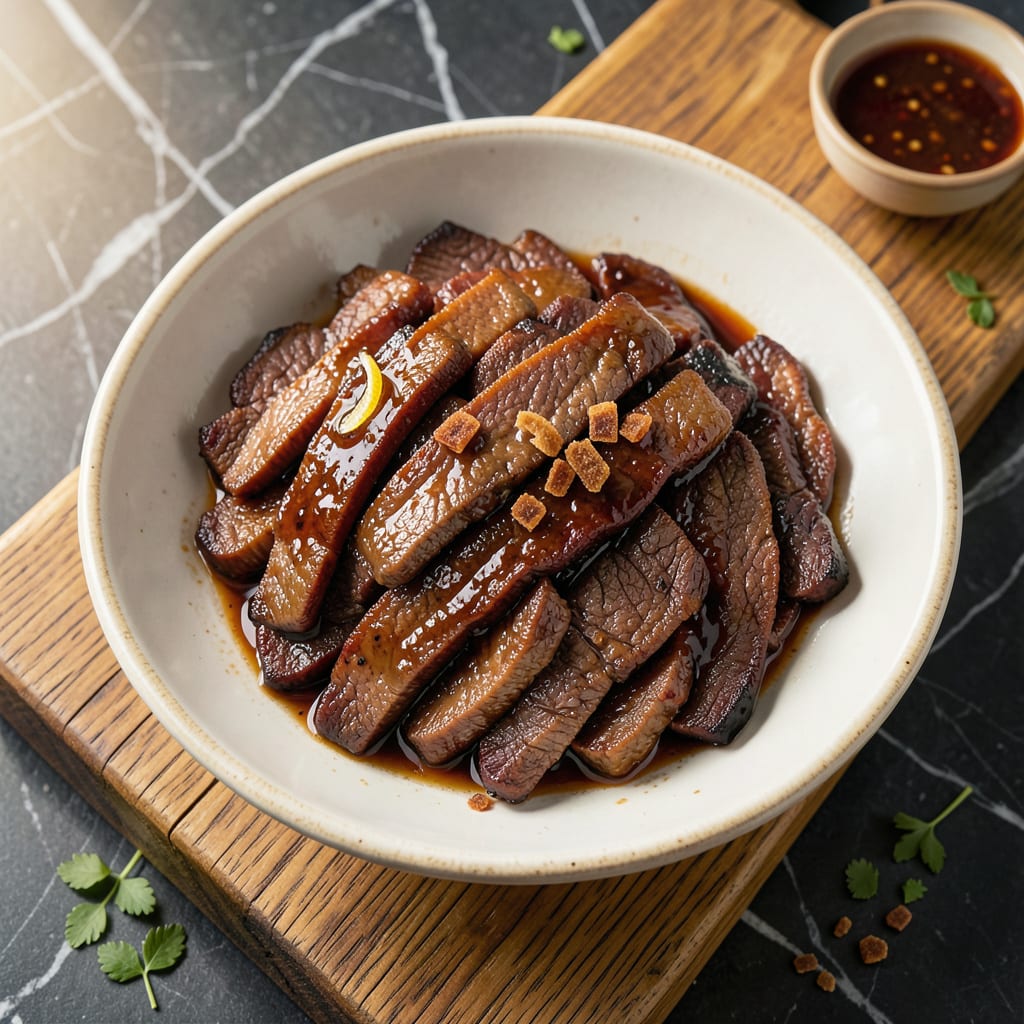
This beef jerky recipe transforms lean cuts into tender, flavorful bites with a smoky-sweet BBQ twist. The marinade infuses deep, complex flavors while ensuring the meat stays juicy during dehydration.
Using a low-temperature dehydrator or oven, the jerky dries evenly for that perfect chewy texture. Store in airtight containers for weeks of snacking.
Ingredients for Bbq Sauce Beef Jerky
Lean beef and bold BBQ flavor combine for these chewy, smoky jerky bites.
| Ingredient | Amount | Notes |
|---|---|---|
| Lean Beef Top Round 🥩 | 1 ½ lb | Sliced against the grain |
| BBQ Sauce 🍯 | ¾ cup | Thick, smoky variety preferred |
| Worcestershire Sauce 💧 | 2 tbsp | For umami depth |
| Soy Sauce 🥢 | 2 tbsp | Low-sodium for balance |
| Liquid Smoke 🔥 | 1 tsp | Optional for extra smokiness |
| Brown Sugar 🏝️ | 2 tbsp | Light or dark variety |
| Garlic Powder 🧄 | 1 tsp | Fresh minced works too |
| Onion Powder 🧅 | 1 tsp | Balances sweet and savory |
| Black Pepper 🌶️ | 1 tsp | Freshly ground preferred |
| Smoked Paprika 🌶️ | 1 tsp | Enhances BBQ flavor |
| Salt 🧂 | 1 tsp | Kosher or sea salt |
| Cayenne Pepper 🔥 | ¼ tsp | Adjust for heat preference |
[recipe_ingredient_scaler]
The beef cut is critical—top round or flank steak work best for jerky, as they’re lean yet flavorful. Avoid fatty cuts like ribeye, which don’t dehydrate well. For the BBQ sauce, Stubb’s Original or Sweet Baby Ray’s deliver consistent quality. Most grocery stores carry these, but check the label for added sugars if that’s a concern. Freeze the meat for 30 minutes before slicing for cleaner cuts.
No BBQ sauce? Ketchup mixed with molasses and vinegar (2:1:1 ratio) works in a pinch. Swap soy sauce for coconut aminos if avoiding gluten. Liquid smoke can be replaced with half the amount of smoked salt. If you’re out of brown sugar, maple syrup or honey (1 tbsp = 1 tbsp sugar) adds similar sweetness. The spices are flexible—adjust cayenne for your preferred heat level.
Store jerky in an airtight container with a silica packet (or a paper towel) to absorb moisture. Keeps at room temperature for 2-3 weeks, or refrigerate for 1-2 months. Freeze for up to 6 months if prepping in bulk. Slice meat uniformly for even drying—aim for 1/4-inch thickness (the width of a pencil).
Why You’ll Love This Recipe
- Set It and Forget: It’s just mix, marinate, dry—no babysitting required.
- Smoky Sweet Bite: The BBQ sauce and liquid smoke give it that deep, tangy campfire flavor without the campfire.
- Trail or Tailgate: I pack it for hikes and serve it at parties, and it disappears both places.
- Cheaper Than Store: A pound of top round makes more jerky than I can buy for the same price, and it tastes way better.
Step-by-Step Instructions for BBQ Sauce Beef Jerky
This method ensures perfectly tender jerky with deep smoky-sweet flavor every time.
Step 1: Slice and Prepare the Beef
Begin by partially freezing the 1.5 lb Lean Beef Top Round for 30-45 minutes to firm it up. This makes slicing against the grain significantly easier. Using a sharp knife, cut the beef into ¼-inch thick strips, maintaining uniformity for even drying.
As you work, trim away any visible fat or connective tissue—these don’t dry properly and can cause spoilage. The grain should run perpendicular to your slices, which creates the characteristic chewy texture. This step is crucial for achieving jerky that tears easily without falling apart.
Step 2: Create the BBQ Marinade
In a large bowl, whisk together the 0.75 cup BBQ Sauce, 2 tbsp Worcestershire Sauce, 2 tbsp Soy Sauce, 1 tsp Liquid Smoke, 2 tbsp Brown Sugar, 1 tsp Garlic Powder, 1 tsp Onion Powder, 1 tsp Black Pepper, 1 tsp Smoked Paprika, 1 tsp Salt, and 0.25 tsp Cayenne Pepper until fully combined.
The mixture should be thick but pourable, with the brown sugar fully dissolved. I recommend tasting the marinade at this point—it should deliver a balanced sweet-savory profile with a subtle smoky backbone. The acidity from the sauces will tenderize the meat while the spices penetrate deeply during marinating.
Step 3: Marinate the Beef Strips
Add the sliced beef to the marinade, ensuring each piece is fully coated. I like to use my hands for this, pressing the strips into the mixture to eliminate air pockets. Cover the bowl with plastic wrap and refrigerate for 12-24 hours, stirring once or twice during the process.
The longer marinating time allows the flavors to fully develop and the salt to work its way through the meat. You’ll notice the beef absorbs most of the liquid after several hours, becoming slightly puffy—this is normal and indicates proper marination. Don’t exceed 24 hours or the texture may become mealy.
Step 4: Dry the Jerky
Arrange the marinated strips on your dehydrator trays or oven racks, leaving ½ inch of space between each piece for proper air circulation. If using an oven, set it to its lowest temperature (ideally 175°F) and prop the door open slightly with a wooden spoon.
Dry the jerky for 4-6 hours, rotating the trays halfway through if using a dehydrator. The jerky is done when it bends but doesn’t snap completely in half, with no moist spots remaining. For food safety, ensure the internal temperature reaches 160°F if checking with a meat thermometer.
Step 5: Cool and Store
Remove the jerky from the dehydrator or oven and let it cool completely on a wire rack. This prevents condensation from forming, which could lead to mold. As it cools, you’ll notice the texture firms up significantly—this is when it develops its final chewy consistency.
Once cooled, store in an airtight container in the refrigerator for up to 1 month, or freeze for longer storage. For the best texture, I recommend letting it come to room temperature for 10-15 minutes before serving. The flavors intensify over the first few days, making it even more delicious.
Pro Tips For Making Bbq Sauce Beef Jerky
- Slice Against Grain: Cut the top round into 1/4-inch strips against the grain—this keeps each piece tender instead of chewy. I learned this the hard way after struggling through tough jerky for years.
- Marinate Overnight: Give the beef at least 12 hours in the BBQ sauce, Worcestershire, and soy mixture. Sounds like a long time, but it’s the only way to guarantee deep flavor in every bite.
- Pat Dry Before Drying: After marinating, blot the strips with paper towels to remove excess moisture. Skip this and you’ll end up steaming the jerky instead of drying it.
- Use Low Heat: Keep your dehydrator or oven under 175°F—any hotter and the sugars in the BBQ sauce will burn before the meat finishes drying. My first batch taught me that lesson with a bitter, blackened mess.
Troubleshooting Great bbq sauce beef jerky
Too Wet After Drying
If your jerky still feels moist after the recommended drying time, it likely needs more time. Return it to the dehydrator or oven at 175°F for an additional 30-60 minutes. Check frequently to avoid over-drying. 🔥
Uneven Drying
This usually happens with inconsistent slicing. Next time, use a ruler to ensure all strips are exactly ¼-inch thick. Also, rotate trays in the dehydrator or oven halfway through for even air circulation.
Jerky is Too Tough
Over-drying is the culprit. Pull strips out as soon as they bend without snapping. Remember, they firm up as they cool. If already tough, soak in warm water for 10 minutes to restore some chewiness.
Mold Development
Mold appears when moisture remains trapped. Always pat strips dry before dehydrating and store with a silica packet or paper towel. If you see any spots, discard the batch immediately for safety.
Marinade Too Thin
Thicken it with 1-2 tbsp cornstarch mixed into the marinade. Alternatively, reduce the liquid by simmering for 5-10 minutes before adding the beef. This helps the flavors cling better.
Flavor Too Mild
Extend marinating time to the full 24 hours. For bolder taste, add 1 tsp smoked paprika or ½ tsp cayenne to the marinade. Taste and adjust before adding the meat. 💡
Nutrition Facts

Trained in classic French technique but raised on slow-cooked ribs and spicy rubs, she blends culinary skill with smoke and soul.
- Recipe for Boneless Pork Chops in Cast Iron Skillet: Sear and Baste to Juicy Perfection - October 3, 2026
- Recipe for Boneless Cross Rib Roast: Slow-Roasted Beef with Herb Crust - October 3, 2026
- Hamburgers in Sauce Recipe Crock Pot: Slow-Cooked Savory Delight - October 3, 2026