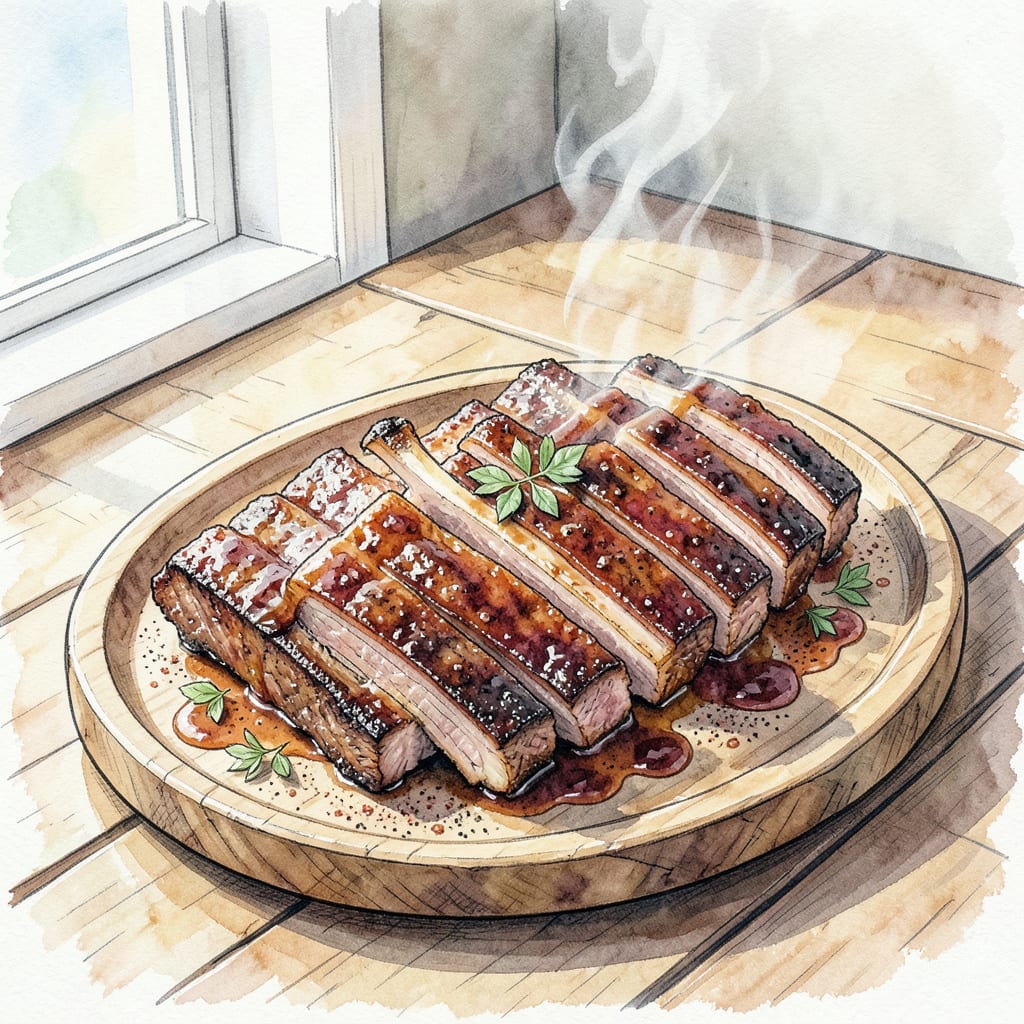
As a pitmaster, I’ve perfected the art of slow-cooking BBQ spare ribs to tender perfection using my smoker. The key is low and slow cooking at 225°F for several hours until the meat falls off the bone.
This recipe yields tender and flavorful ribs with a rich, smoky flavor. Pair with classic sides like coleslaw, baked beans, or cornbread for a complete BBQ experience. Let’s get started!
Ingredients for Bbq Spare Ribs Recipe Smoker
Low and slow is the name of the game here. Simple ingredients.
| Ingredient | Amount | Notes |
|---|---|---|
| Beef Spare Ribs 🥩 | 2 lb | Membrane removed for tenderness |
| Kosher Salt 🧂 | 2 tbsp | Diamond Crystal preferred |
| Black Pepper 🌶️ | 1 tbsp | Freshly ground preferred |
| Brown Sugar 🍮 | 2 tbsp | Dark or light brown sugar |
| Smoked Paprika 🌶️ | 1 tbsp | For smoky depth |
| Garlic Powder 🧄 | 1 tsp | Not garlic salt |
| Onion Powder 🧅 | 1 tsp | Fresh ground preferred |
| Chili Powder 🌶️ | 1 tsp | Mild or hot variety |
| Apple Cider Vinegar 🍎 | ¼ cup | For basting during cooking |
| Wood Chips 🌲 | 2 cups | Hickory or apple wood |
| BBQ Sauce 🍯 | 1 cup | For glazing during last hour |
[recipe_ingredient_scaler]
The ribs matter most—look for St. Louis-style cut spare ribs at your butcher or quality grocery store. If you can’t find them pre-cut, ask your butcher to remove the membrane (trust me, it makes a difference). I usually grab mine from Costco when I’m doing a big batch, but the regular supermarket stuff works fine for a weeknight dinner.
No smoked paprika? Regular paprika plus liquid smoke gets you close. Brown sugar can be adjusted—more for sweeter ribs, less for tangier. For the wood chips, hickory gives that classic BBQ flavor, but apple or cherry wood adds a nice fruitiness. The BBQ sauce is for glazing—use your favorite store-bought or homemade variety.
These reheat beautifully—honestly taste better the next day once everything melds. Keeps 4-5 days in the fridge, freezes for 3 months. I portion mine into containers so lunches are sorted for the week.
Step-by-Step Instructions for BBQ Spare Ribs on a Smoker
Let’s get started with the method that’ll give you perfect, tender ribs every time.
Step 1: Prepare the Beef Spare Ribs
Start by removing the membrane from the bone side of the 2 lb Beef Spare Ribs. I like to use a paper towel to get a good grip on the membrane, then carefully peel it off. This step is crucial because it allows the rub to penetrate the meat and helps the ribs become tender.
Next, mix together the 2 tbsp Kosher Salt, 1 tbsp Black Pepper, 2 tbsp Brown Sugar, 1 tbsp Smoked Paprika, 1 tsp Garlic Powder, 1 tsp Onion Powder, and 1 tsp Chili Powder in a small bowl. I find that using freshly ground black pepper and kosher salt makes a big difference in the flavor. Apply this dry rub evenly to both sides of the ribs, making sure to coat them thoroughly.
Step 2: Set Up Your Smoker
Preheat your smoker to 225-250°F using your preferred type of wood chips – I recommend hickory or apple wood for that authentic BBQ flavor. Once the smoker is ready, place the 2 cups Wood Chips inside to start generating smoke. Let the smoker run for about 10-15 minutes to get the wood chips smoking well before adding the ribs.
Place the ribs in the smoker, bone side down. Close the lid and let them cook undisturbed for 4-5 hours. You want to maintain a consistent temperature throughout the cooking process, so keep an eye on the smoker’s temperature gauge.
Step 3: Monitor and Baste the Ribs
After the ribs have cooked for 3 hours, start basting them with the 0.25 cup Apple Cider Vinegar every 30 minutes. This helps keep the ribs moist and adds a tangy flavor. Continue cooking until the ribs reach an internal temperature of 190-200°F and the meat is tender and starts to pull away from the bones.
During the last 10 minutes of cooking, brush the ribs with the 1 cup BBQ Sauce. This will give them a nice glaze and add that signature BBQ flavor. If you prefer a thicker glaze, you can apply the BBQ Sauce a bit earlier and let it cook for a few minutes longer.
Step 4: Rest and Serve
Once the ribs are done, remove them from the smoker and let them rest for 10-15 minutes. This resting period allows the juices to redistribute, making the ribs even more tender. After resting, cut the ribs into portions and serve them hot. You’ll know they’re perfectly cooked when the meat is fall-off-the-bone tender and full of that delicious smoky flavor.
Troubleshooting Great bbq spare ribs recipe smoker
Common Smoker Issues
One of the most frustrating things that can happen during a long cook is temperature fluctuation in your smoker. If you notice your temperature dropping, check that your wood chips aren’t smoldering – this can cool the chamber. I like to use a mix of hickory and apple wood for that perfect balance of flavor. Make sure you’re not overloading the smoker with too many ribs at once.
Meat Too Tough
If your ribs are turning out tougher than expected, it’s likely they haven’t reached the proper internal temperature. For spare ribs, you want to hit 190-200°F for that perfect tenderness. I remember one competition where my ribs were still a bit tough – turned out I hadn’t cooked them long enough at 225°F. Letting them rest properly after cooking also helps redistribute the juices.
Excessive Smoke
Too much smoke can make your ribs taste bitter. This often happens when you’re using too many wood chips at once. Try reducing the amount of wood or soaking it for longer before using. I find that 30 minutes of soaking makes a big difference. Also, make sure your smoker is getting enough airflow – a little ventilation goes a long way.
Uneven Cooking
If you notice some ribs cooking faster than others, it’s usually due to uneven heat distribution. Rotate your ribs every hour to ensure even cooking. I like to use a dual-probe thermometer to monitor both the smoker and the meat’s internal temperature. This helps me catch any temperature swings early.
Saving a Stuck Cook
Sometimes things don’t go as planned. If your ribs are cooking too quickly, you can try lowering the temperature or moving them to a cooler part of the smoker. If they’re not cooking fast enough, you can wrap them in foil with some liquid to create a steam effect. This has saved me during competitions when the temperature has spiked unexpectedly.

Trained in classic French technique but raised on slow-cooked ribs and spicy rubs, she blends culinary skill with smoke and soul.
- Recipe for Boneless Pork Chops in Cast Iron Skillet: Sear and Baste to Juicy Perfection - October 3, 2026
- Recipe for Boneless Cross Rib Roast: Slow-Roasted Beef with Herb Crust - October 3, 2026
- Hamburgers in Sauce Recipe Crock Pot: Slow-Cooked Savory Delight - October 3, 2026