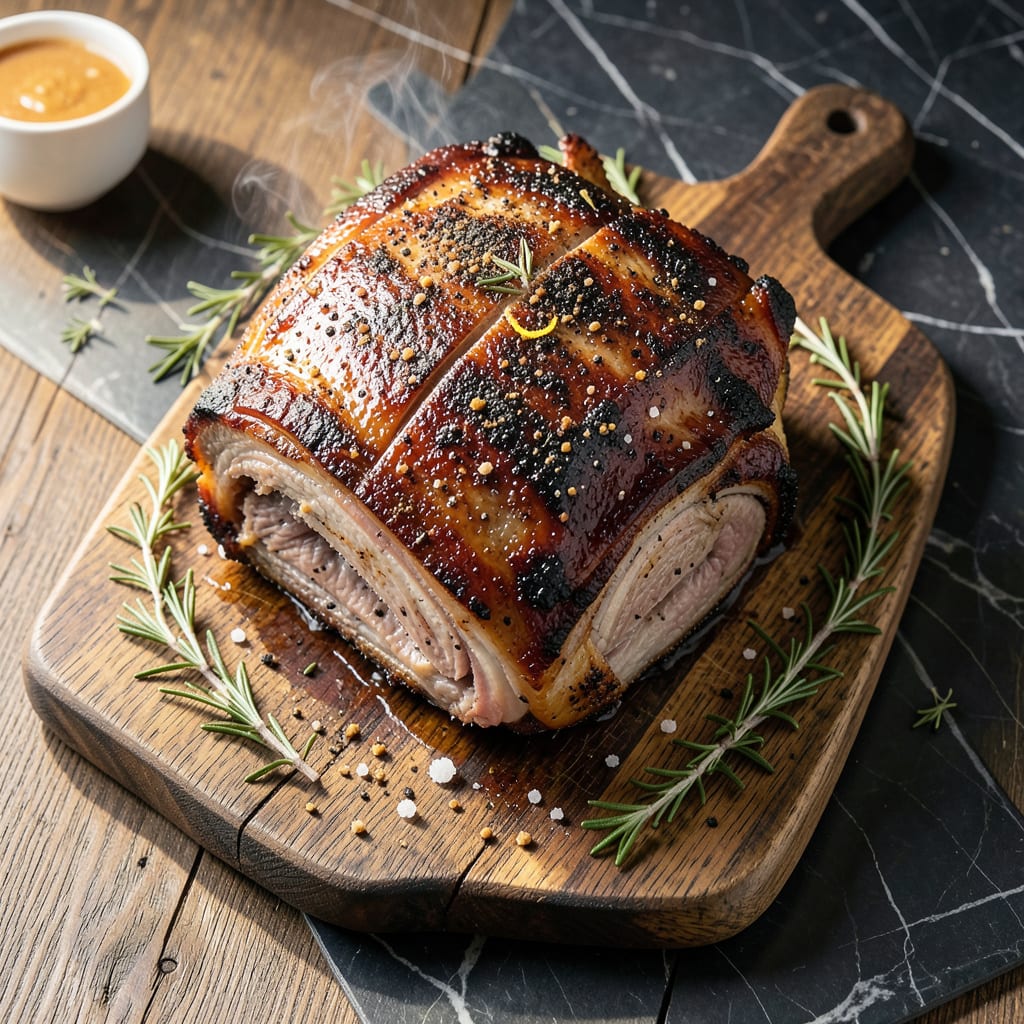
This standing rib roast transforms into melting tenderness through slow smoking over hickory. My French training meets pitmaster tradition in every perfectly charred bite.
The secret lies in a simple dry rub and patient 4-hour smoke at 225°F, yielding a crust so crisp it gives way to impossibly tender meat beneath.
Ingredients for Bbq Standing Rib Roast
Prime beef, bold spices, and hickory smoke. That’s all you need for this showstopper.
| Ingredient | Amount | Notes |
|---|---|---|
| Standing Rib Roast 🥩 | 4 lb | Bone-in, prime grade preferred |
| Coarse Kosher Salt 🧂 | 2 tbsp | Diamond Crystal brand ideal |
| Freshly Ground Black Pepper 🌶️ | 2 tbsp | Coarse grind for texture |
| Garlic Powder 🧄 | 1 tbsp | Not garlic salt |
| Onion Powder 🧅 | 1 tbsp | Fresh ground preferred |
| Smoked Paprika 🌶️ | 1 tbsp | Sweet or hot variety |
| Dried Rosemary 🌿 | 1 tbsp | Crushed to release oils |
| Dried Thyme 🍃 | 1 tbsp | Mediterranean oregano substitute |
| Hickory Wood Chunks 🪵 | 4 pieces | For smoking, soaked 1 hour |
| Olive Oil 🫒 | ¼ cup | For binding dry rub |
| Yellow Mustard 🟡 | 2 tbsp | Binder for rub adhesion |
| Apple Cider Vinegar 🍏 | ¼ cup | For spritzing during smoke |
[recipe_ingredient_scaler]
The rib roast is non-negotiable here. Prime grade from a butcher gives you the best marbling—USDA Choice works but won’t be as tender. Ask for bone-in (it’s called a standing rib roast for a reason). Most Whole Foods or Costco locations carry prime cuts, especially around holidays. If you’re buying in advance, dry brining overnight boosts the flavor even more.
No hickory chunks? Cherry or apple wood gives a sweeter smoke profile. Out of smoked paprika? Regular paprika plus a pinch of cayenne gets you close. The mustard binder might seem odd, but it forms the best crust—Dijon works too if that’s what’s in the fridge. Don’t skip the spritzing; it keeps the surface moist during that long smoke.
Leftovers (if there are any) keep 4-5 days wrapped in foil. Freeze slices for up to 3 months—perfect for quick sandwiches. The rub mix? Make extra and store in an airtight container for 6 months.
Why You’ll Love This Recipe
- Set and Forget: I rub the roast with salt, pepper, garlic and onion powder, pop it in the oven, and let it do its thing—no babysitting required.
- Crust You’ll Crave: That smoky BBQ dry rub forms a dark, flavorful bark that cracks with every slice.
- Feeds a Holiday: One standing rib roast and I’ve got a showstopping centerpiece for Sunday supper or Christmas dinner.
- Leftovers for Days: The slices reheat beautifully for sandwiches, tacos, or a quick beef hash—no waste here.
Step-by-Step Instructions for BBQ Standing Rib Roast
Here’s the method I use to get that perfect bark and melt-in-your-mouth texture every time.
Step 1: Prepare the Dry Rub and Season the Roast
In a bowl, combine the 2 tbsp Coarse Kosher Salt, 2 tbsp Freshly Ground Black Pepper, 1 tbsp Garlic Powder, 1 tbsp Onion Powder, 1 tbsp Smoked Paprika, 1 tbsp Dried Rosemary, and 1 tbsp Dried Thyme. Crush the dried herbs between your fingers to release their oils.
Pat the 4 lb Standing Rib Roast dry with paper towels, then brush it all over with 2 tbsp Yellow Mustard. The mustard acts as a binder for the rub. Rub the spice mixture evenly over the entire roast, pressing it in firmly. Let it sit at room temperature for 30 minutes while you prep the smoker.
Step 2: Set Up the Smoker with Hickory Wood
Soak the 4 pieces Hickory Wood Chunks in water for 1 hour before smoking. This prevents them from burning too quickly. Set up your smoker for indirect heat at 225°F using the soaked hickory for smoke.
Once the smoker reaches 225°F and you see thin blue smoke, place the roast directly on the grates, bone-side down. The consistent low temperature is key for even cooking and that perfect smoke penetration. Close the lid and maintain this temperature throughout the cook.
Step 3: Smoke the Roast Low and Slow
Smoke the roast undisturbed for 3-4 hours or until the internal temperature reaches 120°F for medium-rare. Use a meat thermometer to check the temperature in the thickest part of the roast, avoiding the bone.
Every 45-60 minutes, spritz the roast with 0.25 cup Apple Cider Vinegar mixed with 0.25 cup Olive Oil to keep the surface moist and build a beautiful bark. This step ensures the exterior stays flavorful and doesn’t dry out during the long cook.
Step 4: Finish and Rest for Perfect Tenderness
Once the roast hits 120°F, remove it from the smoker. Tent it loosely with foil and let it rest for 15-20 minutes. The internal temperature will rise to about 130°F during this time, reaching ideal medium-rare doneness.
Resting allows the juices to redistribute throughout the meat, ensuring every slice is tender and juicy. Slice between the bones to serve, and watch as the beautiful pink interior and crispy bark impress your guests.
Pro Tips For Making Bbq Standing Rib Roast
- Rest Before Slicing: Let the roast rest under loose foil for at least 15-20 minutes after cooking—this keeps all those juices from running out when you slice it. I learned this the hard way after serving a dry roast to dinner guests.
- Season Overnight: Rub the roast with salt, pepper, garlic powder, and onion powder the night before cooking. Sounds weird, but it works: the flavors penetrate deep and the crust forms better.
- Skip the Cold Roast: Take the meat out of the fridge 1-2 hours before cooking so it’s not ice-cold. After burning a few roasts that cooked unevenly, I finally figured out this was the culprit.
- Use a Meat Thermometer: Don’t guess doneness—insert a thermometer into the thickest part and pull it at 120°F for medium-rare. My grandmother swore by this, and she was right: it’s the only way to guarantee perfect results.
Troubleshooting This Dish
Uneven Cooking
If one end of your roast cooks faster, rotate it 180 degrees halfway through. I check mine at the 2-hour mark and swap positions. The bone-in side often needs more time, so keep your thermometer handy to monitor both ends. 🌡️
Weak Smoke Flavor
If your bark lacks that deep hickory taste, your wood might not be producing enough smoke. Use 2 additional dry hickory chunks directly on hot coals for more intense flavor. Avoid green wood—it creates bitter, acrid smoke that ruins the meat.
Dry Exterior
Increase your spritzing frequency to every 30 minutes instead of 45-60. Mix ½ cup apple cider vinegar with ¼ cup water for a milder spritz. I also add 1 tbsp olive oil to the mix for extra moisture retention. 💡
Temperature Stalls
If your roast stalls around 150-160°F, wrap it tightly in pink butcher paper or foil. This “Texas crutch” pushes through the stall by preventing moisture loss. Unwrap for the last 30 minutes to crisp the bark back up.
Over-Smoked Taste
If your meat tastes bitter, you likely used too much wood or didn’t maintain clean smoke. Next time, limit to 4 hickory chunks total and ensure you’re seeing thin blue smoke, not thick white smoke. Clean out old ash between cooks.
Resting Issues
If juices pool when slicing, your roast didn’t rest long enough. Tent with foil and rest for the full 20 minutes. I set a timer—this step is non-negotiable for juicy, perfect slices every time.
Nutrition Facts

Trained in classic French technique but raised on slow-cooked ribs and spicy rubs, she blends culinary skill with smoke and soul.
- Recipe for Boneless Pork Chops in Cast Iron Skillet: Sear and Baste to Juicy Perfection - October 3, 2026
- Recipe for Boneless Cross Rib Roast: Slow-Roasted Beef with Herb Crust - October 3, 2026
- Hamburgers in Sauce Recipe Crock Pot: Slow-Cooked Savory Delight - October 3, 2026