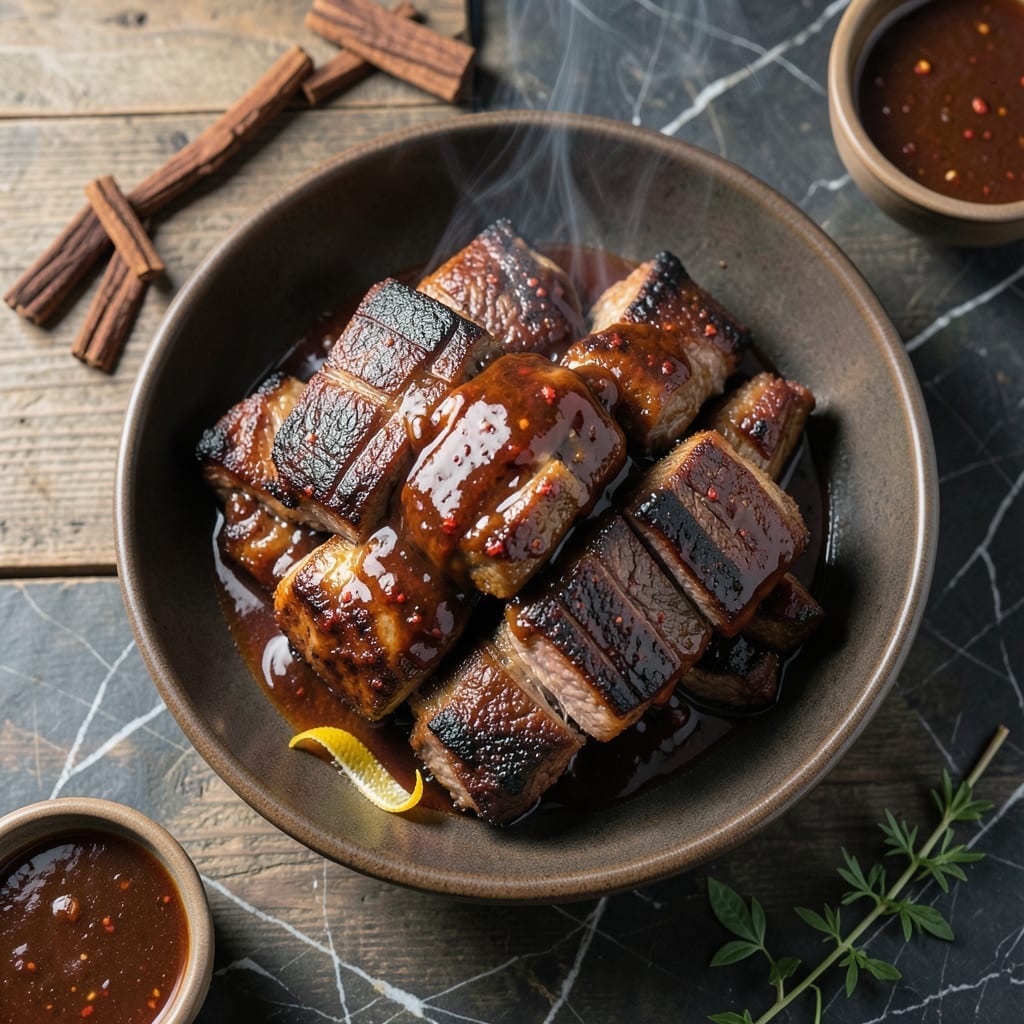
There’s nothing like the aroma of beef slow-cooked over smoky hickory, a tradition I’ve carried from my family’s backyard cookouts. This method transforms tough cuts into tender, flavorful masterpieces.
With a simple rub and patient cooking, you’ll achieve restaurant-quality results that rival any pitmaster’s. The smoke infuses every bite with deep, complex flavors.
Ingredients for Beef Barbecue
Slow-cooked beef and smoky hickory create a backyard classic with restaurant-level depth.
| Ingredient | Amount | Notes |
|---|---|---|
| Beef Chuck Roast 🥩 | 3 lb | Well-marbled, trimmed of excess fat |
| Hickory Wood Chips 🪵 | 2 cups | Soaked in water for 30 minutes |
| Brown Sugar 🍚 | ½ cup | Light or dark variety |
| Paprika 🌶️ | 2 tbsp | Smoked paprika preferred |
| Garlic Powder 🧄 | 1 tbsp | Freshly ground if possible |
| Onion Powder 🧅 | 1 tbsp | Fine grain for even coating |
| Kosher Salt 🧂 | 1 tbsp | Diamond Crystal preferred |
| Black Pepper 🌶️ | 1 tbsp | Freshly ground for best flavor |
| Cayenne Pepper 🔥 | ½ tsp | Adjust for heat preference |
| Apple Cider Vinegar 🍏 | ½ cup | For tang and balance |
| Tomato Paste 🍅 | ¼ cup | Double-concentrated preferred |
| Worcestershire Sauce 💧 | 2 tbsp | Anchovy-free if preferred |
| Yellow Mustard 🟡 | 2 tbsp | For depth in rub |
[recipe_ingredient_scaler]
The beef is everything here. Chuck roast is ideal—marbled fat keeps it juicy through the long cook. I grab mine from Costco for consistent quality, but any butcher worth their salt will have good options. Look for vibrant red color and visible fat streaks. Hickory chips from Weber or Traeger give that authentic pitmaster flavor (avoid the dusty old bags at the hardware store).
No hickory? Apple or cherry wood chips work too—sweeter but still delicious. Out of brown sugar? Honey or maple syrup at half the quantity. The rub can handle swaps: chipotle powder for smoked paprika, or Dijon instead of yellow mustard. Worcestershire missing? Soy sauce plus a pinch of sugar gets you close (just know it’s saltier).
The rub keeps in a jar for 3 months (if it lasts that long). Cooked beef freezes beautifully for 3 months too—slice before freezing for easy portions. Leftovers? Shred for sandwiches or tacos (the flavor just gets better).
Why You’ll Love This Recipe
- I’ll be real: the flavor actually gets better overnight, so I always make extra for tacos the next night.
- Set It and Forget: I toss the chuck roast with the dry rub at night, and the smoker does the rest while I sip my coffee next morning.
- Smoky Sweet Heat: The hickory chips give that deep campfire flavor, while the brown sugar and paprika caramelize into a sticky, finger-licking crust.
- Feeds the Block: One 4-pound chuck roast turns into pulled beef for sandwiches, tacos, or loaded baked potatoes for the whole crew.
Step-by-Step Instructions for Beef Barbecue
Here’s my method for achieving fall-apart tenderness with deep smoky flavor every time.
Step 1: Prepare and Season the Beef Chuck Roast
Start by patting the 3 lb beef chuck roast completely dry with paper towels. This ensures the rub adheres properly and creates a beautiful bark. In a small bowl, combine the 0.5 cup brown sugar, 2 tbsp paprika, 1 tbsp garlic powder, 1 tbsp onion powder, 1 tbsp kosher salt, 1 tbsp black pepper, and 0.5 tsp cayenne pepper.
Massage this rub generously over every surface of the beef, pressing it in so it forms a thick, even coating. I like to let the seasoned roast sit at room temperature for 30 minutes while I prepare the smoker—this helps the flavors penetrate deeper.
Step 2: Set Up the Smoker with Hickory Wood Chips
Soak the 2 cups hickory wood chips in water for 30 minutes to prevent them from burning too quickly. Drain them just before use. Set up your smoker for indirect heat, aiming for a consistent temperature of 225-250°F.
Add the soaked wood chips to the smoker box or directly onto the coals. Once you see thin, blue smoke (not thick white smoke), you’re ready to start cooking. Place a water pan in the smoker to maintain moisture during the long cook—this is crucial for keeping the beef from drying out.
Step 3: Smoke the Beef to Perfection
Place the seasoned beef chuck roast on the smoker grate, fat-side up. Insert a meat probe into the thickest part of the roast, avoiding any large fat pockets. Close the lid and maintain the temperature between 225-250°F.
Smoke undisturbed for 4-5 hours until the internal temperature reaches 165°F. At this point, you’ll likely hit “the stall,” where the temperature plateaus as moisture evaporates. Don’t rush it—this is normal and necessary for breaking down the collagen.
Step 4: Wrap and Continue Cooking with Sauce
In a bowl, whisk together the 0.5 cup apple cider vinegar, 0.25 cup tomato paste, 2 tbsp Worcestershire sauce, and 2 tbsp yellow mustard to create a tangy mop sauce. Once the beef hits 165°F, wrap it tightly in pink butcher paper and return it to the smoker.
Every 45 minutes, unwrap the beef and baste it with the sauce, then rewrap it. Continue cooking until the internal temperature reaches 200-205°F and the beef is probe-tender—this should take another 2-3 hours. The meat should feel like butter when you insert the probe.
Step 5: Rest and Shred the Beef
Remove the beef from the smoker and let it rest, wrapped, for at least 30 minutes. This allows the juices to redistribute and the collagen to fully break down. Unwrap the beef and transfer it to a large bowl or cutting board.
Using two forks or meat claws, shred the beef into bite-sized pieces. Toss it with any remaining sauce from the butcher paper. The beef should be incredibly tender, with a rich, smoky bark on the outside and juicy, flavorful meat throughout. Serve immediately on buns or as a main dish with your favorite sides.
Pro Tips For Making Beef Barbecue
- Low and Slow Wins: Keep your smoker or grill between 225-250°F—any hotter and that chuck roast turns tough instead of fall-apart tender. I learned this the hard way after ruining a 5-pound roast by rushing it.
- Soak the Wood: Give those hickory chips a 30-minute soak in water before adding them to the fire. Sounds weird, but it works: prevents them from burning up too fast and gives you that steady smoke flavor.
- Skip the Over-Rub: Use about 1 tablespoon each of brown sugar, paprika, and garlic powder per pound of beef—enough to coat but not so much that it burns before the meat cooks. More isn’t better here.
- Rest Before Slicing: Let the roast rest under foil for at least 20 minutes after pulling it off the heat. This isn’t the prettiest method, but it’s the tastiest—the juices redistribute instead of ending up on your cutting board.
Serving Suggestions for Leftovers
Classic Sandwich Style
Pile the shredded beef on toasted brioche buns for the ultimate barbecue sandwich. I brush the buns with melted butter and toast them on the smoker for 2-3 minutes for extra depth. Add crisp pickles and a handful of coleslaw for crunch. 💛
Plated Dinner Elegance
For a sit-down meal, serve the beef over garlic mashed potatoes with a side of grilled asparagus. Drizzle the beef with reduced cooking sauce and garnish with fresh cilantro. This presentation works beautifully for dinner parties.
Taco Night Twist
Transform leftovers into smoky beef tacos on corn tortillas. Top with diced white onions, fresh cilantro, and a squeeze of lime. I like to add pickled jalapeños for extra kick. These disappear fast at my family gatherings.
Loaded Baked Potatoes
Spoon the beef over baked russet potatoes split open and fluffed. Add shredded cheddar, sour cream, and sliced green onions. The smoky beef pairs perfectly with the creamy potato.
BBQ Nacho Platter
Create a shareable platter with tortilla chips, melted cheddar-jack cheese, and the shredded beef. Add black beans, diced tomatoes, and jalapeños. Broil until cheese is bubbly.
Meal Prep Bowls
Portion the beef into containers with steamed rice, roasted sweet potatoes, and steamed green beans. These bowls reheat beautifully for lunches throughout the week. I pack mine with extra sauce on the side.
Nutrition Facts
Frequently Asked Questions
Can I use a different cut of beef?
Brisket or short ribs work well, but may need 1-2 hours more cooking. Avoid lean cuts like sirloin—they’ll dry out. Chuck roast is ideal for its marbling and connective tissue.
Why does the temperature stall during smoking?
This is normal! The stall occurs around 165°F as moisture evaporates, cooling the meat. Be patient—it’s part of breaking down the collagen for tender results.
Can I make this in an oven?
Yes! Use 275°F and place a water pan on the lower rack. Add liquid smoke to the rub for that smoky flavor. Cook until probe-tender, about 5-6 hours.

Trained in classic French technique but raised on slow-cooked ribs and spicy rubs, she blends culinary skill with smoke and soul.
- Recipe for Boneless Pork Chops in Cast Iron Skillet: Sear and Baste to Juicy Perfection - October 3, 2026
- Recipe for Boneless Cross Rib Roast: Slow-Roasted Beef with Herb Crust - October 3, 2026
- Hamburgers in Sauce Recipe Crock Pot: Slow-Cooked Savory Delight - October 3, 2026