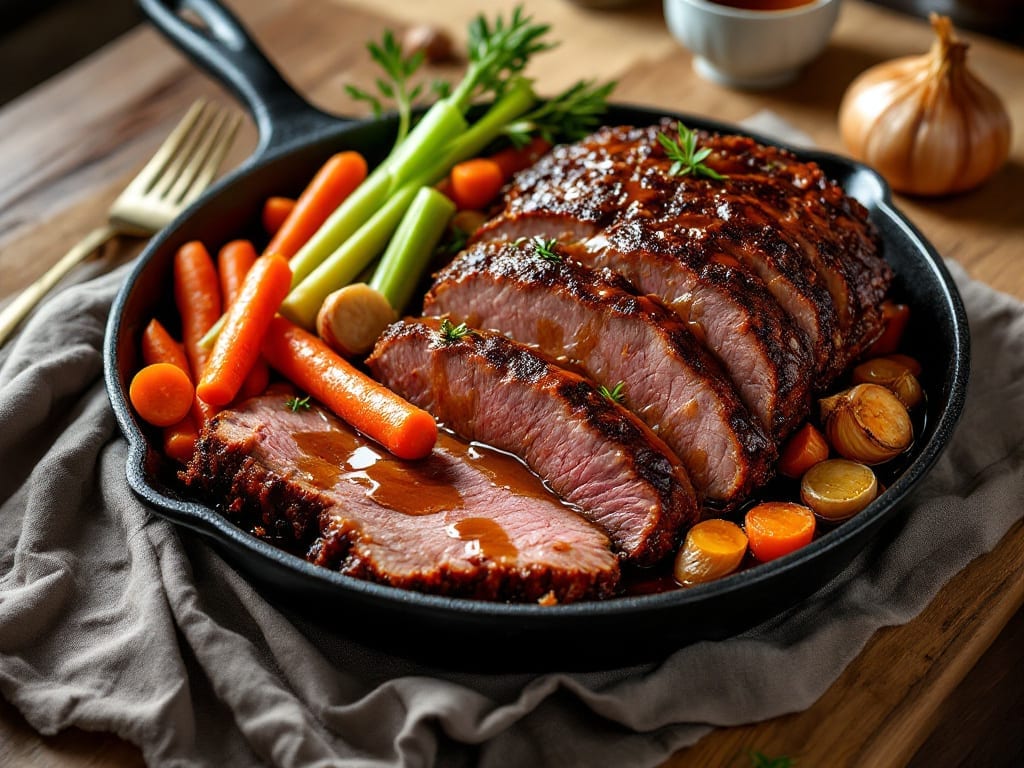
This beef brisket beer recipe transforms tough cuts into melt-in-your-mouth perfection using the magic of slow cooking and beer braising.
The day I realized French technique could elevate my rubs changed everything—now I combine that precision with the bold flavors of beer to create a dish that’s rich, tender, and impossible to resist.
That first whiff of hickory smoke at my family backyard cookout still makes me crave this recipe, and I’ve since perfected it for restaurant-quality results at home.
The secret lies in the 6-hour process, where a well-seared brisket develops a deep, caramelized crust while the beer braising liquid infuses every fiber with smoky, malty depth.
You’ll need a sturdy Dutch oven or slow cooker, a good-quality beer (amber ales or stouts work beautifully), and patience—this isn’t a quick meal, but the result is worth every minute.
The beer not only tenderizes the meat but also adds layers of flavor that balance perfectly with the rich, beefy taste.
By the end, you’ll have a brisket so tender it nearly falls apart, with a glossy, beer-braised surface that’s impossible to resist. The aroma alone will have everyone gathering around the table, and the first bite delivers that perfect harmony of smoky, savory, and slightly sweet notes.
Serve it sliced thin with classic sides like creamy mashed potatoes or a fresh green salad to let the brisket shine.
This recipe is designed to impress—whether you’re hosting a weekend dinner or prepping for a crowd. The techniques are straightforward, but the results are restaurant-quality, proving that slow cooking and a little beer can turn a simple cut of meat into something extraordinary.
Let’s get started on creating your smoky, beer-braised beauty.
Ingredients for beef brisket beer
Four pounds of brisket, bold beer, and simple spices create restaurant-quality flavor in your Dutch oven.
| Ingredient | Amount | Notes |
|---|---|---|
| Beef Brisket 🥩 | 4 lb | Packaged or whole, trimmed of excess fat |
| Amber Ale Beer 🍺 | 2 cups | Non-alcoholic works too, stout for depth |
| Yellow Onion 🧅 | 1 whole | Sliced into 1/2-inch wedges |
| Garlic Cloves 🧄 | 6 cloves | Smashed, not minced |
| Carrot 🥕 | 2 whole | Cut into 1-inch chunks |
| Celery Stalks 🥬 | 3 whole | Cut into 1-inch pieces |
| Beef Broth 💧 | 1 cup | Low-sodium preferred |
| Brown Sugar 🍚 | 2 tbsp | Light or dark variety |
| Smoked Paprika 🌶️ | 1 tbsp | For smoky depth |
| Ground Black Pepper 🌶️ | 1 tbsp | Freshly cracked preferred |
| Kosher Salt 🧂 | 1 tbsp | For seasoning and searing |
| Olive Oil 🫒 | 2 tbsp | For searing brisket |
| Fresh Thyme 🌿 | 2 sprigs | Or 1 tsp dried thyme |
| Fresh Rosemary 🌿 | 1 sprig | For aromatic depth |
| Balsamic Vinegar 🍷 | 1 tbsp | For balance of acidity |
[recipe_ingredient_scaler]
The brisket is the star—look for packaged brisket at Costco or ask your butcher for a whole packer cut (it’s cheaper and more flavorful). Trim any thick fat caps to 1/4-inch thickness—this renders beautifully but won’t make the dish greasy. I always buy organic or grass-fed when possible (the flavor difference is noticeable), but conventional works too. For beer, amber ales like Leinenkugel’s or stouts like Guinness add depth, but any non-alcoholic amber beer works in a pinch. The key is avoiding light lagers—they’re too bland. Pro tip: Chill your beer first—it keeps the foam down when you add it to the pot later.
No amber ale? Substitute with beef broth plus 1 tbsp balsamic vinegar for acidity. Fresh thyme and rosemary can be swapped for 1 tsp each of dried (but fresh is always better). Running short on onions? Two shallots work perfectly—they’re milder and sweeter. The brown sugar is optional but worth it for a touch of caramelized sweetness that balances the beer’s bitterness. For the vegetables, frozen works in a pinch if you’re in a rush, but fresh gives better texture. If you’re prepping ahead, par-cook the veggies for 10 minutes before adding them to the brisket—saves time later.
This brisket tastes even better the next day—plan ahead and make it for a dinner party. Store leftovers in the braising liquid (it’s liquid gold) for up to 5 days in the fridge. For longer storage, freeze in portions for up to 3 months. The braising liquid makes an amazing gravy too—just strain it, reduce by half, and finish with a splash of heavy cream if you want richness. I always double the recipe for crowds—it reheats beautifully and feeds a lot. The secret to perfect slices? Rest the brisket 15 minutes before cutting against the grain.
Why You’ll Love This Recipe
- One-Pan Magic: I swear by this recipe because it’s that easy—just toss the brisket, beer, and veggies into one pot, let it simmer, and walk away. No fancy searing, no basting, no stress. The amber ale does all the work while I sip my coffee and pretend I’m not cooking.
- Beer-Infused Richness: That slow-cooked beer caramelizes into the brisket, turning it tender and packed with malty depth. The onions and garlic melt into the sauce, creating a sticky, savory glaze that makes every bite feel like a reward. (Yes, even on a Tuesday night.)
- Leftovers That Save Me: This recipe practically begs for seconds, which means I make it once and eat it twice. The brisket stays juicy for days, and the beer sauce only gets better as it sits—perfect for sandwiches or reheating with a splash of broth.
- Budget-Friendly Feast: Brisket’s my secret weapon for affordable, hearty meals. A single cut feeds four, the beer adds restaurant-quality flavor without the price tag, and the veggies stretch the dish further. Honestly, it’s the kind of recipe that makes me feel like I’m feeding a crowd without breaking the bank.
Step-by-step instructions for smoky beer-braised brisket
Here’s how to transform a tough cut into melt-in-your-mouth perfection with rich beer flavors.
Sear the Brisket for Deep Flavor
Pat the 4 lb beef brisket completely dry with paper towels—this is crucial for crispy bark. Heat a heavy Dutch oven over medium-high heat and add the 2 tbsp olive oil. Once shimmering, place the brisket fat-side down and sear undisturbed for 8-10 minutes until deeply browned. Flip and repeat on the other side.
Here’s the thing—don’t rush this step. The caramelized crust locks in juices and forms the flavor foundation. If the pan isn’t hot enough, the fat will steam instead of brown. You’ll know it’s ready when the brisket releases easily from the pan and the fat sizzles vigorously.
Build the Aromatic Base
Remove the seared brisket and set it aside. In the same Dutch oven, add the sliced 1 whole yellow onion, cut 2 whole carrot into 1-inch chunks, and cut 3 whole celery stalks into 1-inch pieces. Cook for 5 minutes until softened. Add the 6 smashed garlic cloves, 2 sprigs fresh thyme, and 1 sprig fresh rosemary, stirring for 30 seconds until fragrant.
Sprinkle in the 1 tbsp smoked paprika, 1 tbsp ground black pepper, and 1 tbsp kosher salt, stirring to coat the vegetables. This aromatic blend will infuse the beer with layers of flavor as it simmers. The vegetables will break down further during braising, creating a rich fond at the bottom of the pot.
Deglaze and Braise with Beer
Pour in the 2 cups amber ale beer, scraping up all the browned bits from the bottom with a wooden spoon. This deglazing step captures all the flavor you’ve built. Add the 1 cup beef broth and 2 tbsp brown sugar, stirring to combine. Return the brisket to the pot, fat-side up, and bring everything to a gentle simmer.
Here’s where it gets fun—the brisket needs to cook low and slow. Cover the pot and transfer to a preheated 300°F oven. The beer should bubble gently at first, then settle into a steady simmer. Real talk: your oven might run hot, so start checking at the 20-minute mark. The brisket is done when it reaches 205°F internally and is fork-tender, which should take about 4-5 hours.
Finish with Balsamic and Rest
Once the brisket reaches the perfect internal temperature, remove it from the oven and tent loosely with foil. Stir the 1 tbsp balsamic vinegar into the braising liquid and let it simmer uncovered for 5 minutes to reduce slightly and intensify the flavors.
Let the brisket rest for at least 30 minutes before slicing. This resting period is non-negotiable—it allows the juices to redistribute throughout the meat. If you slice too soon, all that delicious moisture will run out onto your cutting board. During this time, you can skim excess fat from the braising liquid if desired, or leave it for extra richness when serving.
Pro Tips For Making Beef Brisket Beer
- Sear the Brisket First: High heat. Seriously, crank it up to 450°F for 10 minutes before you even think about adding beer. I used to skip this step—my brisket ended up tough and underflavored. The crust locks in juices and deepens that malty beer aroma.
- Caramelize Onions Slowly: Don’t rush the onions. They’re the backbone of flavor here—cook them 20-25 minutes until deep brown, not just soft. I learned this the hard way when I walked away after 10 minutes, and the beer just couldn’t save the blandness.
- Deglaze with Beer Early: As soon as you remove the brisket, pour that amber ale into the pan while it’s still hot. The residual fat and caramelized bits will dissolve into the beer, making your sauce richer. I used to wait, and the flavor was always weaker.
- Use Whole Carrots: Skip the chopping—toss in 2-3 whole carrots, peeled, with the brisket. They’ll soften perfectly in the beer and add natural sweetness without overpowering. I was skeptical until I tried it, and now I never go back.
Troubleshooting this dish
Uneven Cooking
If your brisket ends up with cold spots or uneven doneness, it’s usually from inconsistent heat distribution.
I’ve found that placing the brisket in a heavy Dutch oven (like Le Creuset) helps, but even then, your oven’s hot spots can cause issues. Rotate the pot halfway through cooking—this simple trick ensures even exposure to heat.
Also, avoid overcrowding the pot with veggies; keep them to a single layer so heat circulates properly. If your oven runs hot, reduce the temperature to 275°F for the final hour to prevent overcooking the outer edges while the center catches up. 🌡️
Beer Too Absorbed
When the beer disappears too quickly, the brisket can dry out or develop a bitter, concentrated flavor. This often happens if you’re using a light beer or if the pot isn’t properly sealed. Chill your beer first before adding it to minimize foaming, which reduces evaporation.
For extra insurance, add ½ cup extra beef broth to the pot during the first hour of cooking. If you’re using a slow cooker, set it to “Warm” instead of “High” for the last 30 minutes to prevent the liquid from boiling away entirely. 🍺
Bland Flavor Profile
A lackluster taste usually means the beer’s flavor didn’t infuse properly or the seasoning was underwhelming. Don’t skip the sear—it’s the flavor foundation.
If your brisket tastes flat, try degrazing with a splash of balsamic vinegar (I use 1 tbsp) after removing the brisket to brighten the braising liquid. For extra depth, add 1 bay leaf or ½ tsp liquid smoke to the pot during the last hour of cooking.
And always use fresh herbs—dried spices can’t match their aromatic punch. The beer should be amber ale or stout (never light lager) for the best maltiness. 💡
Tough or Stringy Meat
If your brisket is still tough after hours in the oven, it likely didn’t reach the collagen breakdown zone (around 205°F internal temp). The key is patience—don’t rush the process.
If you’re short on time, score the fat cap in a diamond pattern before searing to help tenderize the meat. For extra tenderness, add 1 cup red wine (like Cabernet Sauvignon) to the braising liquid—its acidity helps break down proteins.
Also, avoid cutting into the grain when slicing; always go against the grain for that melt-in-your-mouth texture. A sharp Dexter-Russell slicing knife makes all the difference. ⚡
Overly Greasy Result
Too much fat can make your brisket greasy, especially if you didn’t trim the brisket properly. Leave a thin layer of fat (¼-inch max)—this renders beautifully and adds flavor, but thick fat caps can make the dish unpleasantly greasy.
If your brisket is swimming in fat, skim it off during the last 30 minutes of cooking or chill the braising liquid in the fridge overnight—the fat will solidify on top, making it easy to remove.
For a leaner cut, ask your butcher for a “flat cut” (less fat) or trim aggressively before cooking. 🥩
Beer Overpowering the Meat
Sometimes the beer flavor dominates, masking the beef’s natural taste. This happens with highly hopped IPAs or dark stouts that are too intense. For balance, use a malty amber ale (like Leinenkugel’s) or mix beer with beef broth (50/50 ratio).
If the beer is still too strong, reduce the braising liquid by simmering it uncovered for 10-15 minutes before serving. A splash of heavy cream (¼ cup) at the end adds richness and softens the beer’s bitterness.
Taste as you go—adjust with salt, pepper, or a pinch of sugar to harmonize the flavors. 🍷
Nutrition facts
Frequently asked questions
What’s the best beer choice for this brisket recipe?
For maximum flavor, use a malty amber ale like Leinenkugel’s or a stout like Guinness. These styles add sweetness and depth that complements the beef beautifully. Light lagers lack the complexity needed to balance the rich meat flavors. If you prefer non-alcoholic options, look for amber beer varieties—they mimic the maltiness without the alcohol.
Can I make this recipe in a slow cooker instead of an oven?
Follow the same steps for searing and building your aromatic base, then transfer everything to a 6-quart slow cooker. Cook on Low for 8 hours or High for 5-6 hours, adding ½ cup extra broth if needed to prevent drying. The key difference is monitoring liquid levels—keep it just simmering, not boiling, to maintain moisture. The beer will infuse just as well, creating tender, flavorful brisket.
How do I know when the brisket is fully cooked?
The brisket is perfectly done when it reaches an internal temperature of 205°F and is fork-tender. Use a meat thermometer inserted into the thickest part (avoiding fat) for accuracy. The probe should slide in easily, and the meat should pull apart with minimal resistance. For extra confirmation, check the connective tissue—it should be nearly translucent when you cut into it. Patience is key here—rushing can leave it tough.
What’s the best way to serve leftover brisket?
Leftover brisket tastes even better the next day! Slice thinly against the grain and serve on toasted buns with caramelized onions for sandwiches, or shred it for tacos with pickled red onions. The braising liquid makes incredible gravy—simply strain it, reduce by half, and finish with a splash of heavy cream if desired. Store leftovers in the braising liquid (it’s liquid gold) for up to 5 days in the fridge.
Can I use frozen brisket for this recipe?
Yes, but thaw it properly first. Place the unpackaged brisket on a tray in the fridge for 24 hours or use the cold water method (sealed in a bag, changing water every 30 minutes) for 2-3 hours. Never thaw at room temperature—this promotes bacterial growth. Once thawed, pat it completely dry before searing to ensure that crispy bark. The cooking time will be slightly longer (about 1 extra hour) since frozen meat starts colder.

Trained in classic French technique but raised on slow-cooked ribs and spicy rubs, she blends culinary skill with smoke and soul.
- Beef Brisket Beer Recipe: Smoky, Beer-Braised Beauty in 6 Hours - October 15, 2026
- Smoked Whitefish Recipe: Wood-Fired Flakes with Herbed Butter Drizzle - October 15, 2026
- Smoked Teriyaki Beef Jerky Recipe: Umami-Deep Flavor in Every Chewy Bite - October 15, 2026