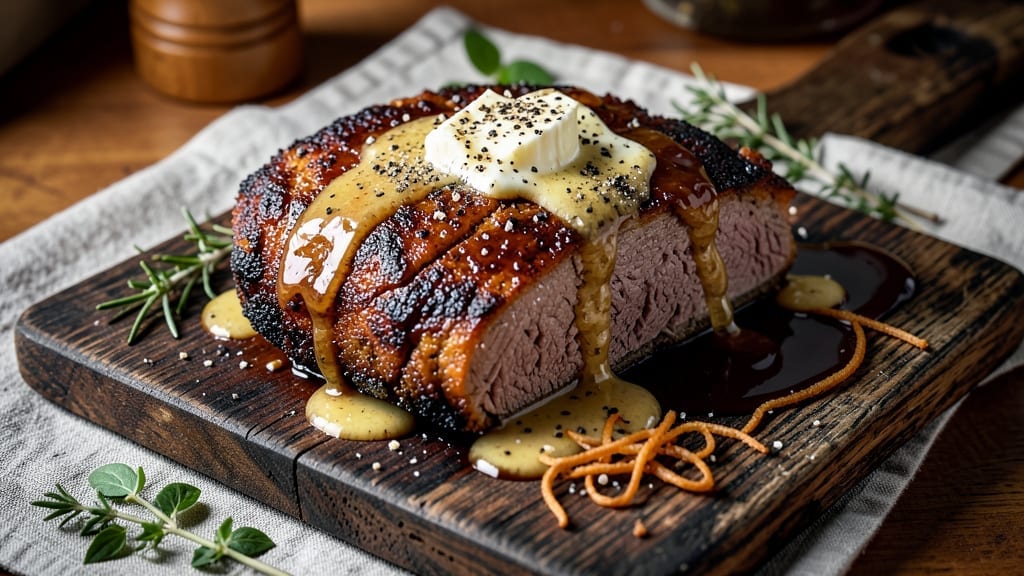
Mastering Ina Garten’s beef brisket in the oven transforms tough cuts into melt-in-your-mouth perfection with a molasses-kissed crust. The secret lies in slow cooking at a steady 275°F for hours, allowing connective tissues to break down while the outer layer develops that signature caramelized bark.
I first tried this recipe during a particularly chilly New England winter when I needed a dish that would feed a crowd and warm the soul.
This method requires patience but delivers restaurant-quality results at home. You’ll start with a simple dry rub of salt, pepper, and garlic powder, then let the brisket cook low and slow until it’s fork-tender.
The molasses glaze, applied in the final hour, creates that irresistible sticky crust that makes every bite worth the wait. Unlike traditional smoked brisket, this oven method uses a water bath to keep the meat moist while developing deep, smoky flavors.
By the time you slice against the grain, you’ll have perfectly tender beef with a glistening, caramelized exterior that holds up beautifully for leftovers. The aroma alone will have everyone gathering at your table, and the rich, beefy flavor pairs perfectly with classic sides like roasted potatoes or buttery cornbread.
This is comfort food at its finest – hearty, satisfying, and impossible to resist.
Serve with a crisp green salad to balance the richness or classic mac and cheese for a true crowd-pleaser. The leftovers reheat beautifully, making this an ideal recipe for meal prep or holiday gatherings. Let’s get started on creating your perfect brisket.
Ingredients for beef brisket recipe oven ina garten
Twelve ingredients for twelve servings of melt-in-your-mouth brisket that feeds a crowd.
| Ingredient | Amount | Notes |
|---|---|---|
| Beef Brisket 🥩 | 6 lb | Flat cut preferred, good marbling |
| Kosher Salt 🧂 | 2 tbsp | Diamond Crystal preferred |
| Freshly Ground Black Pepper 🌶️ | 1 tbsp | Cracked peppercorns preferred |
| Garlic Powder 🧄 | 2 tsp | Freshly ground preferred |
| Unsalted Butter 🧈 | ½ cup | Cold, cubed for water bath |
| Molasses 🍯 | ½ cup | Unsulphured preferred |
| Yellow Onion 🧅 | 1 whole | Large, peeled, halved |
| Garlic Cloves 🧄 | 4 cloves | Peeled, smashed |
| Fresh Rosemary 🌿 | ½ oz | Sprigs, tied with twine |
| Fresh Thyme 🌿 | ½ oz | Sprigs, tied with twine |
| Beef Broth 💧 | 2 cups | Low-sodium preferred |
| Apple Cider Vinegar 🍎 | 2 tbsp | For glaze acidity |
| Brown Sugar 🍚 | 2 tbsp | Light or dark preferred |
| Water 💧 | 2 cups | For water bath |
[recipe_ingredient_scaler]
The brisket is non-negotiable here—flat cut with good marbling is key. Whole Foods or local butchers often carry the best quality, but the meat department at Costco has reliable options too. Look for bright red color and visible fat—this means flavor. If you’re buying a whole packer cut, trim excess fat to about 1/4-inch thickness for even cooking. I always ask the butcher to cut it against the grain for easier slicing later. The rosemary and thyme sprigs add aromatic depth without overpowering—grab fresh from the grocery store’s produce section, not dried bundles.
No Diamond Crystal salt? Morton kosher salt works fine, but measure carefully—it’s finer. Fresh garlic and herbs make a difference, but dried thyme at half the amount gets you close in a pinch. For the glaze, brown sugar substitute? Honey or maple syrup (same amount) works beautifully. The molasses should be unsulphured—check the label, sulphured versions taste bitter. No fresh rosemary? Dried rosemary at one-third the amount still adds great flavor. The beef broth can be homemade or store-bought, but low-sodium is crucial—you’ll be adding salt separately.
This brisket reheats like a dream—350°F for 20 minutes with a splash of broth. Keeps in the fridge for 5-6 days wrapped tightly, or freeze portions for up to 3 months. I always make extra because the leftovers are even better. Store the cooked brisket in its juices to keep it moist. For serving, slice against the grain—this is the secret to tender bites. The glaze keeps well too, so you can brush on fresh glaze when reheating for that restaurant-quality finish.
Why You’ll Love This Recipe
- Foolproof Oven Magic: I swear by this method—no smoker, no stress. Just a single pan, a 300°F oven, and that beautiful brisket turning tender without babysitting it. Between us, the butter basting every 45 minutes does all the work.
- Salt-Crusted Perfection: Honestly, the kosher salt crust transforms everything. It locks in juices while creating this crispy, savory shell that melts into the meat. That first bite? Pure satisfaction—no fancy rubs needed.
- Leftovers That Shine: This brisket practically begs to be repurposed. Shred it for tacos, sandwiches, or even a hearty soup. My freezer’s always stocked because it reheats like it just came out of the oven—no dryness, no complaints.
- Budget-Friendly Feast: A whole brisket feeds my family for days, and the ingredient list? Five things max. The garlic powder and butter make it taste gourmet, but the price tag stays friendly—especially when you stretch it across meals.
Step-by-step instructions for slow-cooked brisket with molasses crust
Here’s the method that delivers tender, smoky brisket with that signature caramelized molasses crust.
Prepare the Brisket and Seasoning
Start by trimming the fat cap of the 6 lb beef brisket down to about ¼ inch thickness using a sharp boning knife. Leave the fat on the sides and edges for flavor and moisture during cooking. Pat the entire surface dry with paper towels—this helps the seasoning adhere and creates a better crust.
In a small bowl, mix together the 2 tbsp kosher salt, 1 tbsp freshly ground black pepper, and 2 tsp garlic powder. Generously rub this mixture all over the brisket, including the cavity if you’ve left it intact. Let the seasoned brisket sit at room temperature for 1 hour before cooking. This step ensures even cooking and maximum flavor penetration.
Create the Molasses Glaze and Water Bath
While the brisket seasons, prepare the molasses glaze by melting the ½ cup unsalted butter in a small saucepan over medium heat. Remove from heat and whisk in the ½ cup molasses, 2 tbsp apple cider vinegar, and 2 tbsp brown sugar until smooth. Set aside to cool slightly.
For the water bath, preheat your oven to 300°F. Place the halved yellow onion, 4 smashed garlic cloves, tied rosemary sprigs, and tied thyme sprigs in a large roasting pan. Add the 2 cups beef broth and 2 cups water, then place the brisket fat-side up on top of the vegetables. Pour the cooled molasses mixture over the brisket, coating it evenly.
Slow-Cook Until Fork-Tender
Cover the roasting pan tightly with heavy-duty aluminum foil, sealing all edges to create a steam chamber. Place the pan in the preheated oven and cook for 4 hours. After this initial cooking time, uncover the brisket and increase the oven temperature to 325°F. Continue cooking, uncovered, for an additional 2 to 3 hours or until the internal temperature reaches 195°F to 203°F.
Here’s the thing—you’ll know it’s ready when the meat is fork-tender and pulls apart easily. The molasses mixture should have caramelized into a glossy glaze on the surface. If the glaze seems too thin, you can brush on additional molasses mixture during the final hour of cooking to enhance the crust.
Rest and Slice for Maximum Juiciness
Once the brisket reaches the proper internal temperature, remove it from the oven and transfer to a cutting board. Tent loosely with aluminum foil and let it rest for at least 30 minutes. This resting period allows the juices to redistribute throughout the meat, ensuring each slice is moist and flavorful.
After resting, slice the brisket against the grain into ¼-inch thick slices. Serve immediately with the pan juices spooned over the top. The result should be tender, smoky brisket with a sweet, caramelized crust that’s perfect for sandwiches or serving alongside roasted vegetables.
Pro Tips For Making Beef Brisket Recipe Oven Ina Garten
- Trim the Fat First: A thick layer of fat on brisket is your friend, but if it’s uneven, it’ll burn before the meat cooks through. Grab a sharp knife and trim just the outer edges—leave the fat cap intact to baste the meat as it roasts. I learned this the hard way when my first attempt turned into a sad, charred brick.
- Salt Like It’s 1920: Don’t skimp on kosher salt—this isn’t a delicate fish fillet. Generously coat the brisket at least 12 hours ahead (yes, even if you’re impatient like me), and re-salt right before roasting. The salt breaks down the proteins, and that crust? It’s the thing that matters most when you’re serving it straight from the oven.
- Start Hot, Finish Slow: Crank your oven to 425°F (220°C) for the first 20 minutes—this sears the surface and locks in juices. Then drop it to 275°F (135°C) for the rest. I used to low-and-slow from the start, and the meat ended up dry. The high heat at the beginning makes all the difference.
- Butter the Crust: When the brisket hits 160°F (71°C) internal temp, pull it out, dot the top with unsalted butter, and let it melt into a golden blanket. The butter adds richness and helps carry those garlic powder flavors into every bite. Skip this, and you’re missing out on the best part—easy as it sounds.
Troubleshooting your beef brisket recipe oven ina garten
Uneven Cooking Fix
If your brisket cooks unevenly with some areas tougher than others, it’s likely due to inconsistent heat distribution. I’ve found that placing a baking sheet under the roasting pan helps reflect heat upward. Also, rotate the pan halfway through cooking—front to back, then side to side—to ensure even exposure.
For stubborn cold spots, increase the oven temp by 25°F for the final 30 minutes to boost caramelization. 🌡️
Dry Brisket Solution
Dry brisket usually means it cooked too long uncovered or lacked moisture. To prevent this, always use the water bath method as described, and never skip the foil cover during the first 4 hours.
If your brisket is already dry, try this trick: slice it thinly, then quickly sear the slices in a hot skillet with 2 tbsp butter and 1 tbsp beef broth for 30 seconds per side. The butter will add moisture and create a quick sauce.
Glaze Too Thin
The molasses glaze should be thick enough to stick to the brisket but not so thick it pools. If yours is too runny, reduce the beef broth in the water bath by ½ cup next time.
For a quick fix, simmer the glaze separately in a small saucepan until it thickens slightly, then brush it on during the final 30 minutes of cooking. A splash of apple cider vinegar (just 1 tsp) can also help balance sweetness and add stickiness. 🍯
Overcooked Brisket
Brisket is forgiving, but if yours turns out too mushy, it likely cooked past 203°F. To salvage it, slice thinly and serve immediately with extra pan juices. For future attempts, use a meat thermometer and remove the brisket when it hits 195°F.
The internal temp will rise 5-10°F while resting, so don’t worry about hitting the exact target. 💡
Fat Not Rendering
If the fat cap isn’t melting properly, your oven temp might be too low or the brisket too cold when starting. Always bring the brisket to room temperature before cooking, and ensure your oven is calibrated (use an oven thermometer to check).
For stubborn fat, score the cap in a crosshatch pattern before seasoning to help it render more evenly. 🔥
Weak Flavor Profile
If your brisket tastes bland, the issue is usually insufficient seasoning or lack of aromatics. Double-check that you’re using freshly ground black pepper and Diamond Crystal salt—table salt won’t give the same depth.
For extra flavor, add 1 tsp smoked paprika to the dry rub, or infuse the beef broth with 1 bay leaf and 2 sprigs of thyme while cooking. A splash of Worcestershire sauce in the glaze also adds umami richness. 🌿
Nutrition facts
Frequently asked questions about slow-cooked beef brisket
How long should I let the brisket rest before slicing?
Always rest your brisket for at least 30 minutes after removing it from the oven. This crucial step lets the juices redistribute, preventing dry slices. For extra-tender results, rest it up to 1 hour in a warm oven (170°F) if serving later.
Can I use a different cut of beef instead of brisket?
This recipe is specifically designed for brisket, but you could try a chuck roast in a pinch. However, the cooking time and texture will differ—chuck roast typically cooks faster and has a more uniform texture. For best results, stick with brisket’s signature toughness that transforms into tenderness through slow cooking.
What’s the best way to reheat leftover brisket?
Slice the brisket thinly and reheat in a skillet over medium-low heat with a splash of beef broth or water to keep it moist. For oven reheating, cover with foil and warm at 300°F for 15-20 minutes. Never microwave—it makes the meat rubbery. The pan juices can also be reheated separately for serving.
Why does my brisket look dry after cooking?
Dry brisket usually means it cooked too long uncovered or lacked moisture. Always use the water bath method and keep it covered for the first 4 hours. If yours is dry, try slicing thinly and serving with extra pan juices or a quick pan sauce made with butter and broth. The molasses glaze should help prevent this by adding moisture during cooking.
What sides pair best with this brisket recipe?
Classic pairings include creamy mashed potatoes, buttery cornbread, or a fresh green salad to balance the richness. For a New England touch, try roasted root vegetables or a tangy coleslaw. The smoky-sweet brisket also works beautifully with mac and cheese or crusty bread for soaking up the juices.

Trained in classic French technique but raised on slow-cooked ribs and spicy rubs, she blends culinary skill with smoke and soul.
- Beef Brisket Recipe Oven Ina Garten: Slow-Cooked Smoky Depth With Molasses-Kissed Crust - October 15, 2026
- Sweet Brisket Rub Recipe: Deep Smoky-Sweet Crust That Stays On - October 15, 2026
- Brisket Philly Cheese Steak Recipe: Smoky-Sauced Sandwich With Caramelized Onions - October 15, 2026