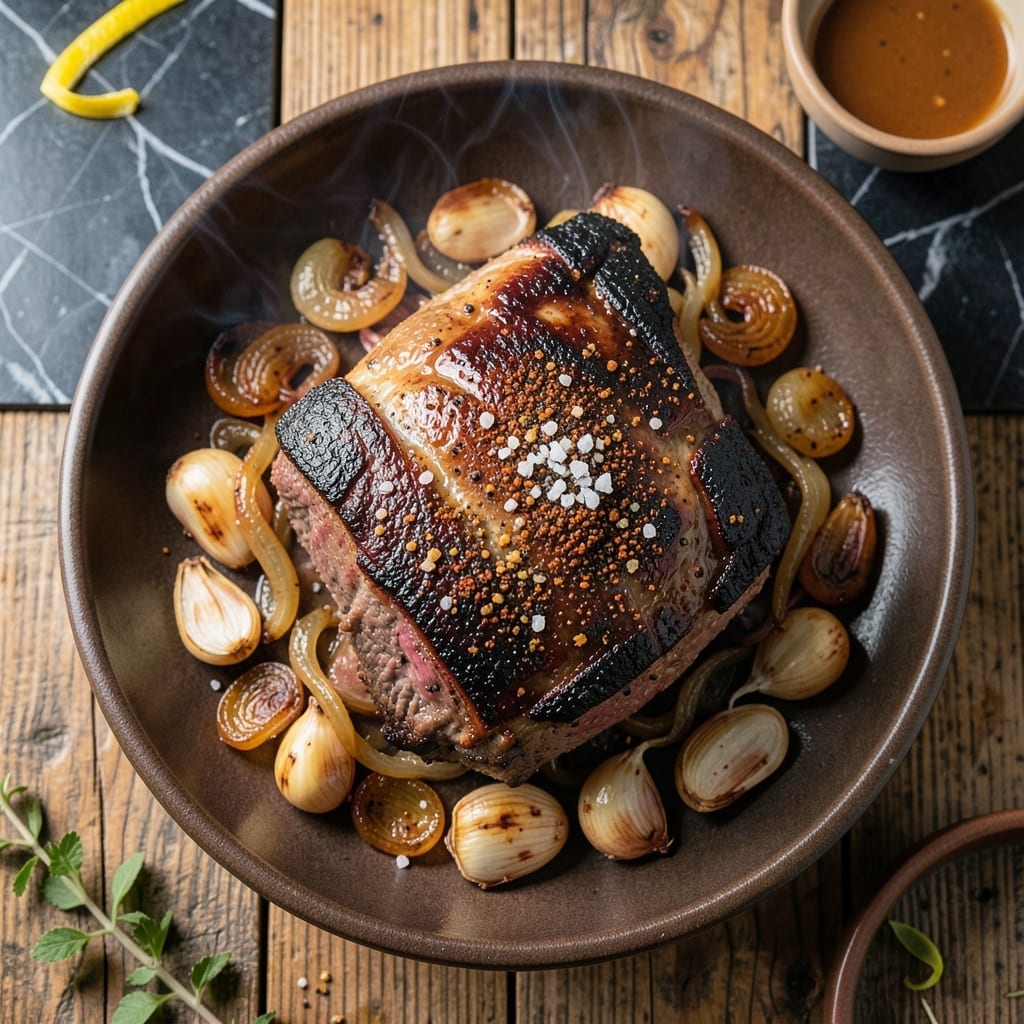
This pellet grill method transforms beef chuck roast into pull-apart tender perfection through low and slow cooking.
I’ve refined this technique to deliver consistent, melt-in-your-mouth results with rich smoky depth every time.
Ingredients for Beef Chuck Roast Pellet Grill
Well-marbled beef and a bold spice rub create that melt-in-your-mouth texture we’re after here.
| Ingredient | Amount | Notes |
|---|---|---|
| Beef Chuck Roast 🥩 | 3 lb | Well-marbled, boneless preferred |
| Coarse Kosher Salt 🧂 | 1 ½ tbsp | Diamond Crystal preferred for consistency |
| Freshly Ground Black Pepper 🌶️ | 1 tbsp | Coarse grind for texture |
| Garlic Powder 🧄 | 1 tbsp | Not garlic salt substitute |
| Onion Powder 🧅 | 1 tbsp | Enhances savory depth |
| Smoked Paprika 🌶️ | 1 tsp | Adds authentic smoke flavor |
| Dried Thyme 🍃 | 1 tsp | Crushed between fingers |
| Dried Rosemary 🌿 | 1 tsp | Crushed to release oils |
| Olive Oil 🫒 | 2 tbsp | For binding rub to meat |
| Beef Broth 🥩 | 1 cup | Low-sodium preferred for control |
| Apple Cider Vinegar 🍏 | ¼ cup | Balances richness of meat |
| Worcestershire Sauce 🫒 | 2 tbsp | Adds umami complexity |
[recipe_ingredient_scaler]
The chuck roast quality is paramount. Optimal results require well-marbled beef with visible fat veins—avoid lean cuts. Professional kitchens source from USDA Choice or Prime grades. Costco offers excellent pre-trimmed chuck roasts at a reasonable price point. The fat content ensures the low and slow process renders that pull-apart tenderness promised in the title.
Substitutions for the dry rub are possible but affect final flavor. Fresh garlic at double the amount can replace garlic powder, though texture differs. No smoked paprika? Regular paprika plus half teaspoon liquid smoke approximates the profile. Beef broth may be substituted with water plus bouillon, but expect reduced depth. Worcestershire sauce is non-negotiable for authentic umami.
Store the raw chuck roast in its original packaging on a rimmed tray for up to 3 days refrigerated. The dry rub ingredients maintain potency for 6-12 months in airtight containers. Prepare the rub immediately before application to preserve freshness and prevent moisture absorption.
Why You’ll Love This Recipe
- I’ll be real: the pulled beef tastes even better the next day in quesadillas or loaded nachos.
- Set It and Forget: I just rub the chuck roast with salt, pepper, garlic and onion powders, pop it on the pellet grill, and let the smoker do the work.
- Smoky Depth: That slow-smoked flavor with just a handful of pantry spices makes every bite rich and satisfying.
- Feeds the Crew: Honestly, this one roast stretches to sandwiches, tacos, or a hearty dinner for the whole family.
Step-by-Step Instructions for Beef Chuck Roast on Pellet Grill
Master the low and slow technique to transform this cut into fall-apart perfection.
Step 1: Season the Beef Chuck Roast
Pat the 3 lb Beef Chuck Roast dry with paper towels to ensure the rub adheres properly. In a small bowl, combine the 1.5 tbsp Coarse Kosher Salt, 1 tbsp Freshly Ground Black Pepper, 1 tbsp Garlic Powder, 1 tbsp Onion Powder, 1 tsp Smoked Paprika, 1 tsp Dried Thyme, and 1 tsp Dried Rosemary.
Rub the spice mixture evenly over all surfaces of the beef, pressing firmly to create a crust. Drizzle the 2 tbsp Olive Oil over the roast and massage it into the seasoning. This step ensures a flavorful bark and helps the spices penetrate the meat.
Step 2: Preheat Pellet Grill and Prepare for Smoking
Preheat your pellet grill to 225°F using your preferred wood pellets—hickory or oak work exceptionally well. While the grill heats, let the seasoned roast sit at room temperature for 30 minutes. This allows the spices to meld with the meat and promotes even cooking.
Once the grill reaches temperature, place the roast directly on the grates. The low temperature and smoke will slowly break down the connective tissue, resulting in the promised tenderness.
Step 3: Smoke Until Internal Temperature Reaches the Stall
Insert a meat probe into the thickest part of the roast and smoke undisturbed until the internal temperature reaches 165°F. This typically takes 4-5 hours, depending on your grill’s consistency. You’ll notice the temperature plateau—this is the stall, a natural phase in the cooking process.
During this time, resist the urge to open the grill lid. Maintaining a steady 225°F is critical for consistent results. The roast should develop a deep mahogany color and a firm bark by this point.
Step 4: Wrap and Continue Cooking
Once the stall occurs, transfer the roast to a large sheet of heavy-duty aluminum foil. Pour the 1 cup Beef Broth, 0.25 cup Apple Cider Vinegar, and 2 tbsp Worcestershire Sauce over the roast. Wrap the roast tightly to create a steamy environment, which will power through the stall.
Return the wrapped roast to the grill and continue cooking until the internal temperature reaches 203°F. This second phase usually takes another 2-3 hours. The meat will become probe-tender, with the fibers easily separating when tested.
Step 5: Rest and Serve
Carefully remove the roast from the grill and transfer it to a cutting board. Unwrap the foil and let the roast rest for 30-45 minutes. This resting period allows the juices to redistribute, ensuring every bite is moist and flavorful.
Shred the beef with two forks or slice it against the grain. Serve immediately with the accumulated juices from the foil for maximum richness. The result will be pull-apart tender, with a smoky depth that defines this cooking method.
Pro Tips For Making Beef Chuck Roast Pellet Grill
- Preheat the Grill: Set your pellet grill to 225°F and let it stabilize for at least 10 minutes—this guarantees even cooking and prevents temperature swings that can toughen the chuck roast.
- Dry the Roast: Pat the beef chuck roast completely dry with paper towels before seasoning; I learned this the hard way—wet meat steams instead of developing that deep, flavorful bark.
- Skip the Overcrowding: Leave at least an inch of space around the roast on the grill grates so smoke can circulate properly and the seasoning doesn’t stick to the grates.
- Rest Before Slicing: Let the roast rest under loose foil for 15-20 minutes after pulling it off the grill—it keeps all the juices inside instead of on your cutting board.
Wine and Beer Pairings for These Flavors
Bold Red Wines
For this smoky dish, I love a full-bodied Cabernet Sauvignon from Napa Valley—its dark fruit notes and tannic structure stand up to the rich beef. A 2018 Caymus offers the perfect balance of power and finesse. Serve at 65°F for optimal flavor. 🍷
Zinfandel Pairings
A jammy California Zinfandel brings out the caramelized edges of the roast. Try Ravenswood Old Vine—its peppery finish complements the smoked paprika. I always keep a bottle on hand for impromptu BBQ gatherings.
Craft Beer Options
Dark beers work wonderfully here. A bourbon barrel-aged stout like Founders KBS mirrors the smoky depth. For something lighter, an amber ale with caramel notes bridges the gap between beer and beef. 🍺
Port or Stout
For dessert pairings, a tawny port like Graham’s 10-Year offers dried fruit notes that echo the meat’s richness. Or try a milk stout—its creamy sweetness contrasts the savory smoke beautifully.
White Wine Alternative
If you prefer white, an oaked Chardonnay from Sonoma County can work. The butteriness stands up to the fat, while the oak notes harmonize with the smoke. Serve well-chilled at 50°F.
Non-Alcoholic
For a booze-free option, try smoked black tea with a splash of apple cider. The tannins and fruit mirror the wine experience without alcohol. I discovered this at a local BBQ competition—it’s surprisingly good.
Nutrition Facts
Frequently Asked Questions
What’s the best wood pellet flavor for this?
Hickory or oak pellets deliver the strongest smoky depth. Mesquite works too but can overpower the beef if used excessively. Stick to 100% hardwood pellets for cleanest flavor.
How do I know when it’s done?
It’s ready when the internal temp hits 203°F and the meat probes like butter. The stall at 165°F is normal—just wrap and keep cooking.
Can I skip the wrapping step?
You can, but expect a longer cook time and potentially drier results. Wrapping in foil with liquid helps power through the stall and retains moisture.

Trained in classic French technique but raised on slow-cooked ribs and spicy rubs, she blends culinary skill with smoke and soul.
- Recipe for Boneless Pork Chops in Cast Iron Skillet: Sear and Baste to Juicy Perfection - October 3, 2026
- Recipe for Boneless Cross Rib Roast: Slow-Roasted Beef with Herb Crust - October 3, 2026
- Hamburgers in Sauce Recipe Crock Pot: Slow-Cooked Savory Delight - October 3, 2026