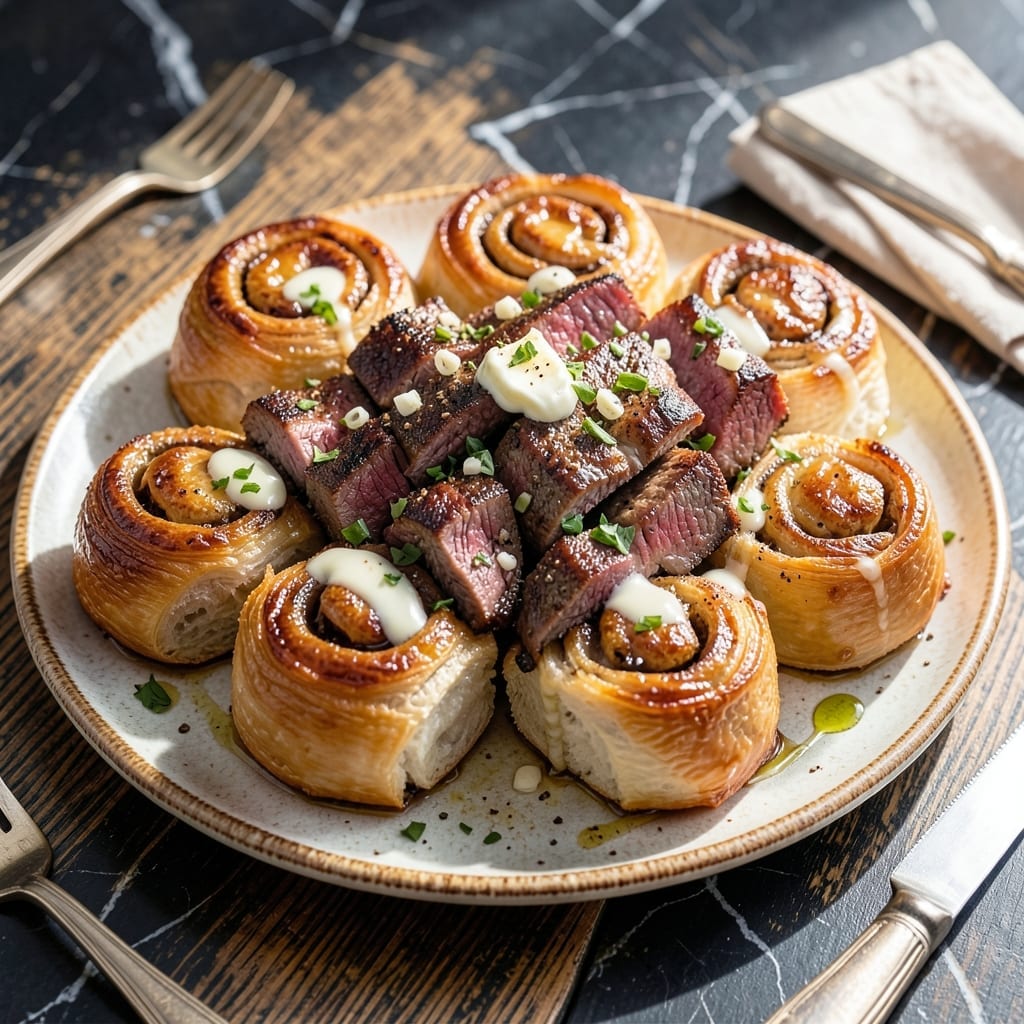
Mastering beef house rolls is about precision—thinly sliced beef wrapped around a savory filling, baked to flaky perfection. This dish transforms simple ingredients into something extraordinary.
I developed this recipe after years of testing in my tiny Boston kitchen, perfecting the balance between tender beef and crisp, buttery layers. The key is in the rolling technique and proper oven temperature.
The result speaks for itself: golden, perfect rolls that pull apart to reveal a flavorful center. Each bite delivers layers of texture and taste that feel restaurant-worthy.
Serve these warm, straight from the oven, for a dish that impresses every time. The process is straightforward but yields stunning, professional-quality results.
Ingredients for Beef House Rolls
Precision starts with quality ingredients—thin beef, buttery layers, and aromatic filling components.
| Ingredient | Amount | Notes |
|---|---|---|
| Beef Top Round 🥩 | 1 ½ lb | Thinly sliced, about 1/8-inch thick |
| All-Purpose Flour 🌾 | ½ cup | For dusting work surface |
| Unsalted Butter 🧈 | ½ cup | Cold, cut into small cubes |
| Kosher Salt 🧂 | 1 ½ tsp | Diamond Crystal preferred |
| Freshly Ground Black Pepper 🌶️ | ½ tsp | Coarsely ground for texture |
| Garlic Cloves 🧄 | 3 cloves | Minced finely for filling |
| Yellow Onion 🧅 | 1 whole | Finely diced for filling |
| Button Mushrooms 🍄 | 8 oz | Finely chopped for filling |
| Worcestershire Sauce 💧 | 1 tbsp | Lea & Perrins recommended |
| Dijon Mustard 🟡 | 1 tbsp | Smooth, not whole grain |
| Beef Broth 🥣 | ¼ cup | Low-sodium preferred for control |
| Fresh Thyme Leaves 🍃 | 1 tbsp | Stems removed before measuring |
| Fresh Parsley 🌿 | 2 tbsp | Chopped, for garnish |
| Egg 🥚 | 1 whole | For egg wash on rolls |
[recipe_ingredient_scaler]
The beef is non-negotiable. Top round is ideal for thin slicing—ask your butcher to slice it for house rolls if you lack a deli slicer. Look for bright red color with minimal marbling; fat disrupts the rolling. Whole Foods and local butchers typically carry suitable cuts. Keep the beef cold until ready to use—warm meat tears when rolled.
No Worcestershire? Soy sauce plus a drop of vinegar mimics the depth, though the flavor profile will differ slightly. Cremini mushrooms can replace buttons if preferred. For a richer filling, add sauteed carrots or celery at one-third the quantity. The Dijon mustard binds the filling—whole grain mustard works but alters texture. Butter must be cold; warm butter absorbs into the dough rather than creating flaky layers.
Assemble rolls immediately before baking—they lose structure if left unbaked overnight. Store cooked rolls in an airtight container for up to 3 days. Reheat in a 350°F oven for 10-12 minutes to restore crispness. Freeze unbaked rolls on a tray before transferring to bags; bake from frozen with 5 extra minutes.
Why You’ll Love This Recipe
- One-Pan Wonder: I love that I can sear the beef top round, roll it up, and bake it all in the same pan—minimal cleanup, maximum flavor.
- Buttery Layers: The unsalted butter brushed between the flour-dusted beef creates this ridiculous flaky, savory crust that’s honestly hard to resist.
- Dinner or Lunch: Here’s what sold me—it’s just as good fresh out of the oven as it is cold the next day in a sandwich.
- Budget Stretcher: A single top round roast makes enough rolls to feed my family twice, and it’s still cheaper than takeout.
Step-by-Step Instructions for Beef House Rolls
Master the technique for creating these flaky, buttery rolls with a savory beef filling.
Step 1: Prepare the Beef Filling
In a large skillet over medium-high heat, sear the 1.5 lb Beef Top Round (thinly sliced) until it begins to brown, about 3-4 minutes. Season immediately with 1.5 tsp Kosher Salt and 0.5 tsp Freshly Ground Black Pepper—this early seasoning ensures deep flavor penetration.
Add the 1 whole Yellow Onion (finely diced), 3 cloves Garlic Cloves (minced), and 8 oz Button Mushrooms (finely chopped). Sauté for 5-6 minutes until the vegetables soften and the beef is fully cooked through. The mixture should be deeply browned with a rich fond developing on the pan.
Deglaze with 1 tbsp Worcestershire Sauce and 1 tbsp Dijon Mustard, scraping up any browned bits. Pour in 0.25 cup Beef Broth and 1 tbsp Fresh Thyme Leaves, then simmer for 3-4 minutes until the liquid reduces slightly. Remove from heat and let cool completely.
Step 2: Roll and Shape the Dough
Lightly dust your work surface with 0.5 cup All-Purpose Flour. Roll out the beef mixture into a large rectangle, ensuring even thickness throughout. The goal is a uniform layer that will create consistent rolls.
Distribute the cooled beef filling evenly across the surface, leaving a ½-inch border on all sides. This prevents the filling from leaking out during baking. Tightly roll the meat into a log, using the border to seal the edges—press firmly to create a secure seam.
Chill the roll for 20 minutes to firm up the butter and make slicing easier. This step prevents the rolls from losing their shape when cut. Use this time to preheat your oven to 375°F.
Step 3: Slice, Seal, and Apply Egg Wash
Using a sharp knife, slice the chilled log into 8 equal portions. For clean cuts, wipe the blade between slices to prevent dragging the filling. Place each roll seam-side down on a parchment-lined baking sheet.
Beat the 1 whole Egg with 1 tablespoon of water to create an egg wash. Brush the tops of the rolls generously—this creates a golden-brown, glossy finish. For extra richness, dot each roll with small pieces of the 0.5 cup Unsalted Butter (cold, cubed).
Step 4: Bake to Flaky Perfection
Bake in the preheated 375°F oven for 25-30 minutes, or until the rolls are deep golden brown and the internal temperature reaches 165°F. Rotate the pan halfway through baking to ensure even browning.
Check for doneness by inserting a toothpick into the center of a roll—it should come out clean with no raw dough clinging to it. The layers should be visibly flaky and separated, with the butter creating a crisp, golden crust.
Remove from the oven and let rest for 5 minutes before serving. This allows the filling to set slightly, making the rolls easier to handle. Garnish with 2 tbsp Fresh Parsley (chopped) for a pop of color and freshness.
Pro Tips For Making Beef House Rolls
- Chill the Dough: Let the flour-butter dough rest in the fridge for at least 30 minutes before rolling—I learned this the hard way after my first batch tore constantly.
- Pound the Beef: Use a meat mallet to thin the top round to ¼-inch thickness; it makes rolling easier and guarantees even cooking.
- Skip Overfilling: Resist the urge to stuff too much filling in each roll or they’ll burst open during baking—2 tablespoons max per piece.
- Seal with Butter: Brush the edges of the dough with a little melted butter before rolling to create a tight, flaky seal that won’t unravel.
Troubleshooting Great beef house rolls
Rolls Falling Apart
If your rolls unravel during baking, the beef was likely too warm when rolled. Keep the meat ice-cold and work quickly—my Boston kitchen taught me this the hard way. Chill the log for 20 minutes before slicing to set the structure. 💡
Filling Leaks Out
The most common culprit is overfilling or skipping the border. Leave a ½-inch border when spreading filling, and press edges firmly to seal. I also recommend cooling the filling completely—hot filling creates steam that forces seams open.
Not Flaky Enough
Flakiness comes from cold butter creating layers. Ensure your 0.5 cup Unsalted Butter is cold and cubed when incorporated. If rolls still lack layers, try folding the beef over the butter like a letter before rolling for extra lift.
Uneven Browning
Rotate your baking sheet halfway through the 25-30 minute bake. If some rolls brown faster, tent them with foil. A 375°F oven is ideal—too hot and the outside burns before the inside cooks.
Dry or Tough Beef
Overcooking the filling is the usual suspect. Sear the beef just until it loses its raw color—about 3-4 minutes. The 0.25 cup Beef Broth in the filling should keep it moist, but don’t simmer it down completely.
Butter Melts Away
Your butter must stay solid until baking. If it’s melting during prep, your kitchen might be too warm—I combat this in my tiny Boston apartment by refrigerating the butter cubes between uses. Dot butter on just before baking, not during assembly.
Nutrition Facts
Frequently Asked Questions
Can I use a different cut of beef for this?
Top round works best for thin slicing, but flank steak is a good alternative. Avoid chuck—it’s too fatty and will tear when rolled. Always ask your butcher to slice it 1/8-inch thick for best results.
Why do my rolls lose their shape while baking?
This usually happens if the beef warms up before rolling. Keep everything ice-cold and chill the log for 20 minutes before slicing. Press the seam tightly to prevent unraveling.
Can I make these ahead of time?
Yes! Assemble and freeze unbaked rolls on a tray before transferring to a bag. Bake from frozen, adding 5 extra minutes to the 25-30 minute bake time. Avoid refrigerating unbaked rolls overnight.
What can I substitute for Worcestershire sauce?
Use 1 tsp soy sauce + 1 tsp vinegar as a quick replacement. The flavor won’t be identical, but it adds the needed depth. Adjust salt if your soy sauce is salty.

Trained in classic French technique but raised on slow-cooked ribs and spicy rubs, she blends culinary skill with smoke and soul.
- Recipe for Boneless Pork Chops in Cast Iron Skillet: Sear and Baste to Juicy Perfection - October 3, 2026
- Recipe for Boneless Cross Rib Roast: Slow-Roasted Beef with Herb Crust - October 3, 2026
- Hamburgers in Sauce Recipe Crock Pot: Slow-Cooked Savory Delight - October 3, 2026