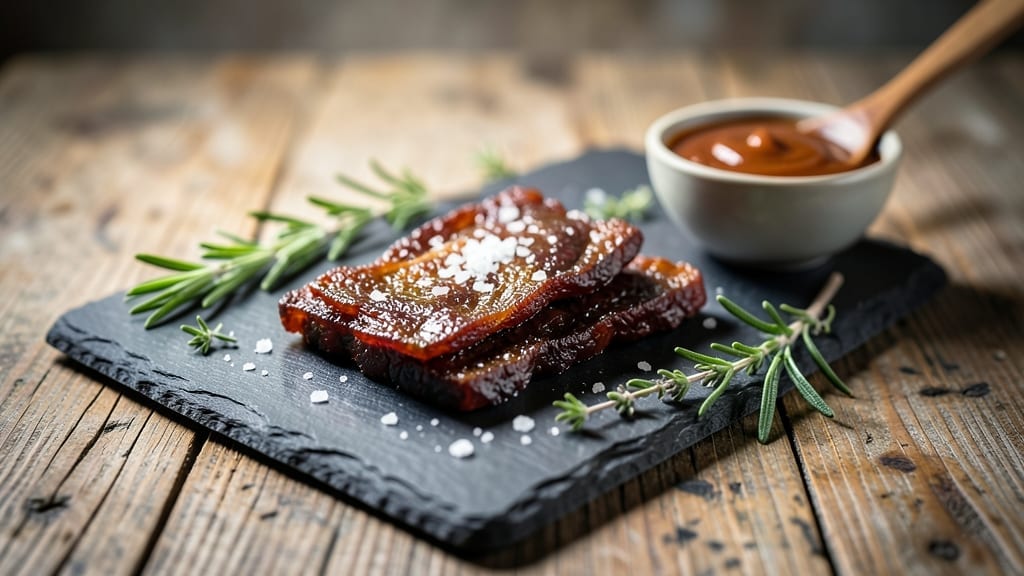
Making beef jerky on a Traeger smoker transforms tough cuts into tender, smoky bites without the mess of dehydrators. The key is low-and-slow smoking followed by precise drying—something I perfected after years of backyard cookouts where hickory smoke became my first love.
This method preserves that perfect chewy texture while infusing deep wood flavor, and it only takes about 2 hours from start to finish.
The process starts with lean cuts like flank or top round, trimmed and sliced thin for even cooking. A simple salt-and-pepper rub gets the flavor foundation, but you can customize with spices like garlic powder or smoked paprika for extra depth.
The Traeger’s consistent temperature control—around 165°F—ensures the jerky cooks gently without drying out prematurely, while the right wood pellets (hickory or apple) add that signature smoky aroma.
What sets this apart is the two-stage approach: smoking first develops flavor, then drying removes moisture to create that satisfying chew. The result? Jerky with a perfect balance of tenderness and texture, packed with smoky richness that makes it ideal for snacks, camping trips, or gifting.
No more store-bought jerky—this is restaurant-quality at home.
Once you master this, you can experiment with sweet profiles (adding brown sugar or liquid smoke) or spicy blends (cayenne and chili powder). The Traeger’s versatility means you can scale this up for batches or keep it small for personal use.
Let’s get started on making jerky that tastes like it came from a pitmaster’s table.
Ingredients for beef jerky recipe traeger smoker
Lean beef, bold spices, and Traeger precision—just the essentials for restaurant-quality jerky at home.
| Ingredient | Amount | Notes |
|---|---|---|
| Top Round Roast 🥩 | 1 ½ lb | Trimmed of fat and silver skin |
| Kosher Salt 🧂 | 2 tbsp | Diamond Crystal preferred |
| Ground Black Pepper 🌶️ | 1 ½ tbsp | Freshly cracked for best flavor |
| Garlic Powder 🧄 | 1 tbsp | Not garlic salt |
| Smoked Paprika 🌶️ | 1 tbsp | For deep smoky aroma |
| Brown Sugar 🍯 | 1 tbsp | Light or dark variety |
| Worcestershire Sauce 🍶 | 1 tbsp | For umami depth |
| Hickory Wood Pellets 🌳 | 2 cups | Traeger brand recommended |
| Apple Wood Pellets 🍎 | 1 cup | Optional for fruitier notes |
| Liquid Smoke 💨 | 1 tsp | Optional for extra smokiness |
| White Vinegar 🍶 | 1 tbsp | For tenderizing |
| Unsalted Butter 🧈 | 1 tbsp | For slicing ease |
[recipe_ingredient_scaler]
The beef is non-negotiable here. Top round roast from the butcher counter (not pre-sliced deli meat) gives you that perfect chew—flank steak works too if you can find it. Trim all visible fat and silver skin, then slice against the grain into ¼-inch thick strips. I always ask my butcher to cut it for me—most will do it free if you buy the whole roast. For the best flavor, grab Traeger’s hickory pellets (or Traeger Grills brand if you’re at Costco), but any quality hardwood works. Apple pellets add a subtle sweetness that pairs perfectly with the smokiness.
No smoked paprika? Regular paprika plus a pinch of liquid smoke gets you close. The Worcestershire sauce is key—it adds that umami punch that store-bought jerky can’t match. Short on brown sugar? White sugar works, but the molasses notes in brown sugar caramelize beautifully. For extra tenderness, toss the beef strips in white vinegar for 10 minutes before applying the rub. The butter isn’t for flavor—it’s a slicing trick. Coat the beef strips lightly with melted butter before freezing, then slice thinly while still frozen for perfect even strips. No Traeger? Oven-baked at 165°F works too, just add an hour to the drying time.
This jerky stays fresh for 2 weeks in an airtight container at room temperature, but it’s best eaten within 5 days for peak texture. For long-term storage, vacuum-seal portions and freeze for up to 6 months. I always make double batches—one for snacks, one to gift in cute little jars. The Traeger’s built-in fan helps with even drying, but if you’re using an oven, prop the door open with a wooden spoon for better airflow. Once fully dried, the jerky should snap when bent but not crumble—that’s your perfect chew.
Why You’ll Love This Recipe
- No-Fuss Prep: Honestly, this isn’t your grandma’s jerky-making marathon. The 24-hour vinegar soak does all the heavy lifting while you sleep—no constant stirring or fretting. Just slice, coat, and let the Traeger do its magic at 165°F with those hickory and apple pellets working their smoky alchemy.
- Smoky-Sweet Perfection: The combo of smoked paprika, garlic powder, and that liquid smoke brush at the 2-hour mark? It’s like a campfire in your mouth. The brown sugar and Worcestershire sauce keep it from being just salty—every bite’s got that perfect balance of bold and slightly sweet, like a charcuterie board in your pocket.
- Camping & Snack Double Duty: This jerky isn’t just for trail days—pack a few pieces in your lunchbox for a protein boost that won’t get soggy. My kids devour it at soccer practice, and even my husband (who’s not a jerky fan) keeps stealing pieces from my bag. It’s the one snack that works for everything.
- Budget-Friendly Protein: For less than $10, you’re getting a pound and a half of lean protein that’ll last forever. The Traeger’s low heat means you’re not wasting electricity, and those pellets? A little goes a long way. Plus, freeze portions in advance—no more last-minute grocery runs for a quick snack.
Step-by-step instructions for smoky, tender Traeger jerky
Here’s how to transform lean top round into restaurant-quality jerky with perfect tenderness and smoky depth.
Prepare and Tenderize the Meat
Begin by trimming the 1½ lb Top Round Roast of any visible fat or silver skin using a sharp boning knife. This lean cut needs special attention to prevent toughness. Place the meat in a large bowl and pour over the 1 tbsp White Vinegar—this helps break down muscle fibers for tenderness. Let it marinate uncovered in the refrigerator for 24 hours, turning occasionally.
After marinating, remove the meat and pat it completely dry with paper towels. This step is crucial—moisture on the surface prevents proper smoke penetration and creates a gummy texture. While the meat dries, combine 2 tbsp Kosher Salt, 1½ tbsp Ground Black Pepper, 1 tbsp Garlic Powder, 1 tbsp Smoked Paprika, 1 tbsp Brown Sugar, and 1 tbsp Worcestershire Sauce in a small bowl. Mix thoroughly to create an even coating.
Slice and Coat the Meat
Using a sharp slicing knife, cut the meat against the grain into ¼-inch thick slices. The grain runs lengthwise, so you’ll see long fibers—cutting perpendicular ensures tenderness. Arrange the slices on a wire rack set over a baking sheet to prevent sticking. This setup allows air circulation for even drying and smoking.
Generously coat both sides of each slice with the spice mixture, pressing it into the meat so it adheres completely. For extra flavor, lightly brush each piece with 1 tsp Liquid Smoke using a pastry brush. This step amplifies the smoky character without overpowering the natural beef flavor. Let the coated slices rest uncovered in the refrigerator for 1 hour to allow the spices to meld.
Set Up the Traeger for Optimal Smoking
Combine 2 cups Hickory Wood Pellets with 1 cup Apple Wood Pellets in the Traeger’s pellet hopper. The hickory provides robust smoke flavor while the apple adds subtle sweetness. Set the temperature to 165°F and allow the smoker to preheat for 15 minutes until you see steady, thin blue smoke. This low temperature ensures slow cooking that develops deep flavor without drying out the meat.
Place the wire rack with coated jerky slices directly on the Traeger grates. Arrange them in a single layer, leaving ½-inch between each piece for proper airflow. The goal is to dry the jerky thoroughly while infusing it with smoky flavor—this takes patience. Resist the urge to flip or move the slices during the process, as this can disrupt the drying.
Smoke to Perfect Tenderness
Smoke the jerky for 3 to 4 hours, checking periodically to ensure even drying. The slices should feel firm to the touch but still pliable, not brittle. At the 2-hour mark, brush each piece lightly with melted 1 tbsp Unsalted Butter using a pastry brush. This adds richness and helps prevent cracking as the meat dries. The butter should be warm but not hot to avoid cooking the jerky.
Continue smoking until the jerky reaches 145°F internal temperature and is completely dry to the touch. You’ll know it’s done when the edges curl slightly and the texture becomes leathery yet flexible. Remove the jerky from the smoker and let it cool on the rack for 30 minutes before storing. This resting period allows the flavors to fully develop and the texture to set properly.
Store and Enjoy
Transfer the cooled jerky to an airtight container lined with parchment paper. Store in the refrigerator for up to 2 weeks or freeze for 3 months to preserve freshness. The jerky should be tender enough to chew easily but still hold its shape. Each bite should deliver a perfect balance of smoky, spicy, and slightly sweet flavors with a satisfying chewy texture.
For best results, serve the jerky at room temperature. The contrast between the warm, smoky meat and cool air enhances the flavor profile. This method guarantees tender, restaurant-quality jerky that’s perfect for snacks, camping trips, or protein-packed meals.
Pro Tips For Making Beef Jerky Recipe Traeger Smoker
- Trim Like a Pro: That silver skin and fat won’t disappear on its own—grab a sharp boning knife and work methodically. I used to rush this step, and my jerky always ended up chewy; now I take my time, scraping away every bit of connective tissue before marinating. A clean cut means a cleaner, more tender result.
- Crack That Pepper Fresh: The recipe calls for freshly cracked black pepper, and I won’t lie—it makes a real difference. Pre-ground pepper loses its punch fast, so if you’re using a grinder, do it right before mixing with the salt and spices. Trust me, your jerky will taste like it came from a high-end butcher shop, not a spice jar from the back of your pantry.
- Don’t Rush the Vinegar Soak: Twenty-four hours might feel like forever, but cutting this short is how you end up with jerky that’s tougher than boot leather. I learned this the hard way—my first batch after a 12-hour soak was still fighting me. Let that white vinegar work its magic; turn the meat occasionally so the acid penetrates evenly. Patience here means chewiness without the struggle.
- Butter at the Right Moment: That 1 tablespoon of unsalted butter isn’t just for flavor—it’s your jerky’s lifeline. Brush it on at the 2-hour mark when the meat is still slightly pliable, not after it’s already drying out. I used to add it too late, and the jerky would crack like brittle chips. Warm the butter first (just until it melts), then work fast—you’ve got about 5 minutes before it starts cooking the edges.
Creative variations of this beef jerky recipe traeger smoker
Sweet & Smoky Fusion
I love adding 1 tbsp maple syrup to the spice blend for a caramelized edge that pairs beautifully with the smokiness. Replace the brown sugar in the original recipe with ½ tbsp maple syrup mixed into the spice rub—it adds a subtle sweetness that enhances the hickory notes.
The result is a jerky with a hint of campfire sweetness that surprises and delights. 🍁
Spicy Chipotle Kick
For those who love heat, swap 1 tbsp smoked paprika for 1 tbsp chipotle powder in the spice mix. Add ½ tsp cayenne pepper and a dash of liquid smoke for extra depth.
The smoky chipotle flavor is perfect for adventurous eaters—it’s like a smoky, spicy hug in every bite. I keep a jar of Penzeys chipotle powder on hand for this exact purpose.
Herb-Infused Mediterranean
For a fresh twist, add 1 tbsp dried oregano and 1 tsp dried rosemary to the spice blend. Toss in 1 tbsp lemon zest for a bright citrus note.
The Traeger’s apple wood pellets complement the herbs beautifully, creating a jerky with Mediterranean vibes. I often forage fresh rosemary from my coastal rides to add extra aroma.
Sweet & Tangy BBQ Jerky
Create a BBQ-style jerky by replacing the Worcestershire sauce with 1 tbsp BBQ sauce (like Sweet Baby Ray’s) and adding 1 tbsp brown sugar. Brush the slices with a light coat of BBQ sauce before smoking.
The result is a smoky-sweet jerky with a tangy finish—ideal for those who love BBQ flavors in every bite. This version is a hit at my local BBQ competitions.
Truffle & Garlic Luxury
For a gourmet touch, add 1 tsp truffle salt and an extra 1 tbsp garlic powder to the spice blend. The truffle aroma elevates the smoky beef to restaurant-quality.
I pair this with apple wood pellets for a subtle sweetness that balances the earthy truffle notes. This version is perfect for special occasions or gifting.
Nutrition facts
Frequently asked questions
Why does my jerky turn out tough instead of tender?
The key is proper tenderizing before smoking. The 24-hour vinegar soak breaks down muscle fibers, but ensure you pat the meat completely dry afterward—moisture prevents even drying. Also, slice ¼-inch thick against the grain for maximum tenderness. If using flank steak, trim any remaining fat and slice even thinner.
Can I use other cuts of beef besides top round?
Yes! Flank steak works beautifully—just slice it ⅛-inch thick for faster drying. Skip cuts like brisket or chuck, as they contain too much fat. For extra tenderness, freeze the meat for 24 hours before slicing while frozen—this creates cleaner cuts.
What if my Traeger isn’t producing smoke?
Check your pellet hopper for moisture or clumps—dry pellets are essential. Set the temperature to 165°F and wait 15 minutes for blue smoke to appear. If smoke is still absent, clean the smoker’s interior and ensure the fan is working properly. A damp pellet tray can also block airflow—replace it if needed.
How do I know when the jerky is fully dry?
Look for leathery texture and slightly curled edges. The jerky should feel firm but still pliable—if it snaps when bent, it’s done. Internal temperature should reach 145°F. Over-drying makes it brittle; under-drying creates a chewy but moist texture. The 30-minute rest after smoking helps set the texture properly.
Can I make this jerky without a Traeger?
Use a 275°F oven with the door propped open 2 inches for airflow. Place jerky on wire racks, smoke with a foil pouch of soaked wood chips, and bake for 5-6 hours, checking moisture levels. The butter brushing step still works—just do it at the 3-hour mark. Results may take slightly longer but achieve similar tenderness.

Trained in classic French technique but raised on slow-cooked ribs and spicy rubs, she blends culinary skill with smoke and soul.
- Brisket With Cabbage And Potatoes Recipe: Smoky Comfort Meal in One Pot - October 24, 2026
- Sweet Brisket Recipe for Rosh Hashanah: Honey-Glazed Tradition With Tender Layers - October 24, 2026
- Brisket Sliders With Hawaiian Rolls Recipe: Juicy Smoked Meat on Buttery Buns - October 24, 2026