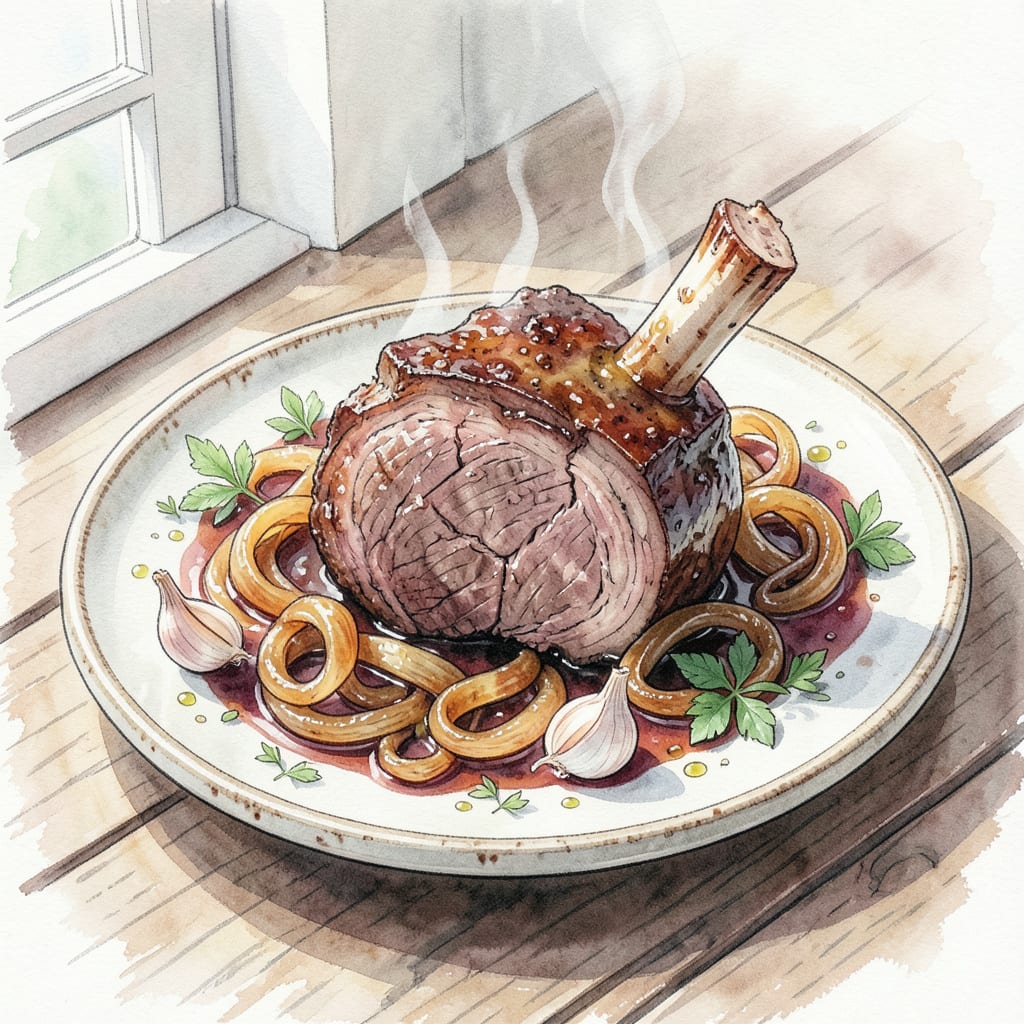
As a pitmaster, I’ve perfected the art of slow-cooking beef knuckle to tender, juicy perfection. 🔥 This recipe transforms a tougher cut into a fall-apart masterpiece with minimal effort. The key is low and slow cooking, allowing the connective tissues to break down beautifully.
By cooking the beef knuckle at 275°F for several hours, you’ll achieve tender results that simply melt in your mouth. This method ensures the meat is infused with rich flavors while maintaining its natural juiciness. Let’s get started!
Ingredients for Beef Knuckle
Simple ingredients, big flavor. Just what you need for tender beef knuckle.
| Ingredient | Amount | Notes |
|---|---|---|
| Beef Knuckle 🥩 | 2 ½ lb | Trimmed of excess fat |
| Olive Oil 🫒 | ¼ cup | For searing meat |
| Kosher Salt 🧂 | 2 tbsp | Coarse, freshly ground |
| Black Pepper 🌶️ | 1 tbsp | Freshly ground |
| Garlic Cloves 🧄 | 4 cloves | Minced, for flavor |
| Onion 🧅 | 1 whole | Sliced, for aromatics |
| Carrots 🥕 | 2 whole | Peeled, sliced |
| Celery Stalks 🥕 | 2 stalks | Sliced, for aromatics |
| Beef Broth 🍜 | 2 cups | Low-sodium, for braising |
| Red Wine 🍷 | 1 cup | Dry, for depth of flavor |
| Tomato Paste 🍅 | 2 tbsp | Concentrated, for richness |
| Bay Leaves 🌿 | 2 whole | Fresh or dried, for aroma |
[recipe_ingredient_scaler]
The beef knuckle is the star here. Look for USDA Choice or higher at your local butcher or Whole Foods. If you can’t find knuckle, chuck roast is a good substitute. Make sure to trim excess fat before cooking for the best results.
No red wine? Use additional beef broth or beef stock with a splash of vinegar. Fresh thyme is great, but dried thyme works too—just use one-third the amount. If you can’t find tomato paste, canned crushed tomatoes can work in a pinch, but reduce the broth accordingly.
This dish reheats beautifully and gets better with time. Store in the fridge for up to 4 days or freeze for 3 months. Reheat slowly in the oven or on the stovetop for the best results. Portion into containers for easy meals throughout the week.
Step-by-Step Instructions for Tender Beef Knuckle
Here’s the method that delivers fall-apart tender beef knuckle every time.
🔥 Step 1: Sear the Beef Knuckle
Preheat your oven to 300°F. Heat the 0.25 cup olive oil in a large Dutch oven over high heat. Pat the 2.5 lb beef knuckle dry with paper towels and season generously with 2 tbsp kosher salt and 1 tbsp black pepper. Sear the beef knuckle for 2-3 minutes per side until it’s browned on all sides. Remove the beef from the pot and set it aside.
The browning process creates a rich flavor foundation. Make sure to get a good sear on all sides. Don’t worry if it sticks a bit at first – once it’s properly browned, it’ll release from the pan easily.
👨🍳 Step 2: Prepare the Aromatics
Reduce the heat to medium and add the 4 cloves minced garlic cloves to the same pot. Cook for 1 minute until fragrant, being careful not to burn them. Then add the 1 whole sliced onion, 2 whole sliced carrots, and 2 sliced celery stalks. Cook for 5-7 minutes until the vegetables are softened and lightly browned.
This aromatic base is crucial for the depth of flavor. Stir occasionally to prevent burning and ensure even browning. The vegetables will start to caramelize and stick to the pan – that’s where the magic happens.
🥘 Step 3: Braise the Beef Knuckle
Add the 2 cups beef broth, 1 cup red wine, and 2 tbsp tomato paste to the pot, scraping up any browned bits from the bottom. Return the beef knuckle to the pot and add 2 whole bay leaves. Bring the liquid to a simmer, then cover the pot with a lid.
Transfer the pot to the preheated oven and braise for 2 ½ to 3 hours until the beef is tender and easily shreds with a fork. The slow cooking process breaks down the tough connective tissues, resulting in tender, juicy meat.
⏰ Step 4: Rest and Serve
Remove the pot from the oven and let the beef knuckle rest for 15-20 minutes before slicing. Strain the braising liquid and skim off any excess fat. Serve the sliced beef with the rich, flavorful sauce spooned over the top. The result is a tender, juicy beef knuckle that’s sure to impress.
Slice against the grain for maximum tenderness. The resting period allows the juices to redistribute, ensuring every bite is flavorful and moist. Serve with your favorite sides to complete the meal.
Health Benefits of beef knuckle
Protein Powerhouse
Beef knuckle is an excellent source of high-quality protein, essential for muscle building and repair. A 3-ounce serving provides about 25 grams of protein, making it an ideal choice for those looking to increase their protein intake. The protein in beef knuckle also contains all nine essential amino acids that your body needs. 💪
Rich in Essential Minerals
This cut of beef is rich in important minerals like iron and zinc. Iron supports healthy red blood cells, while zinc plays a crucial role in immune function and wound healing. A serving of beef knuckle can provide a significant portion of your daily iron and zinc needs.
Vitamins and Antioxidants
Beef knuckle contains B vitamins, particularly vitamin B12, which is vital for nerve function and the production of red blood cells. It also provides selenium, an antioxidant that helps protect cells from damage. These nutrients contribute to overall health and well-being.
Healthy Fats
While beef knuckle does contain fat, it also has a good amount of healthy fats, including conjugated linoleic acid (CLA). CLA has been linked to various health benefits, including improved immune function and body composition. The fat content also helps make the meat tender and flavorful.
Nutritional Balance
When prepared correctly, beef knuckle can be part of a balanced diet. It’s a nutrient-dense food that provides a range of essential vitamins and minerals. Pair it with vegetables and whole grains for a well-rounded meal that supports overall health.
Reheating and Storage
Beef knuckle reheats well and can be stored in the refrigerator for up to 4 days or frozen for 3 months. Proper storage and reheating techniques help maintain its nutritional value and flavor. Always reheat to an internal temperature of 165°F to ensure food safety.

Trained in classic French technique but raised on slow-cooked ribs and spicy rubs, she blends culinary skill with smoke and soul.
- Recipe for Boneless Pork Chops in Cast Iron Skillet: Sear and Baste to Juicy Perfection - October 3, 2026
- Recipe for Boneless Cross Rib Roast: Slow-Roasted Beef with Herb Crust - October 3, 2026
- Hamburgers in Sauce Recipe Crock Pot: Slow-Cooked Savory Delight - October 3, 2026