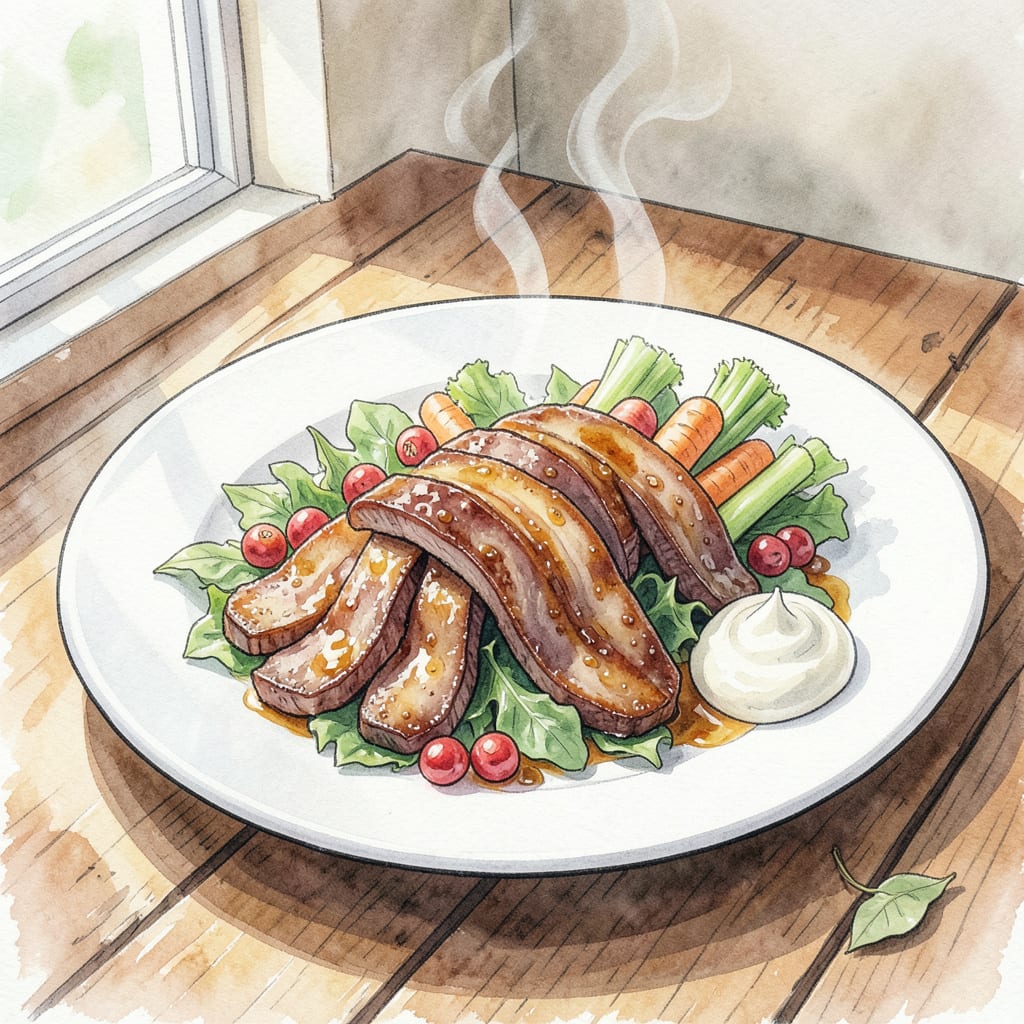
Beef lengua, or tongue, is a Mexican comfort food staple that I’ve grown to love. 🔥 After slow-cooking, the meat becomes tender and develops a rich, unctuous texture that’s hard to resist. The key to tender lengua is low and slow cooking.
This recipe delivers on that promise, using low heat and plenty of time to break down the tough meat. With simple ingredients and straightforward steps, you’ll be enjoying tender, flavorful lengua in no time.
Ingredients for Beef Lengua
Simple ingredients make this tender beef lengua recipe shine with authentic Mexican flavor.
| Ingredient | Amount | Notes |
|---|---|---|
| Beef Tongue 🥩 | 2 lb | Trimmed, rinsed |
| Onion 🧅 | 1 whole | Quartered, peeled |
| Garlic Cloves 🧄 | 4 cloves | Peeled, smashed |
| Carrots 🥕 | 2 whole | Peeled, chopped |
| Celery Stalks 🥦 | 2 stalks | Chopped, including leaves |
| Bay Leaves 🌿 | 2 whole | Fresh or dried |
| Black Peppercorns 🌶️ | 1 tsp | Whole, not ground |
| Salt 🧂 | 1 tbsp | Kosher or sea salt |
| Beef Broth 🍜 | 4 cups | Low-sodium preferred |
| Water 💧 | 2 cups | |
| Lime Juice 🍋 | 2 tbsp | Freshly squeezed |
| Limes 🍋 | 4 whole | For serving |
[recipe_ingredient_scaler]
The beef tongue is the star here. Look for fresh, plump tongues at your local Mexican market or well-stocked supermarkets. If you’re feeling adventurous, ask your butcher to trim it for you. The aromatics matter too—get firm, fresh carrots and bright celery for the best flavor. Don’t skip the bay leaves; they add a depth you won’t get from other spices.
No beef broth? You can substitute with chicken broth or a mix of water and beef bouillon. If you prefer a different acid, apple cider vinegar or white vinegar can replace lime juice. The garlic can be adjusted to taste—roast the cloves for a deeper flavor if you have time. And if you can’t find fresh limes, bottled juice works too, just don’t overdo it.
This dish reheats beautifully. Store leftovers in an airtight container in the fridge for up to 5 days. The flavors will meld together even more, making it taste even better the next day. You can also freeze it for up to 3 months—just thaw overnight in the fridge before reheating. Slice thinly against the grain for the best texture.
Step-by-Step Instructions for Beef Lengua
Let’s cook this tender Mexican comfort food together – it’s easier than you think.
🍳 Step 1: Prepare the Beef Tongue
Start by rinsing the 2 lb beef tongue under cold water, then pat it dry with paper towels. I like to trim any excess fat or membrane – it helps the tongue cook more evenly. Place the tongue in a large pot (at least 6-quart capacity) with the 1 whole onion, 4 cloves garlic cloves, 2 whole carrots, and 2 stalks celery stalks. These aromatics create a rich, flavorful broth that tenderizes the tongue.
Pour in the 4 cups beef broth and 2 cups water, making sure the tongue is fully submerged. If it’s not covered, add a bit more water. Bring the mixture to a boil over high heat, then reduce to a simmer. Skim off any impurities that rise to the surface – this keeps the broth clear and clean-tasting.
🔥 Step 2: Slow Cook the Lengua
Add the 2 whole bay leaves, 1 tsp black peppercorns, and 1 tbsp salt to the pot. Cover and simmer gently for 2½-3 hours until the tongue is tender when pierced with a fork. I check mine after 2½ hours – if it’s still firm, I give it another 30 minutes. The slow cooking is what makes the lengua melt-in-your-mouth tender.
During cooking, check the liquid level occasionally and add more water if needed to keep the tongue submerged. The slow, gentle heat breaks down the tough connective tissues, transforming the tough tongue into tender, fall-apart meat.
🔪 Step 3: Peel and Slice the Lengua
Once the tongue is tender, remove it from the broth and let it cool slightly. The outer layer will have a thick, tough skin that needs to be peeled off. I use a sharp knife to make a small incision, then peel back the skin while it’s still warm – it’s much easier when warm than when completely cooled.
Once peeled, slice the lengua into ¼-inch thick slices against the grain. The meat should be so tender it practically falls apart. For serving, I like to briefly warm the slices in some of the strained broth to keep them moist and flavorful.
🍽️ Step 4: Serve with Fresh Lime
To serve, place the warm lengua slices on a platter or individual plates. Drizzle with the freshly squeezed 2 tbsp lime juice and serve with 4 whole limes cut into wedges on the side. The acidity brightens the rich, meaty flavor beautifully. I like to serve this with warm tortillas, fresh cilantro, and your favorite salsa or Mexican street corn for a complete meal.
As you take your first bite, the tender lengua practically melts in your mouth. The combination of rich, slow-cooked beef with that fresh lime kick is pure comfort food magic. Enjoy!
Troubleshooting Perfect Results
Common Cooking Issues
One of the most common issues with cooking beef lengua is achieving the right tenderness. If your lengua is tough, it likely wasn’t cooked long enough. The key is to maintain a gentle simmer for 2½-3 hours. I check mine after 2½ hours and give it another 30 minutes if needed. 🔥
Peeling Challenges
Peeling the tongue can be tricky, especially if it’s cooled too much. I find it’s easiest to peel when it’s still warm. Make a small incision with a sharp knife, then peel back the skin. If it’s cooled too much, you can reheat it briefly in the broth to make peeling easier.
Liquid Level Management
Keep an eye on the liquid level during cooking. The tongue should remain submerged throughout the cooking process. Check occasionally and add more water or broth as needed to prevent the tongue from drying out.
Flavor Adjustments
If you find the broth isn’t flavorful enough, you can adjust the seasoning after cooking. Strain the broth and simmer it down to concentrate the flavors, or add a splash of lime juice or a sprinkle of fresh herbs to brighten it up.
Slicing Techniques
Slicing against the grain is crucial for tender slices. Once peeled, slice the lengua into ¼-inch thick slices. If you find the meat falls apart while slicing, try chilling it briefly to firm it up before slicing.
Nutrition Facts

Trained in classic French technique but raised on slow-cooked ribs and spicy rubs, she blends culinary skill with smoke and soul.
- Recipe for Boneless Pork Chops in Cast Iron Skillet: Sear and Baste to Juicy Perfection - October 3, 2026
- Recipe for Boneless Cross Rib Roast: Slow-Roasted Beef with Herb Crust - October 3, 2026
- Hamburgers in Sauce Recipe Crock Pot: Slow-Cooked Savory Delight - October 3, 2026