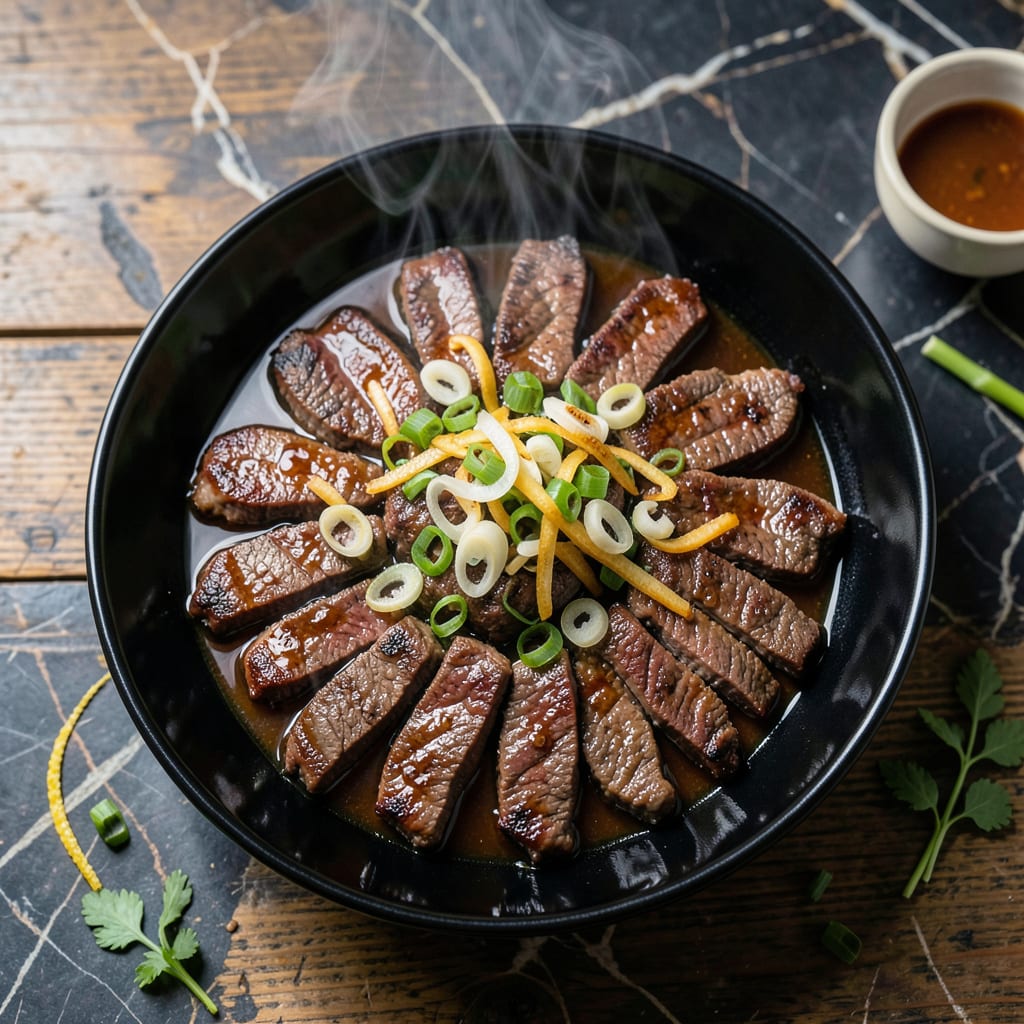
This dish brings together tender beef slices with a rich, savory-sweet sauce that’s hard to resist. I’ve perfected the balance of flavors to ensure every bite is packed with depth.
The stir-fry method delivers quick results without sacrificing quality, making it ideal for a satisfying weeknight meal. The sauce clings beautifully to the beef, creating a dish that’s both hearty and flavorful.
Ingredients for Beef Mongolian Bbq
Tender beef and a bold sauce require just a few pantry staples and fresh aromatics.
| Ingredient | Amount | Notes |
|---|---|---|
| Flank Steak 🥩 | 1 ½ lb | Thinly sliced against grain |
| Cornstarch 🌾 | 2 tbsp | For tenderizing beef |
| Soy Sauce 🫙 | ½ cup | Low-sodium preferred |
| Brown Sugar 🍚 | ½ cup | Packed, for sweetness |
| Garlic Cloves 🧄 | 4 cloves | Minced for sauce |
| Fresh Ginger 🌿 | 1 tbsp | Grated or minced |
| Vegetable Oil 🫒 | 3 tbsp | High smoke point for stir-frying |
| Green Onions 🧅 | 4 whole | Thinly sliced for garnish |
| Rice Vinegar 🍶 | 2 tbsp | For acidity balance |
| Sesame Oil 🫒 | 1 tsp | Toasted, for finishing |
| Red Pepper Flakes 🌶️ | ½ tsp | Adjust to taste |
| Beef Stock 🥣 | ¼ cup | Low-sodium recommended |
[recipe_ingredient_scaler]
The beef is the foundation here. Flank steak delivers the perfect balance of flavor and tenderness when sliced thinly against the grain. Look for well-marbled pieces at Whole Foods or your local butcher—avoid pre-cut stew meat, which can be tough. Cornstarch is non-negotiable for that velvety texture; Bob’s Red Mill is a reliable brand. Soy sauce should be low-sodium to control the dish’s saltiness.
Out of flank steak? Skirt steak or sirloin work but may need slightly longer cooking. Brown sugar can be replaced with coconut sugar or honey (though not vegan). No rice vinegar? Apple cider vinegar at the same ratio gets you close. Fresh ginger is ideal, but ground ginger at one-quarter the amount works in a pinch. The sauce thickens as it cooks—don’t rush it.
This keeps 3-4 days in the fridge, though the beef is best fresh. Freeze the sauce separately for up to 3 months. Reheat gently to avoid making the meat chewy. Always slice the beef just before cooking (don’t pre-slice and store).
Why You’ll Love This Recipe
- One Pan Meal: I toss the flank steak with cornstarch, sear it, then let the soy sauce and brown sugar caramelize right in the same pan. One less dish to wash.
- Sweet Garlic Punch: The garlic cloves and brown sugar create this sticky, savory-sweet glaze that coats every bite of tender beef.
- Crowd Pleaser: Honestly, it’s my go-to for potlucks—everyone from kids to grandparents cleans their plates.
- Leftovers Rock: Between us, it tastes even better the next day. I double the batch just to have extra for lunches.
Step-by-Step Instructions for Beef Mongolian BBQ
Master this technique for perfectly tender beef with a glossy, sweet-savory sauce every time.
Step 1: Prepare and Tenderize the Flank Steak
Slice the 1.5 lb flank steak thinly against the grain into ¼-inch thick strips. This shortens the muscle fibers, ensuring maximum tenderness in the final dish. Pat the strips dry with paper towels to remove excess moisture.
Place the beef in a bowl and sprinkle with the 2 tbsp cornstarch. Toss until every piece is evenly coated. I’ve found this step creates a light crust that locks in juices while stir-frying. Let it sit for 10 minutes while you prepare the sauce.
Step 2: Create the Sweet-Savory Mongolian Sauce
In a medium bowl, whisk together the 0.5 cup soy sauce, 0.5 cup brown sugar, 4 cloves minced garlic, 1 tbsp fresh ginger, 2 tbsp rice vinegar, and 0.5 tsp red pepper flakes. The brown sugar should dissolve completely into the liquid.
Pour in the 0.25 cup beef stock and whisk again until smooth. Taste and adjust the balance if needed—the sauce should be sweet with a salty depth and just a hint of heat from the pepper flakes. This blend forms the signature Mongolian BBQ flavor profile.
Step 3: Stir-Fry the Beef to Perfection
Heat 2 tbsp vegetable oil in a wok or large skillet over high heat until it shimmers. Working in batches to avoid crowding, add the cornstarch-coated beef in a single layer. Let it sear undisturbed for 1-2 minutes until the edges turn golden brown.
Flip the beef and cook for another 1 minute until just cooked through. Transfer to a clean plate and repeat with the remaining beef, adding the remaining 1 tbsp vegetable oil as needed. The beef should be tender with slightly crispy edges from the cornstarch coating.
Step 4: Combine and Finish with Aromatics
Reduce heat to medium and pour the prepared sauce into the same pan. Let it simmer for 2-3 minutes until it thickens slightly and becomes glossy. Return all the cooked beef to the pan and toss to coat evenly in the sauce.
Cook for an additional 1-2 minutes until the beef absorbs some of the sauce and everything is heated through. Stir in the 1 tsp sesame oil and half of the 4 whole thinly sliced green onions. The sauce should cling to the beef with a beautiful sheen.
Step 5: Garnish and Serve Immediately
Transfer the beef Mongolian BBQ to a serving platter and garnish with the remaining green onions. The dish should have a perfect balance of sweet, salty, and umami flavors with a slight caramelization from the brown sugar.
Serve hot over steamed rice or noodles. The beef should be tender with a slight bite, and the sauce should be thick enough to coat each piece without being syrupy. This dish comes together quickly, so have your sides ready before you start cooking.
Pro Tips For Making Beef Mongolian Bbq
- Slice Against the Grain: Cut the flank steak into thin strips against the grain—this shortens the muscle fibers so every bite is tender, not chewy.
- Velvet the Beef: Toss the steak with cornstarch before cooking; it creates a silky, restaurant-style coating that holds onto the sauce beautifully.
- Skip the Overcrowding: Cook the beef in batches so the pan stays hot—dumping it all in at once steams the meat instead of searing it.
- Bloom the Garlic: Cook the minced garlic in the sauce for 30 seconds before adding liquids; it mellows the bite and fills the dish with deep, nutty flavor.
Wine and Beer Pairings for This Recipe
Bold Red Wines
A medium-bodied Pinot Noir from Oregon’s Willamette Valley cuts through the sweetness beautifully. Its bright acidity and red fruit notes complement the dish without overpowering it. I love how the wine’s earthiness balances the caramelized flavors. 🍷
Crisp White Wines
An off-dry Riesling from Washington state offers a perfect contrast with its honeyed notes and crisp acidity. The slight sweetness mirrors the brown sugar in the sauce while the acidity cleanses your palate between bites.
Asian-Inspired Beers
A clean Japanese lager like Sapporo has the crispness to handle the rich sauce. Its light body and subtle sweetness make it an ideal match for this dish’s bold flavors. The carbonation helps cut through the sauce’s viscosity. 🍺
Craft Beer Options
For hop lovers, a Belgian-style witbier with citrus notes provides an interesting contrast. I recommend Blue Moon or Hoegaarden for their coriander and orange peel undertones that complement the ginger and garlic.
Non-Alcoholic Pairings
A chilled hibiscus iced tea offers a refreshing contrast with its tart cranberry-like flavors. The tea’s natural acidity balances the dish’s sweetness, and its deep red color makes for a beautiful presentation.
Sparkling water with lime wedge provides a simple, palate-cleansing option that lets the beef’s flavors shine through. I always keep this on hand for guests who prefer non-alcoholic beverages.
Nutrition Facts

Trained in classic French technique but raised on slow-cooked ribs and spicy rubs, she blends culinary skill with smoke and soul.
- Recipe for Boneless Pork Chops in Cast Iron Skillet: Sear and Baste to Juicy Perfection - October 3, 2026
- Recipe for Boneless Cross Rib Roast: Slow-Roasted Beef with Herb Crust - October 3, 2026
- Hamburgers in Sauce Recipe Crock Pot: Slow-Cooked Savory Delight - October 3, 2026