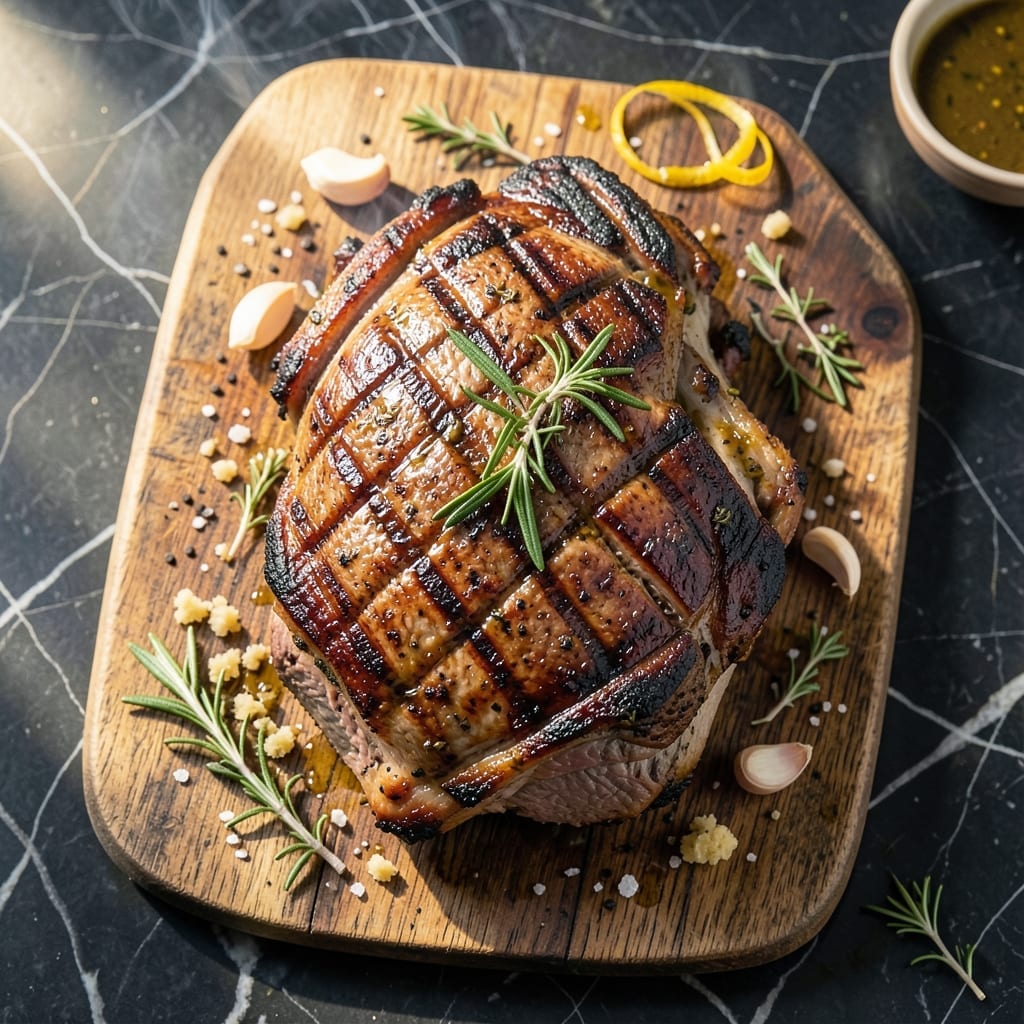
There’s nothing like the aroma of a beef rib roast hitting the grill, its fat cap rendering into a tender, herb-infused masterpiece. This method transforms a simple cut into a showstopper with a charred crust and juicy, fall-apart texture.
I perfected this technique after years of experimenting with heat zones and seasoning blends. The key is searing over direct flame first, then finishing low and slow to lock in moisture and build depth of flavor.
By the time it rests, the meat will be so tender it nearly melts on your fork. The crust, dark and caramelized, encases every bite in smoky richness.
Serve this at your next gathering and watch it disappear. The grill does most of the work for you.
Ingredients for Beef Rib Roast Recipe Grill
Prime beef, fresh herbs, and a few pantry staples create this showstopping grill masterpiece.
| Ingredient | Amount | Notes |
|---|---|---|
| Beef Rib Roast 🥩 | 5 lb | Bone-in, prime grade preferred |
| Kosher Salt 🧂 | 2 tbsp | Diamond Crystal brand recommended |
| Freshly Ground Black Pepper 🌶️ | 1 ½ tbsp | Coarse grind for texture |
| Garlic Cloves 🧄 | 6 cloves | Minced into paste consistency |
| Fresh Rosemary 🌿 | ¼ cup | Finely chopped, stems discarded |
| Fresh Thyme 🍃 | ¼ cup | Leaves stripped from stems |
| Olive Oil 🫒 | ¼ cup | Extra-virgin for depth of flavor |
| Dijon Mustard 🟡 | 2 tbsp | Whole grain preferred for texture |
| Red Wine 🍷 | ½ cup | Dry variety like Cabernet Sauvignon |
| Unsalted Butter 🧈 | ½ cup | Softened to room temperature |
| Beef Stock 🥣 | 1 cup | Low-sodium for reduction control |
| Honey 🍯 | 1 tbsp | Optional for glaze finish |
[recipe_ingredient_scaler]
The beef rib roast is non-negotiable here. Prime grade from Whole Foods or a trusted butcher gives you the marbling needed for that fall-apart texture (the fat cap renders beautifully over direct flame). Bone-in roasts cook more evenly and add flavor. Ask for a roast with even fat distribution—this isn’t the time for lean cuts. I always get mine a day ahead and let it dry-brine in the fridge for better crust development.
No prime grade available? Choice grade works fine if you’re patient with the low-and-slow finish. Fresh out of rosemary or thyme? Dried herbs at one-third the amount (but they won’t infuse the same depth). If red wine isn’t your thing, beef stock with a splash of balsamic vinegar mimics the acidity. The Dijon can be swapped for regular mustard, but you’ll lose that complex kick. Don’t skip the garlic paste—it clings to the meat better than minced.
The roast needs to rest 30-45 minutes before slicing to redistribute juices. Leftovers (if there are any) keep 4-5 days in the fridge. For longer storage, vacuum-seal and freeze for up to 6 months. Reheat slices gently in a warm oven with a splash of beef stock to revive.
Why You’ll Love This Recipe
- Set and Forget: It’s just salt, pepper, garlic, and rosemary on the roast, then the grill does all the work.
- Herb-Crusted Heaven: That combo of fresh rosemary and garlic forms a crust so good I sneak bites before serving.
- Holiday to Sunday: I’ve served this for Christmas dinner and a random Sunday supper—it fits both.
- Leftovers Luxe: Honestly, the next-day sandwiches with the sliced beef and a little horseradish? Even better.
Step-by-Step Instructions for Beef Rib Roast on the Grill
This method delivers a charred crust with herb-infused tenderness that will impress your guests.
Step 1: Prepare the Herb Marinade
In a bowl, combine the 0.25 cup olive oil, 2 tbsp Dijon mustard, 6 cloves garlic cloves (minced into paste), 0.25 cup fresh rosemary, 0.25 cup fresh thyme, 2 tbsp kosher salt, and 1.5 tbsp freshly ground black pepper. This aromatic blend will penetrate deep into the meat.
Whisk until fully emulsified—the mixture should look thick and glossy. I’ve found that letting this marinade sit for 10 minutes allows the herbs to infuse the oil completely, maximizing flavor in every bite of the beef rib roast.
Step 2: Season and Sear the Roast
Rub the marinade all over the 5 lb beef rib roast, ensuring every surface is coated. Let it sit at room temperature for 30 minutes while you preheat your grill to 450°F for direct heat searing. This step is crucial for developing that signature charred crust.
Place the roast directly over the hot coals or burners. Sear for 4-5 minutes per side until a deep, dark crust forms. You’ll hear a satisfying sizzle—that’s the sound of the Maillard reaction creating complex flavors. The surface should be dark brown with visible char marks.
Step 3: Indirect Grilling for Even Cooking
Move the roast to the cooler side of the grill (indirect heat) and close the lid. Maintain the grill temperature at 325°F. Now, pour the 0.5 cup red wine and 1 cup beef stock into a disposable aluminum pan underneath the roast to create a moist heat environment.
Cook for approximately 1.5 to 2 hours, basting occasionally with the pan juices. The meat is ready when an instant-read thermometer inserted into the thickest part reads 125°F for medium-rare. The aroma of rosemary and thyme will fill the air, signaling it’s nearly done.
Step 4: Rest and Finish with Butter-Honey Glaze
Transfer the beef rib roast to a cutting board and tent loosely with foil. Let it rest for 20 minutes—this allows the juices to redistribute, ensuring every slice is tender and moist. I know it’s tempting to cut in right away, but patience here is key.
While it rests, melt the 0.5 cup unsalted butter in a small saucepan over low heat. Stir in the 1 tbsp honey until fully combined. Brush this glossy glaze over the roast just before serving for a subtle sweetness that complements the savory herbs beautifully.
Pro Tips For Making Beef Rib Roast Recipe Grill
- Dry the Roast First: Pat the beef rib roast thoroughly dry with paper towels before seasoning—I learned this the hard way after my first few attempts had a steamed, pale crust instead of a proper sear.
- Salt Overnight: Season the roast with kosher salt at least 12 hours before grilling; it penetrates deep and guarantees even seasoning, especially with a thick cut like this.
- Use Indirect Heat: Start with direct heat to sear the outside, then move to indirect heat to finish cooking; this prevents burning the rosemary and garlic while ensuring the inside cooks evenly.
- Rest Before Slicing: Give the roast a solid 15-20 minutes under foil after grilling—sounds tedious, but it redistributes the juices so they don’t all end up on the cutting board.
Common Mistakes When Making Great beef rib roast recipe grill
Skipping the Rest
I know it’s hard to resist slicing into that beautiful roast right off the grill, but cutting too soon lets all those precious juices spill out. Always rest your beef rib roast for at least 20 minutes under foil to lock in moisture. The internal temperature will also rise 5-10°F during this time. 💡
Uneven Heat Zones
Grill hot spots can turn your perfect roast into a charred mess on one side. I always test my grill’s heat zones with a loaf of bread—where it browns fastest is your direct heat area. Adjust the roast’s position accordingly for even cooking.
Overcrowding the Grill
Give your roast space to breathe. Cramming it next to other foods creates steam, which softens that crispy crust you worked so hard to build. Keep at least 2 inches of clearance on all sides for proper air circulation.
Neglecting the Thermometer
Guessing doneness by color or time alone is risky business. I’ve seen medium-rare roasts look well-done on the outside. Invest in a good instant-read thermometer and pull at 125°F for perfect results every time.
Forgetting to Baste
Those pan juices are liquid gold. Basting every 30 minutes during the indirect cooking phase adds layers of flavor and keeps the surface moist. I use a silicon basting brush to avoid damaging the crust.
Using Cold Meat
Starting with a cold roast means uneven cooking and a longer time to reach temperature. Always let your beef rib roast sit at room temperature for 30-45 minutes before grilling. This ensures even cooking from edge to center. 🔥
Nutrition Facts
Frequently Asked Questions
What temperature should the grill be for searing?
Preheat your grill to 450°F for the initial sear. This high heat creates a perfect charred crust on the roast.
How long should I let the roast rest after grilling?
Always rest the roast for at least 20 minutes under foil. This allows juices to redistribute for moist, tender slices.
Can I use dried herbs instead of fresh?
Yes, but use 1/3 the amount since dried herbs are more concentrated. Fresh herbs provide better flavor infusion though.
What’s the ideal internal temperature?
For medium-rare, pull the roast at 125°F. The temperature will rise 5-10°F while resting.

Trained in classic French technique but raised on slow-cooked ribs and spicy rubs, she blends culinary skill with smoke and soul.
- Recipe for Boneless Pork Chops in Cast Iron Skillet: Sear and Baste to Juicy Perfection - October 3, 2026
- Recipe for Boneless Cross Rib Roast: Slow-Roasted Beef with Herb Crust - October 3, 2026
- Hamburgers in Sauce Recipe Crock Pot: Slow-Cooked Savory Delight - October 3, 2026