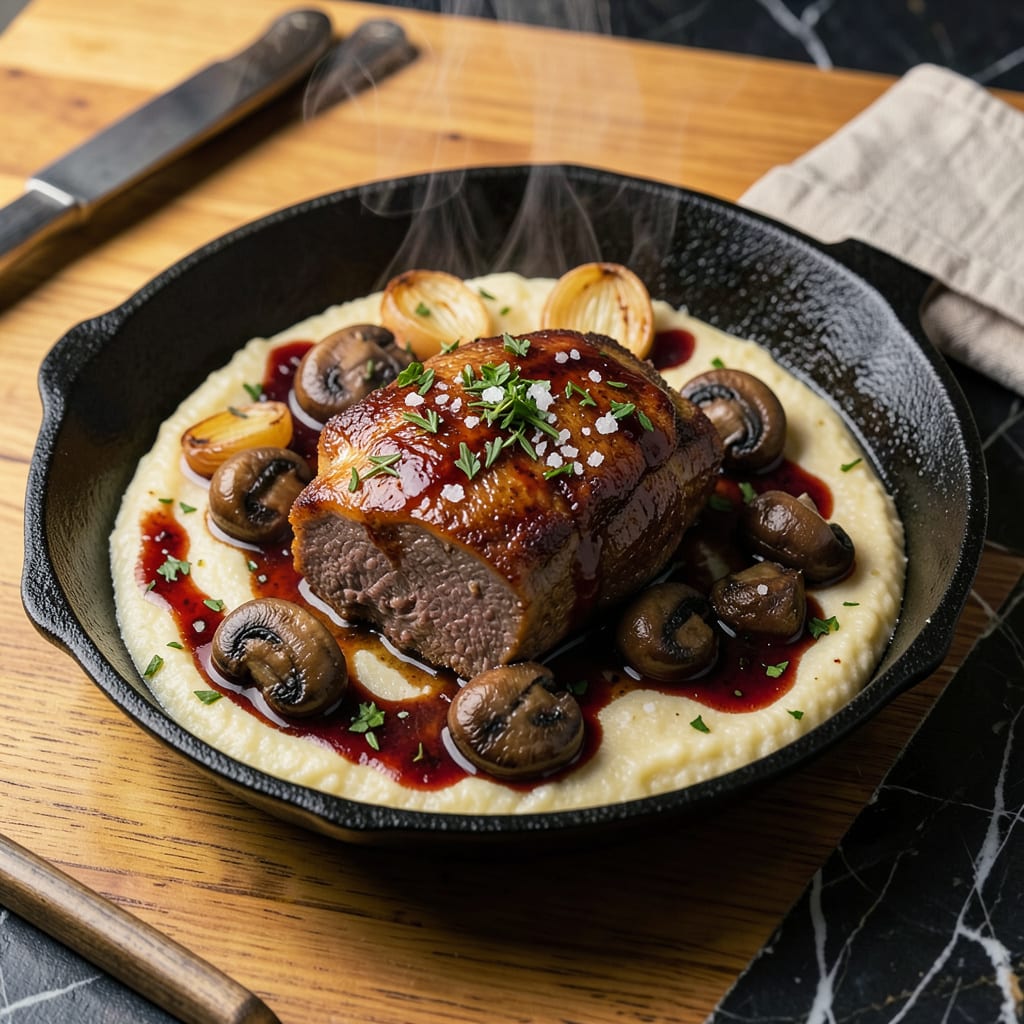
Beef shin is a tough but flavorful cut that shines when slow-cooked. Braising, stewing, or pressure cooking transforms its connective tissue into rich, gelatinous tenderness perfect for hearty dishes like osso buco or beef bourguignon.
This cut comes from the lower leg, where constant movement builds dense muscle and collagen—the secret to its deep, meaty flavor. 🔥 When I’m working with beef shin, I think of it as a blank canvas for bold flavors because those connective tissues melt into silky gelatin during long cooking, creating body and richness in sauces. The key is patience: low temperatures (275-325°F) over 2-4 hours let the magic happen, turning what was once tough into something luxuriously tender.
What I love most is how versatile it becomes once properly cooked. The gelatinous quality makes it ideal for stews where you want the broth to have almost a velvety texture. ✨ It’s also budget-friendly compared to other premium cuts, giving you that restaurant-quality mouthfeel without the premium price tag. Just remember to trim excess fat before cooking to avoid greasy results.
💡 In This Article
- Why Beef Shin Becomes Tender with Slow Cooking
- Top 5 Global Beef Shin Recipes to Try at Home
Why Beef Shin Becomes Tender with Slow Cooking
The secret lies in the cut’s dense connective tissue—primarily collagen—which makes up about 20% of beef shin’s composition. When exposed to prolonged heat, these tough collagen fibers begin breaking down at 160°F, but the real transformation happens between 180-205°F. This is where collagen converts to gelatin, a process that requires both time and moisture.
🔥 The gelatin then coats muscle fibers, creating that signature “melt-in-your-mouth” texture while adding body to cooking liquids.
Temperature control is everything. Below 160°F, collagen remains intact, leaving the meat tough. Above 212°F, proteins contract violently, squeezing out moisture. The sweet spot is 180-205°F for 2-4 hours, where collagen dissolves at about 1% per hour. Moist-heat methods like braising maintain this ideal range while preventing surface drying.
I’ve found that adding acidic ingredients (tomatoes, wine) speeds this process by about 15% through gentle protein denaturation.
What happens visually tells the story: raw beef shin appears dense with white marbling (collagen), while properly cooked pieces glisten with translucent gelatin threads. The liquid in your pot will thicken naturally as gelatin leaches out—this is why osso buco sauce coats the back of a spoon. ✨ Pro tip: Don’t rush the cooling process.
Letting cooked shin rest in its liquid allows gelatin to redistribute, preventing that “first bite squirt” of juices.
Quick cooking methods fail because they don’t allow time for collagen conversion. A seared shin steak at 400°F for 5 minutes might brown nicely, but the interior remains chewy. Pressure cooking works by raising the boiling point to 250°F, achieving in 45 minutes what normally takes hours. The tradeoff?
Less flavor development compared to slow braising where Maillard reactions have time to create complex meaty notes.
Here’s what most home cooks miss: the cut’s location matters. Shin comes from the leg’s front, where tendons and ligaments are most concentrated. These structures contain the highest collagen content of any beef cut—about 3x more than ribeye. When rendered, this collagen creates a mouthfeel similar to bone broth but with meaty depth.
💫 The marrow in the central bone adds another layer of richness as it melts into the cooking liquid.
For maximum tenderness, I recommend:
- Low-and-slow braising: 275°F for 3-4 hours with aromatics
- Acidic marinade: Wine or vinegar pre-treatment (30-60 minutes) to jumpstart collagen breakdown
- Resting period: 20-30 minutes in cooking liquid before serving
The science explains why this “peasant cut” becomes luxurious.
What starts as tough, sinewy muscle transforms through patience and proper technique into something far greater than the sum of its parts. That’s the magic of beef shin—turning humble ingredients into restaurant-worthy dishes through understanding these fundamental processes. 🌟

Trained in classic French technique but raised on slow-cooked ribs and spicy rubs, she blends culinary skill with smoke and soul.
- Recipe for Boneless Pork Chops in Cast Iron Skillet: Sear and Baste to Juicy Perfection - October 3, 2026
- Recipe for Boneless Cross Rib Roast: Slow-Roasted Beef with Herb Crust - October 3, 2026
- Hamburgers in Sauce Recipe Crock Pot: Slow-Cooked Savory Delight - October 3, 2026