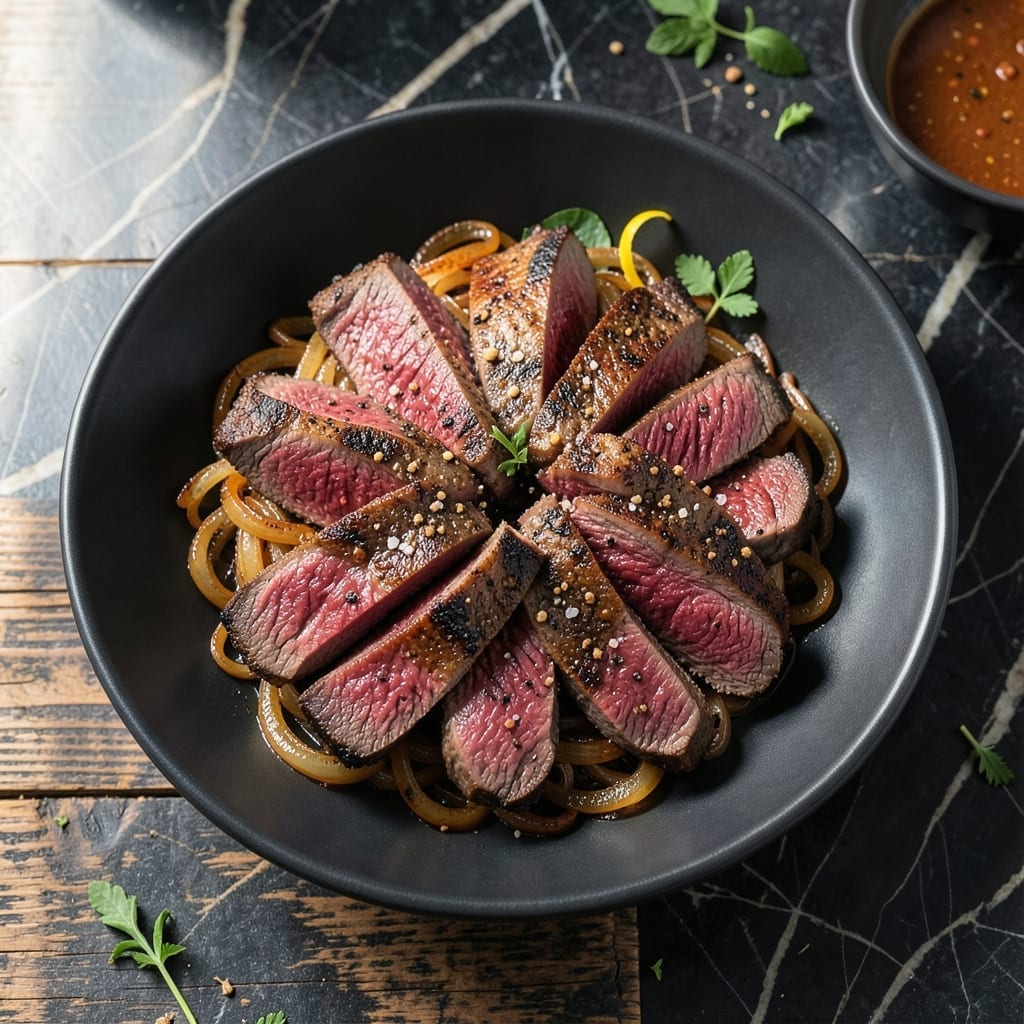
This method delivers a juicy beef sirloin tip roast with deep, smoky char every time. The key is indirect heat and precise timing.
I developed this technique to capture the essence of open-fire cooking while ensuring the roast stays tender throughout. This is grill mastery at its finest.
Ingredients for Beef Sirloin Tip Roast Grill
A few quality ingredients transform this roast into a smoky, juicy masterpiece.
| Ingredient | Amount | Notes |
|---|---|---|
| Beef Sirloin Tip Roast 🥩 | 3 lb | Well-marbled, trimmed of excess fat |
| Kosher Salt 🧂 | 2 tsp | Diamond Crystal preferred for even coating |
| Coarse Black Pepper 🌶️ | 2 tsp | Freshly ground for best flavor |
| Garlic Powder 🧄 | 1 tsp | Not garlic salt |
| Onion Powder 🧅 | 1 tsp | Balances the dry rub |
| Smoked Paprika 🌶️ | 1 tsp | Adds depth and color |
| Olive Oil 🫒 | 2 tbsp | For searing the roast |
| Red Wine Vinegar 🍷 | 1 tbsp | For acidity and balance |
| Worcestershire Sauce 🍶 | 1 tbsp | Enhances umami flavor |
| Fresh Rosemary 🌿 | 2 tbsp | Chopped, for aromatic touch |
| Fresh Thyme 🌿 | 2 tsp | Chopped, complements beef |
| Hickory Wood Chips 🪵 | 1 cup | Soaked in water for 30 minutes |
[recipe_ingredient_scaler]
The beef is everything here. Sirloin tip roast (not to be confused with top sirloin) has incredible marbling and stays tender when cooked right. Look for USDA Choice or Prime at your butcher or Whole Foods—the grading matters. Ask for a roast that’s evenly shaped so it cooks uniformly. If buying pre-packaged, check the color: bright red (not brown) means freshness. I always trim any large fat caps myself for better char.
No smoked paprika? Regular paprika plus a pinch of liquid smoke works in a pinch. Fresh herbs can be swapped for dried at one-third the amount. If you’re out of Worcestershire, soy sauce with a dash of vinegar mimics the umami. The red wine vinegar can be apple cider vinegar—just avoid white vinegar, which is too harsh. Hickory not available? Mesquite or apple wood chips bring their own great flavors.
Store the roast in the fridge (unwrapped) on a rack for up to 3 days before cooking—this dries the surface for better searing. Fresh herbs keep 5-7 days wrapped in damp paper towels. The dry rub can be mixed ahead and stored for 1 month in a cool, dark place.
Why You’ll Love This Recipe
- 5-Minute Seasoning: I just rub the roast with salt, pepper, garlic, and onion powder—no marinade, no fuss.
- Smoky Grill Crust: That char from the grill locks in juices while the spices form this irresistible crust.
- Feeds a Hungry Table: One roast stretches to sandwiches, tacos, or Sunday dinner with barely any extra effort.
- Leftovers for Days: Honestly, I make it on purpose just to have cold slices for lunch all week.
Step-by-Step Instructions for Beef Sirloin Tip Roast on the Grill
This method guarantees a perfectly charred exterior with tender, juicy slices every time.
Step 1: Prepare the Roast with a Flavorful Dry Rub
Begin by patting the 3 lb Beef Sirloin Tip Roast dry with paper towels to ensure a good sear. In a small bowl, combine the 2 tsp Kosher Salt, 2 tsp Coarse Black Pepper, 1 tsp Garlic Powder, 1 tsp Onion Powder, and 1 tsp Smoked Paprika. This blend creates a robust crust while enhancing the beef’s natural flavors.
Rub the mixture evenly over the entire surface of the roast, pressing it in gently. This step is crucial for forming a flavorful bark that locks in juices during grilling. Let the seasoned roast sit at room temperature for 30-45 minutes before grilling to ensure even cooking.
Step 2: Infuse with Aromatics and Prep the Grill
In a separate bowl, mix the 2 tbsp Olive Oil, 1 tbsp Red Wine Vinegar, 1 tbsp Worcestershire Sauce, 2 tbsp Fresh Rosemary, and 2 tsp Fresh Thyme. Brush this mixture over the seasoned roast, allowing the herbs to adhere to the surface. The acidity from the vinegar and Worcestershire tenderizes the meat while adding depth.
Soak the 1 cup Hickory Wood Chips in water for at least 30 minutes. This ensures they smolder and produce smoke rather than burn quickly. Preheat your grill to medium-high heat (about 375-400°F) for direct and indirect zones. Drain the wood chips and place them in a smoker box or foil pouch with holes poked in it, then position it over the direct heat.
Step 3: Sear and Smoke for Maximum Flavor
Place the roast on the grill over direct heat and sear for 4-5 minutes per side until deeply browned. This high-heat step creates a flavorful crust that seals in the juices. Watch for a rich, caramelized exterior—this is your visual cue that the Maillard reaction is working.
Move the roast to the indirect heat side of the grill, close the lid, and maintain a temperature of 275-300°F. Cook for 1.5-2 hours, or until the internal temperature reaches 135°F for medium-rare. The hickory smoke will infuse the meat with a subtle, smoky essence that complements the beef’s natural richness.
Step 4: Rest and Slice for Optimal Tenderness
Once the roast reaches the desired internal temperature, transfer it to a cutting board and tent loosely with foil. Let it rest for 15-20 minutes—this allows the juices to redistribute throughout the meat, ensuring every slice is moist and flavorful. Skipping this step can result in dry, tough slices.
Slice the roast against the grain into ½-inch thick pieces. You’ll notice the juices pooling on the cutting board if you’ve timed the rest correctly. Serve immediately while still warm. The result should be tender, juicy slices with a smoky char that delivers on the promise of a perfectly grilled roast.
Pro Tips For Making Beef Sirloin Tip Roast Grill
- Dry the Surface: Pat the sirloin tip roast completely dry with paper towels before seasoning—this guarantees a proper sear instead of steaming the meat.
- Salt Generously: Use more kosher salt than you think, especially on this leaner cut, to build a flavorful crust and penetrate the meat.
- Avoid Over-Flipping: I learned this the hard way—flip the roast only once or twice on the grill to develop that deep, even char.
- Let It Rest: After pulling it off the grill, tent it loosely with foil and wait 10 minutes before slicing—this keeps all the juices inside where they belong.
Common Mistakes When Making beef sirloin tip roast grill
Skipping the Rest
I see this mistake all the time at local BBQ competitions. Slicing immediately after grilling sends all those precious juices straight to the cutting board. Always rest your roast for 15-20 minutes tented with foil. This lets the meat reabsorb its natural moisture, guaranteeing juicy slices. 💪
Uneven Heat Zones
Your grill needs distinct direct and indirect heat areas. Without this setup, you’ll either burn the outside or undercook the inside. I position my hickory chips over direct heat and keep the roast on the cooler side for that perfect low-and-slow finish.
Inadequate Searing
Don’t rush the sear. Those 4-5 minutes per side over direct heat are crucial for developing that deep, caramelized crust. This is where the Maillard reaction works its magic, creating complex flavors that define great grilled beef.
Temperature Neglect
Precision matters. Use a meat thermometer to track internal temperature—135°F for medium-rare. Guessing leads to overcooked, dry roast. I keep my ThermoWorks probe handy throughout the entire cook.
Poor Wood Chip Prep
Soak your 1 cup hickory wood chips for at least 30 minutes before grilling. Dry chips burn quickly and produce bitter smoke. Properly soaked chips smolder, releasing that sweet, aromatic smoke that makes this dish special.
Wrong Slicing Direction
Always slice against the grain into ½-inch thick pieces. Cutting with the grain makes the meat chewy. I learned this the hard way at my first competition—judges notice the difference immediately.
Nutrition Facts
Frequently Asked Questions
What internal temperature should I aim for?
For perfect medium-rare, pull it off at 135°F. Use a meat thermometer for accuracy—guessing leads to overcooking. The temperature will rise 5-10°F while resting.
Can I use a gas grill instead of charcoal?
Set up direct and indirect heat zones on your gas grill. Add wood chips in a smoker box for that essential smoky flavor. Maintain 275-300°F for low-and-slow cooking.
How do I know when it’s done without a thermometer?
The meat should feel like the base of your thumb when your hand is relaxed. But for best results, a thermometer is non-negotiable. The 1.5-2 hour cook time is just an estimate.
What if my roast is too large or small?
Adjust cooking time, not temperature. For a 2 lb roast, reduce time by 25%. For a 4 lb, increase by 25%. Always use internal temperature as your guide.

Trained in classic French technique but raised on slow-cooked ribs and spicy rubs, she blends culinary skill with smoke and soul.
- Recipe for Boneless Pork Chops in Cast Iron Skillet: Sear and Baste to Juicy Perfection - October 3, 2026
- Recipe for Boneless Cross Rib Roast: Slow-Roasted Beef with Herb Crust - October 3, 2026
- Hamburgers in Sauce Recipe Crock Pot: Slow-Cooked Savory Delight - October 3, 2026