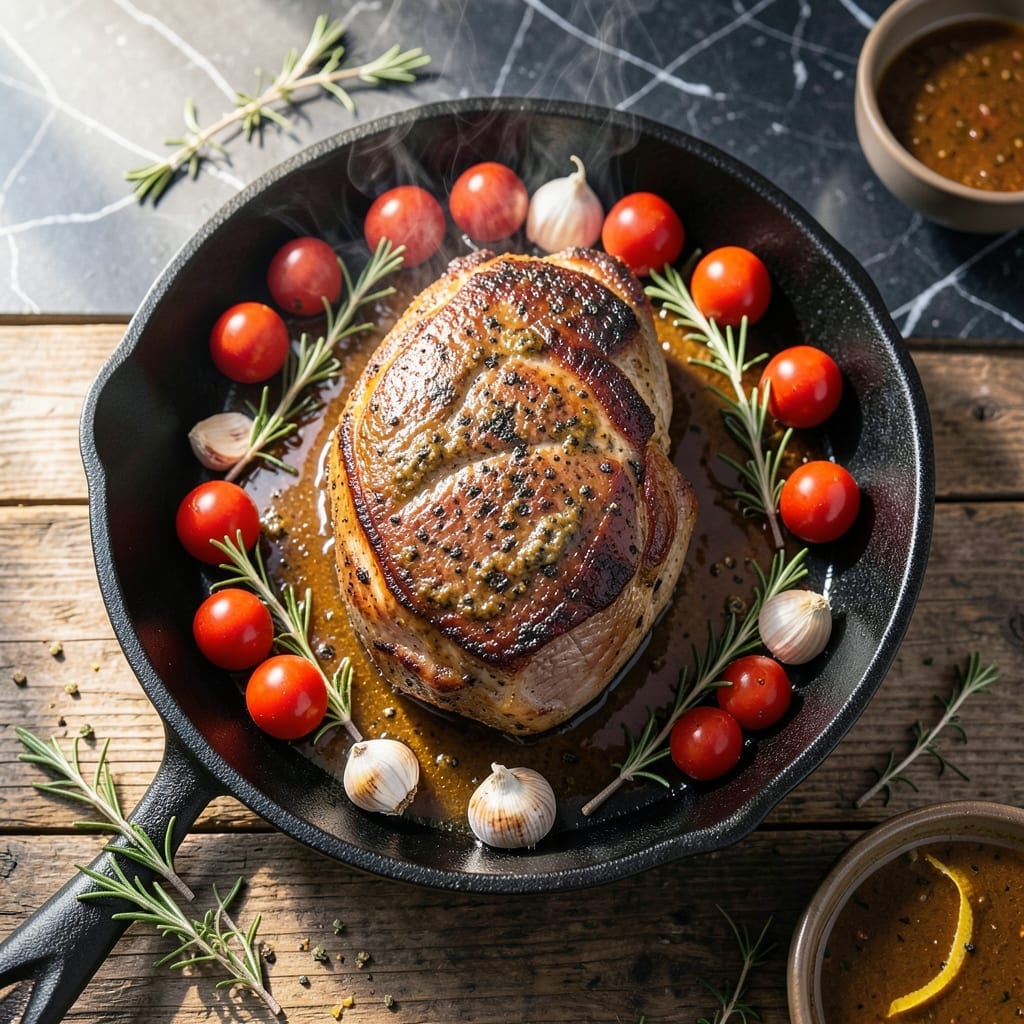
I’ve spent years perfecting the art of roasting beef, and this herb-crusted sirloin tip roast is the result of countless Sunday experiments. The key lies in a simple but foolproof technique that guarantees juicy, tender meat every time.
This method uses a blend of fresh herbs and garlic to create a fragrant crust that seals in flavor. The oven does most of the work, transforming a modest cut into a centerpiece worthy of special occasions.
What emerges is a roast with a perfectly browned exterior and succulent, rose-colored interior. The herbs form a crust that adds texture and aroma to each slice.
Serve this with roasted vegetables for a complete meal that tastes like it came from a professional kitchen. Here’s how to achieve these results in your own home.
Ingredients for Beef Sirloin Tip Roast Recipe Oven
Transform a modest cut into a showstopper with fresh herbs, garlic, and time-honored technique.
| Ingredient | Amount | Notes |
|---|---|---|
| Sirloin Tip Roast 🥩 | 3 lb | Trimmed of excess fat |
| Fresh Rosemary 🌿 | 2 tbsp | Finely chopped, stems discarded |
| Fresh Thyme 🍃 | 2 tbsp | Finely chopped, stems discarded |
| Garlic Cloves 🧄 | 6 cloves | Minced to fine paste |
| Extra-Virgin Olive Oil 🫒 | 3 tbsp | Divided for crust and searing |
| Kosher Salt 🧂 | 2 tsp | Diamond Crystal preferred |
| Black Pepper 🌶️ | 1 ½ tsp | Freshly cracked, coarse grind |
| Dijon Mustard 🟡 | 2 tbsp | Smooth, no seeds |
| Red Wine 🍷 | ½ cup | Dry variety for deglazing |
| Beef Stock 🥣 | 1 cup | Low-sodium preferred |
| Unsalted Butter 🧈 | 2 tbsp | Cold, cubed for finishing |
| Yellow Onion 🧅 | 1 whole | Large, roughly chopped |
| Carrots 🥕 | 3 whole | Peeled, cut into chunks |
| Celery Stalks 🥬 | 2 whole | Cut into large pieces |
[recipe_ingredient_scaler]
Sirloin tip excels here—lean yet flavorful, with a fine grain that stays tender. Whole Foods or ButcherBox offer high-quality cuts with good marbling. Request a center-cut piece for even cooking. The fresh herbs are non-negotiable for that aromatic crust; organic rosemary and thyme from the produce section deliver superior fragrance compared to dried. For the red wine, any dry Cabernet Sauvignon or Merlot works beautifully (whatever you’d drink).
No fresh herbs? Use one-third the amount of dried, but rehydrate them briefly in warm water to revive the oils. Out of red wine? Beef broth with a splash of balsamic vinegar mimics the acidity and depth. Dijon mustard can be swapped for whole-grain, but avoid yellow mustard—it lacks the complexity. The butter at the end adds gloss and richness; vegan butter works if needed, though the flavor profile shifts slightly.
Rest the roast at least 15-20 minutes before slicing—this redistributes juices for maximum tenderness. Leftovers keep 4-5 days refrigerated or freeze for 3 months. Slice against the grain when serving for optimal texture (worth the extra minute).
Why You’ll Love This Recipe
- Hands-Off Cooking: I just season, sear, and let the oven do the work. Honestly, it’s my kind of lazy Sunday cooking.
- Herb-Crusted Perfection: The rosemary and thyme create this insane crust with the garlic that makes every bite ridiculous.
- Feeds a Hungry Crowd: One roast, eight happy people. I’ll be real: it’s my go-to for family gatherings and leftovers taste even better.
- Budget-Friendly Luxury: A sirloin tip roast gives that fancy steakhouse feel without the fancy price tag.
Step-by-Step Instructions for Beef Sirloin Tip Roast Oven
Here’s the method. Straightforward, tested, works every time.
Step 1: Create the Herb Crust and Sear the Roast
Pat the 3 lb Sirloin Tip Roast dry with paper towels, then season all over with the 2 tsp Kosher Salt and 1.5 tsp Black Pepper. In a small bowl, combine the 2 tbsp Fresh Rosemary, 2 tbsp Fresh Thyme, 6 cloves Garlic Cloves, 2 tbsp Dijon Mustard, and 2 tbsp Extra-Virgin Olive Oil to form a paste.
Rub this mixture evenly over the entire surface of the roast. Heat the remaining 1 tbsp Extra-Virgin Olive Oil in a large oven-safe pot over medium-high heat. Sear the roast on all sides until deeply browned, about 3-4 minutes per side. This creates a flavorful crust and locks in juices.
Step 2: Build the Aromatic Base
Remove the roast and set it aside. In the same pot, add the 1 whole Yellow Onion, 3 whole Carrots, and 2 whole Celery Stalks. Cook for 5 minutes until the vegetables begin to brown and soften slightly.
This step develops the fond that will deepen the flavor of your pan sauce. The vegetables should start to caramelize at the edges, releasing their natural sweetness. Don’t let them burn—adjust the heat if they begin to darken too quickly.
Step 3: Deglaze and Begin the Braise
Pour in the 0.5 cup Red Wine to deglaze the pot, scraping up all the browned bits with a wooden spoon. Let it simmer for 2-3 minutes until reduced by half. This process lifts all the concentrated flavors from searing into your cooking liquid.
Add the 1 cup Beef Stock and return the roast to the pot, along with any accumulated juices. The liquid should come about halfway up the sides of the roast. Bring to a gentle simmer, then cover the pot.
Step 4: Roast to Perfection
Transfer the pot to a preheated 325°F oven. Roast for 2 to 2.5 hours, turning the roast every 45 minutes to ensure even cooking. The roast is done when it reaches an internal temperature of 135-140°F for medium-rare.
You’ll know it’s ready when a meat thermometer inserted into the thickest part registers the correct temperature and the juices run clear. The meat should be tender but still hold together when sliced.
Step 5: Rest and Finish with Butter
Remove the roast from the pot and transfer it to a cutting board. Tent loosely with foil and let it rest for 15-20 minutes. This allows the juices to redistribute throughout the meat, ensuring every slice is moist and flavorful.
Skimming excess fat from the cooking liquid, place the pot on the stovetop over medium heat. Whisk in the 2 tbsp Unsalted Butter until melted and fully incorporated. Strain the sauce and serve it alongside the carved roast for maximum flavor impact.
Pro Tips For Making Beef Sirloin Tip Roast Recipe Oven
- Sear It First: I learned this the hard way—skipping the sear gives you a bland, gray roast. Crank the oven to 450°F for 15 minutes first, then drop to 325°F to finish.
- Let It Warm: Pull the sirloin tip out of the fridge 30-45 minutes before cooking. Cold meat cooks unevenly, and I’ve ruined a few roasts by rushing this step.
- Slash the Garlic: Sounds weird, but it works: slice the garlic cloves in half before stuffing them into the roast’s slits—this spreads the flavor way better than whole cloves.
- Rest Under Foil: After pulling it from the oven, tent the roast with foil and give it a solid 15 minutes before slicing. It keeps all the juices inside—my first few attempts were dry because I skipped this.
Dietary Considerations for These Flavors
Gluten-Free Friendly
This recipe is naturally gluten-free since it relies on whole ingredients like beef, herbs, and vegetables. The only potential concern is the Dijon mustard—always check labels as some brands add wheat-based thickeners. I use Annie’s or Maille for guaranteed gluten-free options. 💪
Low-Carb Option
With just 3g net carbs per serving (mostly from the vegetables), this fits perfectly into low-carb or keto diets. Skip the red wine if counting strictly, and replace with extra beef stock. The natural sugars in carrots and onions are minimal but add depth to the sauce.
Dairy-Free Adaptation
Simply omit the 2 tbsp Unsalted Butter at the end or substitute with olive oil. The roast remains incredibly flavorful from the herb crust and pan sauce. I’ve made it both ways, and honestly, the difference is negligible for most palates.
Allergen Notes
This dish contains mustard (in the Dijon) and sulfites (in the red wine). For mustard allergies, use a garlic-herb paste instead. For sulfite sensitivity, opt for sulfite-free wine or additional beef stock with 1 tsp apple cider vinegar for acidity.
Sodium Control
To reduce sodium, use low-sodium beef stock and cut the Kosher Salt by half. The Dijon mustard and herbs still provide plenty of flavor. I often make this adjustment when cooking for my parents, who watch their salt intake closely.
Vegetarian Alternative
For a plant-based version, try this technique with a portobello mushroom cap or cauliflower steak. Use vegetable stock and olive oil instead of butter. The herb crust and braising method work beautifully with hearty vegetables too. 🌱
Nutrition Facts
Frequently Asked Questions
What internal temperature should I aim for?
For perfect medium-rare, remove the roast at 135-140°F. Use a meat thermometer in the thickest part. The temperature will rise 5-10°F during resting.
Can I cook this in a slow cooker instead?
Yes, but the texture differs. Sear first, then cook on low for 6-8 hours with the same liquids. You’ll lose the crispy crust but gain fall-apart tenderness.
How do I prevent the roast from drying out?
Don’t skip the searing step—it seals in juices. Also, let it rest 15-20 minutes before slicing to redistribute the moisture.
What can I use instead of red wine?
Substitute with beef stock plus 1 tbsp balsamic vinegar for acidity. Apple cider vinegar works in a pinch.

Trained in classic French technique but raised on slow-cooked ribs and spicy rubs, she blends culinary skill with smoke and soul.
- Recipe for Boneless Pork Chops in Cast Iron Skillet: Sear and Baste to Juicy Perfection - October 3, 2026
- Recipe for Boneless Cross Rib Roast: Slow-Roasted Beef with Herb Crust - October 3, 2026
- Hamburgers in Sauce Recipe Crock Pot: Slow-Cooked Savory Delight - October 3, 2026