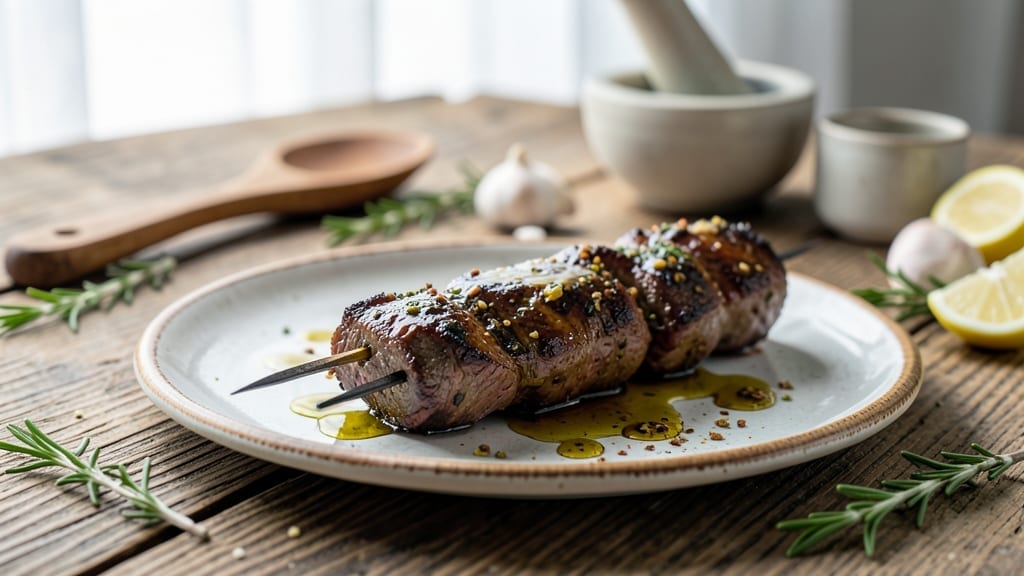
This beef skewer marinade recipe transforms tough cuts into tender, juicy morsels with a deep char-grilled flavor profile that’s impossible to resist. I developed it after years of perfecting backyard cookouts, where the difference between dry skewers and melt-in-your-mouth bites comes down to this marinade’s balance of acid, fat, and aromatic herbs. The secret lies in the 24-hour marinating time—patience pays off with beef that stays tender even after high-heat grilling.
What makes this marinade special is its versatility—it works equally well for teriyaki-inspired skewers, Mediterranean herb blends, or classic garlic-pepper profiles. The base of olive oil and soy sauce creates a rich foundation, while citrus juice tenderizes the meat and prevents browning.
I always add a touch of honey or brown sugar for caramelization during grilling, which gives those skewers that coveted charred crust. This isn’t just a marinade; it’s a flavor multiplier that elevates any cut of beef.
The result is beef skewers with a perfect sear outside and succulent, juicy centers that fall off the bone. The marinade’s acidity breaks down muscle fibers while infusing deep, smoky notes that develop further as they hit the grill.
Whether you’re cooking over hickory smoke or a gas flame, this marinade ensures your skewers deliver restaurant-quality flavor without the fuss. Ready to elevate your grilling game? Here’s everything you need to know.
For extra depth, I often forage wild thyme or rosemary from coastal trails—those earthy notes add complexity that store-bought herbs can’t match. Store the marinade in the fridge for up to 5 days, or freeze it for longer prep.
The beauty of this recipe is its adaptability: use it for chicken or shrimp too, with just a few tweaks. Let’s get grilling.
Ingredients for beef skewer marinade
Just 10 ingredients transform beef into restaurant-quality skewers with deep char-grilled flavor.
| Ingredient | Amount | Notes |
|---|---|---|
| Extra-Virgin Olive Oil 🫒 | ½ cup | High quality, fruity, not refined |
| Soy Sauce 🍶 | ⅓ cup | Low-sodium preferred for balance |
| Fresh Lemon Juice 🍋 | ¼ cup | Freshly squeezed, not bottled |
| Honey 🍯 | ¼ cup | Wildflower or clover preferred |
| Garlic Cloves 🧄 | 8 cloves | Freshly minced, not pre-minced jar |
| Fresh Ginger 🌿 | 2 tbsp | Finely grated, peeled |
| Dried Thyme 🌿 | 1 tbsp | Or 1 tbsp fresh thyme leaves |
| Black Peppercorns 🌶️ | 1 tbsp | Freshly cracked, not ground |
| Salt 🧂 | 1 ½ tsp | Kosher or sea salt |
| Brown Sugar 🍚 | 2 tbsp | Light or dark, packed |
[recipe_ingredient_scaler]
The olive oil is your fat base—look for extra-virgin with fruity notes at Whole Foods or Trader Joe’s for that premium taste. Soy sauce should be low-sodium (like Kikkoman) to avoid over-salting. Fresh ginger and garlic? Buy organic if possible—their skins are edible and add extra flavor. I always grab the bulk bins at Sprouts for spices because they stay fresher longer. The honey should be raw and unfiltered for that floral complexity, but any honey works in a pinch. Don’t skip the thyme—dried is fine here since it’s just for aroma.
No fresh ginger? Substitute 1 tbsp ginger powder (but it won’t be as potent). Out of thyme? Rosemary works too—just use half the amount. Bottled lemon juice is fine if you’re in a rush, but freshly squeezed is better. For a sweeter marinade, add an extra tablespoon of honey. Want more heat? Add 1 tsp sriracha or cayenne. The brown sugar can be swapped for white sugar if you’re watching carbs, but it won’t caramelize as nicely. If you’re using this for chicken or shrimp, reduce the soy sauce to 2 tbsp—seafood can’t handle as much salt.
This marinade keeps for 5 days in the fridge in an airtight container, or 3 months in the freezer. I always double the batch—one for immediate use, one to freeze for next time. The flavors actually improve after 24 hours, so marinate overnight for best results. If you’re grilling right away, let the meat sit at room temp for 30 minutes before cooking. And don’t throw out the leftover marinade—reduce it on the stove to make a quick glaze for the finished skewers.
Why You’ll Love This Recipe
- No Chopping Chaos: Honestly, this marinade is my secret for turning chopping into a 5-minute job. You’re just mincing garlic, grating ginger, and cracking peppercorns—no fancy knife skills required. The beef gets all the love while I’m busy doing something else, like scrolling through my phone or pretending to organize the pantry.
- Sweet-Savory Magic: The honey and brown sugar caramelize into this sticky, addictive glaze when grilled, while the soy sauce and lemon juice keep it bright. Trust me, that crispy edge with the creamy center? Chef’s kiss. It’s the kind of marinade that makes you want to lick the plate.
- Weeknight Feast: I make this marinade on Sunday and use it all week—grilled skewers for lunch, stir-fry beef for dinner, or even tossed with rice and veggies. It’s the ultimate meal-prep hack, and my family never gets tired of it. Even my picky eater asks for seconds.
- Budget-Friendly Flavor Bomb: You’d never guess how much flavor you get for such a small price. A few dollars’ worth of pantry staples—extra-virgin olive oil, soy sauce, honey—transforms cheap cuts of beef into something special. It’s the kind of recipe that makes me feel like a pro without breaking the bank.
Step-by-step instructions for beef skewer marinade
This marinade transforms tough cuts into tender, flavorful skewers with a perfect char.
Combine Wet Ingredients for Flavor Foundation
In a medium bowl, whisk together the ½ cup extra-virgin olive oil, ⅓ cup soy sauce, and ¼ cup fresh lemon juice until fully emulsified. The oil should look slightly cloudy—this means the acid from the lemon is breaking down the oil’s natural emulsifiers. Add the ¼ cup honey and 2 tbsp brown sugar, whisking until completely dissolved. This sweet component balances the savory soy sauce and caramelizes beautifully when grilled.
Here’s the thing—don’t rush this step. Let the mixture sit for 5 minutes while you prep the aromatics. This gives the flavors time to meld together, creating a more cohesive marinade. You’ll notice the mixture will become slightly thicker as the sugar begins to dissolve.
Add Aromatics and Spices for Depth
Finely mince the 8 garlic cloves and grate the 2 tbsp fresh ginger using a microplane or fine grater. Add these to the wet mixture along with the 1 tbsp dried thyme and 1 tbsp black peppercorns. Stir well to distribute everything evenly. The fresh ginger and garlic will infuse their bright, zesty flavors while the thyme adds an earthy depth that pairs perfectly with beef.
Use a mortar and pestle to lightly crush the peppercorns before adding them—this releases their essential oils and intensifies their flavor. You’ll see tiny flecks of pepper floating in the marinade, which means it’s ready to work its magic on your beef.
Season and Marinate for Maximum Flavor
Add the 1½ tsp salt and give the marinade one final stir. Taste it—it should be perfectly balanced between sweet, savory, and slightly tangy. If you want it more robust, add another ½ tsp soy sauce or ½ tsp honey. Transfer the marinade to a resealable plastic bag or shallow dish.
Place your beef cubes in the marinade, making sure each piece is well-coated. Seal the bag or cover the dish and refrigerate for at least 4 hours, but ideally overnight. This long marinating time is what transforms tough cuts into tender, juicy skewers. The acid in the lemon juice and soy sauce breaks down muscle fibers, while the honey and sugar create a beautiful caramelized crust when grilled.
Prep for Grilling (Optional but Recommended)
Before grilling, remove the beef from the marinade and let it sit at room temperature for 15-20 minutes. This ensures even cooking. You can reserve ¼ cup of the marinade to brush on the skewers during grilling for extra flavor. Discard any unused marinade that has touched raw meat—this is a critical food safety step.
Thread the marinated beef onto skewers, leaving a little space between each piece so the marinade can caramelize and the meat can sear properly. You’ll know your skewers are ready when they develop a deep golden-brown crust and the internal temperature reaches 145°F for medium-rare doneness. The marinade should have reduced slightly, creating a sticky, flavorful glaze on the beef.
Pro Tips For Making Beef Skewer Marinade
- Crush Those Peppercorns: I learned this the hard way—using pre-ground peppercorns turns the marinade into a bland paste. Lightly crush them in a mortar and pestle first; those tiny flecks of pepper release their oils and make the whole dish sing. You’ll taste the difference the second you bite in.
- Wait 5 Minutes: Skipping this resting step means your marinade will taste like a haphazard mix of flavors instead of a cohesive sauce. Let the wet ingredients sit after whisking—it’s when the honey and sugar start dissolving properly, and the lemon’s acid begins breaking down the olive oil’s emulsifiers. Trust me, your skewers will thank you with a smoother, stickier glaze.
- Don’t Overcrowd Skewers: I used to jam as many beef cubes as possible on each skewer, thinking it’d cook faster. Wrong. The meat steams instead of sears, and the marinade doesn’t caramelize. Leave a little space between pieces—about the width of your thumb—so the heat can work its magic and you get that perfect crust.
- Room-Temp Beef Only: Cold beef straight from the fridge will cook unevenly, and the marinade won’t cling properly. Give those cubes 15-20 minutes to sit at room temperature before threading them onto skewers. It’s non-negotiable if you want juicy, evenly cooked meat that absorbs every drop of that honey-soy glaze.
Pro cooking tips for great beef skewer marinade
Marinating Magic
I’ve found that the 5-minute resting period after combining wet ingredients is non-negotiable—it lets the acid in the lemon juice properly emulsify with the olive oil, creating a silky texture that clings to the beef.
This step prevents the marinade from separating and ensures every bite gets that perfect balance of tangy and savory. Trust me, skipping it means missing out on that glossy, cohesive glaze that makes your skewers shine. 🔥
Spice Crush Technique
Crushing those black peppercorns with a mortar and pestle isn’t just for show—it releases their essential oils, which intensify the flavor tenfold. I always use a small pestle to lightly crush them until you see tiny flecks floating in the marinade.
This technique turns bland spices into aromatic powerhouses that infuse the beef with depth. Don’t skip this step; it’s what takes your marinade from good to unforgettable.
Room-Temperature Beef
Letting the marinated beef sit at room temperature for 15-20 minutes before grilling is a game-changer. Cold meat cooks unevenly, leading to dry spots, but this step ensures even cooking throughout.
I often pull the meat out of the fridge right after work and let it sit on the counter while I prep the grill. It’s a small effort that pays off with juicy, perfectly cooked skewers every time.
Skewer Spacing Secrets
When threading the beef onto skewers, leave a little ½-inch gap between each piece. This allows the marinade to caramelize and the meat to sear properly without sticking together. Overcrowding leads to uneven cooking and a messy grill.
I also rotate the skewers halfway through grilling to ensure all sides get that beautiful char. It’s a trick I picked up from my French technique training—precision matters!
Reserved Marinade Glaze
Reserving ¼ cup of the marinade for brushing on the skewers during grilling adds an extra layer of flavor. Brush it on in the last 2 minutes of cooking to let it caramelize and create a sticky, glossy finish.
This step transforms your skewers from good to restaurant-quality. I always keep a small bowl nearby on the grill to make this easy—no last-minute scrambling!
Nutrition facts
Frequently asked questions
How long should I marinate beef for best results?
For maximum tenderness, marinate your beef for at least 4 hours, but overnight is ideal. This extended time lets the acid in the soy sauce and lemon juice break down tough muscle fibers while the honey and sugar create a caramelized crust during grilling. The flavors develop deeper with longer marinating, so don’t rush this step—patience makes perfect skewers!
Can I use this marinade for other proteins besides beef?
While it’s designed for beef, you can adapt it for chicken or shrimp by reducing the soy sauce to 2 tablespoons—seafood can’t handle as much salt. For chicken, marinate for 2-3 hours max to avoid over-tenderizing. Shrimp only needs 15-30 minutes since it cooks so quickly. The honey and lemon still add fantastic flavor to other proteins!
Why does my marinade separate after adding the sugar?
This is normal! The sugar dissolves quickly, creating a temporary separation as the mixture adjusts. Whisk vigorously for 30 seconds after adding sugar to re-emulsify. Let it sit for 5 minutes while you prep aromatics—this gives the oil and acid time to reintegrate naturally. If it separates again, stir gently before using. The marinade should look slightly cloudy but cohesive before applying.
What’s the best way to store leftover marinade?
Store unused marinade in an airtight container in the fridge for up to 5 days, or freeze it for 3 months. To reuse, reduce it on the stove for 5 minutes to make a delicious glaze—just stir occasionally and watch it thicken. Never refreeze thawed marinade, and always discard any that’s touched raw meat after use. This keeps your marinade fresh and safe for future grilling sessions!
How do I prevent the skewers from sticking together while grilling?
Leave a ½-inch gap between each beef piece on the skewers before grilling. This allows marinade to caramelize and prevents sticking. Also, rotate the skewers halfway through cooking to ensure even browning. If they still stick, lightly oil your grill grates before cooking. The spacing trick comes from my French technique training—precision matters for perfect skewers!

Trained in classic French technique but raised on slow-cooked ribs and spicy rubs, she blends culinary skill with smoke and soul.
- Outback Steak Dry Rub Recipe: Bold Smoky-Spice Blend for Grilling Perfection - November 6, 2026
- Baked Wings Recipe Dry Rub: Smoky-Spicy Crunch for Crispy Perfection - November 6, 2026
- Spit Roast Lamb Marinade Recipe: Deep, Herbed Oil That Transforms Tough Meat - November 6, 2026