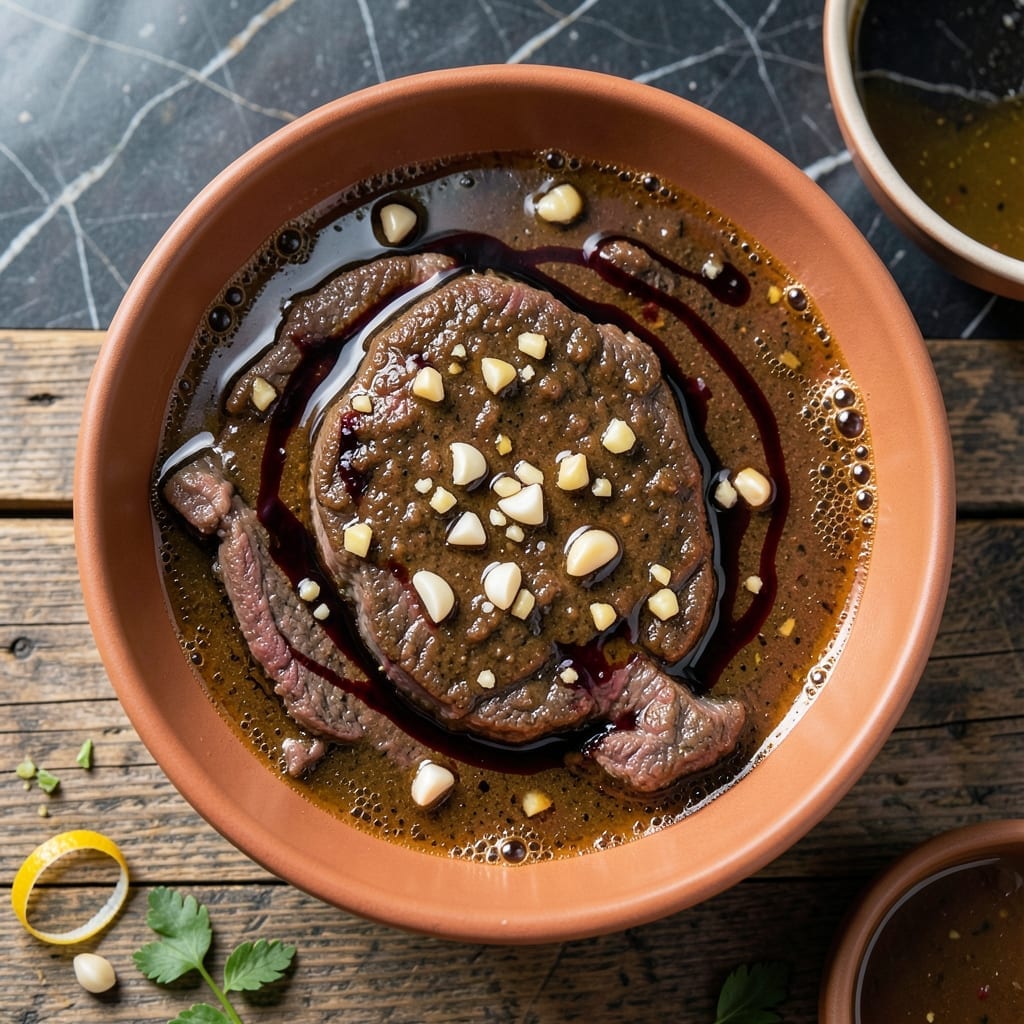
This marinade transforms good steak into something unforgettable. A precise blend of acid, oil, and herbs ensures perfect flavor penetration without overpowering the beef.
I developed this after years of grilling, balancing bold flavors with technique. The result is tender, juicy steak with char marks that command attention at any cookout.
Ingredients for Beef Steak Marinade Recipe for Grilling
A precise blend of oil, acid, and herbs transforms beef with bold, balanced flavors.
| Ingredient | Amount | Notes |
|---|---|---|
| Extra-Virgin Olive Oil 🫒 | ¾ cup | High-quality, cold-pressed preferred |
| Soy Sauce 🥢 | ½ cup | Low-sodium for controlled seasoning |
| Red Wine Vinegar 🍷 | ¼ cup | Balanced acidity for tenderizing |
| Worcestershire Sauce 🍶 | 2 tbsp | Adds umami depth to marinade |
| Honey 🍯 | 2 tbsp | Natural sweetener balances acidity |
| Garlic Cloves 🧄 | 6 cloves | Freshly minced for robust flavor |
| Fresh Rosemary 🌿 | 2 tbsp | Finely chopped, woody stems removed |
| Fresh Thyme 🌿 | 2 tbsp | Leaves stripped from stems |
| Dijon Mustard 🟡 | 1 tbsp | Smooth, no seeds |
| Black Pepper 🌶️ | 2 tsp | Freshly cracked for maximum aroma |
[recipe_ingredient_scaler]
The olive oil and soy sauce form the foundation here. Look for cold-pressed extra-virgin olive oil—it withstands heat better and carries flavor deeper into the meat. San Marzano tomatoes aren’t relevant here, but Kikkoman low-sodium soy sauce gives you consistent salt levels. Fresh herbs are non-negotiable for this marinade; dried simply won’t deliver the same aromatic punch. Most Whole Foods locations have fresh rosemary and thyme year-round.
No red wine vinegar? Apple cider vinegar works at the same ratio, though it’s slightly sweeter. Out of honey? Brown sugar dissolved in warm water can substitute, but it won’t have the same floral notes. Worried about gluten? Tamari replaces soy sauce one-to-one. The Dijon mustard is mostly for emulsifying—yellow mustard in a pinch, though the flavor profile will shift slightly.
This marinade keeps beautifully in the fridge for up to 5 days. The flavors actually deepen after 24 hours. For longer storage, freeze in portions for up to 3 months—thaw in the fridge before using. Always discard used marinade; never reuse it for safety.
Why You’ll Love This Recipe
- Five-Minute Mix: I toss these five ingredients in a bowl faster than the grill heats up.
- Sweet & Tangy Bite: The honey balances the red wine vinegar so every bite is ridiculously good.
- Weekend or Weeknight: I’ve used this marinade for both backyard BBQs and a quick Tuesday dinner.
- Stretches the Budget: A cheap cut soaks up the soy and Worcestershire and tastes like a pricier steak.
Step-by-Step Instructions for Beef Steak Marinade
This professional method ensures maximum flavor penetration for exceptional grilling results.
Step 1: Prepare and Combine Wet Ingredients
In a medium bowl, whisk together the 0.75 cup Extra-Virgin Olive Oil, 0.5 cup Soy Sauce, 0.25 cup Red Wine Vinegar, 2 tbsp Worcestershire Sauce, and 2 tbsp Honey until fully emulsified. The vinegar’s acidity will naturally separate from the oil, so vigorous whisking is essential here.
This base creates the perfect balance of salty, sweet, and tangy flavors that will tenderize the meat while adding depth. I always use a bowl with a pour spout for easier transfer later.
Step 2: Incorporate Aromatics and Seasonings
Add the 6 cloves Garlic Cloves (minced), 2 tbsp Fresh Rosemary (finely chopped), 2 tbsp Fresh Thyme (leaves only), 1 tbsp Dijon Mustard, and 2 tsp Black Pepper to the wet mixture. Stir thoroughly to distribute the herbs and spices evenly throughout the marinade.
The garlic should release its pungent aroma as you stir, signaling that its essential oils are infusing into the liquid. Fresh herbs are non-negotiable here—dried simply won’t deliver the same vibrant flavor.
Step 3: Rest and Infuse the Marinade
Let the marinade sit at room temperature for 15-20 minutes before using. This resting period allows the flavors to meld together fully. You’ll notice the herbs begin to soften and the garlic mellows slightly, creating a more harmonious blend.
I’ve found this brief waiting period makes a noticeable difference in the final flavor profile. The marinade should appear slightly thicker after resting as the herbs release their natural pectin.
Step 4: Apply to Steak and Marinate
Place your steak in a resealable plastic bag or shallow dish and pour the marinade over it, ensuring all surfaces are coated. For best results, marinate in the refrigerator for 4-12 hours. The Red Wine Vinegar and Worcestershire Sauce will begin breaking down the meat fibers almost immediately.
Turn the steak occasionally during marinating to ensure even exposure. The exterior should take on a slightly darkened appearance as it absorbs the marinade’s rich color.
Pro Tips For Making Beef Steak Marinade Recipe For Grilling
- Marinate Overnight: I learned this the hard way—beef needs at least 4 hours in the marinade, but overnight actually changes the outcome. The soy sauce and red wine vinegar tenderize best with time.
- Warm the Honey: Sounds weird, but it works: Microwave the honey for 10-15 seconds before mixing. It blends smoothly into the olive oil and vinegar instead of clumping at the bottom.
- Skip the Salt: Steer clear of adding extra salt—the soy sauce and Worcestershire already pack enough. I ruined a batch by oversalting once, and the steak was inedible.
- Reserve Some Marinade: Before adding the beef, set aside 2-3 tablespoons of the marinade. Use it to baste while grilling for extra flavor without cross-contamination.
Troubleshooting Perfect Results
Marinade Separation
If your marinade separates into oil and liquid layers, don’t panic. This is natural due to the Red Wine Vinegar and Extra-Virgin Olive Oil base. Simply give it a vigorous whisk before using. I keep a small whisk in my marinade jar for this exact reason. 💡
Over-Marinating Issues
Leaving beef in this marinade for more than 12 hours can actually make the texture mushy. The acids in the Red Wine Vinegar and Worcestershire Sauce break down proteins too aggressively. Stick to the 4-12 hour window for optimal tenderness without compromising structure.
Uneven Flavor Distribution
For consistent flavor, always turn your steak every 2-3 hours during marinating. I use a resealable bag and simply flip it over. This ensures all surfaces get equal exposure to the Garlic Cloves and fresh herbs. The difference in even flavor penetration is noticeable.
Herb Sediment
You might notice herb bits settling at the bottom of your marinade container. This is perfectly normal with fresh Rosemary and Thyme. Just stir before each use to redistribute those flavor-packed herbs throughout the liquid.
Grill Flare-Ups
After marinating, pat your steak dry with paper towels before grilling. The Extra-Virgin Olive Oil in the marinade can cause dangerous flare-ups on the grill. This extra step gives you better sear control and those perfect char marks we’re after. 🔥
Marinade Reuse
Never reuse marinade that’s touched raw meat. The Soy Sauce and meat juices create a perfect breeding ground for bacteria. If you want extra for basting, set aside a portion before adding the steak. Safety first always wins with me.
Nutrition Facts

Trained in classic French technique but raised on slow-cooked ribs and spicy rubs, she blends culinary skill with smoke and soul.
- Recipe for Boneless Pork Chops in Cast Iron Skillet: Sear and Baste to Juicy Perfection - October 3, 2026
- Recipe for Boneless Cross Rib Roast: Slow-Roasted Beef with Herb Crust - October 3, 2026
- Hamburgers in Sauce Recipe Crock Pot: Slow-Cooked Savory Delight - October 3, 2026